Allnic Audio D-15000 Signature OTL/OCL DAC: Elevating Digital Sound with Tube Magic


 See more Architeg Prints stories on Google.
Allnic Audio D-15000 Signature OTL/OCL DAC: Elevating Digital Sound with Tube Magic
Explore how the Allnic Audio D-15000 DAC elevates digital music with unique OTL/OCL tube technology and refined digital craftsmanship.
A New Benchmark in DAC Design
When it comes to crafting one of the world’s top digital-to-analog converters, there’s simply no room for “good enough.” That’s the tightrope walked by the Allnic Audio D-15000 Signature OTL/OCL DAC, which takes the already revered D-10000 model and pushes it to new heights. The name itself — “Signature” — hints at a step beyond the previous flagship, offering an exquisite refinement without compromising the beloved traits of its predecessor.
Both the D-10000 and D-15000 share the hallmark output transformerless (OTL) and output capacitorless (OCL) audio stage—a design choice that lends Allnic products their signature smoothness and grace, as showcased in earlier reviews.
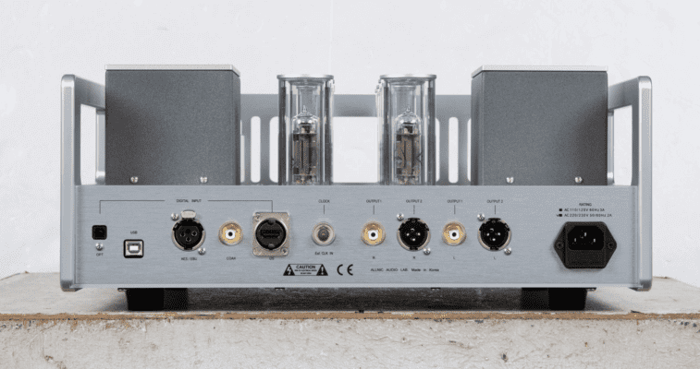
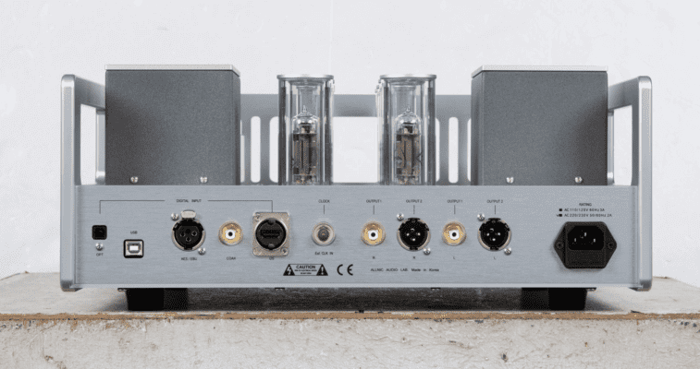
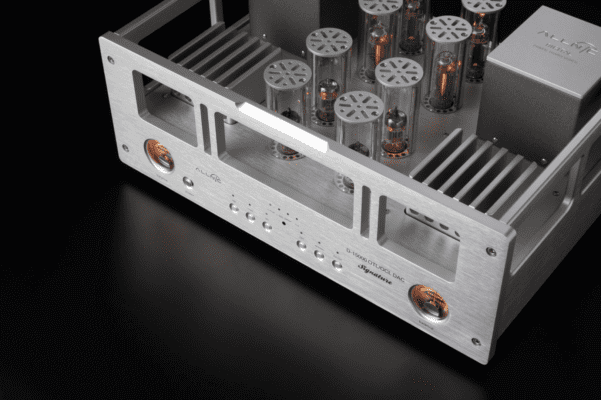
At first glance, the D-15000 might seem like a souped-up D-10000, with shared aesthetics like a central tube group, twin balance meters, and nearly identical size and weight. But looks can be deceiving. Beyond surface similarities, the D-15000 introduces substantial upgrades, most notably the addition of an I²S input and a dedicated clock input, setting it apart in both function and sonic prowess.
The Revival of I²S and Clock Inputs
I²S has sat quietly on the sidelines of digital audio connections for years but has recently enjoyed a renaissance. Unlike typical digital interfaces, I²S lacks a formal standard termination, with HDMI currently serving as the de facto connector—though pin configurations can vary widely. Allnic Audio adopts PS Audio’s HDMI setup, a choice shared by brands like Audiobyte and Rockna, ensuring compatibility and performance.
Clock input options are easier to spot, and Allnic wisely refrains from prescribing a “best” clock, recognizing that audiophiles might spend anywhere from less than a quality interconnect cable up to more than the DAC itself to chase that elusive timing perfection.
Chip Upgrade: The Heart of the D-15000
At the core of the Allnic Audio D-15000 lies a significant chip upgrade. Moving from the dual-mono ES9018K2M chips of the D-10000, the D-15000 harnesses the power of the ES9039PRO DAC chipset. This newer model features ESS’s “HyperStream IV” architecture, enabling advanced serial data interfacing perfect for I²S inputs.
This architectural overhaul makes a big difference. While SABRE DACs have sometimes gotten a reputation for sounding clinical, the D-10000 proved that isn’t a rule set in stone. The D-15000 builds on that legacy without succumbing to coldness or digital sterility.
Interestingly, while the ES9039PRO offers user-adjustable digital filters, Allnic chose to keep things simple and consistent, avoiding the pitfall of “audiophilia nervosa”—an obsessive quest for the perfect filter setting that can often distract more than delight. Instead, the D-15000 is designed to be a “set it and forget it” masterpiece that frees your mind to simply enjoy the music.
The Magic of OTL and OCL Tube Design
Talking about chips is only one part of the story; the real personality of the D-15000 lies in its OTL/OCL tube-based output stage. “OTL” stands for output-transformerless, and “OCL” means output-capacitorless—both eliminating components that typically color the sound in traditional designs.
Instead, the DAC uses tubes to create a perfect impedance match between its digital output and your preamp’s input, delivering linearity and a warm, natural sound. The valve lineup includes an ECF80/6BL8 combination triode/pentode input, a 12AU7/ECC82 phase-splitter/inverter, and the star of the show, the 6C19P triode, famed in OTL power amplifier circles for its superb linearity and low impedance.
Why Choose OTL/OCL? The Sound Speaks
Why bother with this somewhat old-school tube tech in a modern DAC? Because it changes the listening experience in a way that pure solid-state can’t quite replicate. Transformers and coupling capacitors traditionally shape much of what you hear in valve amplifiers, but Allnic’s sound leans on tubes themselves for coloration—or more accurately, the lack of unwanted coloration.
Reflecting on the D-10000’s listening notes, this DAC was transparent, with minimal coloration and a sense of immediacy. The D-15000 amplifies these qualities to an extreme degree: the sound is so subtle and uncolored that the listener almost forgets the device is there. It’s like stepping into a time machine—take Dean Martin crooning “I’m Confessin’ (That I Love You)” from Dream With Dean as an example. The intimate jazz quartet backing him sounds effortlessly real, from Barney Kessel’s guitar to the smoothness of Dean’s voice. The D-15000 lets you travel back to that smoky lounge, sipping your cocktail, with no digital artefacts in sight.
A Listening Experience Like No Other
The connection this DAC creates is more than just sonic accuracy; it’s an invitation to be swept away by music. Whether it’s the ethereal choral work of Arvo Pärt’s Creator Spiritus or the glitchy, frenetic rhythms of Squarepusher’s “Mekrev Bass,” the D-15000 pulls you deeper into the soundstage with an immediacy that’s nothing short of mesmerizing.
Balanced Transparency Without Sterility
Putting the romanticism aside, the D-15000 is remarkably transparent and uncolored without sounding clinical or harsh. It doesn’t smooth over highs or roll off frequencies; instead, it offers a musically honest presentation. Imagine the openness and naturalness of a well-maintained open-reel tape playing your favorite album.
The soundstage is impressively adaptive — it naturally expands or contracts to fit the recording, whether it’s the grand scale of Mahler’s Eighth Symphony or the intimate, close-miked atmosphere of Laura Marling’s Semper Femina.
Dynamic range is another highlight. Pieces like Rachmaninov’s Symphonic Dances surge with life and energy, making quiet moments feel delicate and loud passages startlingly powerful.
Although the majority of listening was with standard 16/44 PCM files, a few DSD tracks revealed the DAC’s ability to extract details and charm from high-resolution sources. Bob Dylan’s “Queen Jane Approximately” and John Coltrane’s Blue Train felt more alive and present, even if some of that magic could be attributed to mastering nuances.
Contemporary music fares equally well. Taylor Swift’s “Exile” from folklore and Tool’s “Chocolate Chip Trip” from Fear Inoculum are rendered with energy and precision, never treated as vintage recordings but as vibrant, complex modern works.
Visuals: Familiar Yet Deceptively Different
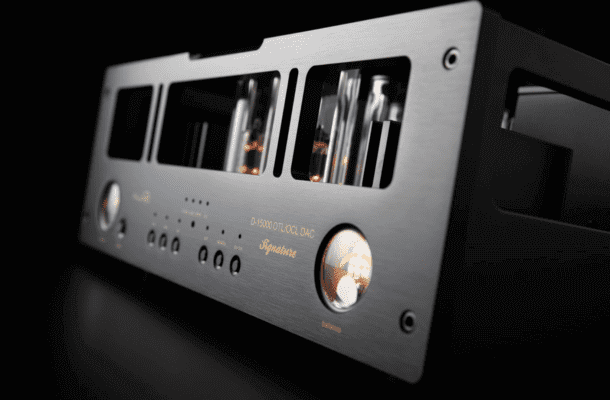
One potential stumbling block for the D-15000 is its striking visual similarity to the D-10000. Our brains love patterns, and many might assume the newer model is a simple upgrade or “blinged-out” version of the older one. But that’s a misconception. The internal advances and sonic improvements are substantial.
Had Allnic opted for a more radical design change—say, by splitting off the power supply into a separate chassis—listeners might better appreciate the leap. Yet, the subtle exterior gives bonus perks: it lets you upgrade your DAC discreetly, without alarming anyone about your sonic ambitions!
Final Thoughts: A Rare Audio Treasure
Sitting with the Allnic Audio D-15000 Signature OTL/OCL DAC is a rare pleasure. It delivers one of the most involving digital audio experiences you’re likely to encounter, easily surpassing its illustrious predecessor. And this is just the start — with I²S inputs and external clock options, there’s still more sonic territory to explore.
Thinking about pairing it with other Allnic gear? The synergy is bound to be powerful, especially recalling how impressive the HPA-5000XL headphone amplifier was. Once you hear what the D-15000 can achieve, you’ll likely want to dive deeper into the Allnic ecosystem.
Specs & Pricing
- Type: OTL/OCL DAC
- DAC Chips: Dual Mono ES9039PRO (32-bit HyperStream IV)
- Tubes: ECF80, 2 × 12AU7, 4 × 6C19P
- USB Input: PCM up to 32bit/768kHz, Native DSD up to DSD512
- S/PDIF Input: PCM up to 32bit/192kHz, DoP up to DSD128 (AES/EBU, coaxial RCA)
- I²S Input: PCM up to 32bit/768kHz, Native DSD up to DSD1024 (HDMI, PS Audio compatible)
- Analog Outputs: 1 pair unbalanced (RCA), 1 pair balanced (XLR)
- Clock System: Internal OCXO (±5 ppb) + External 10MHz clock input (BNC)
- Frequency Response: 20Hz–20kHz flat
- Total Harmonic Distortion: < 0.1%
- Signal to Noise Ratio: < 86dB (CCIR, 1kHz)
- Jitter: ~5ps RMS (PLL-based)
- Output Voltage: 1.75V RMS
- Output Impedance: 50Ω
- Finishes: Black, silver
- Dimensions (WxDxH): 43 × 32 × 17 cm
- Weight: 13 kg
- Price: Approximately $31,000 USD
FAQ
- What does OTL/OCL in the DAC's name stand for?
OTL means Output Transformerless, and OCL means Output Capacitorless, referring to a tube output stage design that avoids transformers and coupling capacitors for purer sound. - How is the D-15000 different from the D-10000?
Besides visual similarities, the D-15000 features upgraded DAC chips (ES9039PRO), adds I²S digital input, external clock input, and improved tube-based output stages. - What kind of music benefits most from this DAC?
The D-15000 excels across genres—from intimate jazz and classical to modern rock and electronic—delivering transparency and warmth without fatigue. - Is I²S input important for this DAC?
Yes, the I²S input allows for high-bandwidth, low-jitter digital connections, unlocking the DAC’s full potential when paired with compatible sources. - Does the D-15000 sound “cold” or clinical?
Not at all. Thanks to its tube output stage and refined design, it offers a warm, natural, and musically honest presentation.
Ready to celebrate your love for music and iconic album art? Shop your favorite album cover posters at Architeg Prints for a nostalgic touch that complements your listening space beautifully.
 | DISCOUNTGET 30% OFF*Use code on your next order:
|
* This post may contain affiliate links, meaning we earn a commission if you make a purchase through these links, at no additional cost to you.