Apple’s Most Meaningless Device: Even Fans Won’t Buy It


 See more Architeg Prints stories on Google.
Apple’s Most Meaningless Device: Even Fans Won’t Buy It
Explore why Apple's HomePod failed to capture the hearts of even its loyal fanbase, despite the brand's iconic success.
Remembering Apple’s Game Changers
Hey friends, let’s rewind a bit. Picture this: January 9, 2007. Steve Jobs steps on stage at Macworld, energized and ready to make history. By day’s end, everyone was buzzing about one thing — the brand-new iPhone smartphone. Seriously, it was an explosion of excitement everywhere.
Of course, the iPhone smartphone became that revolutionary product that changed the world—that’s a fact we all know. But here’s a fun twist: its predecessor, the Apple iPod portable media player, was no slouch either. This gadget sold a mind-blowing 450 million units! That’s just insane, right? Apple kept producing it all the way up until 2022. So, the road to iconic status actually started with a different, but equally fantastic, device.
When Apple Missed the Mark: Newton and Other Flops
Not every Apple product was a smashing hit. Remember the Newton personal digital assistant? This personal digital assistant (PDA) used a stylus and could recognize handwriting. Sounds ahead of its time, right? Well, the handwriting recognition was, frankly, a bit of a mess. At $699 (about $54,000 if converted to rubles back then), it was also pricey. Steve Jobs eventually pulled the plug on it. But here’s the kicker: the ARM-based processor Apple developed for Newton paved the way for the A and M series chips powering today’s iPhones and Macs. So, even failures can shape the future.
Many engineers who worked on Newton later helped build the software for the iPod portable media player and iPhone smartphone. Plus, Newton pioneered app-based layouts and touch gestures—features we take for granted today.
After the iPhone: Apple’s Mixed Bag of Hits and Misses
Post-iPhone smartphone, Apple rolled out several popular devices: the iPad tablet, Apple Watch smartwatch, AirPods wireless earphones, and AirTags tracking device. But not every new gadget was a blockbuster. Enter the HomePod smart speaker—Apple’s take on the smart speaker, designed to rival Amazon Echo and kickstart the smart speaker craze.
A smart speaker is basically a speaker with a digital assistant. You can ask it to play songs, news, sports updates, and more. Launched in February 2018, HomePod grabbed about 6% of the market by September, but shockingly, only 2% of Apple device owners bought one. Why? Siri just couldn’t keep up with Alexa and Google Assistant’s smarts.
Plus, HomePod’s launch price was $349 (around $279) and later dropped to $299 ($239), which was steep compared to competing smart speakers priced between $50 ($40) and $100 ($80). Apple eventually discontinued the original HomePod, “burying” it quietly in their Apple Park, alongside the Newton. But the story didn’t end there. In November 2020, Apple introduced the more compact HomePod mini smart speaker, priced at a gentler $99 (~$79), making it more accessible.
The Price and Challenges of HomePod in Russia
HomePod smart speaker’s journey in Russia is a bit rocky. There are no official sales channels or Apple support for the device there. Locals can only get the HomePod by ordering from abroad or buying from parallel importers and resellers, which drives the price way up.
The HomePod mini, officially priced at $99 (~9,000 rubles), can cost anywhere from 11,000 to 25,000 rubles locally. The newer second-gen HomePod model starts at around 30,000 rubles. This steep markup is due to logistics, customs fees, and reseller margins.
Using HomePod in Russia: The Real Limitations
Purchasing a HomePod in Russia comes with some hurdles:
- No official support or Russian language: Siri doesn’t speak Russian, only languages like English, German, and French. If you don’t speak English, using voice controls can be tough. For example, Siri won’t understand Russian song titles.
- Limited access to Apple services: Some Apple services and App Store features are unavailable due to restrictions. While basic control via the “Home” app works, some online functions are restricted.
- Warranty and compatibility issues: Imported devices have no official Apple warranty locally. Sellers might provide their own, but it’s not the same. Also, the power adapter fits U.S. sockets, so you’ll need a European plug adapter.
- Potential function blocks: There’s a chance Apple might block features regionally, just like it did with Apple Pay. A full device lockout is unlikely, but it’s a technical possibility.
Tips to Ease the Pain of Restrictions
While you can’t dodge all limitations, you can make life easier:
- Set Siri’s language to U.S. English for best voice recognition.
- Use streaming services compatible with AirPlay (like Yandex.Music), since HomePod only natively supports Apple Music.
- Turn off automatic OS and app updates to avoid unexpected function-blocking.
- Use a VPN to access blocked services like FaceTime.
All said, owning a HomePod here takes some tech savvy, patience, and acceptance of the risks involved.
Why Do Apple Fans Prefer Amazon Echo Over HomePod?
Interestingly, HomePod mini smart speaker isn’t as beloved by audiophiles as its bigger sibling, but it’s selling better commercially. However, a significant chunk of Apple users still steer clear of both the original HomePod and even the latest Apple smart speaker.
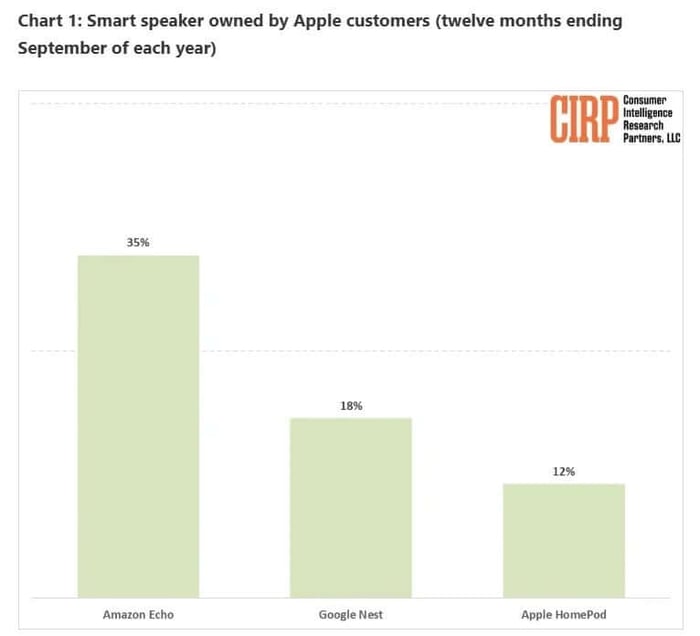
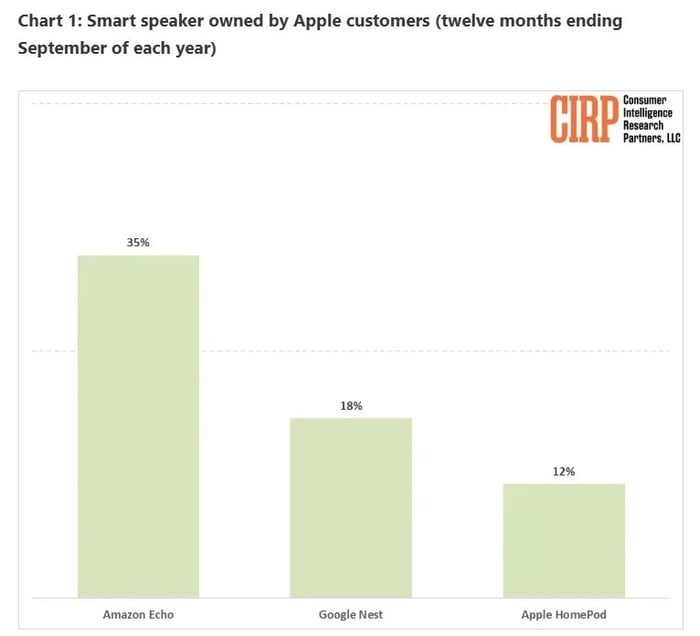
According to recent research by Consumers Intelligence Research Partners (CIRP), among new Apple device buyers over the past year (from September 2024 to September 2025), Amazon Echo remains the reigning smart speaker in the Apple ecosystem.
Here’s the breakdown of smart speaker ownership among Apple customers in the U.S.:
- 35% own Amazon Echo devices.
- Google Nest comes in second.
- HomePod holds just 10-12% of the market.
Why the cold shoulder? Apple fans, known for their loyalty, behave just like other consumers who favor Echo’s affordability and performance. The HomePod mini smart speaker’s $99 price tag is roughly double that of the Amazon Echo Dot 5th Gen and Google Nest Mini — two affordable rivals.
“Apple’s HomePod never became a hit, even among Apple’s own fans.”
— Industry Analyst
Wrapping It Up: The HomePod’s Struggle for Relevance
Apple’s HomePod story is a fascinating one. It’s a reminder that even the biggest tech giants can misstep — and that brand loyalty can only carry a product so far. While devices like the iPod portable media player and iPhone smartphone reshaped the tech world, the HomePod struggled to find its place amidst fierce competition and high price tags.
Are smart speakers just a tricky market? Or did Apple miss the mark on the voice assistant experience? Maybe it’s a bit of both. Either way, the HomePod is a curious footnote in Apple’s otherwise sparkling history.
FAQ
- Which Apple product changed the tech world before iPhone?
The Apple iPod portable media player, which sold over 450 million units before being discontinued in 2022, was a major milestone. - What was Apple’s Newton?
A personal digital assistant with handwriting recognition that was ahead of its time but ultimately unsuccessful. - Why did the original HomePod fail?
Its high price and Siri’s weaker voice assistant compared to Alexa and Google Assistant limited its appeal. - Is HomePod officially available in Russia?
No, it’s only available through imports and resellers, leading to higher costs and limited support. - What is the most popular smart speaker among Apple users?
Amazon Echo leads in popularity, followed by Google Nest and then Apple’s HomePod.
Love the Apple vibe? Elevate your space with your favorite album cover posters—shop our exclusive collection at Architeg Prints for a dash of retro and rock ’n’ roll magic.
 | DISCOUNTGET 30% OFF*Use code on your next order:
|
* This post may contain affiliate links, meaning we earn a commission if you make a purchase through these links, at no additional cost to you.