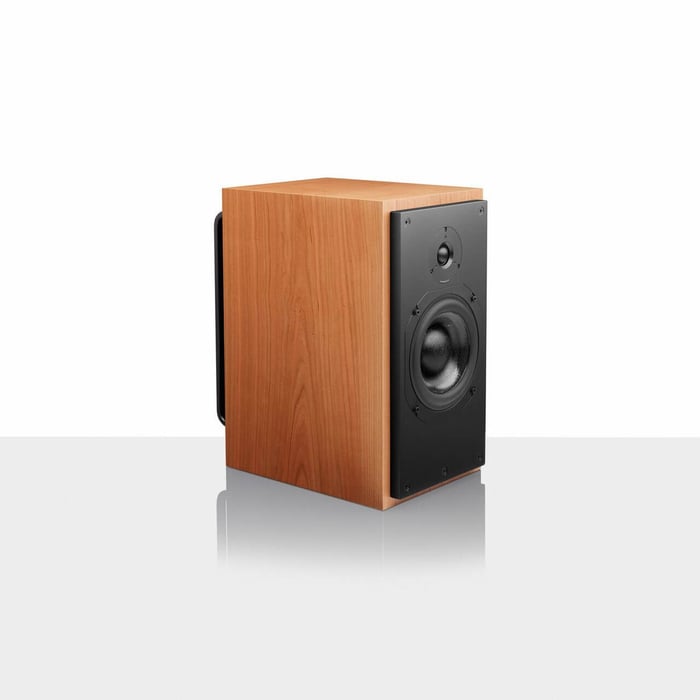
ATC SCM20ASL Active Loudspeaker: Studio-Grade Sound in a Compact Design


 See more Architeg Prints stories on Google.
ATC SCM20ASL Active Loudspeaker: Studio-Grade Sound in a Compact Design
Explore the ATC SCM20ASL active loudspeaker’s dynamic precision and clarity that elevate your listening experience with seamless integration of amplifier and crossover technology.
A Passion for Active Loudspeakers
The high-end audio world has long fascinated me, especially when it comes to active loudspeakers. These beauties combine amplifier and crossover electronics within the speaker cabinet, creating an efficiency and performance synergy that’s hard to beat. If you’ve dipped your toes in the active audio pool, you know ATC, the iconic British loudspeaker manufacturer founded in 1974 by the late Billy Woodman.
Celebrating over 50 years of excellence, ATC’s reputation is carved from their active professional and consumer loudspeaker lines, deeply rooted in legendary recording and mastering studios worldwide. Their passive lineup also boasts stellar models, including the recent ATC SCM20P loudspeaker from the Classic Series, a Golden Ear award winner in 2023. But today, we’re focusing on the eagerly anticipated SCM20ASL, the active counterpart to the SCM20P, and trust me—it’s worth the wait.
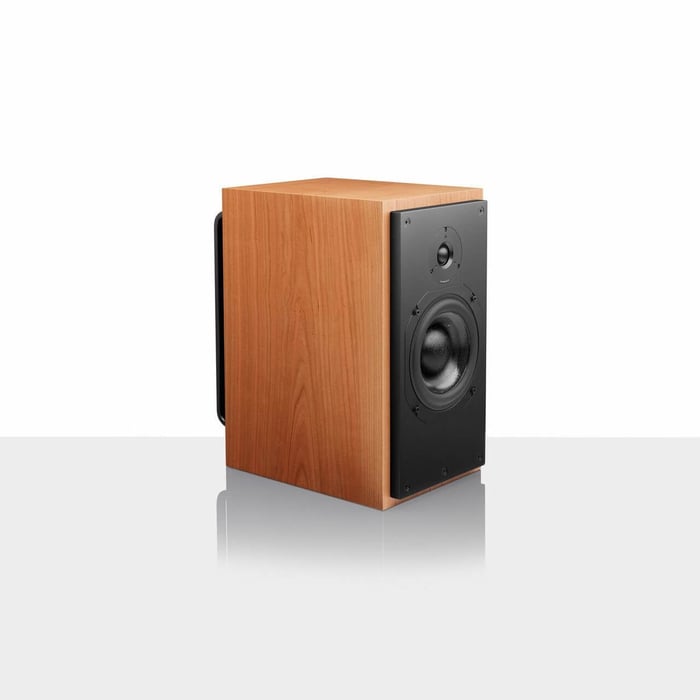
The sleek and robust ATC SCM20ASL combines powerful amplification with precise drivers for studio-grade sound.
Design Parallels with a Twist
At first glance, the SCM20ASL looks like the mirror image of its passive sibling, the SCM20P. Both are two-way stand-mount monitors featuring the same transducers mounted on a thick front baffle, housed in a heavy, sealed acoustic-suspension cabinet. The difference? Flip the ASL around, and you’ll spot the absence of speaker wire terminals, replaced by a balanced XLR input. Plus, there are grab handles and aluminum heat sinks designed to cool the internal amplifier module.
The cabinet’s depth has grown slightly to house the amplifier electronics, marking the physical divide between active and passive design. Although these speakers share their core elements, the SCM20ASL emerges as a distinct sonic character with its onboard amplification.
Transducers and Technology That Define ATC
ATC is known for hand-building its transducers, and the SCM20ASL is no exception. The mid/bass driver is a 6-inch “Super Linear” unit equipped with a generous 3-inch voice coil and a motor assembly designed to reduce distortion through ATC’s “SL” motor technology. This clever design minimizes eddy-current distortion, especially from the upper bass into the midrange, preserving clarity.
On top, the tweeter is a 25mm “S-Spec” soft-dome with dual suspension and a high-energy 2.1 Tesla motor, delivering crisp response well beyond 20 kHz. It’s this combination that gives ATC speakers their signature smoothness and precision.
Powering the Sound: The Amp Pack
The heart of the SCM20ASL is its “Amp Pack” modules—bi-amplified Class AB MOSFET power amplifiers tailor-made for each driver. The mid/bass driver gets a robust 200 watts, while the tweeter receives 50 watts, ensuring both drivers are driven optimally without compromise.
A second-order Linkwitz-Riley active crossover splits the signal at line level before amplification. This setup eliminates the signal losses and distortions common to passive crossovers, offering wider dynamic range and improved tonal balance. ATC also includes an all-pass filter for phase optimization, sharpening imaging and cohesion.
Why Choose Active? The Advantages Unpacked
Active loudspeakers bring multiple advantages to the table:
- Elimination of passive crossover losses means the signal remains purer, boosting dynamic range.
- Direct amplifier-to-driver connection offers better driver control and reduces distortion.
- Matched amplifier-speaker design ensures efficient power use.
- Operating within narrower bandwidths, these amps reduce inter-modulation distortion.
The SCM20ASL also includes user-friendly controls for input sensitivity and bass shelf adjustments, allowing you to tailor the speaker’s response to your room and source system. One quirky note: the speaker has no power indicator light or standby mode—it’s simply on or off, keeping the circuitry clean and reliable.
Build Quality and Setup
The SCM20ASL’s sealed cabinet is built tough, with internal bracing to prevent resonance and damping materials to keep sound clean. It comes with a removable grille wrapped in black acoustically transparent fabric and is available in various real wood veneers, satin paints, and high-gloss lacquers to fit any décor.
Setting them up is straightforward but demands sturdy stands—the speakers weigh over 50 pounds each. My system included the Lumin S1 media player with Leedh Processing, an Aesthetix Mimas integrated amplifier for the passive SCM20P, and top-tier cables from Snake River Audio, Furutech, and Audience for deliciously clean signal paths.
Sound Impressions: Familiar Yet Elevated
The SCM20ASL retains the tonal neutrality, midrange presence, and dynamic conviction that make the SCM20 series a favorite for vocals and music lovers alike. The treble is smooth and unforced, with a tight mid/bass free of any port noises thanks to the sealed design.
However, the active model brings a new level of immediacy and liveliness to the music. It’s as if some nearly invisible veil has lifted, revealing more detail and precision. Imaging is razor-sharp—not just pinpointing individual instruments but painting immersive three-dimensional acoustic landscapes, from intimate vocals to complex choral arrangements.
The voice of the SCM20ASL feels weightier and more authoritative, with a wider, grounded sonic footprint that resonates deeply.
Bass and Low-End Mastery
What truly stands out is the SCM20ASL’s control and impact in the lower midrange and bass. From electric bass lines to kettle drums and grand orchestral moments like John Williams’ “Olympic Fanfare” or Copland’s Fanfare for the Common Man, the bass is tight, clear, and impactful.
Listening to classic recordings like Gene Scott’s acoustic bass on the Dave Brubeck Quartet’s “Take Five” reveals the speaker’s talent for untangling complex musical interplay, offering less smudging and easier listening. The piano’s lower registers and harmonic decay are beautifully rendered, with sustain and resonance fully realized.
Rock, Pop, and Rhythm That Drive You
The SCM20ASL shines on rock and pop tracks too. Take The Cars’ “Just What I Needed”—a song that demands punch and momentum. This speaker delivers with infectious energy, extending deeper and with a slightly increased midbass presence compared to its passive sibling.
While ATC specs list bass extension at 55Hz for both models, the ASL feels like it reaches a few hertz lower and a couple of decibels louder in the midbass, adding to a fuller, more dimensional soundstage. On choral works like Rutter’s Requiem, the acoustic space of the venue is more convincingly conveyed, with better control and atmospheric depth.
Subtle Details and Clarity at Low Volumes
Another win for the SCM20ASL is its ability to reveal detail at lower listening levels. Unlike the passive SCM20P, which sometimes needs a volume boost to really come alive, the ASL perks up early, delivering clear bass pitch and detail even when you’re just relaxing in the background.
This clarity extends “upstream” to reveal harmonics, timbral nuances, and vocal richness. Singers like Tom Waits and Shelby Lynne sound fuller and more dimensional, with enhanced warmth and texture.
Is Active the Future?
Active loudspeakers were once a tough sell for audiophiles, who cherished tweaking every component. Surrendering some control to the speaker’s internal design team felt risky. But consider the value: the passive SCM20P retails for just under $6,000, while the active SCM20ASL comes in around $11,000.
Factor in what you’d spend on separate amplifiers for bi-amping, and suddenly that $5,000 difference looks like a savvy investment for superior sound and integration.
Final Thoughts: A Clear Winner
So, which speaker should you choose? For me, the active SCM20ASL wins by a nose. It’s not one magic feature but an overall lift in resolution, control, and musicality that makes it stand out. Both are fantastic loudspeakers, and I adore my SCM20P, but the ASL’s musical truth and presence are undeniable.
If you’re ready to plug in and play with something truly special, the SCM20ASL is a compelling choice.
Specs & Pricing
- Type: Two-way compact, sealed enclosure
- Drivers: 25mm soft-dome tweeter, 6″ mid/bass
- Power: On-board ATC active 250W “Amp Pack” module
- Dimensions: 9.75″ x 17.75″ x 16.25″
- Weight: 53.6 lbs.
- Price: $10,999 ($11,999 with optional finishes)
FAQ
- What makes the SCM20ASL different from the SCM20P?
The SCM20ASL is an active speaker with built-in amplifiers and active crossover, while the SCM20P is a passive model requiring external amplification. - How does active amplification improve sound?
It eliminates passive crossover losses, provides better driver control, and reduces distortion, resulting in clearer and more dynamic audio. - Can I adjust the sound on the SCM20ASL?
Yes, it offers controls for input sensitivity and low-frequency shelf adjustments to tailor the bass response and overall gain. - What kind of setup is recommended for these speakers?
Stable, rigid floorstands are essential due to the weight, and high-quality source components and cables will maximize performance. - Is the lack of a power indicator a drawback?
While it might be inconvenient, this design choice avoids unnecessary circuitry that could impact sound quality or reliability.
Elevate your listening space with a stunning print of your favorite album cover—shop our collection of iconic music posters here. It’s the perfect blend of art and sound to complement your ATC experience.
 | DISCOUNTGET 30% OFF*Use code on your next order:
|
* This post may contain affiliate links, meaning we earn a commission if you make a purchase through these links, at no additional cost to you.