Boulder 1162 Stereo Amplifier Review: Class A Amp Excellence Unveiled


 See more Architeg Prints stories on Google.
Boulder 1162 Stereo Amplifier Review: Class A Amp Excellence Unveiled
Explore the impressive sound detail and clarity of the Boulder 1162 stereo amplifier, a standout in class A amplification.
When you’re shelling out for an amplifier at the Boulder 1162’s price point, you expect nothing less than excellence. And let me tell you—it delivers in spades. This isn’t just any high-end amp; it’s a meticulously crafted machine where every detail counts. With so many exceptional amplifiers both cheaper and more expensive, the 1162 has to stand out—and it does.
Product Overview: A True Colorado-Built Class A Powerhouse
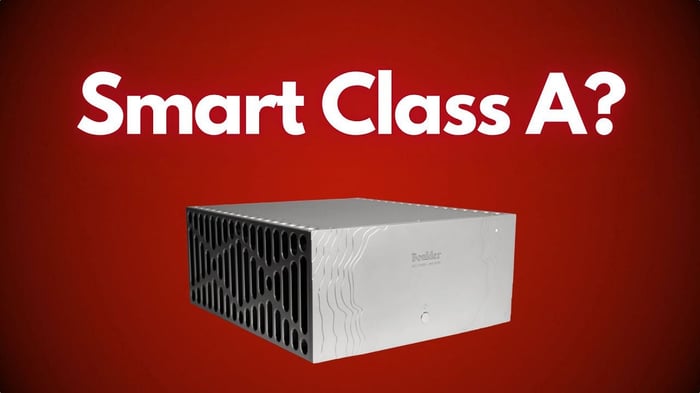
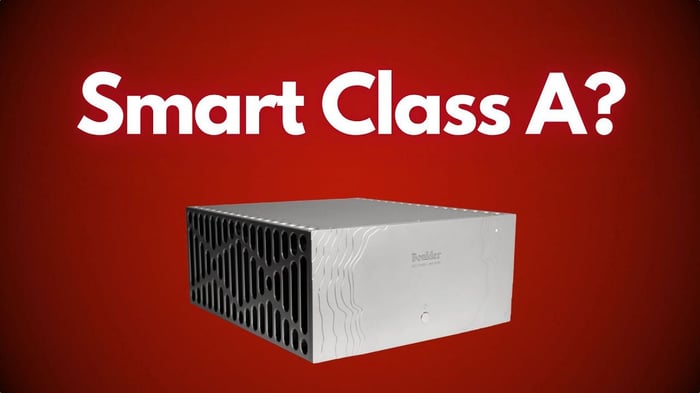
Hailing from Boulder Audio amplifiers, a Colorado-based company known for crafting amplifiers, preamps, and line stages with in-house parts, the 1162 represents the company’s commitment to precision and innovation. This stereo power amplifier boasts a whopping 300 watts per channel into 8 ohms continuously, with a peak punch of 900 watts into 4 ohms. It weighs a hefty 135 pounds and sits at a $45,000 price tag. For those interested, there’s also a slightly lower-power mono version and a half-power stereo variant available.
Class A amplification isn’t about efficiency—it’s about sound purity. Traditionally, class A designs burn a lot of energy as heat since they run at less than 25% efficiency. But Boulder flips the script with an ultra-high-speed bias adjustment system they call Smart Current Biasing. What does this mean in real terms? Idle power consumption is a much leaner 120 watts, so this amp stays warm, not scorching—no need to worry about it doubling as a space heater.
Class A amps often come with higher price-to-watt ratios, but if you’re like me, curious about whether class A truly has sonic advantages, the Boulder 1162 is a fascinating case study.
The Science Behind the Sound: Why Class A Matters
Amplifiers aim to produce a bigger, cleaner version of the input signal, but because their output devices (transistors, MOSFETs, tubes) are fundamentally nonlinear, distortion creeps in. Class A designs excel by amplifying signals in a way that minimizes the distortion caused during signal “handoff” seen in other amplifier classes like A/B. Boulder’s 1162, with its smart biasing, tackles distortion from the source itself, promising a linear, faithful sound despite complex engineering challenges.
Sound Quality: A Sonic Journey Through Detail and Clarity
I set up the Boulder 1162 stereo amplifier in my carefully calibrated listening room, pairing it with Perlisten S7t speakers. My digital source was Qobuz streaming through an Aurender N20 streamer and a Berkeley Audio Alpha DAC Reference Series 3P. The experience? Nothing short of revelatory.
Voicing: Walking the Tightrope Between Detail and Naturalness
Class A amplifiers often strike a delicate balance between razor-sharp detail and a smooth, natural treble. You’d think you have to choose—either clarity or smoothness—but great class A amps manage to have both. Some lean into a slightly darker presentation, but Boulder’s 1162 is different. It leans brighter than some peers like the Block Monos, offering an impressively open and clear sound that doesn’t feel harsh or edgy.
I was especially taken with the way it handled violins. Listening to Paganini’s Caprices with Duenas on DGG was a marvel—every intricate texture was present without any sharpness. The Takacs Quartet’s Bartok String Quartets similarly came alive; the viola and cello had rich warmth, while the violins were crystal clear and easy to follow. The 1162’s honesty in reproduction feels like being present at the session, even if the microphones’ close placement makes the recordings brighter than live sound.
But be warned: this amp won’t “fix” poor recordings or mask harsh digital artifacts. Instead, it reveals what’s really there, which is a refreshing approach for audiophiles who prefer transparency over digital smothering.
On a different note, the 1162 also handled edgy electro-pop like Hildur Gudnadottir’s Where to From and Rosalia’s Motomami with layered complexity and energy. It respected the recording’s intent—no smoothing, no hiding—just pure, exciting sound.
Bass: The Perfect Balance of Warmth and Precision
Bass reproduction on the 1162 is a fascinating mix: detailed yet warm, never thin or bloated. On Explosions in the Sky’s American Primal, the bass had deep subterranean impact without losing grip or becoming muddy. This bass grip felt natural, not the forced "audiophile effect" some amps chase. Still, the amp isn’t a magic bullet for speaker or room flaws—it’s a partner for well-set-up systems.
Transparency and Dynamics: A Balanced Sonic Canvas
The 1162 strikes me as an amplifier that excels in transparency and dynamics while maintaining tonal naturalness. On Annahstasia’s Tether, her voice was so lifelike it felt like she was right there in the room. The acoustic guitar carried a warm, realistic body tone. Compared to other class A amps like the Block Monos, which prioritize tonal naturalness, the 1162 tilts toward transparent clarity.
For context, heavyweight amps from CH and Soulution 727 amplifier push transparency further, but at significantly higher price points. More budget-friendly amps like the PS Audio BHK M600 monoblock power amplifiers series offer enjoyable transparency but a rung below the 1162. Constellation’s Revelation amps provide a slightly different flavor—less transparent but more tonally beautiful with the right speakers.
Speaker matching, as always, matters. The Boulder 1162 pairs brilliantly with a range of expensive speakers, including Magico S2 and S3, Wilson Watt/Puppy and Sasha, and YG Vantage 3. Of course, these amps and speakers shine brightest in dedicated, acoustically treated rooms with top-tier sources.
Imaging: Floating Instruments in Perfect Space
Imaging is where the 1162 really shines. It excels at preserving phase information and low noise, crucial for creating a 3D soundstage. When conditions are right, instruments and voices float beautifully in space, detached from the speakers. Front-to-back layering, particularly on the Takacs string quartet recording, was startlingly vivid.
While some amps costing significantly more might offer slightly more expansive soundspace, the difference is subtle—so subtle you’d need direct comparisons to notice. Overall, spatial presentation is a genuine strength here.
Testing Across Eras: Timelessness in Sound
Audio recording quality and style have evolved over the decades, and it’s important to see how an amp handles music spanning eras. The 1162 passed this test with flying colors. Often, transparency-focused amps struggle with older recordings, but the Boulder reveals what’s on the tape without harshness or muddiness.
I listened to an eclectic mix—from Thelonious Monk’s Misterioso (1958), T-Rex’s Electric Warrior (1971), Supertramp’s Breakfast in America (1979), to The White Stripes’ Elephant (2003). Each recording retained clarity and dynamic range, with the amp handling power surges effortlessly.
Of course, some lo-fi recordings like Lush’s Gala (1990) resist “fixing,” but the 1162’s honesty makes you appreciate what’s really there.
Summary: The 1162’s Winning Formula
The Boulder 1162 strikes a masterful balance between detail and beauty, delivering an abundance of sonic information without sacrificing naturalness. It navigates the trade-off between musical insight and listenability better than most amps I’ve heard.
If you’re considering pairing it with high-end speakers, Magicos and Wilsons are excellent matches despite their differing characters. Remember, in this realm, we’re talking small differences—but those nuances mean everything to discerning listeners.
“The 1162 delivers so much sonic insight in the upper midrange and treble regions… without a sense of stridency or edge.”
— Boulder 1162 Stereo Amplifier Review
FAQ
- What is the power output of the Boulder 1162?
The amplifier delivers 300 watts per channel continuously into 8 ohms, and up to 900 watts peak into 4 ohms. - How does Boulder’s Smart Current Biasing affect the amplifier’s efficiency?
It reduces idle power consumption to about 120 watts, making the amp warm but not overly hot, improving on traditional class A inefficiency. - Which speakers pair well with the Boulder 1162?
It works well with various high-end speakers such as Magico S2/S3, Wilson Watt/Puppy and Sasha, and YG Vantage 3. - Is the Boulder 1162 suitable for poor or poorly recorded music?
No, it reveals the recording’s reality without masking faults, making it best for well-recorded and high-quality music. - How does the 1162 perform in terms of imaging?
It excels at creating a spacious soundstage with clear front-to-back layering and well-defined instrument placement.
Elevate your listening space with a stunning album cover poster that matches the elegance of your Boulder 1162. Browse our collection at Architeg Prints and bring your favorite music moments to life on your walls.
 | DISCOUNTGET 30% OFF*Use code on your next order:
|
* This post may contain affiliate links, meaning we earn a commission if you make a purchase through these links, at no additional cost to you.