Butthole Surfers: When Their Name Shocked and Their Music Defied Limits


 See more Architeg Prints stories on Google.
Butthole Surfers: When Their Name Shocked and Their Music Defied Limits
Relive the wild legacy of Butthole Surfers, the Texas punk pioneers whose shocking name and chaotic shows broke underground barriers and reached mainstream heights.
A Psychedelic Reunion Sparks Nostalgia and Mayhem
It’s a buzzing night on September 23, 2025, at the iconic Egyptian Theater in Hollywood. Imagine a whirlwind of psychedelic noise and unhinged energy unleashed by none other than the reunited Butthole Surfers. Their first live show in eight years kicks off with “Cherub,” a raucous blend of art-punk melody and feedback straight from 1984’s underground noise scene. Frontman Gibby Haynes paces anxiously, his manic laughter amplified through a megaphone, while co-founder Paul Leary bends over his guitar, coaxing out layers of maximal dissonance.
The atmosphere is electric — a celebration not only of the band’s return but of a rebellious spirit that has inspired generations. The crowd is a vibrant mix of die-hard fans, fellow musicians from the punk underground, and curious newcomers. They have gathered for the premiere of Butthole Surfers: The Hole Truth And Nothing Butt, an outrageous and revealing documentary that charts the band’s insane highs, hilarious antics, and poignant lows.
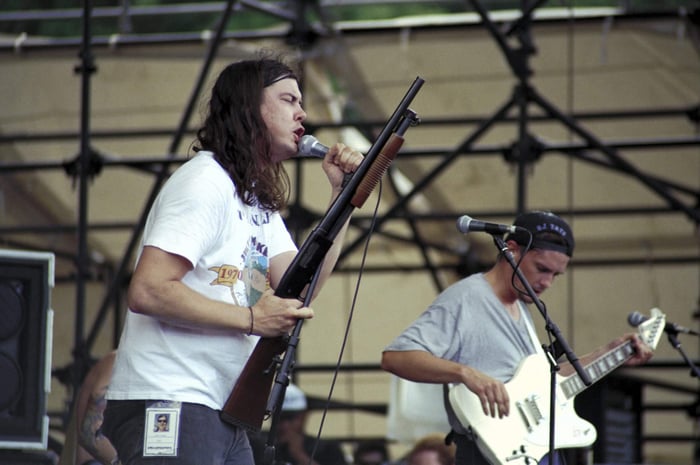
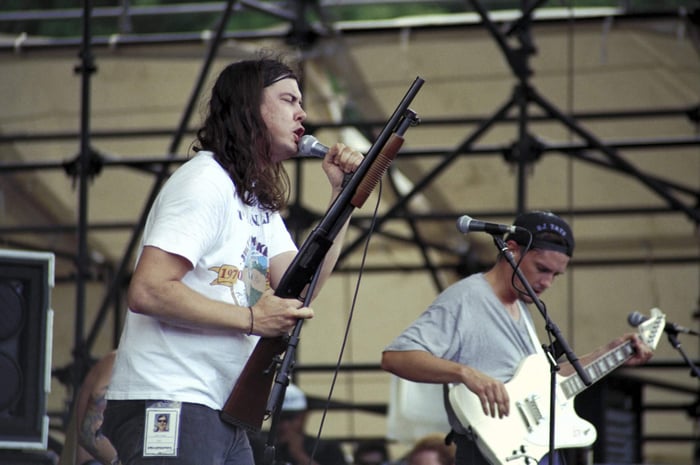
Gibby Haynes and Paul Leary (without shotgun) of the Butthole Surfers playing Lollapalooza, 1991. (Photo by Steve Eichner/WireImage via Getty Images)
Band members Haynes, Leary, drummer King Coffey, and bassist J.D. Pinkus were scheduled only for a post-screening Q&A with director Tom Stern, but instead ended the night with an unexpected blast of live music — possibly their last hurrah in this form.
“We were not philosophical,” Paul Leary reflects from his Austin home months later. “We were into randomness and just letting things happen and let the chips fall where they may. We didn’t think about things too much. We’re not smart people, so thinking about things wasn’t going to help us.”
From Bohemian Beginnings to Cult Punk Icons
The Butthole Surfers’ origin story is as chaotic and colorful as their sound. Starting out in Texas clubs and shuffling through van tours that tested their endurance and sanity, the band lived on the edge—sleeping on floors, sneaking into motel showers, and scavenging for leftovers at diners. Their dedication to doing things their own wild way quickly became legendary.
During their first trip to Los Angeles in 1982, they crashed at SST Records, the home turf of Black Flag, whose absence allowed the Surfers to occupy Henry Rollins’ famously smelly bed beneath a desk. Gibby recalls witnessing the infamous Go-Go’s performance at the Starwood nightclub, where the crowd showered the band with spit — a true testament to the abrasive punk scene.
King Coffey joined the lineup in 1983, just in time to lay down drum tracks for their debut studio album, Psychic… Powerless… Another Man’s Sac. Coffey had already been hooked by their distinct “weirdo vibe” — punk in spirit but utterly unbound by punk conventions.
“They are some of the sharpest, most intelligent people I’ve ever met, but they’re also hysterical,” Coffey says.
Gibby Haynes insists that the Butthole Surfers weren’t just another punk band — they were an attitude. “Yes, we were punk rock. We were confrontational, but more internalized. We were aggressive on stage, but we weren’t challenging anybody.”
A Friendship Forged by Art, Absurdity, and Texas Roots
Before the chaos erupts onstage, Paul Leary’s story as a young adult was far more grounded. Working at a lumber yard and dreaming of accounting, his life took a wild turn after meeting Gibby Haynes at Trinity University in San Antonio. Their shared passion for the absurdist Dada art movement, punk rock, and Texas legends like Roky Erickson and Willie Nelson sealed the deal. Though Paul hadn’t seriously played guitar in years, the idea of starting a band with Gibby was irresistible.
“We didn’t want to get paid. We wanted to be weird as shit,” Gibby says with a smile. “It’s really a question of art versus music, and we were artists at heart.”
The band’s lineup evolved with memorable characters like Kathleen Lynch, who danced nude onstage channeling a punk Stacia from Hawkwind’s ’70s shows, and Teresa Taylor (aka Teresa Nervosa), who pounded tribal rhythms alongside Coffey and became a Gen-X icon after her appearance in Richard Linklater’s Slacker.
Their unhinged sound and wild live shows inspired everyone from Kurt Cobain to The Flaming Lips. Gibby fondly recalls a chat with Dave Grohl, joking about the longevity of albums and how “every band has got three albums, and that’s it.”
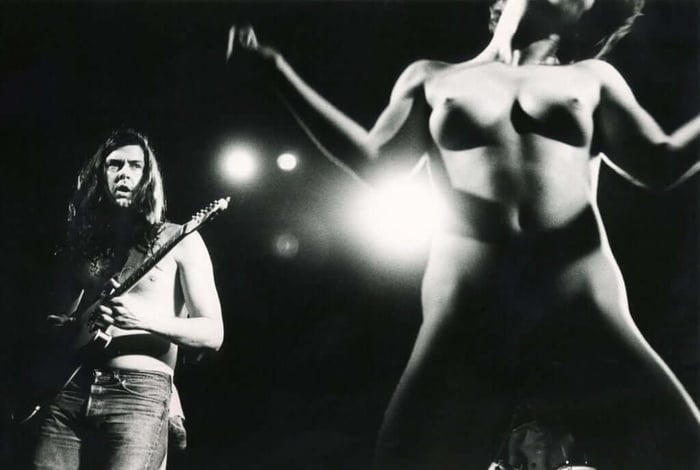
Gibby and Kathleen Lynch culturally enrich a Belgian audience with a Buttholes show in 1988. (Photo by Gie Knaeps via Getty Images)
From Underground Rebels to Major Label Surprises
The Butthole Surfers’ anarchic energy caught attention beyond the underground after their participation in the inaugural Lollapalooza tour of 1991. With Nirvana's meteoric rise opening doors for alternative rock, Capitol Records reached out.
Paul Leary recalls his disbelief: “Holy crap, I thought I was on Candid Camera or something. That’s the Beatles and Frank Sinatra and Grand Funk Railroad. The thought of Butthole Surfers being on Capitol Records was a gas.”
Working with Led Zeppelin’s John Paul Jones producing their major label debut marked new creative heights. The band famously smoked pot on the roof of Capitol Records Tower until the company president put a stop to it. Their second album for Capitol, Electriclarryland, spawned the Top-40 hit “Pepper,” which became their breakthrough into mainstream consciousness.
Gibby laughs remembering the moment: “Paul comes up to me and goes, ‘This is our radio song.’ And I was like, ‘Yeah, for sure, dude.’”
Their appearance on David Letterman’s late-night show also helped introduce the band’s famously provocative name to the broader public — a rare moment of "Butthole" spoken on network TV.
“We knew we were weird, but we also had a deep-down fantasy of being a pop band,” Paul admits. “We just wanted to forge our own niche into the pop world.”
The Struggles Behind the Scenes and the Road Ahead
Despite their major label success, tensions arose. A fallout with Capitol Records delayed their next release for five years. Gibby’s life was becoming more complicated, marked by partying with friends like Johnny Depp and Ministry’s Al Jourgensen, and battling a notorious drug problem.
The band’s subsequent album, Weird Revolution, was released on Hollywood Records, but under pressure to alter their original sound — a wrench in their artistic freedom. Fans can now finally experience the band’s true vision with the release of the long-lost album After the Astronaut.
Health issues have also slowed Paul Leary down. Chronic pain from years of onstage antics, including his trademark high kicks during “Sweet Loaf,” has led him to semi-retirement, although he’s still laid down some guitar work for a Perry Farrell project. His happiness now takes priority.
“Touring with the Butthole Surfers would definitely mess with his happiness,” Drummer King Coffey states simply.
Meanwhile, Gibby has found his own peace but remains creatively inspired. He’s developing solo shows blending light projections, movies, and electronic sounds, though he admits, “I can’t play a fucking instrument, but I’m a goddamn creative genius.”
The Butthole Surfers’ Enduring Influence
From their incendiary live shows featuring fire, exploding stuffed animals, flashing lights, nude dancing, and wild visuals, to their Top 40 radio success and cultural impact, the Butthole Surfers remain a singular force in alternative music.
Their ability to balance chaos with artistry, shock with sincerity, and underground grit with mainstream success is a testament to their unique vision and unrelenting spirit. For fans and newcomers alike, their story is a wild ride through punk’s unpredictable heart.
FAQ
- How did the Butthole Surfers get their name?
The band chose a provocative and shocking name to reflect their confrontational and absurdist attitude, aiming to challenge social norms and spark curiosity. - What was unique about their live shows?
Their concerts were legendary for chaotic elements like fire, exploding stuffed animals, nude dancers, flashing strobe lights, and bizarre film clips, creating a sensory overload experience. - Which song brought them mainstream success?
“Pepper” from their Electriclarryland album became a Top-40 hit and gained heavy MTV rotation, marking their breakthrough to a wider audience. - What is After the Astronaut?
It’s a long-buried album recently released, featuring original versions of songs that showcase the band’s intended sound before label interference. - Are the Butthole Surfers still touring?
Currently, they are not active as a full touring band due to health and personal reasons, though Gibby Haynes is exploring solo performances.
For those who want to keep the Butthole Surfers’ wild spirit alive in their own space, shop your favorite album cover poster at our store here. It’s a perfect tribute to a band that remains unforgettable.
 | DISCOUNTGET 30% OFF*Use code on your next order:
|
* This post may contain affiliate links, meaning we earn a commission if you make a purchase through these links, at no additional cost to you.