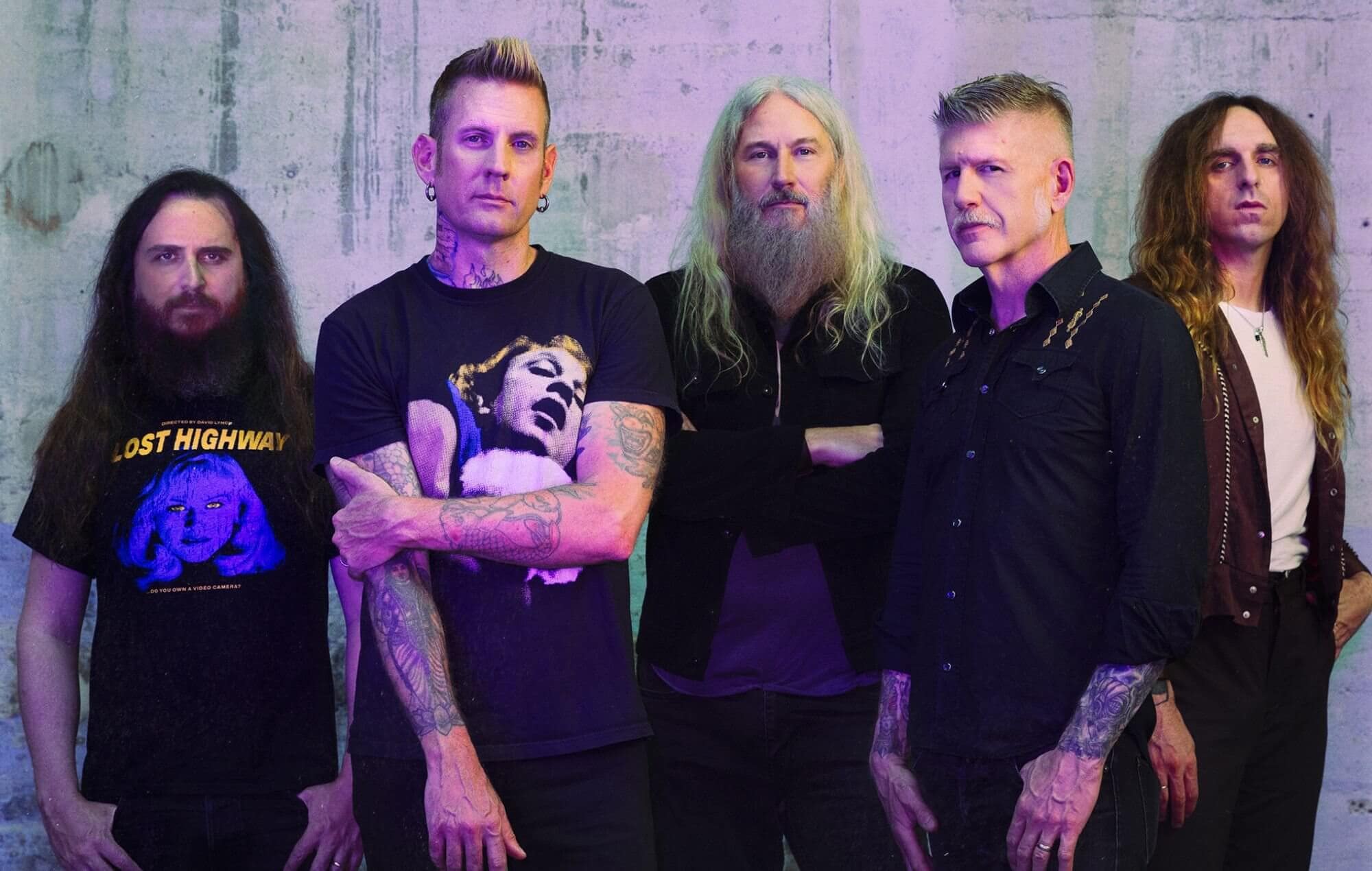
Caleb Shomo on Pure Ecstasy, Self-Love, and Finding Freedom



Caleb Shomo on Pure Ecstasy, Self-Love, and Finding Freedom
Caleb Shomo opens up about Beartooth’s Pure Ecstasy, coming out, self-acceptance, and the patience it took to finally choose joy.
A New Chapter for Beartooth
Some albums feel like collections of songs. Others feel like someone finally opening a locked door. For Caleb Shomo, Beartooth’s Pure Ecstasy belongs firmly in the second category—a record shaped by painful honesty, emotional extremes, and the hard-won relief of becoming more comfortable in his own skin.

The Columbus, Ohio metalcore band will release its sixth album on August 28 through Fearless Records. It marks Beartooth’s first release with the label and follows the singles “Free,” “Eyes Closed,” “Bullshit,” and “Pure Ecstasy.” The album also features co-writing and production from Jordan Fish, formerly of Bring Me The Horizon.
Since Shomo started Beartooth in 2012, the group has built a reputation around punishing post-hardcore riffs, enormous choruses, and lyrics that don’t politely knock before entering the room. From the debut album Disgusting through 2020’s Below, the songs often confronted depression, suicidal thoughts, and the suffocating feeling of being trapped inside your own head.
The 2023 album The Surface began turning toward self-love, although cautiously—as if the idea still felt unfamiliar in the hand. Beartooth also started weaving brighter, more accessible pop instincts into its heavy foundation. With Pure Ecstasy, that contrast becomes even sharper.
From Soul Classics to Thrash Metal
The album’s emotional push and pull can also be heard in its musical DNA. Shomo says he drew inspiration from soul legends, metal staples, and pop’s most theatrical moments while shaping the record’s sound.

“I’ve been listening to a lot more soul—Al Green, Aretha Franklin—and one of the biggest influences was Prince,” Shomo explains. “On the metal side, I’ve been obsessed with thrash and Metallica records, and you hear that all over the riffs.”
That combination gives Pure Ecstasy plenty of room to swing between bruising heaviness and glossy release. Earlier Beartooth material leaned more heavily on hardcore groups such as Every Time I Die, Stray From The Path, and The Chariot. Shomo says his recent listening habits pushed him further toward traditional metal, particularly when it came to the guitar work.
Then there’s pop. Naturally.
The song “I Made It” was heavily influenced by Michael Jackson’s “Man In The Mirror” and the pop sound of the late 1980s and early 1990s. Shomo describes the album as a deliberate emotional journey: it begins with the darkest and heaviest song sonically, before ending with its brightest, most pop-driven moment.
He wanted the record to contain “no middle ground”—an all-or-nothing separation between despair and joy. That bold structure mirrors the personal story underneath the riffs.
Choosing to Speak on His Own Terms
When Beartooth released “Free” in February, Shomo stepped away from social media after receiving homophobic abuse connected to his appearance in the music video. When he returned, he announced the album and upcoming UK shows before publicly coming out as a “proudly gay man.”
He told fans that speculation about his personal life had reached a point where he felt compelled to set the record straight, particularly before it affected the people he loved. For Shomo, speaking publicly wasn’t about creating a dramatic announcement. It was about reclaiming control of his own story.
“I hit this point in my life where I realised, ‘This is probably going to get out into the world, one way or another,’ and I wanted to get ahead of it and say it on my own terms,” he says.
There were several layers to the decision. Shomo was raised Christian, had been married for a long time, and had already spent years being open with people close to him. Still, public honesty carried its own weight.
“In short, it was just time,” he says. “I wanted to get it off my chest. And it felt great.”
When the Music Becomes the Most Honest Place
Shomo has always tried to keep his private life separate from his art, though he admits that distinction has never been especially straightforward. Beartooth is, after all, the most personal project in his life.
While discussing earlier records, he could speak openly about depression and suicidal thoughts. During the making of Pure Ecstasy, however, he realized he was editing himself whenever the conversation approached his sexuality. He was describing the songs, but not telling the whole truth behind them.
“I could feel myself watering things down, not telling the whole truth, and it got tiring,” he says. “I was like, ‘Why am I scared of opening up about this one, when I wasn’t scared of opening up about depression or being suicidal?’”
That realization became part of the album’s emotional engine. Rather than tidy away the difficult material, Shomo followed it. The record became a way to process the biggest thing happening in his life instead of pretending the music existed in a vacuum.

Working with Jordan Fish helped him reconnect with Beartooth’s core identity, too. Shomo says Fish reminded him what the band looked like from a fan’s perspective—something that can be difficult to remember when you’re buried in the machinery of writing, recording, and self-criticism.
“He reminded me what Beartooth really is,” Shomo says. “When you’re this close to it, it’s easy to put it on a pedestal and forget the root point.”
That encouragement made Shomo less afraid to discuss what he was experiencing. Just as importantly, it taught him to let supportive people into his life rather than retreating behind a wall.
“It’s super easy to shut everybody off and hole up,” he says. “But I don’t think I would have made it through this period of my life, had I done that.”
Looking Back at the Early Records
The opening lyric of Pure Ecstasy reaches back toward Beartooth’s first three albums:
“Sick and disgusting this aggressive disease / Never discussing what a word of it means”
For Shomo, the line is a promise to stop hiding from the roots of those earlier songs. He sees the records as honest accounts of being stuck, lost, and unable to confront where the pain was coming from.
He had been searching for self-love and self-understanding for years, but the process was incomplete. The earlier albums documented the struggle before he had the tools—or perhaps the readiness—to fully face it.
“It’s a statement to myself that I’m ready to truly open up,” he says.
That perspective also changes how he approaches Beartooth’s older songs live. The tracks now belong to listeners as much as they belong to him. Fans have attached their own memories, survival stories, and moments of release to those riffs, and Shomo has learned to honor that.
Still, performing them can be overwhelming. During rehearsals for the first shows after coming out, Shomo broke down while playing “Disease.” The same thing happened with “Might Love Myself” and “Riptide.”
Those moments underline how physical music can be. A song isn’t always a file stored in the past; sometimes it’s a trapdoor. One chord, one lyric, and suddenly you’re standing in the old room again.
The Advice He’d Give His Younger Self
“Might Love Myself” represented a major shift because it openly entertained the possibility of self-love. Yet even the debut album contained a small, stubborn spark of hope:
“I have one life to live / And I want true happiness”
Asked what he would tell his 19-year-old self, Shomo doesn’t offer a quick fix or a polished inspirational slogan. His answer is slower and more compassionate.
“I’ve learned over and over in this life that time is the only thing that can heal,” he says. “I needed to grow from that point to get to where I am now, and had I given up, that wouldn’t have happened.”
His advice is simple, but it carries the weight of experience:
- Be patient.
- Give yourself time and grace.
- Stay on the path.
- Listen to your internal compass.
- Keep doing the work.
- Don’t give up before you’ve had the chance to grow.
“The only way out is through,” Shomo says.
It’s the kind of line that might sound familiar on paper, but within the context of his story, it lands differently. The path wasn’t quick. It wasn’t clean. It involved fear, grief, honesty, and the courage to stop apologizing for an essential part of himself.

Letting Go of Old Expectations
The song “Sorry” takes aim at the lingering influence of Shomo’s religious upbringing. Although religion had not been an active part of his life for some time, he realized it still held a subconscious grip.
The song’s refusal to apologize for who he is isn’t directed only at religion. Shomo describes it as containing several different versions of “forget you”—a release aimed at every expectation, fear, and outside judgment that had kept him from accepting himself.
“It was a statement to let that stuff go and really accept who I am,” he says.
There’s a rough honesty to that kind of liberation. Sometimes healing doesn’t arrive as a serene sunrise over a quiet lake. Sometimes it sounds like a door slamming shut and a very clear “enough.”
Why the Album Is Called Pure Ecstasy
The title Pure Ecstasy became a kind of emotional manifestation. Shomo knew the album represented two opposing realities: the joy and freedom that came with finally opening up, and the intensely difficult period he had endured to reach that point.
The question was which side would receive the final word.
Would he define the experience as a life exploding into chaos, or as the moment he found the inner strength to face what he had avoided? Shomo chose the latter—not because the pain wasn’t real, but because it didn’t have to become the permanent meaning of his story.
“That choice was almost a form of manifestation,” he explains. “Which side am I going to give the ultimate power?”
For Shomo, the answer is the joy. The elation. The freedom. The possibility of looking back at this chapter not only as a crisis, but as an essential part of discovering something lasting.
“Already, in hindsight, I made the right call,” he says.
Beartooth Tour Dates
Pure Ecstasy arrives August 28 through Fearless Records. Beartooth will tour across the UK and Europe during the autumn, with dates including:
September
- September 17 – myticket Jahrhunderthalle, Frankfurt
- September 18 – Rudolf Weber Arena, Oberhausen
- September 19 – Swiss Life Hall, Hannover
- September 21 – Ancienne Belgique, Brussels
- September 22 – 013, Tilburg
- September 24 – SaSaZu, Prague
- September 25 – Uber Eats Music Hall, Berlin
- September 26 – Zenith, Munich
- September 27 – Gasometer, Vienna
- September 29 – Fabrique, Milan
- September 30 – Halle 622, Zurich
October
- October 1 – Elysée Montmartre, Paris
- October 3 – O2 Academy Brixton, London
- October 5 – O2 Academy Leeds, Leeds
- October 6 – Barrowland Ballroom, Glasgow
Pure Ecstasy sounds like Beartooth pushing toward the light without pretending the darkness never existed. Caleb Shomo’s story is a reminder that self-acceptance can take time, that old songs can change meaning, and that choosing joy is sometimes an act of defiance. Which Beartooth song has helped you stay on your own path?
FAQ
- What is Beartooth’s new album called?
Beartooth’s sixth album is titled Pure Ecstasy, and it is scheduled for release on August 28 through Fearless Records. - Who worked on Pure Ecstasy with Caleb Shomo?
Jordan Fish contributed to the album’s co-writing and production. - What inspired the sound of Pure Ecstasy?
Shomo drew from soul artists including Al Green and Aretha Franklin, Prince, thrash metal, Metallica, hardcore influences, and late-1980s and early-1990s pop. - What does the title Pure Ecstasy represent?
The title reflects the emotional extremes surrounding the album: the painful period Shomo experienced alongside the freedom, elation, and joy that came from opening up about who he is. - Where will Beartooth tour during the album cycle?
Beartooth will tour across the UK and Europe in September and October, with dates in cities including Frankfurt, Brussels, Berlin, Paris, London, Leeds, and Glasgow.
Bring the emotional energy of Beartooth home with a favorite album cover poster from Architeg Prints. It’s a warm, visual way to keep the music—and the memories it carries—close by.
 | DISCOUNTGET 30% OFF*Use code on your next order:
|
* This post may contain affiliate links, meaning we earn a commission if you make a purchase through these links, at no additional cost to you.