EAT E Glo SB and CB: Tube Phono Preamps with Balanced Connections for Audiophiles


 See more Architeg Prints stories on Google.
EAT E Glo SB and CB: Tube Phono Preamps with Balanced Connections for Audiophiles
Experience pristine vinyl playback with the balanced tube phono preamps EAT E Glo SB and CB, designed for the discerning audiophile.
Introducing EAT’s New Tube Phono Preamps: E-Glo CB and E-Glo SB
If you’re like me, vinyl is more than just music — it’s a ritual, a warm embrace of analog sound. That’s why the latest from European Audio Team (EAT) caught my ear: two fresh tube phono preamps, the E-Glo CB and E-Glo SB, have entered the scene. These beauties are built for high-end vinyl setups, boasting full-size chassis, discrete circuitry, and independent channel design. Plus, they offer a wealth of customization to perfectly match your cartridge.
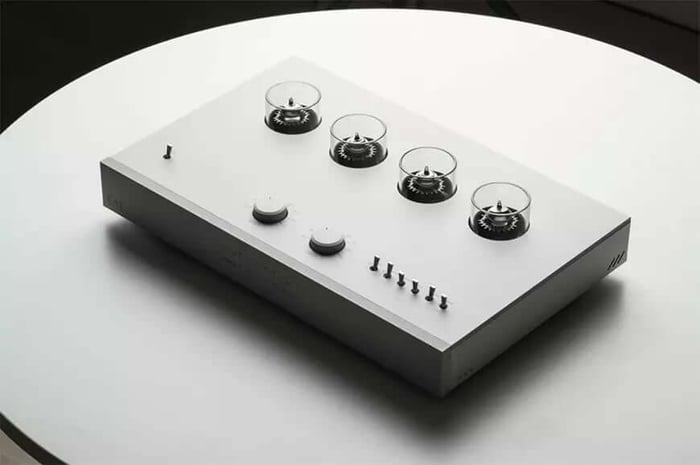
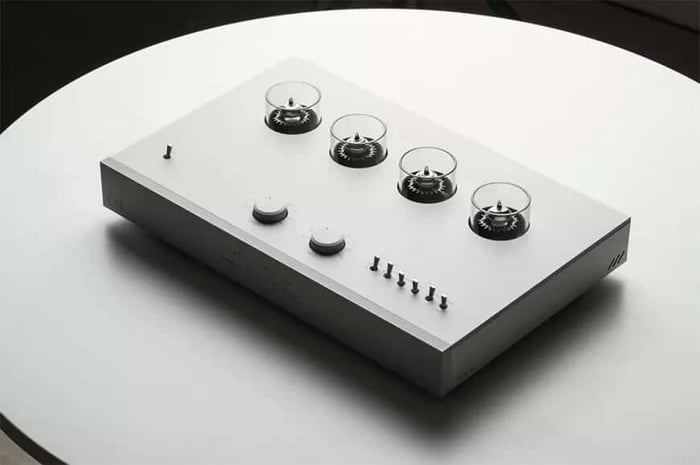
These two new models bridge the gap between EAT’s compact Petit B and the flagship E-Glo FB. They feature a trio of amplification stages, discrete components (no integrated operational amplifiers here!), combined active and passive RIAA equalization, and dedicated DC servo circuits to reduce output offset. For vinyl lovers who crave tonal purity and detail, it’s like a dream come true.
Balanced Inputs and Discrete Amplification: Precision in Every Detail
Let’s dive into the guts of these preamps, shall we? The first amplification stage uses three discrete semiconductor circuits: two handle the positive and negative phases of your precious signal, while a third sums them to cancel out noise and interference. This stage also tackles the high-frequency part of the RIAA equalization curve.
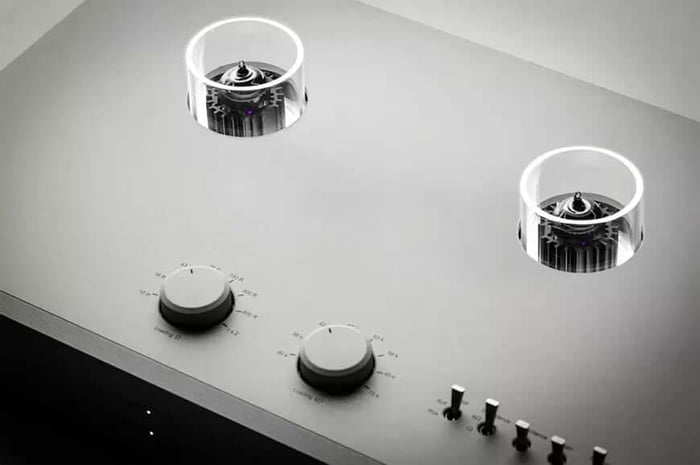
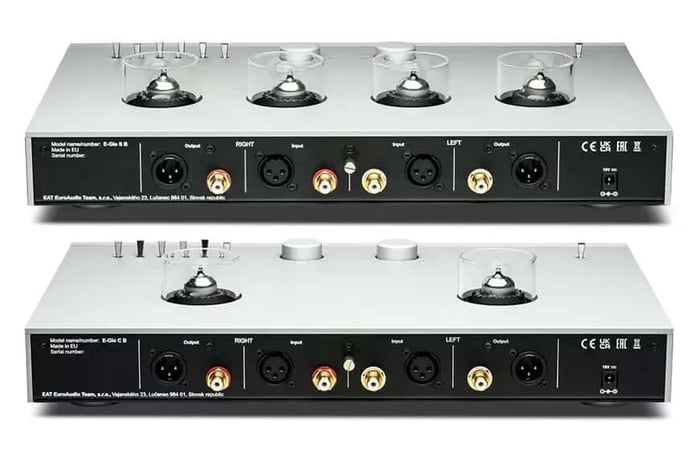
For the MC cartridge fans, EAT smartly includes balanced XLR inputs — a feature that’s gold for very low output cartridges. Meanwhile, unbalanced RCA inputs work well for both MM and MC cartridges. What’s really cool is you can output your signal simultaneously through both XLR and RCA outputs. The balanced connection isn’t just a fancy add-on; it’s crucial for squeezing every bit of detail out of those ultra-delicate MC cartridges.
E-Glo CB: The Hybrid Single-Ended Tubed Powerhouse
The EAT E-Glo CB is a hybrid single-ended design using two ECC83S vacuum triodes alongside a transistor. This setup handles the low-frequency part of the RIAA equalization and controls a switchable infrasonic filter. After passing through the balanced input stage, the signal converts into an unbalanced one, with the balanced output re-established at the final stage.
This model is perfect for those who appreciate the warmth of tubes but want a little transistor precision thrown in for good measure.
E-Glo SB: A Step Closer to the Flagship Experience
Then there’s the EAT E-Glo SB, edging closer to the flagship’s architecture. Its second amplification stage is a fully symmetrical tube circuit featuring two ECC83S triodes and a pair of E88CC tubes. This design keeps the balanced signal processing intact throughout much of the signal path, preserving clarity and separation.
The preamp’s gain and RIAA circuits employ top-tier polypropylene capacitors made from semi-crystalline hydrocarbon dielectrics — audiophile candy ensuring transparency and minimal coloration.
If you’re chasing that flawless vinyl experience, this model’s architecture will surely tick those boxes.
Adjustability and Technical Specs: Tailored for Your Cartridge
Both E-Glo CB and SB come loaded with adjustable parameters designed to tailor the sound to your cartridge’s unique personality:
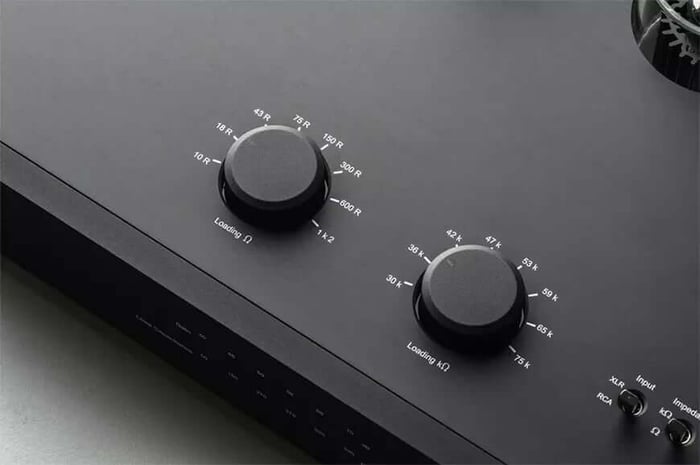
- MM cartridge load resistance: Adjustable from 30 to 75 kΩ
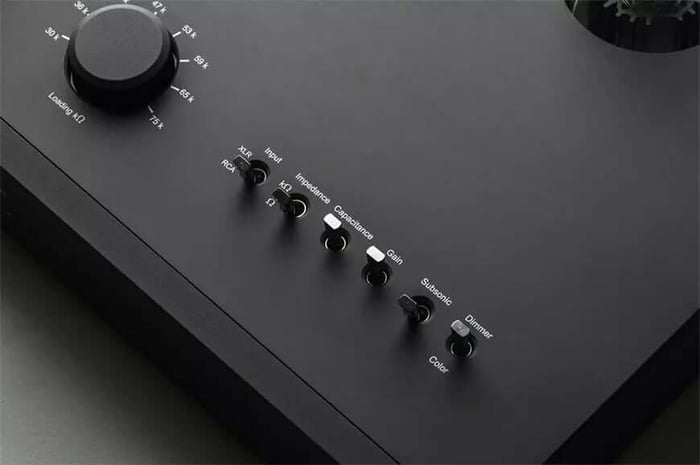
- Capacitance: From 50 to 620 pF
- MC cartridge load resistance: From 10 Ω to 1.2 kΩ
- Gain settings: Six options — 40, 45, 50, 55, 65, and 70 dB. Using XLR outputs adds an extra 6 dB gain!
Both preamps feature a switchable infrasonic filter that cuts off frequencies below 20 Hz with a steep 18 dB/oct slope. This filter is a lifesaver against turntable rumble or low-frequency noise.
The accuracy of the RIAA equalization is a tight ±0.5 dB from 20 Hz to 20 kHz — impressive for any phono preamp aiming for transparent, faithful vinyl playback.
In terms of size, both models measure 395 × 86 × 262 mm. The E-Glo CB weighs in at 5 kg, with the E-Glo SB just a bit heavier at 5.1 kg. Power comes from an external 18 V supply, keeping the sensitive phono amplification circuitry far from the hum of a power transformer.
Pricing and Final Thoughts
The EAT E-Glo CB is priced around $4,599 USD, while the more advanced E-Glo SB commands approximately $6,250 USD. For vinyl enthusiasts who want to elevate their listening ritual with a tube phono preamp that offers balanced connections, discrete amplification, and extensive tuning options, these models are truly worth considering.
“Balance in this design isn’t just a connection type; it’s a philosophy of reducing noise and preserving the signal’s integrity.”
— European Audio Team
FAQ
- What is the main difference between the E-Glo CB and E-Glo SB?
The E-Glo CB uses a hybrid single-ended tube-transistor design, while the E-Glo SB employs a more advanced symmetrical tube circuit with additional tubes for a more balanced signal path. - Can these preamps handle both MM and MC cartridges?
Yes, both have RCA inputs compatible with MM and MC cartridges, and balanced XLR inputs specifically advantageous for low-output MC cartridges. - How adjustable are the load settings for cartridges?
MM cartridge load resistance can be set between 30 and 75 kΩ, capacitance from 50 to 620 pF, and MC load resistance from 10 Ω to 1.2 kΩ, allowing fine-tuning for optimal sound. - What is the purpose of the infrasonic filter?
It removes very low-frequency noise below 20 Hz, such as turntable rumble, protecting your audio from unwanted distortion. - Does the phono preamp come with an internal power supply?
No, it uses an external 18 V power supply to isolate sensitive audio circuits from transformer noise, enhancing sound purity.
Looking to bring the timeless vibe of classic vinyl to your space? Shop your favorite album cover poster at our store and complement your listening experience: Architeg Prints.
 | DISCOUNTGET 30% OFF*Use code on your next order:
|
* This post may contain affiliate links, meaning we earn a commission if you make a purchase through these links, at no additional cost to you.