Exotica’s Enduring Appeal: Why This Timeless Sound Still Captivates


 See more Architeg Prints stories on Google.
Exotica’s Enduring Appeal: Why This Timeless Sound Still Captivates
Exotica music’s timeless charm continues to enchant listeners with its unique blend of tropical vibes and post-war escapism.
A Sonic Time Machine to Mid-Century Tropical Escapes
If you’ve ever found yourself unwinding with a classic cocktail, accompanied by the soothing sounds of rustling palms and distant bird calls, then you’ve dipped your toes into the world of exotica. This captivating genre, emerging in the mid-20th century, remains a curious and delightful musical adventure—part nostalgia, part sonic escapism. It’s the perfect soundtrack for anyone who dreams of a faraway island getaway without ever leaving their living room.
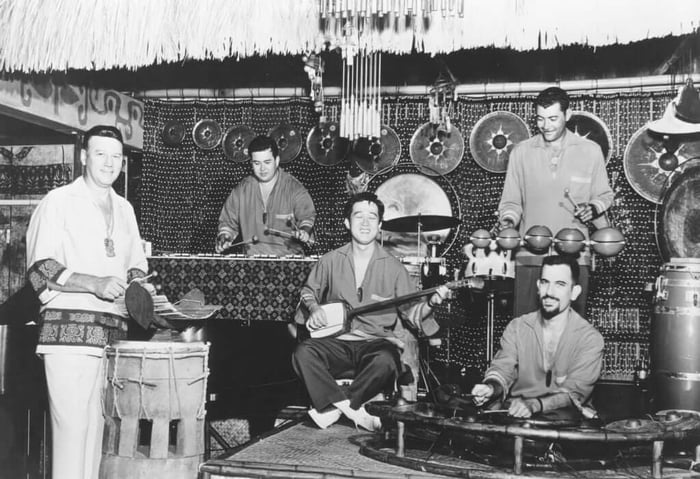
Exotica isn’t just music; it’s a cultural artifact, quintessentially American, blending jazz, Latin rhythms, and Pacific Island influences with a quirky twist. The genre’s pioneers—Martin Denny, Arthur Lyman, and Juan García Esquivel—crafted soundscapes filled with bird calls, shimmering vibraphones, and playful stereo panning that made you feel like you were right there under the tiki torches.
Among the landmark albums, Les Baxter’s Ritual of the Savage (1952) stands out as a foundation stone, while Martin Denny’s Quiet Village (1959) remains a monumental classic that defined the lush, mysterious atmosphere exotica conjures.
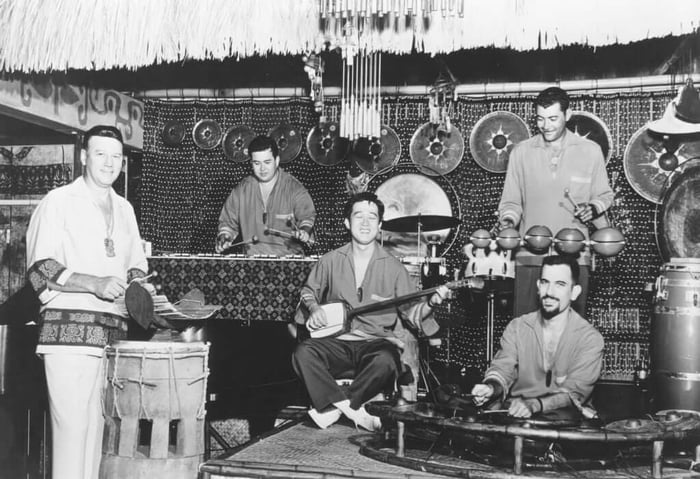
Exotica pioneer Martin Denny and his groovy band. (Photo by Michael Ochs Archives via Getty Images)
From Mid-Century Magic to ’90s Revival and Beyond
But like many musical trends, exotica’s heyday was cut short by seismic cultural shifts—namely the British Invasion. By the time The Beatles were rocking the world, exotica had slipped quietly into the background. Yet the genre’s fate wasn’t to disappear forever. Enter the ’90s—a decade of ironic revivalism and rediscovery.
Sub Pop’s signing of Combustible Edison, a band named after a retro cocktail, sparked a short but enthusiastic resurgence of exotica. Their 1994 debut album I, Swinger mixed kitsch with sophistication, reminding a new generation just how fun and fresh this style could still feel. The ’90s revival may have been brief, but it planted seeds for future explorations.
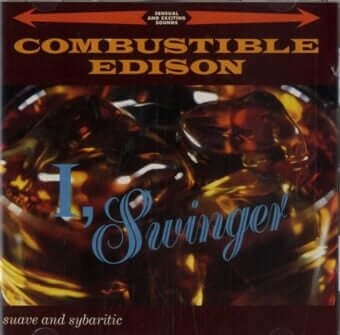
The 1994 debut album I, Swinger by Combustible Edison, blending kitsch and cool.
Modern-Day Exotica: A Cultural Cocktail Stirred Anew
Fast forward to today, and exotica has blossomed once again—this time with fresh eyes and ears. Bands like the Waitiki 7 and Tikiyaki Orchestra harness the genre’s eclectic roots and playful spirit, delivering performances that celebrate both hi-fi recording quality and dynamic live shows.
Hailing from Hawaii, Randy Wong of Waitiki 7 explains how the band formed in Boston over 20 years ago, eager to bring the “pop sound” of Hawaiian music history to new audiences. Their initial gigs at tiki bars in New England surprised even them with the warm reception exotica received far from its tropical origins.
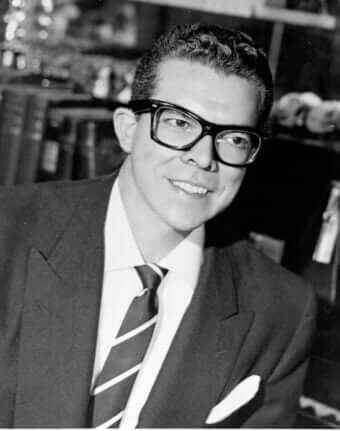
Juan García Esquivel, exotica’s colorful maestro. (Photo by Michael Ochs Archives via Getty Images)
Inspired by tiki culture guru Otto Von Stroheim, Jim Bacchi launched Tikiyaki Orchestra in 2004. Their debut album StereoExotique (2007) poured a potent musical cocktail that mixed classic exotica with modern twists. Since then, they’ve released multiple albums and even a DVD, proving the genre’s staying power.
Waitiki 7’s music has roots in “hapa haole” (half Hawaiian, half foreign) traditions with a jazz-infused flair. Their pianist, Zaccai Curtis, brings Afro-Cuban rhythms to the mix, while percussionist Augie Lopaka Colón, Jr. carries the legacy of Martin Denny’s sidemen. In 2025, they released both a live and a studio album, perfectly balancing originality and nostalgia.

Zaccai Curtis, pianist blending Afro-Cuban heritage into exotica. (Photo by Jack Vartoogian via Getty Images)
The Heart of Exotica: Escapism and Pleasure
So what keeps exotica alive and thriving across decades? Randy Wong offers a clear insight: “It came out of the post-World War II travel phenomenon. Everyone wanted to escape.” The music taps into that universal desire to leave behind the stresses of everyday life and drift into an exotic wonderland.
Jim Bacchi echoes this sentiment simply: “Tiki offers the ultimate form of escapism.”
FAQ
- What defines exotica music? Exotica blends jazz, island sounds like bird calls, vibraphone melodies, and wide stereo effects to create lush, tropical soundscapes.
- Who were the pioneers of exotica? Martin Denny, Arthur Lyman, and Juan García Esquivel are often credited as the genre’s founding artists.
- Why did exotica decline after the 1960s? The rise of rock ‘n’ roll and the British Invasion shifted popular music tastes away from exotica’s lounge and tiki bar vibe.
- What sparked the exotica revival in the ’90s? Bands like Combustible Edison and a renewed interest in retro culture revived exotica, blending irony with genuine appreciation.
- How is modern exotica different? Today’s artists fuse traditional exotica elements with contemporary jazz, Afro-Cuban rhythms, and original compositions, emphasizing both live and recorded sound quality.
Ready to bring a splash of exotica’s tropical charm into your daily life? Browse and shop your favorite classic album cover posters to decorate your space with timeless vibes at Architeg Prints. It’s like a mini island getaway for your walls!
 | DISCOUNTGET 30% OFF*Use code on your next order:
|
* This post may contain affiliate links, meaning we earn a commission if you make a purchase through these links, at no additional cost to you.