Large Canvas Wall Art for Living Room Ideas


 See more Architeg Prints stories on Google.
Table of Contents
- Why Large Canvas Wall Art Works in a Living Room
- Best Styles of Large Canvas Wall Art for Living Rooms
- How to Choose the Right Canvas Size for Your Living Room
- Wall Art Placement and Hanging Tips
- Modern Wall Art Decor Ideas for Every Living Room Style
- Where to Buy Inexpensive Large Wall Art for Your Living Room
The best large canvas wall art for a living room is a piece you enjoy looking at, sized to the furniture below it. Above a sofa, a useful starting point is artwork—or a group of pieces—spanning about two-thirds to three-quarters of the sofa's width. Choose a subject you love, test the dimensions on the wall, and then decide whether a gallery wrap or framed canvas suits the room.
You don't need to redecorate everything around one picture. A calm abstract, a favorite album cover or a colorful retro design can give an otherwise ordinary corner a sense of purpose. This guide walks through the style choices, sizing and placement that make the difference.
By Valeriy Bagrintsev · Published by Architeg Prints.
Why Large Canvas Wall Art Works in a Living Room
A substantial canvas gives the room a clear place for your eye to settle. That helps when a wall above the sofa feels disconnected from the seating, or when an open-plan room needs a little definition without another piece of furniture.
Canvas also adds a physical surface: stretched fabric and a visible edge, rather than a loose sheet. A gallery wrap has no separate decorative outer frame; a framed version gives the composition a more defined outline. Neither is automatically better. Think about whether you want the image to blend into the room or stand apart from it.
The Visual Impact of Oversized Art
Scale changes how a picture reads. A simple shape or broad landscape can hold its own across the room, while a design full of fine lettering rewards a closer look. Before choosing, imagine where you will usually see it: from the doorway, from the opposite sofa or while walking past.
A large print doesn't have to be loud. Pale colors and generous blank space can occupy a wide wall quietly. If a television or fireplace already draws attention, a calmer composition on another wall may feel more comfortable than adding a second equally dramatic focal point.
How Large Wall Art Defines a Room's Personality
Start with what you want the room to feel like. A soft landscape can suggest a slower pace; a graphic movie image can make a media corner feel intentional; an album you love gives guests something personal to notice.
For unique wall art for your living room, personal meaning often matters more than novelty. A familiar design connected to a concert, a film night or a place you've visited may hold your interest longer than a fashionable picture chosen only because it matches the rug.
Best Styles of Large Canvas Wall Art for Living Rooms
The most useful way to narrow your options is to look at three things: the subject, the palette and how busy the image feels. The styles below offer different ways to balance those choices. Pick the one that suits your room and your taste, rather than trying to follow every trend.
Abstract and Modern Wall Art
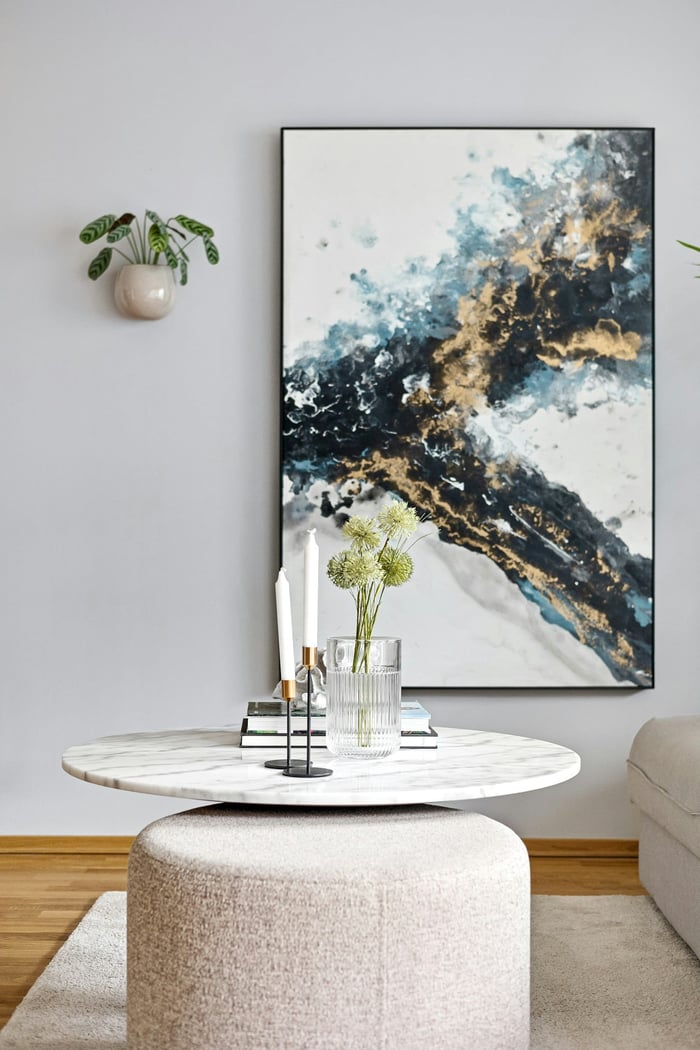
Abstract artwork works well when you want color, shape or movement without a literal subject. Large curves can soften a room with angular furniture; a spare geometric image can give a loose, comfortable seating area a little structure.
For large modern wall art in a living room, try an image that shares one accent color with something you already own. The match can be approximate. A muted rust detail might sit comfortably with a terracotta cushion, while the rest of the artwork introduces cream, charcoal or blue.
Pop Culture Prints: Music, Movies, and Anime
Pop-culture art can look at home in a grown-up living room when you choose it as thoughtfully as any other image. Consider the composition before the name: monochrome photography, a strong silhouette or a restrained palette can sit comfortably alongside contemporary furniture.
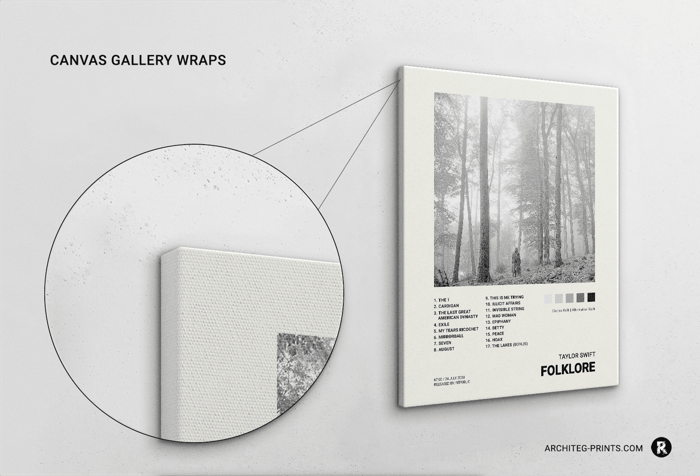
For example, our Taylor Swift Folklore print pairs a forest image with an album layout and offers canvas formats. Its quiet tones suggest one approach for a neutral reading or listening corner. A Jaws design takes a more graphic direction for a film-focused room. Check the selected product's canvas and size options before ordering.
Vintage and Retro Art Prints
Retro artwork can add character beside timber furniture, leather seating or a favorite secondhand lamp. Look for colors that feel at ease with those materials: warm cream, faded red, olive or deep blue, for example.
Be selective about how much of the room follows the same era. A vintage-inspired image with modern furniture can feel collected rather than themed. If the design has simulated wear or aged-paper textures, inspect the preview so you know those details are intentional.
Colorful Statement Pieces for Bold Living Rooms
Large colorful wall art for a living room works best when its strongest colors have somewhere to go. Repeat one of them in a small object or textile, then allow the others to remain mainly in the picture. That gives the art a connection to the room without requiring matching accessories everywhere.
Check your favorite image in daylight and under the lamps you use at night. Your screen and room lighting can make colors look different. If the sofa and rug already have strong patterns, try a canvas with larger, simpler forms so the wall doesn't become another area of fine detail.
How to Choose the Right Canvas Size for Your Living Room
Measure the furniture first, then the usable wall space. Saatchi Art's home-buying guide suggests starting at roughly two-thirds to three-quarters of the furniture's width. Treat that as a design guide, not a rule every room must obey.
For an 84-inch sofa, the calculation gives a combined artwork width of about 56–63 inches. A single portrait canvas measuring 24 × 36 inches is only 24 inches wide, even though its taller dimension sounds substantial. You could test three 18-inch-wide pieces with two 2-inch gaps: 18 + 18 + 18 + 2 + 2 = 58 inches.
That example shows why the best extra large wall art for a living room isn't always one enormous canvas. A coordinated arrangement can provide the width you need while using sizes that are easier to find and rearrange.
Measuring Your Wall the Right Way
- Measure the furniture width. Use the full sofa or console, not just the space between its cushions.
- Mark the available wall area. Account for lamps, switches, doorways, windows and anything else that should remain accessible.
- Check width and height separately. Confirm which dimension is horizontal in the artwork's intended orientation.
- Make a full-size template. Use paper, or painter's tape suitable for your wall finish, to outline the proposed outer dimensions.
- View it from your usual seats. Leave the template in place long enough to notice whether it crowds a lamp, feels too narrow or sits awkwardly in your main sightline.
For a framed canvas, ask whether the listed dimensions describe the canvas or the complete framed object. The outer frame adds to the space occupied. Product mockups help you imagine a design, but furniture in a mockup is not a reliable measuring tool.
Standard vs. Extra Large Canvas Sizes Explained
There is no universal cutoff for “large” or “extra large.” A 24 × 36-inch portrait can be substantial on a narrow wall and look modest over a wide sectional. Use actual dimensions instead of the retailer's size label.
| Layout size | Approximate metric size | A useful placement to test |
|---|---|---|
| 18 × 24 inches | 45.7 × 61 cm | A narrow wall or one piece in a group |
| 24 × 36 inches | 61 × 91.4 cm | A portrait above a compact console or beside a reading chair |
| 36 × 24 inches | 91.4 × 61 cm | A landscape above smaller furniture |
| 48 × 36 inches | 121.9 × 91.4 cm | A larger standalone composition, if the design and format are available |
These are planning examples, not a list of sizes offered by every store. The custom album cover product's Materials & Sizes section lists formats including 18 × 24 and 24 × 36 inches, alongside canvas choices. Confirm the exact combination in the product selectors; a general size list does not establish that every format is available in every dimension.
Changing a portrait design to landscape is a layout change, not simply turning the finished canvas sideways. For a wide space, choose artwork designed horizontally or plan a group of portraits. Leave room for the overall composition to breathe.
Wall Art Placement and Hanging Tips
Place the canvas in relation to the room's main furniture and sightlines. Above a sofa, center it on the seating arrangement rather than automatically on the whole wall. A narrow wall beside a chair may suit a vertical image better than the large wall you first had in mind.
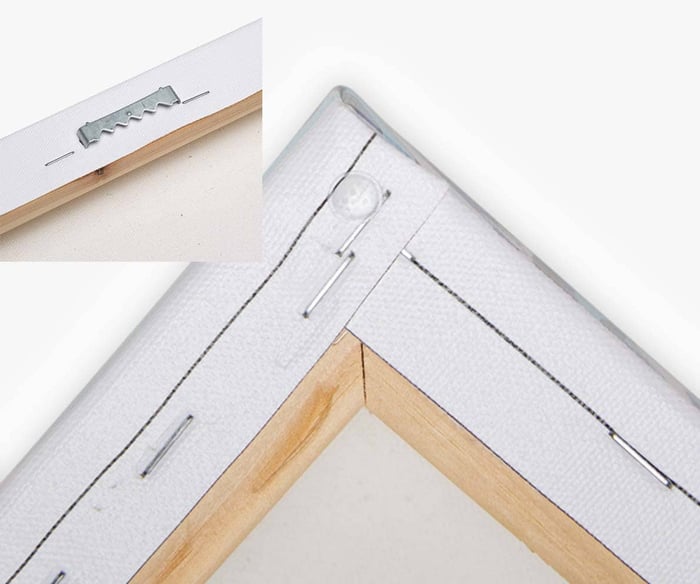
Before making holes, check the wall construction, the finished artwork's weight and its supplied hanging hardware. Use fixings rated for that wall type and load, following their instructions. Keep canvases away from direct heat and prolonged harsh sunlight, and choose a position where people won't regularly brush against them.
Solo Statement Piece vs. Gallery Wall Layout
Choose one canvas for a simple focal point; choose a group when you want flexibility or several related subjects. A single image is easier to align and leaves the room visually quiet. A pair or trio lets you build a wider composition, while a gallery wall can bring together pieces you already own.
For a group, choose one connecting feature: a palette, a consistent outer frame or a shared subject. Three unrelated images with the same color family can work; three pictures with clashing layouts, finishes and spacing are harder to make feel deliberate.
Measure the complete arrangement, including its gaps. Two portrait canvases, each 24 inches wide, with a 2-inch gap occupy 50 inches before any additional outer framing. Lay the group out on the floor first, then transfer the outer outline and fixing positions to the wall.
Ideal Height and Spacing for Large Prints
A common starting point is a picture center about 57–60 inches above the floor. Above a sofa, the relationship to the backrest matters more: Saatchi Art's living-room advice suggests a gap of around 6–8 inches between furniture and artwork. Adjust for your sofa, canvas height and seated view.
For a pair or trio, begin with roughly 2–3 inches between the outer edges and test how the group reads. Larger frames or especially busy images may need a different gap. Keep spacing intentional; a floating frame's internal gap is not the spacing between separate artworks.
Remember that the hook is not usually at the picture's top edge. Once you have marked the intended position, measure the distance from the top of the artwork to its fixing point. That final check prevents a well-planned canvas from ending up several inches too high.
Modern Wall Art Decor Ideas for Every Living Room Style
Now put the decisions together: the artwork, the furniture, the finish and the surrounding objects. You can use the same canvas in different ways depending on what you place around it. These two approaches are starting points you can adapt, rather than complete decorating schemes to copy.
Minimalist and Contemporary Spaces
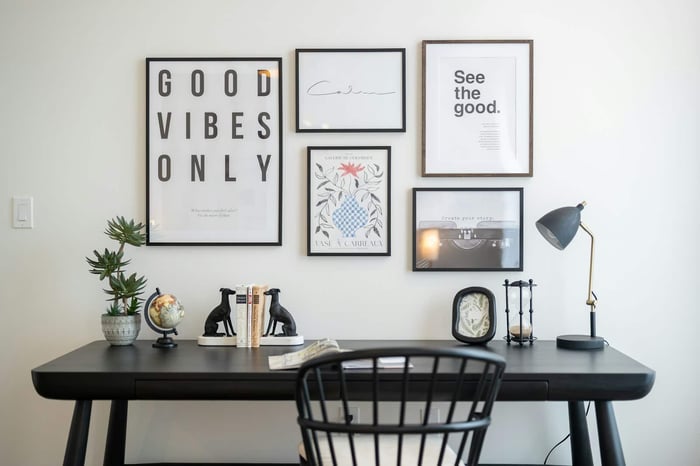
Try a monochrome image above a slim console, with one lamp and a plant beside it. Leave some clear tabletop space so the picture has room to register. In a pale room, a dark frame can echo black furniture legs or a metal light fitting without introducing another color.
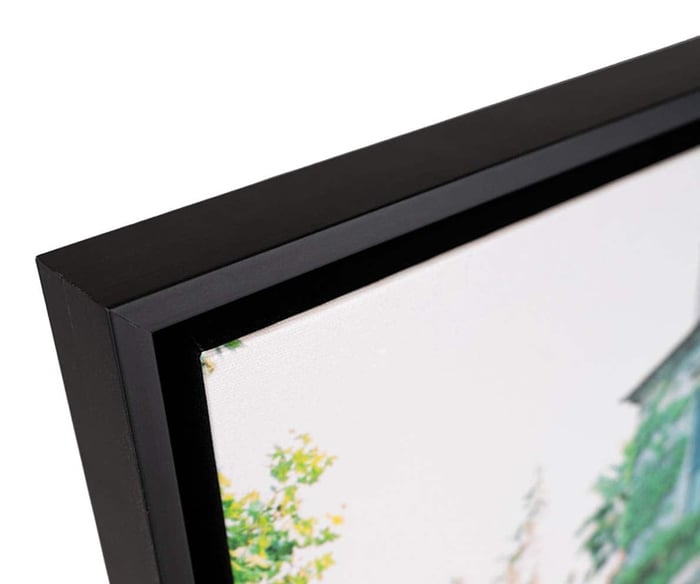
A gallery wrap keeps the outline softer; a floating frame makes it more defined. At Architeg Prints, the canvas specifications describe 400 GSM cotton gallery wraps with a 1.25-inch stretcher, plus a separate framed-canvas option. Those construction details are useful when comparing the look and depth of the finished object.
Eclectic and Maximalist Living Rooms
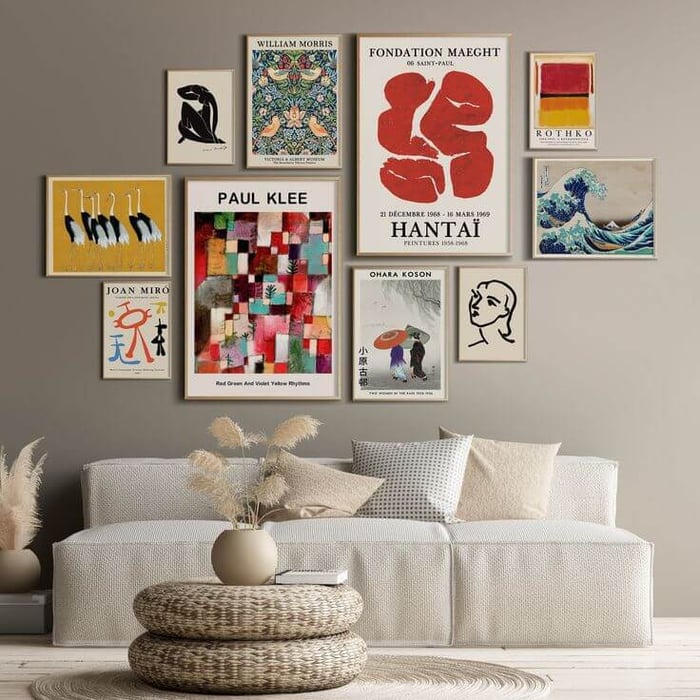
Try two related canvases above a patterned sofa, then repeat one color in a lamp or ceramic piece. Keep the area immediately around the artworks a little calmer so the arrangement remains readable among books, textiles and collected objects.
You can mix a graphic print with a softer image without matching everything. Give them a shared frame finish or align their centers. If you're adding to an existing gallery wall, photograph the current arrangement and sketch the new piece onto it before buying; you may find that the empty space needs a different shape rather than simply a bigger picture.
Where to Buy Inexpensive Large Wall Art for Your Living Room
For inexpensive large wall art, compare the finished display cost. An unframed paper poster, a stretched canvas and a framed canvas are different purchases. A low print price may still require a separate frame or stretching service, while shipping can change the total for a large item.
| Format | What you receive | What to include in your budget |
|---|---|---|
| Paper poster | A loose paper print | A suitable frame, any mounting and delivery |
| Canvas gallery wrap | Canvas stretched over an internal frame | Delivery and appropriate wall fixings |
| Framed canvas | Stretched canvas with a decorative outer frame | The full outer dimensions, delivery and installation |
| Unstretched canvas | Loose printed or painted fabric | Professional stretching and any outer frame |
If you're choosing music or film-inspired art, Architeg Prints is a useful specialist option because you can compare a design's available paper and canvas formats. Look at the selected configuration rather than assuming the lowest product-page price applies to a large framed canvas. Other routes include local print shops for artwork you already have, independent artists for original work, and homeware stores for ready-made designs.
Before ordering, confirm the size, orientation, format, outer frame dimensions where relevant, total delivered price and current processing time. Check the return conditions too, especially for a personalized order. There is little saving in a canvas that fits neither your wall nor your deadline.
Start with one wall and one picture you want to keep looking at. Make the paper template, check it from your favorite seat, and only then choose the finish. If an album or personal memory is the direction you want, our custom poster options give you a place to explore that idea without having to settle for an unrelated design.
FAQs
What size canvas should I choose above a 72-inch sofa?
As a starting point, test artwork occupying about 48–54 inches across. That can be one horizontal canvas or a group: two 24-inch-wide pieces with a 2-inch gap occupy 50 inches before any extra outer framing. Check the whole arrangement with paper templates before ordering.
Can large canvas wall art work in a small living room?
Yes, if it fits the available wall and furniture. Try one clear composition rather than several competing pieces, and leave space around it. Use a full-size template to check its effect from the doorway and your normal seating position.
Should living-room art match the sofa and rug?
It doesn't need to match exactly. A shared accent color can connect the picture to the room, while other colors or a personal subject give it character. Choose something you enjoy rather than rejecting it because every shade isn't repeated in the furniture.
Is a canvas print the same as an original painting?
No. A canvas print reproduces an image on fabric; an original painting is made directly by the artist. A print can display a painting, photograph or graphic design, so check the product description to understand what you are buying.
Does a gallery-wrap canvas need a separate frame?
A gallery wrap is stretched over an internal frame and can be displayed with its finished edges visible. A decorative floating frame is an optional outer surround. Check the selected product's construction and hanging hardware rather than assuming all canvas formats arrive ready to install.
How do I clean a canvas print?
Follow the care instructions for your specific finish. Architeg Prints advises gently wiping dusty prints or canvases with a clean, dry cloth in its Materials & Quality guide. Avoid rubbing the printed surface or adding cleaning products without the supplier's approval.
How can I compare inexpensive large wall art fairly?
Compare the same size and finished format, then include delivery, framing or stretching and the wall fixings you need. A loose paper print and a framed canvas have different costs after purchase. Select the actual product configuration before comparing its price.
 | DISCOUNTGET 30% OFF*Use code on your next order:
|
* This post may contain affiliate links, meaning we earn a commission if you make a purchase through these links, at no additional cost to you.