Linn Selekt DSM Classic Digital Network Music Player & 150 Loudspeaker Review



Linn Selekt DSM Classic Digital Network Music Player & 150 Loudspeaker Review
Experience the seamless blend of Linn’s Selekt DSM Classic player and 150 loudspeakers, showcasing precision sound and advanced digital technology.
The Audiophile’s Dilemma: Complexity or Simplicity?
When it comes to high-end audio, music lovers run the gamut from die-hard tinkerers to straightforward listeners who just want things to sound great without fussing over technicalities. I’ve been both—the eager experimenter swapping tubes and the casual fan just hitting play. Linn’s latest offerings, the Selekt DSM Classic digital network music player and the 150 floorstanding loudspeakers, find a sweet spot between these extremes. They deliver sophisticated technology designed to work effortlessly, but also invite deeper engagement for those who want to dive in.
A Legacy of Excellence: Linn's Silver Anniversary
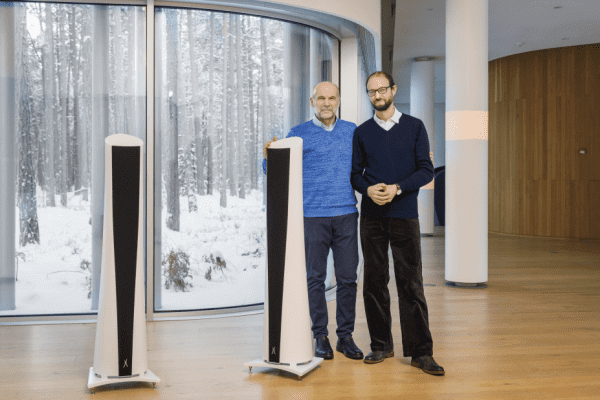
Linn, a Scottish company founded by the ingenious Ivor Tiefenbrun and now led by his son Gilad, celebrated 25 years of innovation in 2023. Their iconic LP12 turntable is legendary, and even the British royal family trusts Linn for their audio needs. What stands out about Linn is their mature, evolving product ecosystem—gear that grows with you through upgrades and thoughtful design. Many audiophiles become lifelong “Linnies” once they discover this brand.
Showcasing Flexibility: Two Versions Each of Selekt DSM and 150 Loudspeakers
Linn provided two versions each of their Selekt DSM digital music player and 150 loudspeaker, launched late last year, to demonstrate their product line's versatility. The Selekt DSM first appeared in 2018 and was updated in 2024, maintaining the same sleek form factor across all versions. Joe Rodger, Linn's Brand Manager, thoughtfully ensured the different versions come in distinct finishes to keep things clear during listening sessions.
Built for Versatility: The Selekt DSM Classic Player
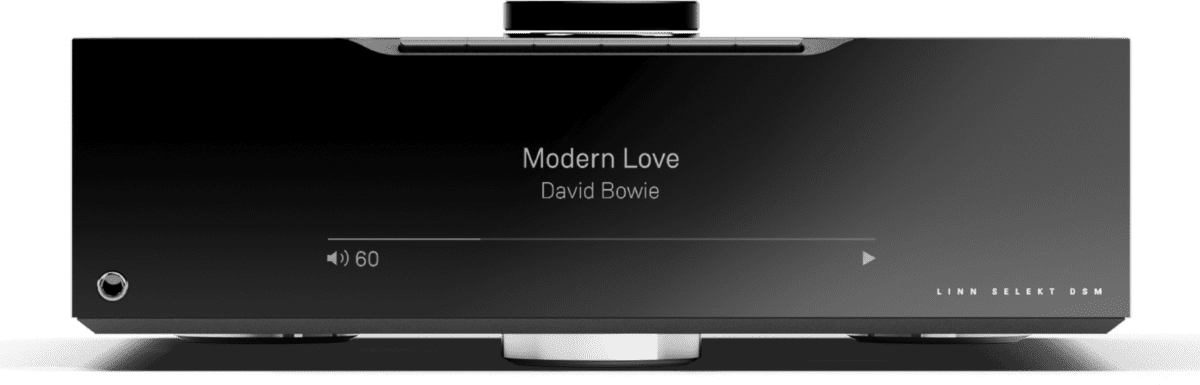
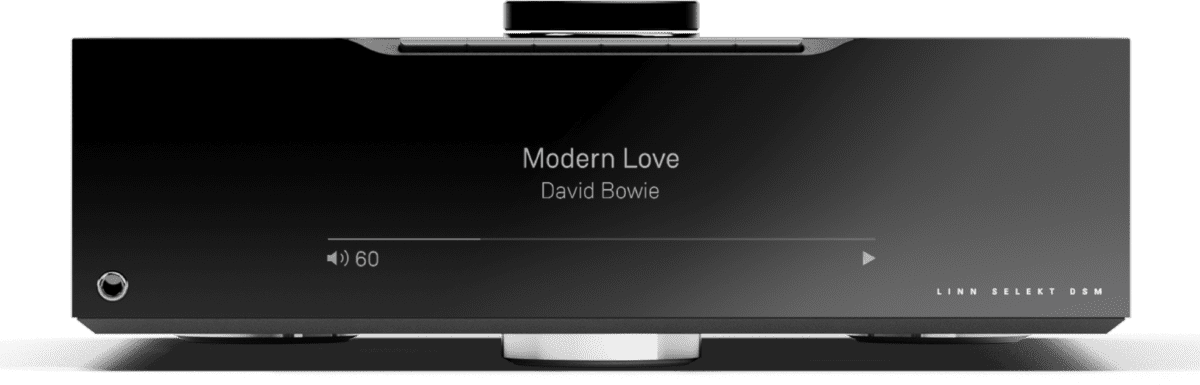
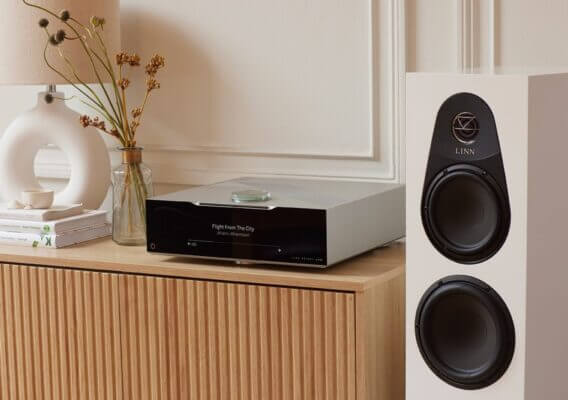
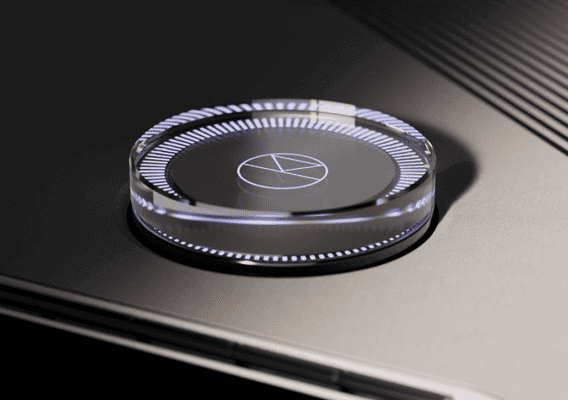
The DSM Classic is a true chameleon—it can be configured either as a line-out DAC/preamplifier or as a DAC/integrated amplifier. The top features a glowing acrylic disc that controls volume, track selection, and basic settings with a satisfying tactile feel. While it comes with a handy remote, the full power lies in Linn's app, which puts comprehensive control at your fingertips.
The front panel sports an easy-to-read screen showing the current source, stream title, artist, and digital resolution—perfectly visible from a comfortable listening spot. A ¼” headphone jack is also cleverly tucked into the corner for private listening.
Around back, the DSM Classic impresses with a plethora of inputs: mains power, Ethernet, optical, SPDIF, two phono inputs (one MM, one MC), auxiliary analog, HDMI ARC, USB-B, subwoofer outputs, ground connections, and two “Exakt Link” connectors integral to Linn’s proprietary time alignment technology. Plus, there are three slots for amplifier or DAC modules so you can customize your setup with ease.
The Magic of Exakt: Linn’s Time-Alignment Technology
If there’s one standout feature, it’s Linn’s Exakt system, introduced in 2013. This technology keeps the audio signal digital as long as possible, avoiding the pitfalls of analog conversion until the last moment. Why does that matter? Because it reduces distortion and electromagnetic interference, and enables precise, digital crossovers for each speaker driver.
The kicker? Exakt virtually eliminates phase distortion, a common issue where different frequencies arrive out of sync, causing a “smearing” effect. By applying custom time delays to each driver, Linn creates a perfectly aligned, immersive soundstage that feels startlingly natural.
Space Optimisation: Tailoring Sound to Your Room
Added to the Exakt system is Linn’s Space Optimisation algorithm, launched in 2015. Rather than using a microphone and test sweeps like most room correction software, Linn takes a detailed “modelled” input: room dimensions, window and door placements, construction materials, and even temperature and humidity. This data allows the app to fine-tune the speaker’s output below 80Hz, targeting the most problematic acoustic aberration.
This approach not only improves bass performance but ensures the music feels integrated into your space. Best of all, Space Optimisation works with hundreds of non-Linn speakers, making it a handy tool even beyond Linn’s own line.
Customizing Your System: A Computer-Like Experience
Buying a Selekt DSM is sort of like ordering a custom PC. You choose the chassis—a classic folded aluminum box or the pricier all-machined Edition. Then you specify whether you want it to act as a preamp or an integrated amplifier, how many amplifier cartridges (one to three stereo pairs) you need depending on your speaker setup, and which DAC level (Standard, Katalyst, or Organik) you prefer.
There are over 120 possible configurations, including multi-channel options! While it sounds complex, Linn’s cartridge system makes upgrades simple—just slide out the old and slide in the new using only two tools. Still, they recommend dealer installation to ensure everything runs perfectly, a promise of hassle-free upgrades that I found reassuring.
The Linn 150 Loudspeaker: Understated Elegance and Precision
The 150 loudspeaker may look modest—a 3-way bass reflex floorstander standing 39” tall and weighing about 47.5 pounds—but don’t let that fool you. With drivers built to Linn’s exacting specs by SEAS, including a 0.77” soft dome tweeter and Nextel-coated paper midrange and woofer, the 150s deliver refined, articulate sound.
The passive crossover is designed with a “separated parallel” layout, ensuring minimal interference between drivers. The bass to midrange crossover sits at 400Hz, while midrange to tweeter crosses at 2.8kHz with a steep slope for clarity. The binding posts accept banana plugs and allow easy bi-amping or tri-amping when paired with the Exakt system.
Pricing and Setup: What to Expect
The Linn 150 speakers cost $7,805 per pair regardless of configuration. The Selekt DSM Classic ranges from $13,845 for the passive setup to $25,495 for the fully loaded active system with three amplifier cartridges and Organik DACs.
Scott Bierfeldt, a Linn dealer and speaker designer, helped set up both the active and passive systems in my listening room. Initially, I planned to place them in separate rooms but quickly realized side-by-side comparison was the way to go. The room measured 15’ by 15’, with ceilings from 10’ to 11.5’, providing a good acoustic canvas.
Listening Impressions: The Active System’s Dynamic Brilliance
The active system, featuring tri-amped 150s powered by three amplifier cartridges, blew me away with its dynamic range and clarity. Tracks like Jeff Lorber Fusion’s “The Badness” and Gordon Goodwin’s big band “Backrow Politics” played loudly without strain or distortion.
Bass was tight and articulate—while not earthquake-shaking, it perfectly served orchestral and jazz music. Pipe organ pieces by César Franck and Olivier Messiaen came alive with deep, controlled lows. The system’s 100W-per-channel amplifiers handled the 4-ohm speakers effortlessly, producing a powerful yet nuanced sound.
Chamber music recordings revealed subtle tonal colors and spatial depth rarely matched. The phase coherence thanks to Exakt technology provided an immersive listening experience with great front-to-back layering and pinpoint instrument placement. Even complex pieces like Messiaen’s “Epode”—with 18 solo strings mimicking birdsongs—were clear and compelling.
Donald Fagen’s “True Companion” showcased an otherworldly soundstage, with vocals swirling around the room just as the producers intended. It was a thrilling demonstration of how technology can enhance emotion and atmosphere.
Passive System: A Strong Alternative with Room to Grow
The passive system—one amplifier cartridge and the traditional crossover in the 150s—is no slouch. It delivered satisfying sound quality with many familiar recordings holding up impressively. After multiple back-and-forth listens on challenging tracks, the passive system proved enjoyable and musically rewarding.
However, compared to the active setup, it lacked some of the three-dimensionality, detail, and bass extension. If budget is a concern, the passive system is a wise choice, especially with the ability to upgrade incrementally later on. This eco-friendly approach means fewer discarded components and a system that evolves with listeners’ preferences.
Specifications & Pricing
Linn Selekt DSM Classic Digital Network Music Player
- Type: Integrated amplifier with DAC (active and passive versions)
- Supported formats: FLAC, Apple Lossless, WAV, DSD (64/128/256), MP3, WMA, AIFF, AAC, OGG
- Power output: 50W into 8 ohms; 100W into 4 ohms
- Analog inputs: Phono MM and MC, Aux
- Digital inputs: 2x SPDIF, 2x optical, USB-B, HDMI ARC, Ethernet
- Headphone output power: 61mW/channel (16 ohms); 83mW/channel (32 ohms)
- Dimensions: 14" x 4.5" x 14"
- Weight: 23.9 lbs (active); 19.8 lbs (passive)
- Price: $25,495 (active); $13,845 (passive)
Linn 150 Loudspeaker
- Type: 3-way bass reflex
- Drivers: 0.77" Sonomex dome tweeter, 6" Nextel midrange, 7.5" Nextel woofer
- Frequency response: 38Hz–20kHz (±3dB)
- Impedance: 4 ohms
- Sensitivity: 86dB
- Dimensions: 8.25" x 39" x 11.75"
- Weight: 47.5 lbs
- Price: $7,805 per pair
"Our designers and engineers took their inspiration from high-end gaming PCs, in that the cartridges slide in and slide out easily and with only two tools—a HEX driver and a TORX driver." — Joe Rodger, Linn Brand Manager
Have you ever experienced a system that elevates your favorite tracks to a whole new level of realism? The Linn Selekt DSM Classic and 150 loudspeaker combo might just be that transformative gear for you. Whether you opt for the all-out active configuration or the more modest passive setup, Linn’s precision engineering and upgrade path offer something truly special for music lovers.
FAQ
- What is the difference between the active and passive Selekt DSM Classic systems?
The active system uses multiple amplifier cartridges with Linn’s Exakt digital crossover for superior sound and phase alignment, while the passive system relies on a traditional internal crossover and a single amplifier cartridge. - Can I upgrade my Selekt DSM Classic over time?
Yes! Linn’s cartridge design allows for easy upgrades, letting you add or replace amplifier and DAC modules as your needs evolve. - What is Linn’s Exakt technology?
Exakt keeps the audio signal digital until it reaches the speaker drivers, applying precise time delays to ensure perfect phase alignment and minimal distortion. - How does Linn’s Space Optimisation improve sound?
It models your room’s dimensions and materials, then adjusts the speaker’s output below 80Hz to reduce bass issues and improve overall integration with the room. - Are Linn 150 speakers suitable for small rooms?
Absolutely. The 150s deliver articulate bass and detailed sound without overwhelming a modest-sized room.
Ready to bring the magic of Linn’s iconic audio legacy into your home? Shop your favorite album cover posters at our store for a perfect complement to your listening setup. Explore now.
 | DISCOUNTGET 30% OFF*Use code on your next order:
|
* This post may contain affiliate links, meaning we earn a commission if you make a purchase through these links, at no additional cost to you.