Nick Cave’s Blunt Take on Russell Brand’s Christianity Conversion Book


Nick Cave’s Blunt Take on Russell Brand’s Christianity Conversion Book
Nick Cave delivers a sharp, no-nonsense verdict on Russell Brand’s new book about his dramatic conversion to Christianity.
When Worlds Collide: Nick Cave Weighs in on Russell Brand’s Spiritual Journey
I’ve been following Nick Cave’s reflections on faith and spirituality for years, so when he gave his unfiltered opinion on Russell Brand’s new Christianity memoir, I had to share it. Brand, who’s made headlines for his tumultuous personal life and recent legal battles, has penned How To Become A Christian In Seven Days, a book chronicling his radical embrace of Christianity. But Cave’s response? Let’s just say it’s as pointed as ever.
Russell Brand announced in 2024 that he was getting baptized, aiming to “leave the past behind.” The ceremony, which took place in May, was witnessed by Bear Grylls, himself a devout Christian. What makes Brand’s conversion more controversial is the timing. It came shortly after Brand was accused of multiple counts of rape, assault, and emotional abuse spanning from 2006 to 2013, allegations brought to light by a joint investigation from major outlets in 2023.
As of now, Brand is awaiting trial. In April 2025, he was charged with rape and sexual assault involving four women, with additional charges against two women added in December. Despite this, Brand has denied all allegations and pleaded not guilty.
Brand’s Book: A Tale of Spiritual Warfare and Personal Redemption?
Brand’s book How To Become A Christian In Seven Days paints a vivid picture of his journey — a dramatic pivot from what he calls ‘demonic Hollywood’ toward Christianity. The blurb highlights his “apostasy,” set against a backdrop that includes “false allegations, his son’s heart surgery, and truly jaw-dropping spiritual warfare.” It’s a narrative that tries to intertwine the personal with the spiritual, but reactions have been mixed, to say the least.
The promotional tour brought its own moments of viral attention. In a memorable interview with Piers Morgan, Brand spent almost two minutes fumbling to find a Bible passage he referenced during his court proceedings, an awkward moment that was widely shared online.
This is, hands down, the most uncomfortable two minutes I’ve watched in a long time. Russell Brand is asked to identify a Bible verse relevant to his, um, legal battles and spends a few minutes clumsily thumbing through Scripture and arrives at nothing.
— Charlotte Clymer
Adding to the controversy, Brand openly admitted on The Megyn Kelly Show to having slept with a 16-year-old when he was 30, calling the act “exploitative.” It’s a complex picture of a man grappling with his past while trying to redefine himself through faith.
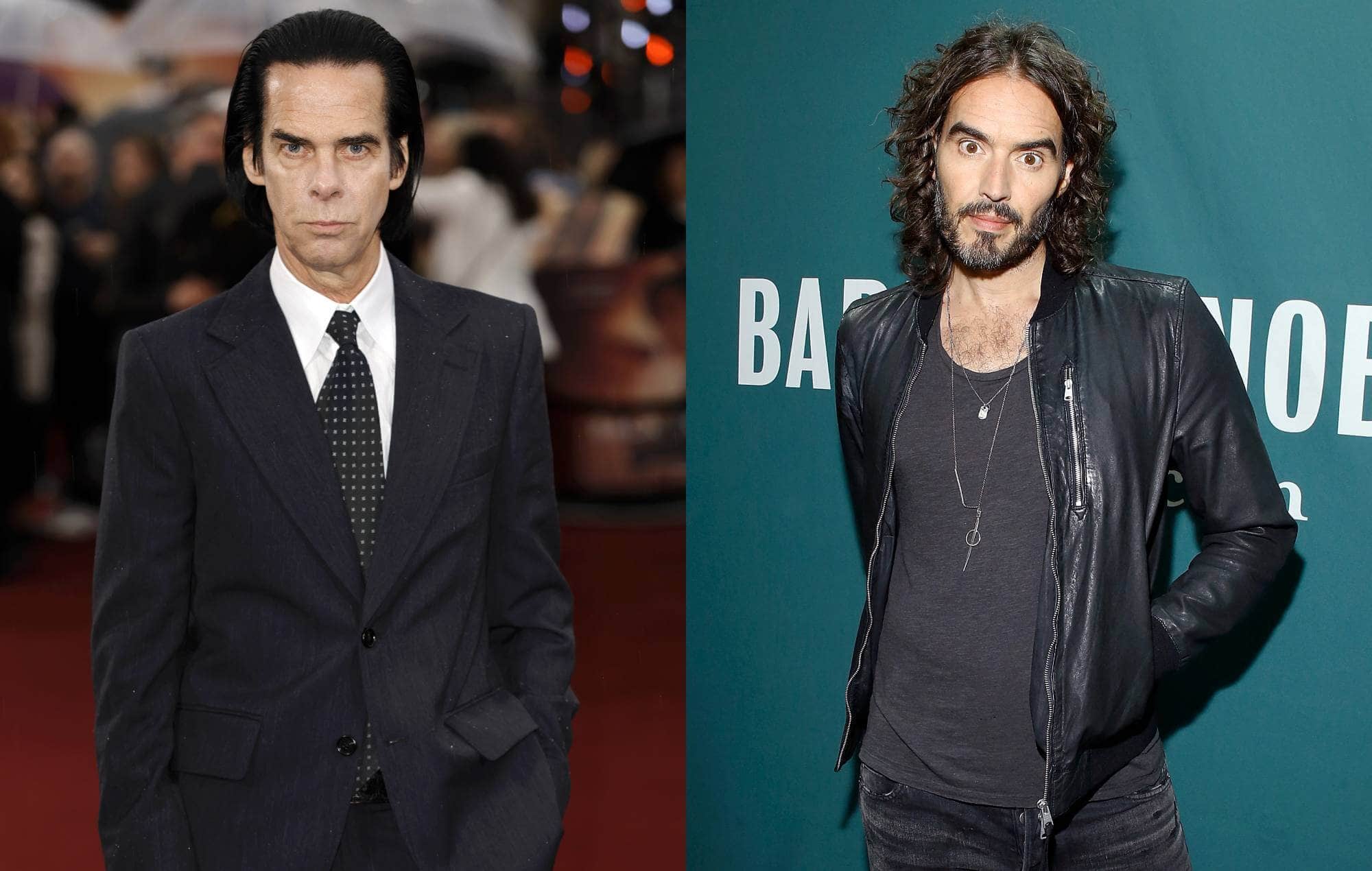
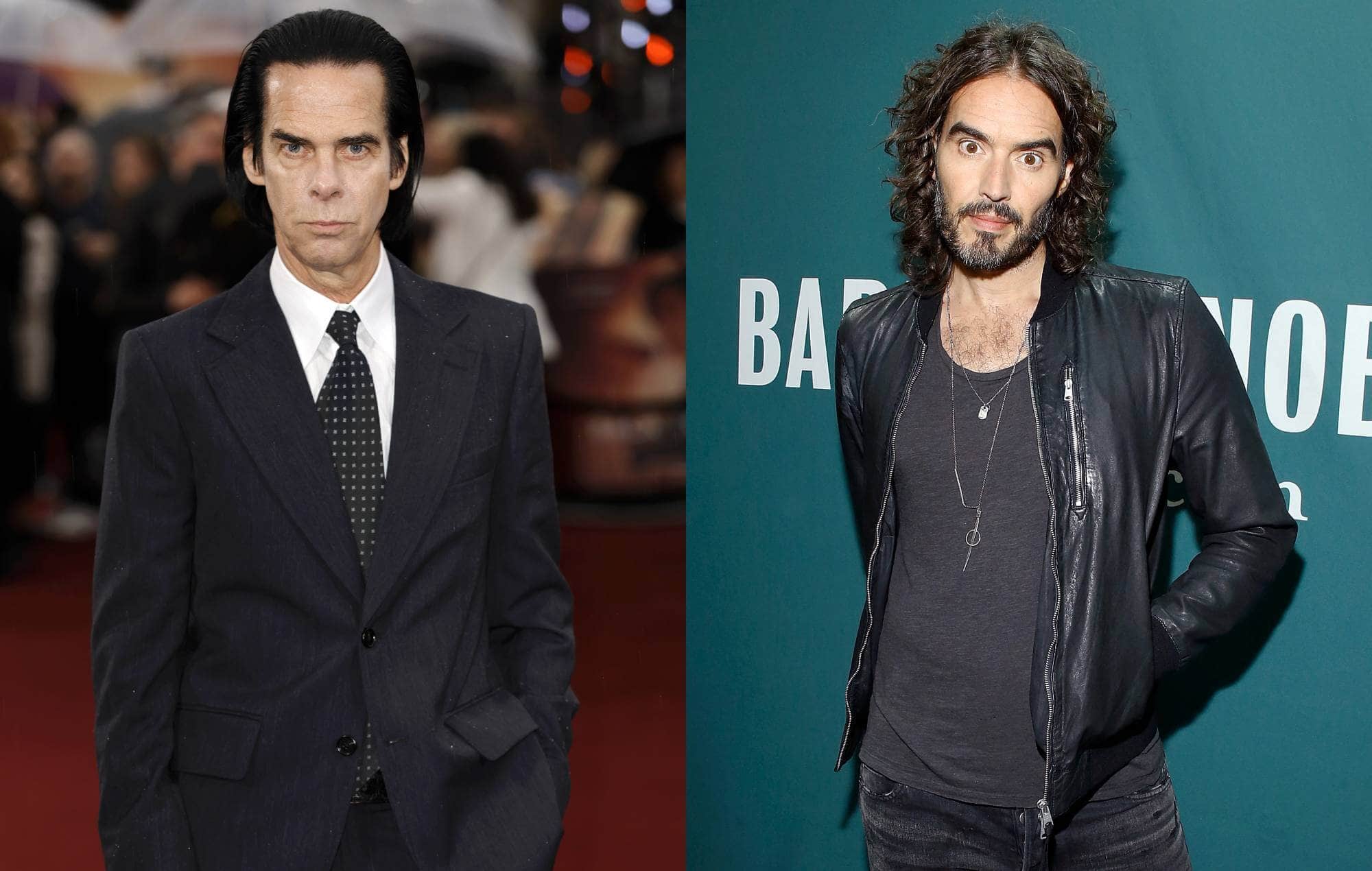
Nick Cave and Russell Brand – a collision of two very different spiritual journeys.
Nick Cave Responds: “Good for Atheism”
When a fan named Barry from London asked Cave about his thoughts on Brand’s book via Cave’s website Red Hand Files, Cave’s reply was crystal clear: “Good for atheism.”
That’s classic Cave — always candid, never sugarcoating his views. His interest in Christianity and religious themes runs deep, but it’s never blind faith. Cave has shared nuanced takes on prayer and spirituality before. In 2020, he explained that prayer isn’t confined to religion or belief:
The act of prayer is by no means exclusive to religious practice because prayer is not dependent on the existence of a subject. You need not pray to anyone. It is just as valuable to pray into your disbelief, as it is to pray into your belief, for prayer is not an encounter with an external agent, rather it is an encounter with oneself.
To Cave, prayer is a moment of self-reflection, a dialogue with your innermost self rather than a plea to an external deity. He believes it offers a chance to contemplate what truly matters in life.
The act of prayer asks of us something and by doing so delivers much in return — it asks us to present ourselves to the unknown as we are, devoid of pretence and affectation, and to contemplate exactly what it is we love or cherish. Through this conversation with our inner self we confront the nature of our own existence.
Cave on Religion, Nihilism, and Art
Nick Cave’s meditations on belief don’t stop there. In 2022, he reflected on freedom of speech within religious contexts, using Jesus as an example of someone who challenged the status quo with “terrifying and heretical ideas.” He noted that many of these once-radical ideas — love your enemy, forgive others — became foundational to modern society.
He warns against rigid thinking and reminds us that sometimes the “shocking, offending, unique idea” is exactly what the world needs.
Cave also critiques absolutism in all its forms. In 2019, he wrote about his discomfort with ideologies that claim to hold “the truth,” whether religious dogma or even atheism and “woke” culture. He champions a state of continual enquiry and uncertainty — fertile ground for creativity and songwriting.
Living in a state of enquiry, neutrality and uncertainty, beyond dogma and grand conviction, is good for the business of songwriting, and for my life in general.
His own book, Faith, Hope & Carnage (2023), dives deep into these themes. Speaking about whether art can emerge from nihilism, Cave says:
I don’t know what comes from nihilism. I don’t think art can come from nihilism at all. As soon as you start making art, you stop being a nihilist, I guess. You’re doing something, and art is in its essence good — it’s morally good.
This perspective is revealing. For Cave, art transcends the artist’s personal beliefs or flaws. He acknowledges that creators might be deeply flawed yet still produce “extraordinary music” that contributes something positive to the world.
It worries me when music is shut down... Just because the people who are making it are fucked up individuals. It’s a really interesting thing, this.
Nick Cave & The Bad Seeds: Looking Ahead to 2026
While Cave’s philosophical musings continue, the music world is buzzing with excitement for Nick Cave & The Bad Seeds’ upcoming 2026 UK and European tour. The homecoming show at Brighton’s Preston Park on July 31 promises to be a massive event, boasting a stellar lineup with The Flaming Lips, English Teacher, Cate Le Bon, and Warmduscher opening.
This is a must-see for fans craving the raw, thoughtful energy Cave and his band bring to live performances — a perfect counterpoint to the swirling debates around faith, art, and personal redemption.
Wrapping It Up: Faith, Doubt, and the Art in Between
Nick Cave’s blunt “Good for atheism” jab at Russell Brand’s Christianity conversion book cuts to the heart of a bigger conversation about faith, doubt, and the messy realities behind spiritual transformations. Brand’s journey is fraught with controversy, courtroom drama, and attempts at redemption, while Cave’s approach is contemplative, skeptical, and deeply human.
The clash of these two perspectives — Brand’s turbulent, public path versus Cave’s introspective, artistic lens — reminds us that spirituality, like art, resists easy answers.
What do you think? Can faith and scandal coexist in a story of redemption? Or is skepticism the only honest response? Let’s talk about it.
FAQ
- What is Russell Brand’s new book about?
It details his conversion to Christianity over seven days, framed against personal struggles including legal allegations and his son’s surgery. - What was Nick Cave’s reaction to Brand’s book?
Cave responded simply with “Good for atheism” when asked about the book, signaling skepticism toward Brand’s spiritual narrative. - Has Russell Brand faced legal issues?
Yes, Brand is currently awaiting trial on multiple charges of rape and sexual assault from incidents dating between 2006 and 2013, which he denies. - How does Nick Cave view prayer?
Cave sees prayer as a personal, introspective act, valuable whether or not one believes in a deity. It’s about confronting oneself and what one cherishes. - What’s Nick Cave’s stance on art and ideology?
He prefers living in uncertainty rather than adhering to rigid beliefs, finding this openness crucial for creativity and songwriting.
If you’re inspired by Nick Cave’s artistic and spiritual journey, why not bring a piece of that energy into your space? Shop your favorite album cover posters at Architeg Prints for unique, high-quality artwork that celebrates musical legends.
 | DISCOUNTGET 30% OFF*Use code on your next order:
|
* This post may contain affiliate links, meaning we earn a commission if you make a purchase through these links, at no additional cost to you.