Notes Between Notes: Your Ultimate Microtonal Music Guide



Notes Between Notes: Your Ultimate Microtonal Music Guide
Unlock the fascinating world of microtonal music, exploring unique scales and sounds beyond the familiar 12-tone system.
If you’ve ever caught the quirky performances of the Québécois duo Angine de Poitrine, then you know that microtonality isn’t just a niche curiosity—it’s a thrilling sonic adventure. Khn de Poitrine’s doubleneck guitar-bass, festooned with twice the usual number of frets, shreds the standard 12-note octave into 24 distinct quarter-tones. This doubling-up, or a “double-double” as they cheekily call it in Quebec, crafts an otherworldly soundscape that’s both weirdly cool and deeply captivating.
For music geeks like me, that’s where the real marvel lies—not just in the wild costumes or stage antics, but in how these tiny, hidden “notes between the notes” open up new dimensions for musical expression. Whether you’re a curious listener or a budding musician eager to expand your tonal palette, this guide is your gateway to the rich universe of microtonal music.
Ancient Roots: The Greek Foundations of Tonality
Stepping back in time, ancient Greek music feels like the original blueprint for the scales we use today. The very word “music” owes its origins to the Muses, daughters of Zeus, and many Western music modes still carry Greek names. Their scales, pieced together from fragmentary notations and literary descriptions, hint at sounds both familiar and hauntingly alien.
Imagine the echoes of Orpheus weaving through these modes—less a lyre’s gentle strums and more a spectral dance of quarter-tones and subtle pitch shifts. The Greeks perhaps stumbled upon what could be called a Platonic ideal of tonality, inspiring centuries of musical evolution.
Listen: For a deep dive into this ancient sound world, Petros Tabouris and his ensemble’s Fragments of Ancient Greek Music album is a treasure trove, richly imbued with those elusive microtones.
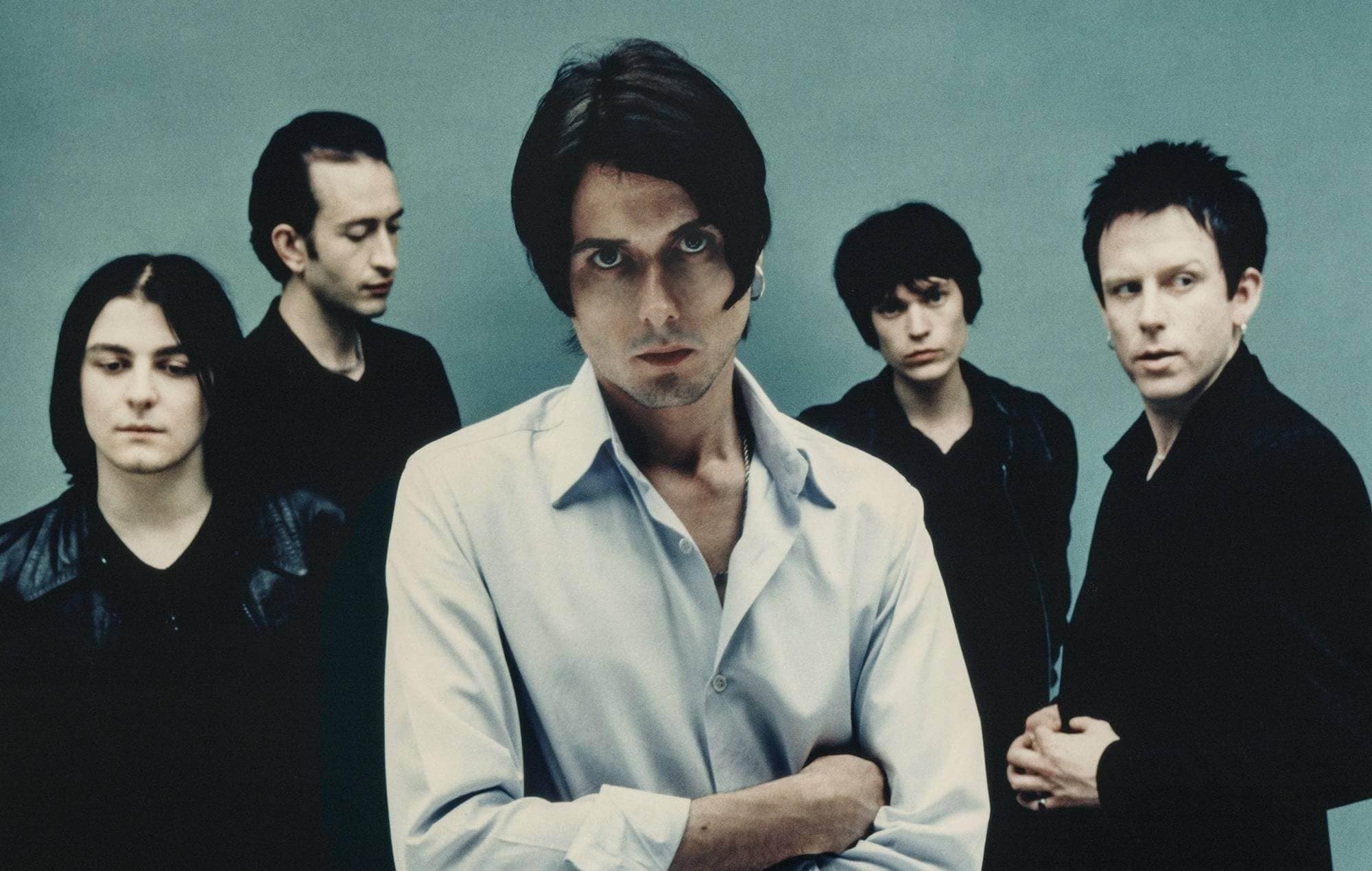
Petros Tabouris and his ensemble explore ancient Greek musical antiquity.
India’s Ragas: A Kaleidoscope of Microtones
India’s musical landscape dazzles with a system known as shrutis—22 micro-intervals within an octave, dating back more than two millennia. Here, notes aren’t fixed points but fluid entities, sliding up and down with expressive bends and melismas that convey profound emotion. If you’ve ever heard the sitar’s soulful cries in Beatles tunes or Ravi Shankar’s legendary performances, you’ve glimpsed this vast world, often simplified or stereotyped in Western ears as "mystical."
But Indian music is a sprawling universe—from the classical Hindustani and Carnatic traditions to Bollywood’s vibrant energies, and the folk melodies that still pulse through the countryside.
Watch and listen: If you know Ravi Shankar, then you owe it to yourself to meet Ali Akbar Khan and his sarod, a fretless cousin of the sitar. This classic performance with Khan accompanied by his son, tabla genius Zakir Hussain, is a masterclass in microtonal wonder.
The Maqams: Microtones Across Arabic Cultures
Arabic music often gets tagged with its famous 24-tone octave scale, but the reality is far richer and more intricate. From Morocco’s desert ceremonies to the electric beats of Syrian wedding music, maqams are complex modes that don’t just dwell in the realm of quarter-tones but explore even finer subdivisions of pitch.
These modal systems offer a palette that’s both deeply traditional and strikingly contemporary, with melodic patterns that evoke both spiritual reverence and joyous celebration.
Listen: Sampling Maqam Rast through an Iraqi ensemble led by vocalist Yusuf Omar provides a stunning introduction to these vibrant and nuanced sounds.
Gamelan: The Metallic Mosaics of Indonesia
When I first heard Indonesian gamelan, it was like discovering a whole new sonic universe made from metal bowls and xylophone-like instruments. Gamelan’s foundation lies in scales of five or seven tones per octave—far fewer than Western music—but distributed with such precision across the octave, the sound feels simultaneously minimal and kaleidoscopic.
There are two main flavors: Javanese gamelan, with its refined, courtly elegance; and Balinese gamelan, bursting with frenetic energy and metallic clashes. These intricate, interlocking rhythms and shimmering textures have inspired Western composers from Debussy to Steve Reich and even Danny Elfman.
Watch and listen: Experience a classic gamelan performance captured in Ubud, Bali, and let the hypnotic patterns sweep you away.
Harry Partch: The Maverick of Microtonality
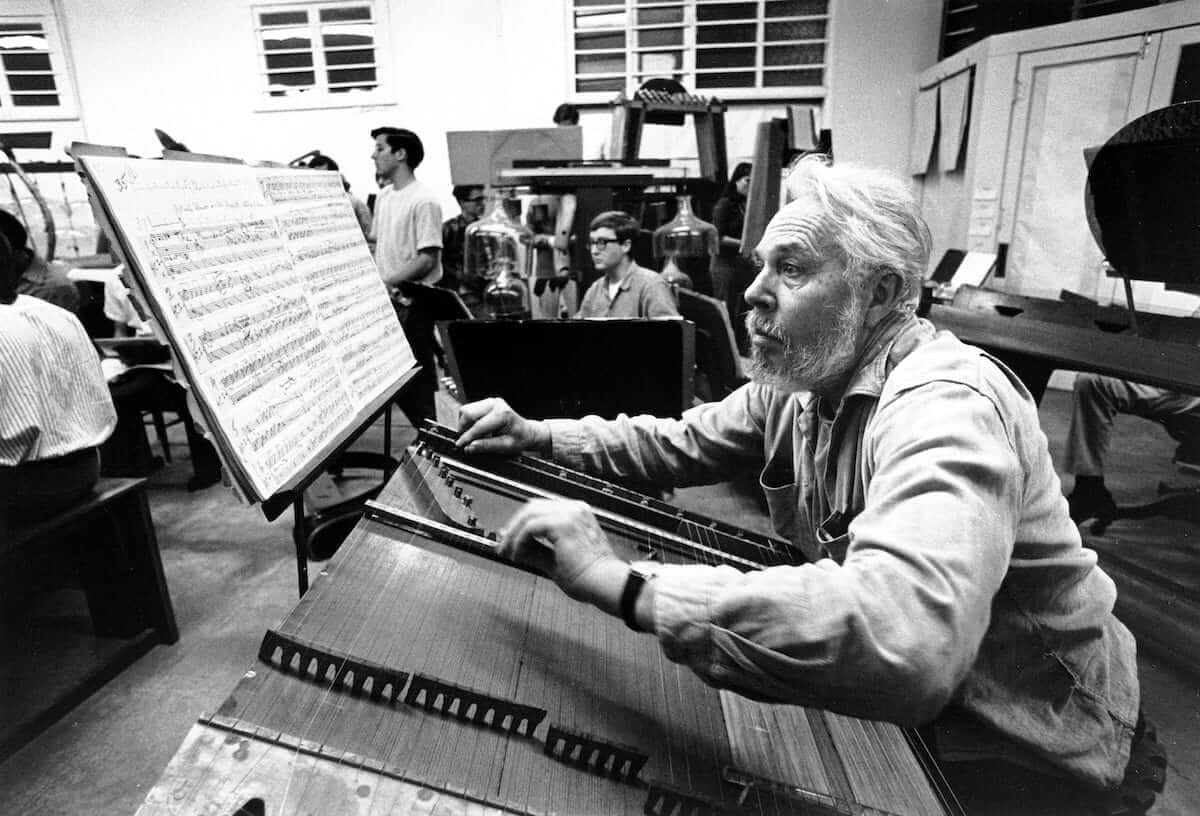
Harry Partch was the ultimate musical rebel—hopping across America during the Great Depression and rejecting the 12-tone system with a vengeance. Influenced by ancient Greek music, he invented microtonal scales with up to 43 notes per octave and built bizarre, beautiful instruments like the Chromatic Organ, the Spoils of War, and the Zymo-Xyl, which cleverly incorporated everyday objects like liquor bottles and hubcaps.
His compositions range from grand operas to intimate, poetic pieces inspired by the graffiti of hitchhikers. Though Partch didn’t find a huge audience during his lifetime—he died in 1974—today he’s hailed as a pioneering American composer who broke every rule in the book.
Listen: The 1969 album The World of Harry Partch captures his extraordinary sound world, starting with “Daphne of the Dunes,” a piece bursting with energy and microtonal magic.
Harry Partch with one of his self-created instruments.
Minimalist Microtones: The Eternal Soundscape
Minimalism and microtonality have a beautiful, intertwined history. The hypnotic layers of Terry Riley’s A Rainbow in Curved Air and John Cage’s prepared piano sonatas laid the groundwork. Yet nothing quite matches La Monte Young’s The Well-Tuned Piano—an improvisatory masterpiece exploring just intonation across hours of performance, each show an ongoing journey rather than a fixed composition.
Young’s 1960s Theatre of Eternal Music ensemble, which included a young John Cale before his Velvet Underground days, set the stage for decades of microtonal exploration. Now in his 90s, Young continues to refine his sonic experiments.
Watch and listen: A 1987 video captures Young’s performance over six and a half hours—a marathon you can dip into for a taste of eternal music.
Glorious Explorations with Gloria Coates and Modern Composers
Microtonality isn’t confined to the avant-garde or minimalists. Classical composers such as Iannis Xenakis, Karlheinz Stockhausen, Pierre Boulez, and Giacinto Scelsi pushed boundaries in their own ways. Among these, Gloria Coates stands out—a Wisconsin-born composer who lived most of her life in Germany, passing in 2023. Her music is drenched in long, slow glissandi for strings that slide hauntingly through microtonal realms, creating entrancing and sometimes disorienting soundscapes.
Her string quartets and chamber works, especially the 2025 performance of String Quartet No. 7: Angels with pipe organ accompaniment, reveal a celestial height to microtonal music’s emotional power.
Jazz Meets Microtones: Phillip Golub and Amir ElSaffar
Jazz has long flirted with microtonality, and composer-keyboardist Phillip Golub pushes this fascination further by fitting 22 notes into his octave. His album Partisan Ship opens with “Loyalty Oath,” a cascade of notes so frenetic it mirrors the manic energy of Angine de Poitrine. Golub’s band includes trumpeter Amir ElSaffar, who himself explores Iraqi maqams deeply, and violinist Layale Chaker.
Unlike ElSaffar’s ensemble that features a re-tuned piano, Golub wields a digital instrument called the Flexichord, capable of dazzling microtonal complexity. His other releases, including Loop 7 and Dream Brigade (a duo with percussionist Lesley Mok), showcase the many facets of his microtonal artistry.
Listen: Dive into “Loyalty Oath” to hear microtonal jazz at its most exhilarating.
The Lizard Wizard’s Psychedelic Microtones
Only a band as wild as King Gizzard & the Lizard Wizard could dedicate three entire albums to microtonal explorations. After teasing microtones on 2016’s Nonagon Infinity, they plunged fully into the realm with 2017’s Flying Microtonal Banana, using custom guitars and Central Asian reed instruments like the zurna. Their sound draws heavily from Turkish musical forms, resulting in a truly unique psychedelic vibe.
Flying Microtonal Banana was followed by K.G. in 2020 and L.W. in 2021, completing a trilogy of microtonal experiments. Fans include none other than Angine de Poitrine, rumored to share secret band ties! Catch them all at King Gizzard’s Field of Vision festival in Colorado this August for a wild ride.
Watch and listen: Their 2021 Melbourne concert performing the entire Microtonal Banana album is a feast for microtonal enthusiasts.

Khn de Poitrine of Angine de Poitrine performing with King Gizzard influence.
Breaking Free From the 12-Tone Cage
Microtonal music invites us to rethink our very perception of sound and scale. Once you step beyond the familiar 12 notes per octave, a universe of sonic possibilities unfolds, rich with emotion, history, and innovation. Whether it’s the steeped traditions of ancient Greece and India, the shimmering layers of gamelan, or the futuristic experiments of modern jazz and psychedelic rock, microtonality challenges our musical boundaries and sparks the imagination.
So, are you ready to explore the notes between the notes?
FAQ
- What is microtonal music? Microtonal music uses intervals smaller than the traditional half-step (semitone) in Western music, often dividing the octave into more than 12 pitches.
- Where does microtonality originate? It has roots in many global musical traditions, including ancient Greece, Indian ragas, Middle Eastern maqams, and Indonesian gamelan.
- How does microtonality sound to the average listener? It can initially sound “off” or unfamiliar but opens up rich emotional and tonal textures once you adjust your ears.
- Which modern artists use microtones? Artists like King Gizzard & the Lizard Wizard, Phillip Golub, and jazz trumpeter Amir ElSaffar incorporate microtonality into their work.
- Are microtonal instruments common? They’re specialized and often custom-made, such as Harry Partch’s unique creations or the double-fretted guitar used by Angine de Poitrine.
If you’re captivated by the idea of microtones and want to celebrate your favorite artists, why not shop for album cover posters that capture their unique spirit? Check out our collection at Architeg Prints to bring a piece of this sonic world into your home.
 | DISCOUNTGET 30% OFF*Use code on your next order:
|
* This post may contain affiliate links, meaning we earn a commission if you make a purchase through these links, at no additional cost to you.