OneOdio Studio Max 2 Review: Wireless DJ Headphones with Pro Features


 See more Architeg Prints stories on Google.
OneOdio Studio Max 2 Review: Wireless DJ Headphones with Pro Features
Explore the versatile OneOdio Studio Max 2, wireless DJ headphones designed for musicians and producers needing reliable, low-latency sound.
Music lovers, grab your favorite tea and settle in! Have you ever wondered if there’s a pair of headphones out there that fits equally well for the laid-back listener and the hardcore home musician mixing tracks in their bedroom? Each year, manufacturers promise us universal gadgets, but usually, we end up with either a stylish dud that sounds terrible or a bulky studio beast that costs a fortune.
When the OneOdio Studio Max 2 landed on my desk for testing, my inner perfectionist wondered: can these headphones really pull off being both a casual companion and a professional tool? Stick with me to the end, and I’ll reveal a surprising secret about these cans that sets everything straight.
OneOdio Studio Max 2: The Quick Rundown
Though it carries a “2” in the name, I see the Studio Max 2 more like a refined “professional” edition of the original Studio Max rather than a radical overhaul. I spent several weeks testing these, and honestly, my overall impressions barely changed — despite a bump in price.
The original Studio Max hit shelves in early 2025. After reviewing them, I found myself using them daily — hooked up to my guitar amp or synthesizer whenever I needed to rehearse. A couple of unique features made them surprisingly comfortable for music production at home.
OneOdio Studio Max 2 leans heavily into the studio realm. They aren’t designed primarily for audiophiles seeking pure sound but for DJs, session musicians, and producers. Still, they’re straightforward enough for hobbyists, making them an excellent choice if you want headphones that can double for work and everyday use.
One caveat: I wouldn’t recommend them for casual music listening on the go. They’re large and chunky — I felt awkward wearing them out and about. The fit wasn’t stable; they jiggle noticeably when walking. Plus, the sound quality leaves much to be desired, and there's no active noise cancellation. This is why my trusty old pair stays glued to my studio gear, never leaving my room.
Sounds like harsh criticism? I get it. But here’s the deal: Studio Max 2 fully justifies its existence by offering an excellent toolkit for music professionals.
The Connectivity and Wireless Edge
OneOdio Studio Max 2 shines with four different connection options: classic 3.5mm and 6.35mm jacks offer more cable freedom than most competitors. Bluetooth is onboard, naturally, but what really makes these stand out is the included audio transmitter, which plugs into any analog source.
Thanks to this transmitter, latency clocks in at just 9 milliseconds. That’s why OneOdio touts these as the perfect pick for DJs — no noticeable delay means you won’t miss a beat. While other brands offer similar technology, OneOdio delivers it at the most wallet-friendly price point.
The transmitter has improved significantly since the original: latency is halved from 20 ms, bitrate increased, though range was cut in half to 10 meters. Considering the price hike, some owners of the first version might not find this upgrade irresistible.
For producers and performers, a foldable design is gold, along with a jaw-dropping 120 hours of Bluetooth playback (50 hours via transmitter). These make the headphones ideal for touring musicians who can’t always hunt for power outlets—though, I admit, in-ear headphones will probably remain the more practical travel companion.
Who Are These Headphones Really For?
Unlike most headphones I test, the Studio Max 2 is a very niche beast. I wouldn’t suggest them for everyday casual listening, nor would I advise pros to ditch their specialized studio gear for these.
But there’s a tiny Venn diagram overlap where the Studio Max 2 finds its fans—and I proudly count myself among them, thanks to my love for the original. Friendly tip: check the prices of the original Studio Max 1 first—if they’ve dropped, that might be a smarter buy.
OneOdio Studio Max 2: Price and Launch Overview
- Released in May 2026
- Priced around $189 USD
- Includes carrying case, cables, and transmitter
The official launch was May 11, 2026, about a year and three months after the first edition. The $189 price tag represents a noticeable increase over the original $169.
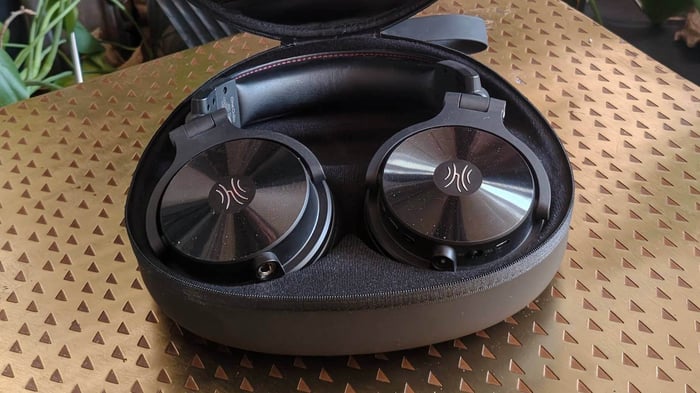
Inside the box, you’ll find the headphones, transmitter, a generous bundle of cables (seriously, there are plenty!), and a handy carrying case. No more digging through drawers for cables!
Features at a Glance
| Feature | Specification |
|---|---|
| Drivers | 45 mm |
| Active Noise Cancellation | None |
| Battery Life | 120 hours |
| Weight | 353 grams |
| Connection Types | Bluetooth 6.0, 3.5mm, 6.35mm, 2.4 GHz transmitter |
| Frequency Response | 20 Hz – 40 kHz |
| Water Resistance | None |
Availability and Use
While mostly found through parallel imports and cross-border platforms, these headphones are available on popular marketplaces. Pricing hovers around $189 USD (converted from local currency). You can also snag them on AliExpress from the official store, but be prepared to wait a couple of weeks for shipping.
No function-blocking or app issues plague users, and the 2.4 GHz transmitter frequency is standard and fully legal. The catch? No official manufacturer warranty locally, so repairs mean either private shops or shipping back abroad.
What Stands Out and What Falls Short?
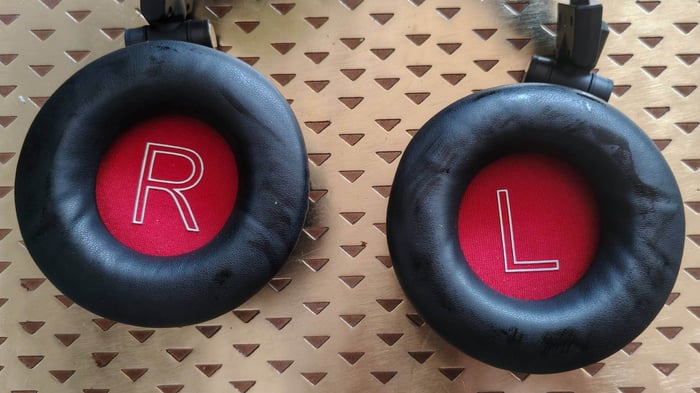
- No active noise cancellation; a very basic app
- Battery life impressively long—up to 120 hours on Bluetooth
- Multiple connection options including low-latency transmitter
Let’s get real: no ANC here, and the companion app is pretty bare-bones. You get three EQ presets—normal, monitoring, bass boost—and a 10-band manual equalizer. Extras include reminders to remove headphones, volume limiting, and mono sound selection. But overall, it feels minimalist.
On the bright side, the battery life is insane—five full days of continuous playback! That’s rare and matches the first gen’s stamina.
The connectivity options are also stellar. Classic 3.5mm and professional 6.35mm jacks make hooking up to pro gear hassle-free. Bluetooth 6.0 brings a more stable wireless experience too.
The real gem is the transmitter using OneOdio’s RapidWill+ 3.0 tech, cutting delay to a negligible 9 ms on 2.4 GHz frequency. Just plug it in and the headphones instantly grab the signal. Plus, it charges via USB-C and runs up to 50 hours per charge.
Sound Quality: The Elephant in the Room
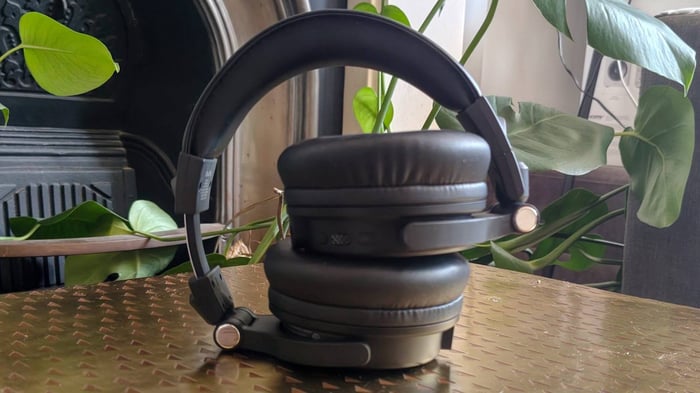
- 45mm drivers
- Sound tends to be muffled and tinny
- EQ presets don’t fix muddiness
Studio Max 2 packs certified Hi-Res Audio and LDAC codec support. Yet, all those shiny badges don’t guarantee a stellar sound experience.
Their sound is muddy and dull. The bass is boomy and blurry, drowning vocals and track details. Forget a spacious soundstage—everything blurs into a shapeless blob.
Take the track Glorious by The Hoosiers—it comes off as a confusing synth soup. Charlie Mars’ She Ain't Coming Back swings wildly from overbearing to nearly inaudible bass.
High frequencies are harsh, cymbals sound squashed, and guitars distort unexpectedly. This isn’t a quirk of a few songs; try any track with live instruments, and you’ll notice it.
EQ settings only make it worse. The bass-boost mode makes things heavier but less clear, and monitoring or custom EQ presets made the sound even sharper and less pleasant, so I abandoned them quickly.
Sadly, this sonic identity hasn’t changed since the original version.
Industrial Design and Build
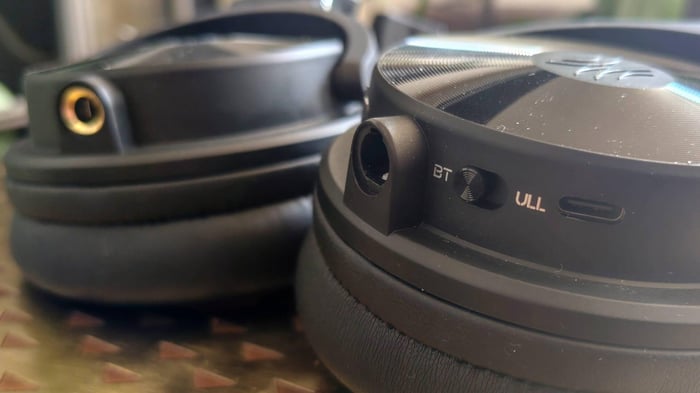
- Chunky, industrial style
- Swivel ear cups and foldable build
- Packed with ports and buttons
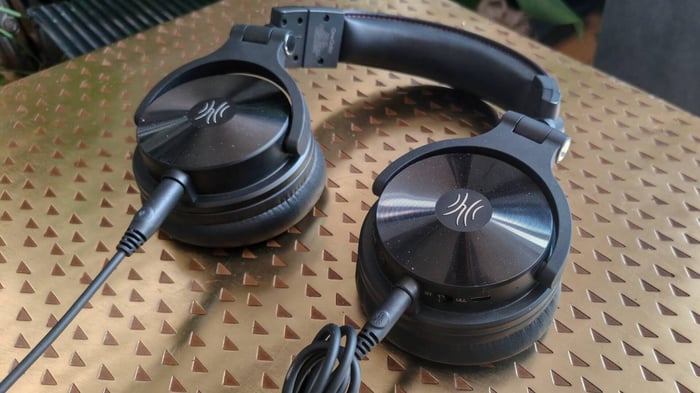
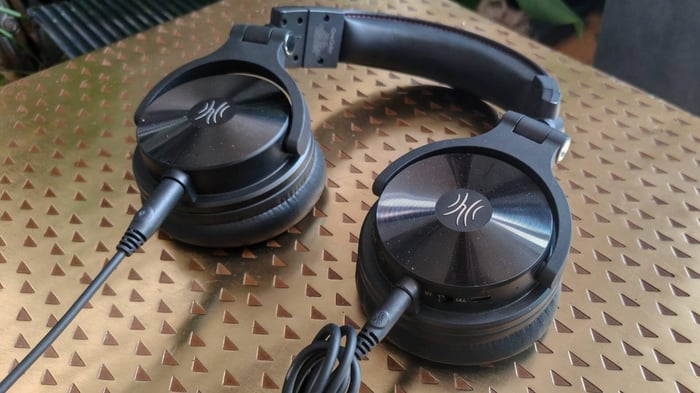
Don’t expect sleek, lightweight, or trendy. Studio Max 2 are big, heavy headphones with a rugged industrial vibe. Honestly, I felt a bit awkward wearing these out.
The ear cushions and headband are soft, but the 353-gram weight wears on you. Positively, they fit most head shapes well thanks to the swivel cups, which also fold flat for easy storage or travel.
However, they don’t grip securely. When I walked briskly, they wobbled. DJs moving energetically might find them frustrating in this regard.
Each ear cup is a control hub: the left has a 6.35mm jack; the right side hosts volume buttons, power switch, 3.5mm input, a Bluetooth/low-latency toggle, and USB-C charging port.
Two quirks aren’t obvious in photos: the headphones creak a lot—not because of cheap plastic (the material feels solid), but likely due to many movable parts. Also, the outer cup surface sports a ridged vinyl record texture that looks cool but attracts dust like a magnet.
Price vs. Value
- Expensive for casual use
- Great value if you need the transmitter
If you’re an average listener, these headphones are hard to justify. Plenty of excellent options exist at a fraction of the price, including from OneOdio itself.
Same goes for those hunting for classic studio monitors.
What you’re paying for here is the transmitter that gives you wireless, low-latency sound from any source, including instruments. If that’s your must-have, Studio Max 2 is cheaper than many rivals. Otherwise, it’s a pass.
Should You Buy OneOdio Studio Max 2?
| Attribute | Notes | Rating |
|---|---|---|
| Features | App could be richer, but battery life and connection modes impress | 4/5 |
| Sound Quality | Not for those craving crisp, beautiful sound | 2.5/5 |
| Design | Polarizing looks and so-so comfort, but highly versatile | 3/5 |
| Value for Money | Affordable transmitter boosts value if you need that feature | 3.5/5 |
Alternatives to Consider
| Parameter | OneOdio Studio Max 2 | AIAIAI TMA-2 | AlphaTheta HDJ-F10 |
|---|---|---|---|
| Drivers (mm) | 45 | 40 | 40 |
| Active Noise Cancellation | No | No | Yes |
| Battery Life (with ANC) | 120 hours | 40 hours | 30 hours |
| Weight (g) | 353 | 217 | 356 |
| Bluetooth Version | 6.0 | 5.3 | 5.2 |
| Water Resistance | No | No | No |
How I Tested Them
- Tested for one month
- Used with PC, guitar amp, synthesizer, and smartphone
- Tried every connection method
I spent about a month with the Studio Max 2 before writing this review. I connected them to everything: guitar amp, synth, computer, and phone—putting all interfaces through their paces.
Mostly, I listened to music but also mixed audio, edited videos, played instruments, and even recorded a field session using an external mic and recorder.
Global and Local Reception
OneOdio has long been a favorite among budget-conscious DJs and producers worldwide. The Studio Max 2 sparked mixed feelings abroad: users rave about Bluetooth 6.0 and the fast transmitter but lament the unchanged muddy bass and outdated drivers.
The 2026 audio trend leans toward spatial sound and smart noise cancellation, so heavy “monitor” style headphones without ANC feel like a throwback aimed at a specific home studio niche.
Locally, despite limited official marketing, these headphones fly off shelves. Users love their robustness, full accessory kit, and hassle-free connection to legacy gear. Against the backdrop of expensive pro DJ gear from Pioneer or Sennheiser, beatmakers and nighttime guitarists see Studio Max 2 as a lifesaver. The hard case only sweetens the deal for practical buyers.
The Debate: Pros and Cons
OneOdio aims these at musicians, not audiophiles. Collaborating with DJ KSHMR, they highlight 9 ms latency, LDAC support, four connectivity options, and up to 120 hours of battery life—facts confirmed by both official data and independent reviews.
Yet, the universal consensus is this: the problem isn’t features but sound quality. Even fans of the wireless monitoring admit the bass is muddy, detail lacking, and soundstage limited.
Managing Expectations
Hi-Res Audio and LDAC badges don’t guarantee audiophile sound. Codec support reduces signal loss, but driver tuning ultimately shapes the sound. Multiple reviewers agree: tech specs impress more than the actual sonic character.
Potential Issues in Use
- Large frame feels heavy over long sessions
- Unstable fit outdoors
- No active noise cancellation
- Minimal app settings
- Studio models at similar prices offer clearer sound
How to Get the Most Out of Studio Max 2
Use them as intended. For rehearsals, guitar playing, synth work, DJ sets, or mobile studios, the RapidWill+ transmitter beats regular Bluetooth.
For casual music listening, the flaws become more obvious than the benefits.
Little Features You Might Miss
- Battery lasts about a full workweek without charging
- Almost every cable you need is included
- Foldable design makes transporting between gigs easy
- The latency is so low that most musicians don’t notice the wireless difference
Future Possibilities
Fans speculate RapidWill tech might eventually replace wired studio headphones in home setups.
For now, it’s a promising idea. Even positive reviews acknowledge the signal quality nears wired levels, but driver sound quality remains a bottleneck.
Final Verdict: To Buy or Not?
Here’s the deal: your choice hinges on how you plan to use them.
Pros:
- Stunning 120-hour battery
- Loaded accessory kit
- 2.4 GHz radio transmitter that slashes latency, perfect for playing instruments or mixing wirelessly
Cons:
- Muddy, dirty sound with overpowering bass
- Heavy, bulky design that’s uncomfortable and not pretty
- High risk of disappointment if you want headphones for daily music enjoyment
My verdict: Yes, but with strong caveats. Only pick OneOdio Studio Max 2 if you’re a DJ, home musician, or podcaster who MUST have wireless, low-latency sound at the best price. If you want daily music or streaming headphones, look elsewhere—there are lighter, sleeker options with noise cancellation and pure sound around this price.
And here’s that secret I promised: these headphones weren’t made to pamper your ears with lush music. Their true superpower is being a wireless “cable” between you and your instrument. Get that, and they’ll be your best studio buddy!
“OneOdio makes the Studio Max 2 not for audiophiles, but for musicians who need reliable wireless sound without delay.” — Reviewer’s insight
FAQ
- What devices can I connect OneOdio Studio Max 2 to? They support Bluetooth, 3.5mm, 6.35mm jacks, and include a 2.4 GHz transmitter for easy connection to instruments and audio gear.
- How long does the battery last on a single charge? Up to 120 hours on Bluetooth and 50 hours when using the transmitter.
- Do these headphones have active noise cancellation? No, they don’t include ANC functionality.
- Are these headphones comfortable for long sessions? They’re quite heavy (353 grams) and can feel uncomfortable after extended wear.
- Is the sound quality good for casual music listening? The sound is muddy and bass-heavy, so they’re not ideal for pure music enjoyment outside professional use.
If you’re inspired by this review and want to bring a touch of music passion into your space, consider shopping your favorite album cover posters at Architeg Prints. It’s a warm way to celebrate the music that moves you.
 | DISCOUNTGET 30% OFF*Use code on your next order:
|
* This post may contain affiliate links, meaning we earn a commission if you make a purchase through these links, at no additional cost to you.