Panasonic Lumix DMW-DMS1 Review – A Brilliant Yet Limited Microphone Solution


 See more Architeg Prints stories on Google.
Panasonic Lumix DMW-DMS1 Review – A Brilliant Yet Limited Microphone Solution
Explore how the Panasonic Lumix DMW-DMS1 microphone offers great sound quality and smart design for Lumix users, but with notable compatibility limits.
Elevating On-the-Go Audio for Creators
Panasonic’s Lumix series has been steadily evolving, targeting content creators with cutting-edge video tech like OpenGate and user-friendly LUTs. Now, they’ve added a fresh tool for handheld shooters—the Panasonic Lumix DMW-DMS1 microphone. This isn’t just any run-of-the-mill on-camera mic; it’s a specialized digital shotgun mic crafted specifically for compatible Lumix cameras, powered and connected through the camera’s hot shoe.
What Makes the DMW-DMS1 Stand Out?
On paper, this mic impresses. It features a newly developed 10mm capsule array, six selectable directional modes, wind noise suppression, and support for 32-bit float recording. Panasonic positions the DMS1 as a perfect middle ground for solo videographers who want something more advanced than a regular mic but cleaner and simpler than juggling multiple microphones, external recorders, or bulky XLR rigs.
But does it truly master that balance, or does it fall into the “jack of all trades, master of none” trap?
Key Specifications at a Glance
| Parameter | Details |
|---|---|
| Microphone Type | 4-channel electret condenser capsule array |
| Directional Modes | 6 selectable modes |
| Recording Capabilities | Up to 96 kHz / 24-bit linear or 96 kHz / 32-bit float, 4-channel mode |
| Connection | Hot shoe only (powers and sends digital audio via camera) |
| Compatible Cameras (as of March 2026) | Lumix S1II, S1IIE, S1IIR, S5II, S5IIX |
| Dimensions | 45.0 x 63.7 x 73.7 mm |
| Weight | Approximately 100 grams |
| Included Accessories | Windshield, carrying pouch |
Pricing and Availability Insights
Currently, the Panasonic Lumix DMW-DMS1 is available through parallel import channels. You can find it in specialized photo and video stores and online marketplaces, with prices averaging about $550 (converted from local currency). Major electronics chains have yet to stock it officially.
Important Notes on Usage
The microphone’s tight integration with the Panasonic Lumix ecosystem is crucial to understand before purchase. It only works with specific Lumix models (like the S5II, S5IIX, G9II) running the latest firmware. No regional software locks exist, but since it draws power and sends digital audio through the hot shoe, it’s self-contained and independent of cloud services.
Warranty support depends entirely on the seller when purchased via parallel import, as no official Panasonic support exists locally for this microphone.
The Price Tag: Worth It?
Released in March 2026 with a retail price around $399, the DMS1’s cost prompts mixed feelings. On one hand, its multi-capsule design, variety of directionality modes, 32-bit float format support, and superior wireless connection system make it a compelling package.
On the other hand, there are other mics in this price range or cheaper offering stellar sound quality and working with a broader range of devices — cameras, recorders, and even smartphones.
The value of the DMS1 largely depends on how invested you are in the Lumix ecosystem. If you are, the price is justifiable. If you often record with other gear, even occasionally, alternatives might make more sense.
Design and User Experience
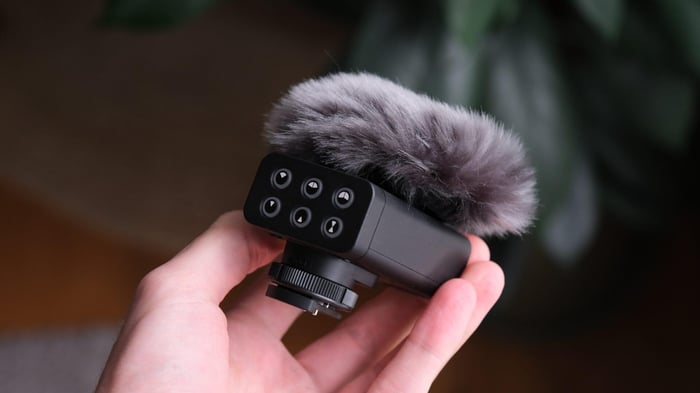
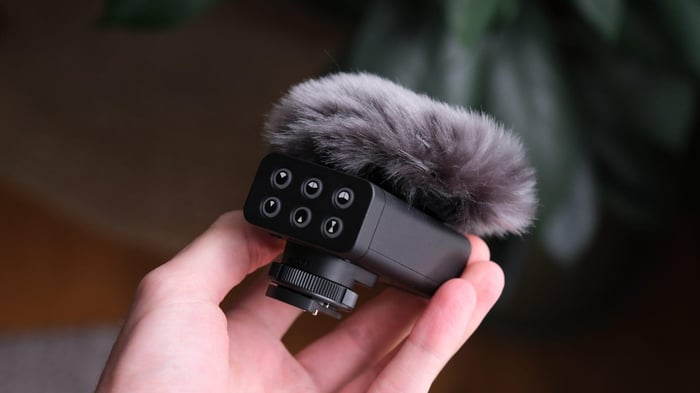
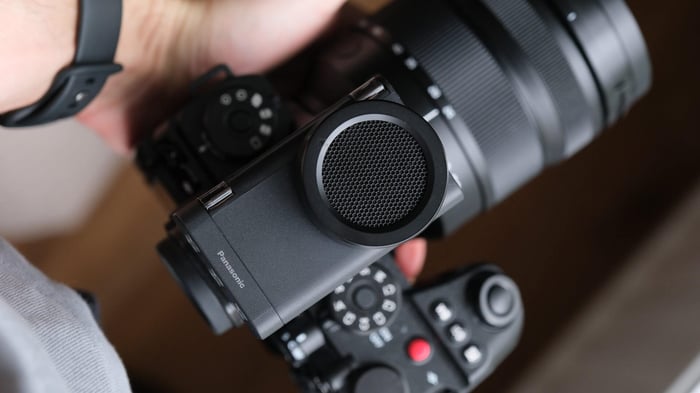
Getting used to the DMS1’s distinctive look took me some time. Unlike classic shotgun mics, its capsule array forms an inverted cone — almost floral in shape. While unusual, it stays compact enough to avoid drawing attention.
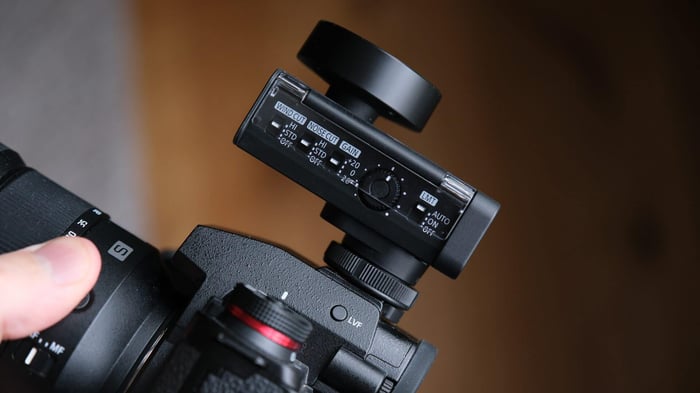
The mic measures a mere 45.0 x 63.7 x 73.7 mm and weighs just 100 grams. During use, I hardly noticed the extra weight, nor did it disrupt camera balance. It also worked well on my stabilizer (Hohem MT3 Pro) without recalibration. One caveat: if you use a cage on your camera, it might interfere with the hot shoe connection needed for power and data.
The beauty of the design is in its seamless simplicity. Power and audio flow through the hot shoe, keeping cables off the sides of your camera—no tangles, no blocked ports, just neatness and ease of setup.
However, that simplicity restricts the mic to only compatible Panasonic cameras. There’s no linear input, no USB-C, no Bluetooth—just hot shoe power. This is fine if you shoot exclusively with Panasonic but less ideal for users switching between brands or recording with phones or laptops for voiceovers.
Ease of Use and Controls
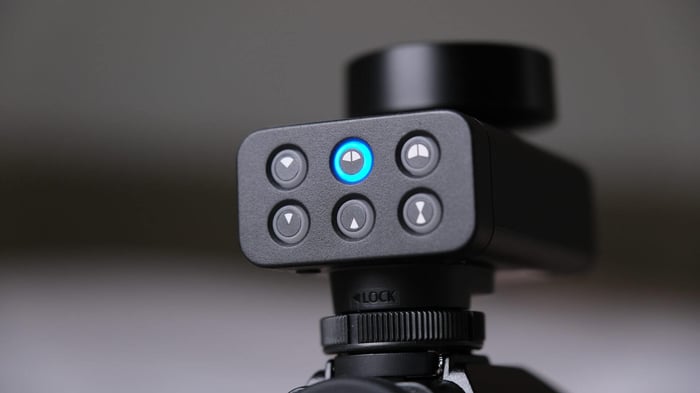
Panasonic strikes a smart balance for pros and casual users alike. The mode selection buttons sit on the back, with a soft blue light indicating the current mode. The buttons require a gentle double press to switch, minimizing accidental toggling during recording.
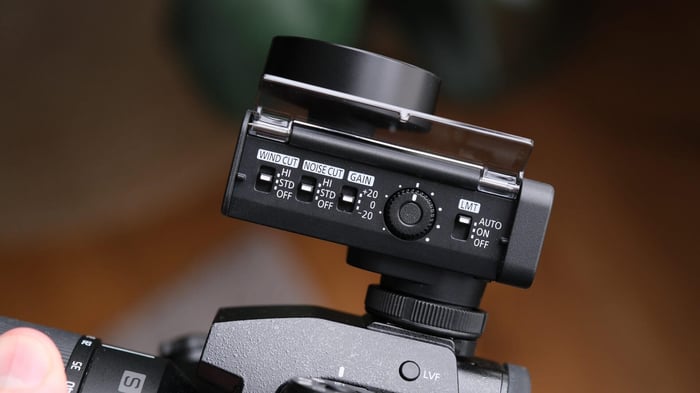
More advanced sound settings live on the side, resembling controls on professional XLR mics. Though this can feel daunting to beginners, the options are actually quite manageable.
The controls are a bit small but easy to toggle with a fingernail, and they’re protected by a transparent cover to prevent accidental changes—a clever design detail.
Included accessories like the windscreen and case show Panasonic’s attention to usability. It’s nice that the pouch fits the mic with the windscreen attached—a rare convenience many competitors overlook.
Performance Highlights
In practice, the DMS1 impresses with its six directional modes: cardioid, stereo, wide stereo, supercardioid, supercardioid+stereo, and bidirectional supercardioid. Each mode delivers excellent sound clarity and focus.
The large 10mm microphone array combined with beamforming tech gives crisp, controlled audio—it really lets you capture the sound you want.
That said, it doesn’t necessarily outperform specialized microphones. I found my Rode shotgun microphone offered stronger voice isolation, and for recording in unpredictable environments, my wireless lavalier system (DJI Mic 3 wireless microphone system) granted me greater mobility without worrying about mic directionality.
Still, the DMS1’s strength lies in its versatility—handling a broad range of situations with one compact device and delivering high-quality sound. Whether that outweighs the limitations depends on your shooting style and needs.
The microphone also includes powerful features that benefit both pros and beginners:
- Effective wind and noise suppression
- 32-bit float format support on compatible cameras—great for tricky recording environments
- Panasonic’s backup recording modes which can save a take if sound levels aren’t perfect
These features require some learning curve but can become invaluable tools once mastered.
Final Verdict
Hats off to Panasonic for the Lumix DMW-DMS1’s design. It may look a bit quirky, but it solves a big headache for video creators who want to avoid cable chaos. It’s lightweight, quick to mount, and simple to operate. The directional modes are genuinely useful and deliver impressive sound quality. For solo creators working in varied environments, this could very well be the only mic you need on your camera.
Yet, whether it’s right for you depends on your shooting habits. I personally found better voice isolation with my dedicated cardioid shotgun and preferred wireless lavaliers for freedom of movement.
The biggest downside is its ecosystem lock-in. If you shoot exclusively with a compatible Lumix camera, the seamless integration is a huge plus. But if you like mixing microphones across brands or want one mic for multiple devices—including phones and laptops—third-party options remain a smarter pick.
| Criterion | Description | Rating |
|---|---|---|
| Features | Six directional modes, 32-bit support, backup recording, and hot shoe power pack a punch for a small mic. | ★★★★★ |
| Design | Compact and cable-free design with thoughtful controls, though shape is unusual and ecosystem lock limits appeal. | ★★★★☆ |
| Performance | Great sound and versatility, but not always the best at specialized tasks. | ★★★★½ |
| Value for Money | Best for dedicated Lumix users; others may find better compatibility and price elsewhere. | ★★★½☆ |
| Overall | ★★★★☆ |
Panasonic’s DMS1 is a clever solution for videographers seeking clean audio without cable clutter, though its ecosystem focus narrows its appeal.
FAQ
- What cameras work with the Panasonic Lumix DMW-DMS1?
Compatible models as of early 2026 include Lumix S1II, S1IIE, S1IIR, S5II, and S5IIX. - Can the mic be used with non-Panasonic cameras?
No, the mic requires a hot shoe connection that only works with select Panasonic cameras. - Does it need batteries or external power?
No external power is needed; it draws power directly from the camera hot shoe. - What recording formats does it support?
It supports up to 96 kHz sampling rate at 24-bit linear or 32-bit float formats. - Is the windscreen included?
Yes, a windscreen and carrying pouch come included in the package.
If you’re inspired by this neat piece of tech, why not add some flair to your creative space? Shop your favorite album cover poster at our store for a vibrant touch to your studio or room. Explore the collection here.
 | DISCOUNTGET 30% OFF*Use code on your next order:
|
* This post may contain affiliate links, meaning we earn a commission if you make a purchase through these links, at no additional cost to you.