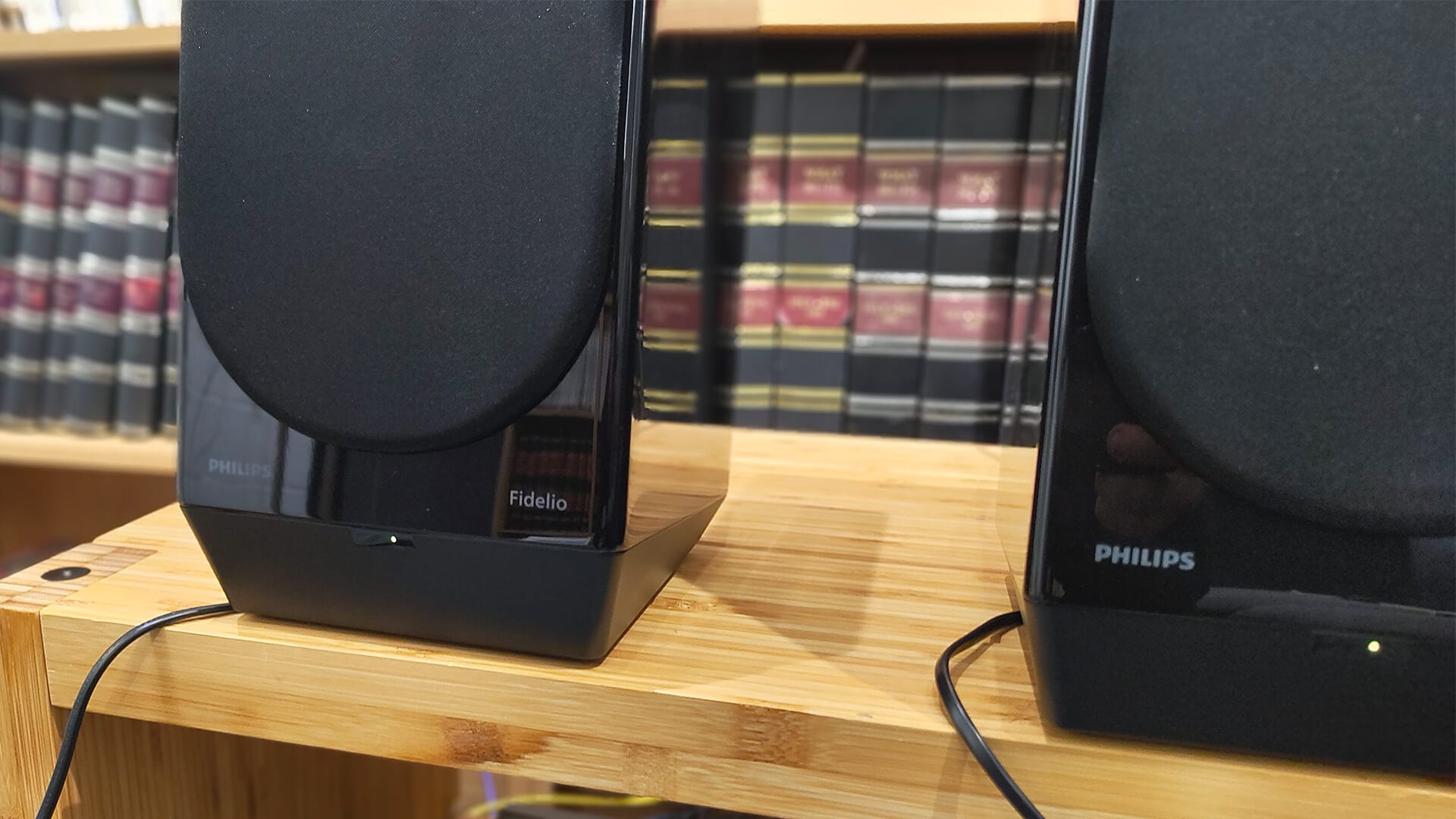
Philips Fidelio FA3 Review: A Bold Contender in Active Stereo Speakers



Philips Fidelio FA3 Review: A Bold Contender in Active Stereo Speakers
Explore the Philips Fidelio FA3 active speakers offering powerful sound and versatile features in a competitive market of compact stereo options.
Finding Your Next Active Stereo Speaker
If you’ve ever hunted for a solid pair of active stereo speakers, you know the market is a bit of a mixed bag. The compact and reasonably priced Ruark MR1 Mk3 active stereo speakers at $579 and Onkyo GX-30ARC active stereo speakers have long been fan favorites, with their neat designs, built-in amplifiers, Bluetooth connectivity, and multiple inputs. Then there’s the more premium KEF Coda W active stereo speakers, commanding around $1000, flaunting sound quality on a completely different level.
Enter Philips with their Philips Fidelio FA3 active stereo speakers, priced roughly at $399, slotting right in with Onkyo and Ruark’s offerings. But while Ruark charms with miniaturized design and a musical personality, and Onkyo wins hearts with stability and versatility, the big question is: can the Fidelio FA3 bring something truly unique to the table against these seasoned players?
When Will the Philips Fidelio FA3 Hit the Russian Market?
Currently, the Philips Fidelio FA3 active stereo speakers have just begun their journey abroad as of March 2026. Official details about its arrival in Russia remain under wraps, but knowing Philips’ solid presence here, especially with the beloved Fidelio lineup, it’s expected these speakers will soon be found in major electronics retailers and audio boutiques.
With a US retail price of around $399, Russian pricing is estimated between $500-$560 after factoring in logistics and taxes. Expect availability in major chains and specialized stores in the near future.
Using Fidelio FA3 in Russia: What to Expect
The beauty of the Fidelio FA3 is its classic active speaker design, free from restrictive streaming ecosystems or subscription ties. Whether you’re rocking Yandex Music, Zvuk, or VK Music, connecting via Bluetooth or cable won’t pose any hiccups.
The Philips Entertainment app, essential for EQ tweaks, is available on Russian App Stores and Google Play. Just a heads-up: if you snag a grey import from the US, make sure the power adapter supports 220V or you’ll need a transformer. European versions come ready to rock out of the box.
Bold Design and Solid Build Quality
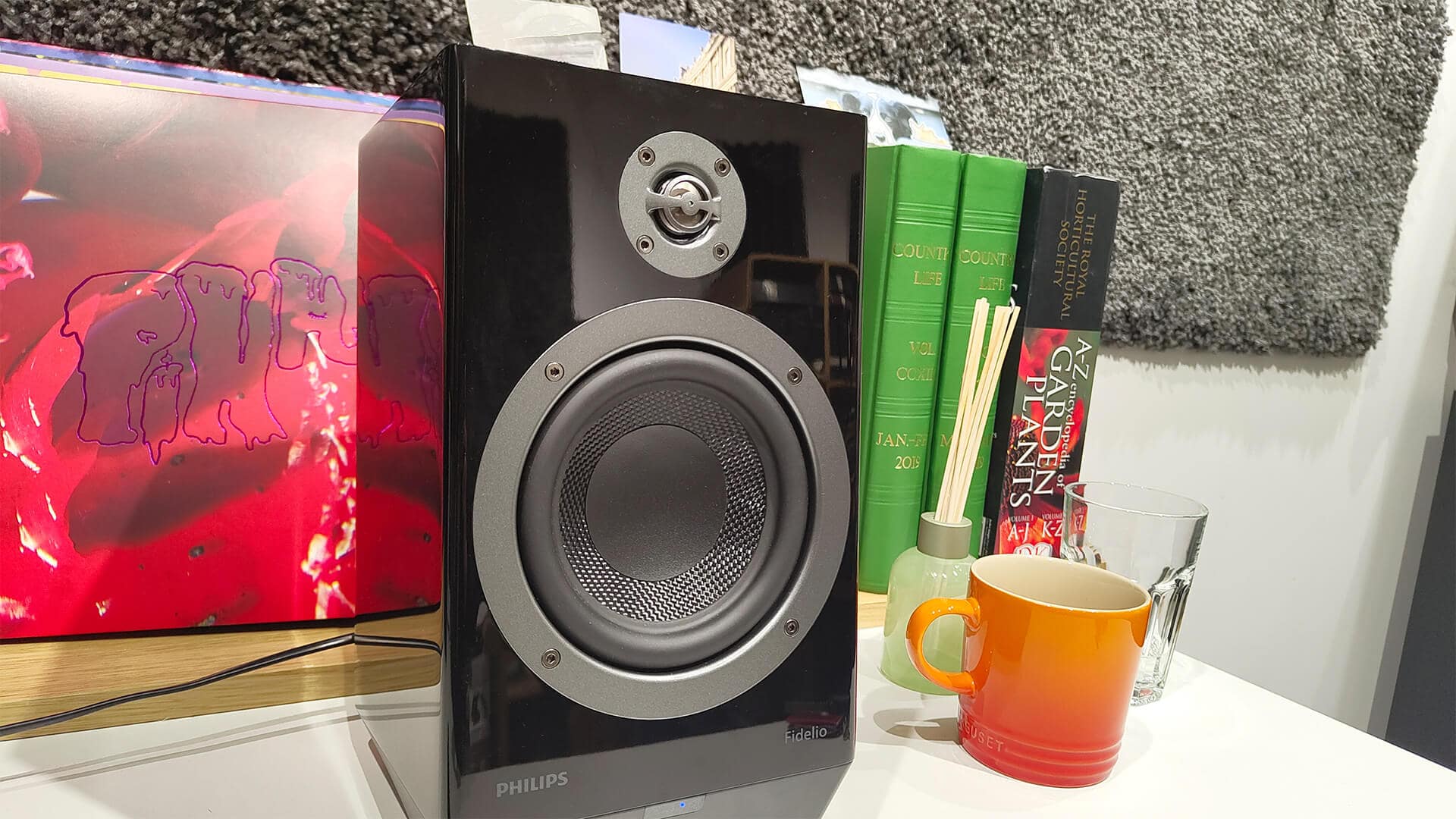
At their price point, the FA3 speakers are quite hefty and large – almost masquerading as classic passive Hi-Fi bookshelf speakers. Standing about 30 cm tall, they tower over the 22 cm tall Onkyo GX-30ARC, and make the tiny 18.5 cm Ruark MR1 Mk3 look downright mini.
Philips Fidelio FA3 Key Specs:
- Bluetooth: Yes (version 5.4)
- Supported Codecs: SBC, AAC, LDAC
- Inputs: RCA line-in, optical, USB-C, HDMI ARC
- Dimensions (H x W x D): 30 x 17 x 21 cm
- Weight per Speaker: 3.4 kg
- Colors: Only black
These speakers are built like tanks, with a glossy black finish that oozes premium vibes—though this shine does attract fingerprints like a magnet. And if black isn’t your jam, you’re out of luck, as no other color options exist.
Unlike most rivals that power a passive satellite speaker from an active one, Philips took a different route: both Fidelio FA3 speakers need their own power outlet. This might be a snag if you only have limited sockets nearby, not to mention the supplied power cords are on the short side at 140 cm each.
All controls and connections—power, input selection, volume knob—are tucked away on the back of the right speaker. There are handy colored LEDs on both speakers indicating the active input, but placing the volume knob in the back feels a bit odd and inconvenient.
The package includes a remote control, a bit plastic-y but perfectly functional for the price. You can switch inputs, adjust volume, control playback, and tweak bass and treble. The front of each speaker is adorned with oval magnetic grilles that cover only the drivers, leaving the rest of the front panel stylishly exposed—a clever design move.
Inside each speaker lives a class D 50-watt amplifier powering a 25 mm titanium dome tweeter and a 12.7 cm fiberglass mid/bass driver, promising “captivating dynamics and a wide soundstage.” The hefty bass presence is aided by a large rear-firing bass reflex port.
Features and Connectivity: A Mixed Bag
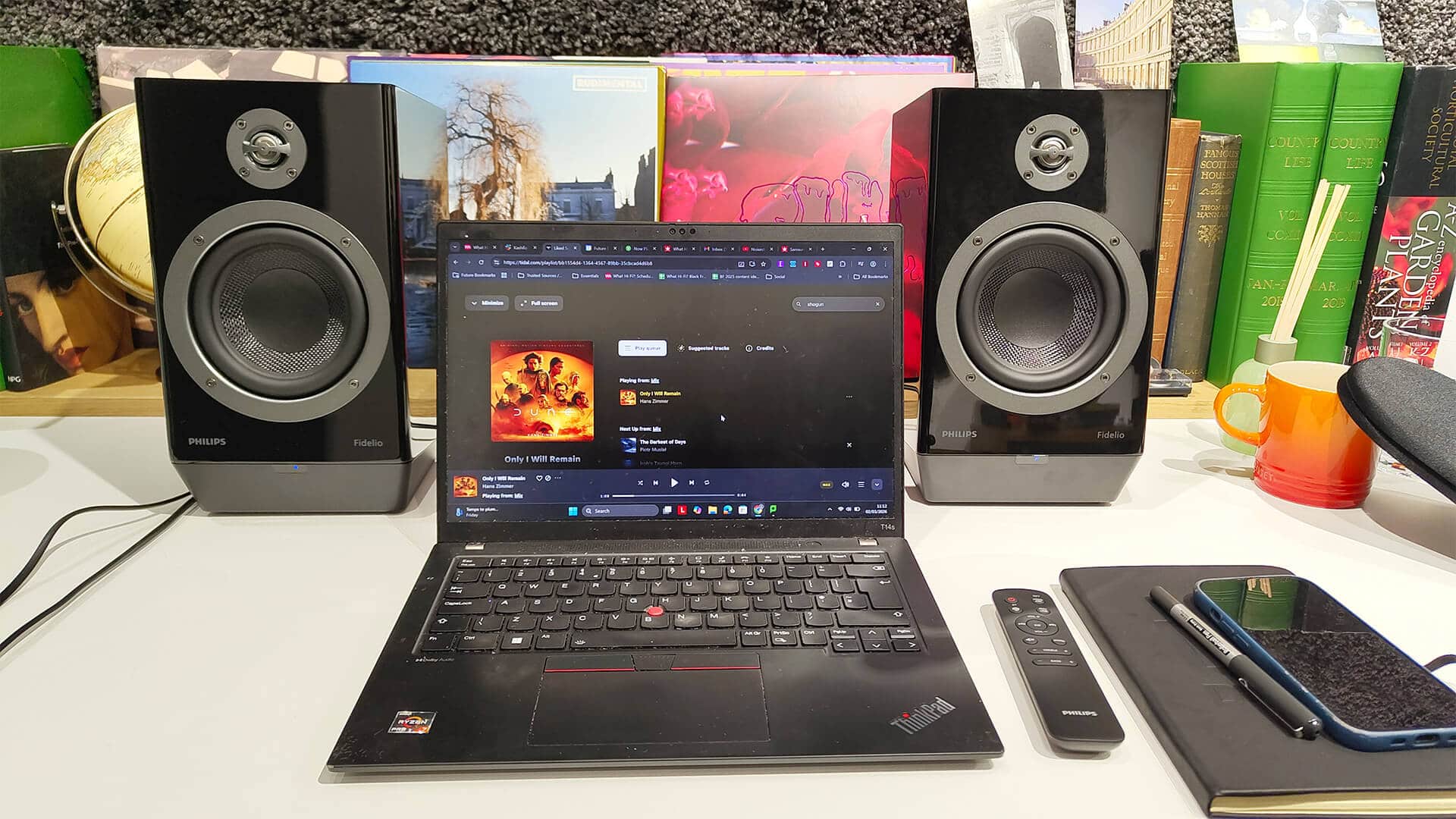
Wireless connectivity is Bluetooth-only. The codec lineup is pretty standard: AAC and SBC, plus audiophile favorite LDAC for compatible smartphones.
Physically, you get RCA analog inputs, optical, USB-C (handy for computers and phones), and HDMI ARC for TVs—a thoughtful addition for home theater use.
However, missing are a 3.5 mm AUX input, a subwoofer output, and a built-in phono stage for vinyl lovers. This means the FA3 falls a bit short of Onkyo GX-30ARC’s versatility.
You can link the speakers wirelessly or using a coaxial cable. All digital inputs support audio up to 24-bit/192 kHz, but there’s a catch: the internal processor downsamples any hi-res file to 24-bit/96 kHz.
For finer sound control, the Philips Entertainment app offers a seven-band equalizer and a virtual remote. Perfect for dialling in your perfect vibe.
Sound Experience: Power Without Finesse
Starting with Bluetooth streaming on Tidal, the FA3s deliver a dense and powerful sound. But there’s a catch—the bass feels bloated and sluggish, like it needs a serious diet. Whether it was the funky groove of So Ready by Goose, the cinematic Why Do We Fall? from Hans Zimmer, or the moody Reckoner by Radiohead, the bass lacked clarity and agility.
On the flip side, vocals came through beautifully — clear, textured, and alive. Mids were sharp and engaging, lending a dramatic flair to Zimmer’s epic tracks. The sound wasn’t fast or punchy but definitely had a thick, cinematic presence.
The struggle was in the low end: the deep bass lines blurred into a muddy rumble. You could tell something was playing, but the bass guitar’s nimble plucks were lost in the haze.
Tweaking the EQ helped tame the bass storm a bit, but the boominess and lack of precision lingered. The FA3 hits hard, but it’s more like a heavyweight lumbering in the ring than a nimble, sharp jab.
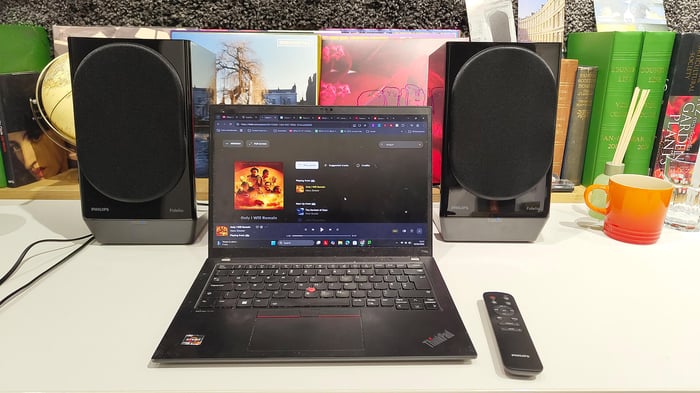
Feeling adventurous, I switched to a USB-C cable hookup with my Lenovo laptop, and the difference was notable. The sharp edges softened, the sound tightened, and the midrange vocals blossomed even more. Bass remained dominant but gained some shape. The music breathed with more space and cohesion, a promising upgrade though still shy of perfection.
Next, I connected a trusted Cyrus CDi CD player via RCA input. The speakers responded well, clearly revealing that quality source gear can coax better performance out of the FA3.
Switching to optical input confirmed the built-in DAC in these Philips speakers is decent, though miles behind my Cyrus’s premium DAC (a device costing about $1300).
No matter the source, the Fidelio FA3 can’t quite match the finesse of the class leaders. Ruark MR1 Mk3 may not have that big, bold sound, but they exude musicality, subtlety, and expressiveness—adjusting mood and flow rather than pounding out a one-note routine.
Similarly, Onkyo GX-30ARC doesn’t blast as loudly as Philips but shines with sparkling mids and controlled, articulate bass.
In short, the FA3 sounds like a lively soccer fan loudly belting out Sweet Caroline in the stands—it’s enthusiastic but lacks refinement and grace.
"This is not a choir in a cathedral, but a rowdy football fan shouting Sweet Caroline in the stadium."
— Reviewer’s take on Philips Fidelio FA3 sound character
Final Thoughts: A Solid Speaker with Room to Grow
Philips Fidelio FA3 brings undeniable positives to the table: an impressive, bold soundstage at a reasonable price and a well-rounded set of ports that promise versatility.
But the competition is fierce. Onkyo GX-30ARC offers stellar connectivity, and Ruark MR1 Mk3 wins on sheer musical charm. It’s tough to pinpoint exactly where the FA3 fits in this vibrant party of speakers.
If you want big sound and solid build with moderate connectivity needs, these might just hit the spot. But if finesse, flexibility, and that special musical magic matter most, the challengers still hold the crown.
FAQ
- How do Philips Fidelio FA3 speakers connect to devices?
They connect via Bluetooth 5.4 and have physical inputs including RCA, optical, USB-C, and HDMI ARC. - Can the FA3 speakers be used without any streaming subscription?
Yes, they operate independently of any proprietary streaming services or subscriptions. - Do both speakers need power outlets?
Yes, each speaker requires its own power source, which means two wall sockets are necessary. - Is there an app to control the sound settings?
The Philips Entertainment app offers detailed EQ adjustments and a virtual remote control. - How does the sound quality compare to competitors?
FA3 delivers a large, bold sound with strong mids but suffers from overly heavy bass lacking precision compared to Ruark MR1 Mk3 and Onkyo GX-30ARC.
Looking to bring your favorite music to life in stylish form? Shop stunning album cover posters at our store for the perfect musical ambiance boost: Architeg Prints.
 | DISCOUNTGET 30% OFF*Use code on your next order:
|
* This post may contain affiliate links, meaning we earn a commission if you make a purchase through these links, at no additional cost to you.