Rega Mercury/Solis Review: This Audio Duo Hooks You Instantly



Rega Mercury/Solis Review: This Audio Duo Hooks You Instantly
Explore the captivating sound and engineering of the Rega Mercury/Solis amplifier duo, blending British finesse with high-end audio performance.
A Surprising Price Tag for a Beloved British Brand
If you think a Rega amplifier carrying a five-digit price tag sounds crazy, you're not alone. For over 50 years, this iconic British company has built its reputation on delivering brilliantly designed, great-sounding gear at reasonable prices. The mantra has always been simple: impeccable value for money.
Sure, Rega has long produced premium gear costing thousands of dollars, but their new combo—the Mercury preamplifier and Solis power amplifier, each priced around $10,500—belongs to a whole different league.
Back in 2023, Rega took its first bold step into the ultimate High-End realm with the launch of the Naia turntable, priced close to $19,000. Now, this amplifier pair aims to solidify that success. But how does this hefty price tag align with Rega’s philosophy of accessible quality? Let’s dive in.
Availability and Pricing Overview
Currently, Rega equipment arrives through parallel importers specializing in High-End gear. You won’t spot this exclusive two-piece on mainstream online stores; these are specialty items brought in through dedicated audio salons. Given the complex logistics and store markups, expect to pay between $26,000 and $30,000 for the Mercury/Solis pair.
Practical Considerations for Buyers
Operating these British beauties poses no voltage headaches—they run on the standard European 230 V, so no transformers needed. The catch? There’s no official factory warranty, so repairs fall to the dealer’s service center, and sourcing original parts like Rega’s custom K-Power capacitors might take months. On the bright side, the robust British craftsmanship and generously overbuilt components keep the chances of failure slim.
Design and Engineering Brilliance
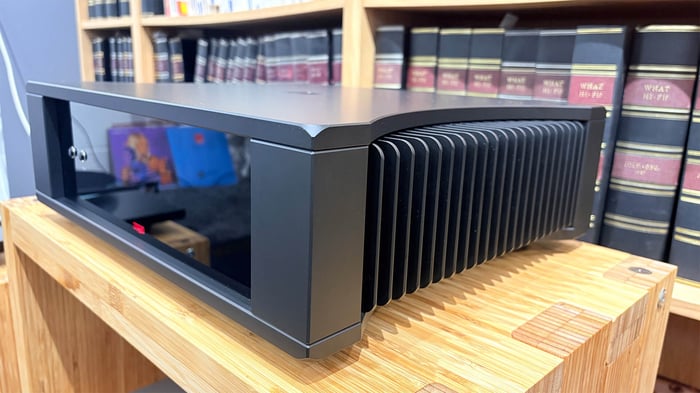
Rega justifiably prides itself on its engineering pedigree. Their unwavering design philosophy shows in everything they do—from the Planar turntables built on high rigidity and minimal mass to their amplifiers.
This new two-box setup inherits its analog preamplifier architecture from the original Elicit integrated amplifier launched in 1990. It’s a fully symmetrical discrete design that pushes high voltage and respectable current, perfectly matched to drive the paired power amplifier with minimal distortion.
Technical Specs Snapshot
| Parameter | Value |
|---|---|
| Type | Preamplifier / Power amplifier |
| Output Power | 168 W per channel (8 Ω) |
| Built-in Phono Stage | No |
| Inputs (Mercury) | 5x RCA line, 1x XLR balanced, 2x optical, 2x coaxial, USB Type-B |
| Outputs | RCA line, XLR balanced, Pre-out |
| Bluetooth | No |
| Headphone Out | Yes (6.3 mm) |
| Dimensions (HxWxD) | Mercury: 9.7 x 43.5 x 38 cm / Solis: 14.0 x 43.5 x 38.5 cm |
| Weight | Mercury: 14 kg / Solis: 24.8 kg |
Mercury is a classic linear preamplifier but with a built-in DAC module. Volume control is entrusted to the time-tested Alps Blue Velvet RK27 motorized potentiometer. Ingeniously, engineers use DC coupling to eliminate coupling capacitors that often degrade sound. A vigilant protection circuit monitors DC levels at outputs and headphone jacks to prevent damage.
The pride of Rega’s engineers is the power supply: it delivers crystal-clear, stable power separately to analog, digital, and control sections, eliminating interference. Judged by complexity, Mercury is Rega’s most sophisticated device to date.
Interestingly, the preamp lacks a built-in phono stage—a surprise given Rega’s vinyl pedigree. This choice stems from the challenge of achieving uncompromised sound in one box and controlling an already high price. For vinyl lovers, Rega offers the outstanding Aura external phono preamp as a companion.
The DAC inside Mercury uses a pair of Wolfson WM8742 chips. Though considered “vintage” since their 2009 debut, Rega embraces them for their musicality over newer alternatives. The engineering team auditioned modern DAC chips and concluded the Wolfson’s sound character better suits their goals. A bold but authentic choice.
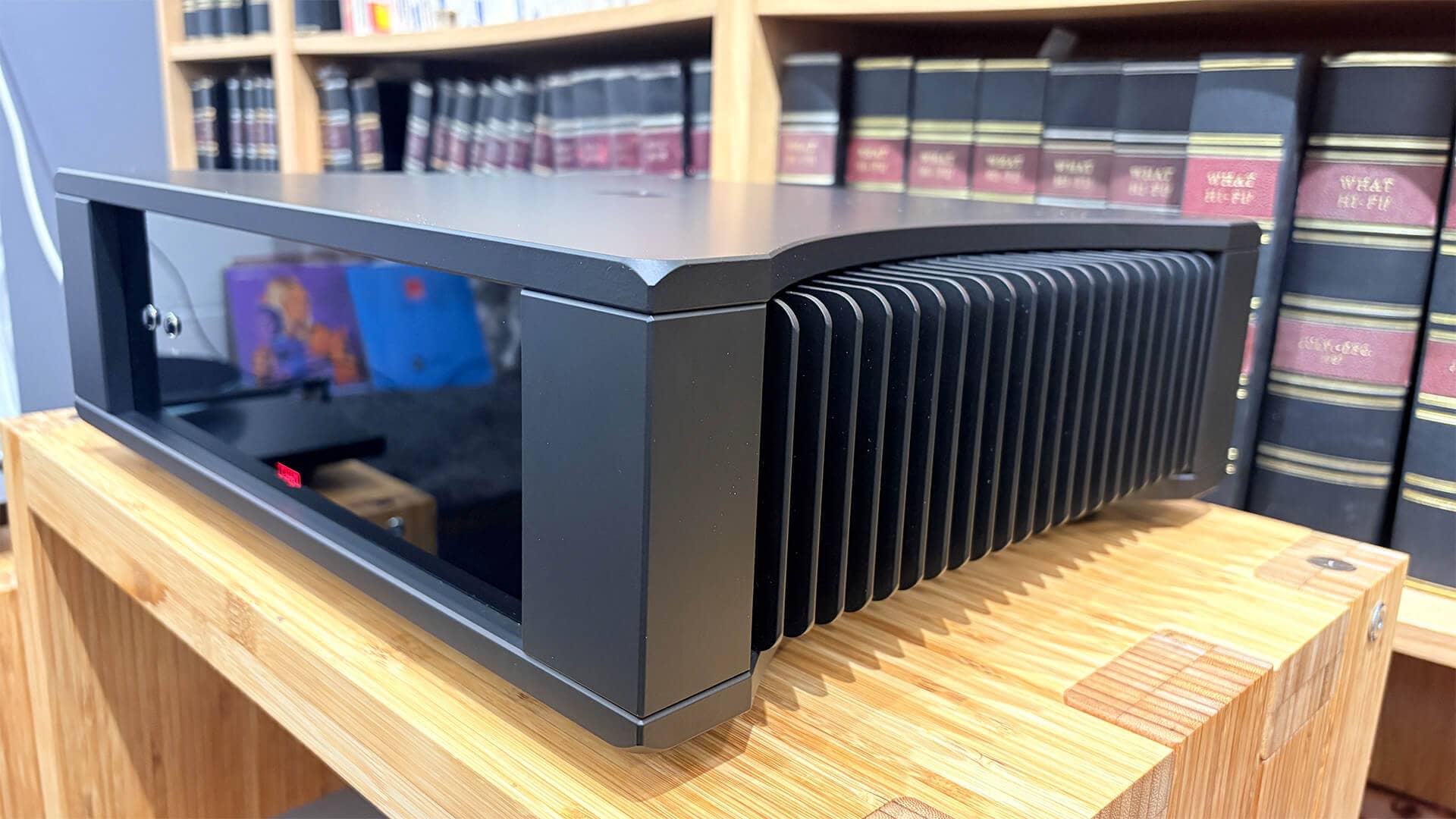
The Solis power amplifier, meanwhile, is a beast. Despite standard dimensions, it weighs nearly 55 pounds! Delivering a solid 168 watts per channel at 8 ohms, the power doubles when impedance halves to 305 watts. This is more than enough muscle to handle even the most demanding speakers.
Inside, the signature fully symmetrical topology shines. Two custom low-noise 330 VA transformers feed the amp, complemented by a massive 80,000 µF of Rega K-Power smoothing capacitors.
Connectivity and Control
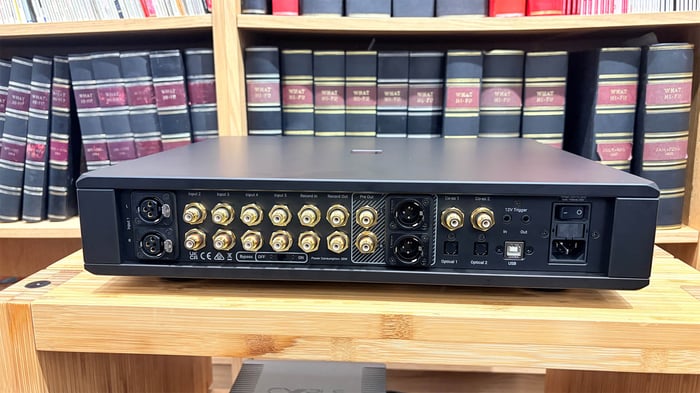
The Mercury’s DAC accepts files up to 32-bit/192 kHz PCM and standard DSD. Sure, many budget devices boast higher specs now, but for most music collections, this coverage suffices.
Analog-wise, the preamp offers five line inputs including one balanced XLR and a recording loop. Digital inputs include coaxial, optical, and USB Type-B for PC connection. Outputs are available in balanced and RCA, alongside a 6.3 mm headphone jack on the front.
That headphone output isn’t token—it’s powered by a separate symmetrical circuit akin to a mini Solis, capable of driving even the most demanding planar headphones.
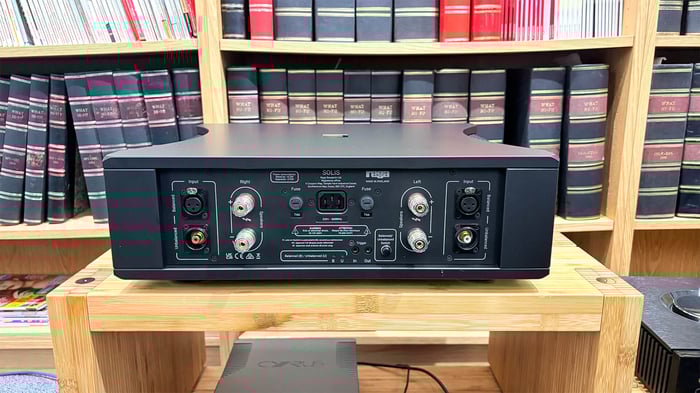
On the Solis, balanced XLR and unbalanced RCA inputs await at the rear. Connector quality on both boxes is impeccable, promising longevity beyond multiple component upgrades.
A quirky tidbit: despite the presence of balanced XLR jacks on both units, Rega recommends using standard RCA cables at home. They argue balanced wiring primarily benefits long cable runs and EMI-heavy studio settings, not typical living rooms—a notion our listening tests fully endorse.
Build Quality and Aesthetic Appeal
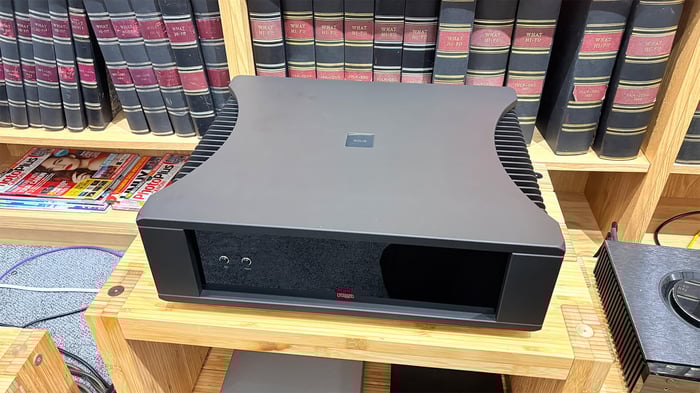
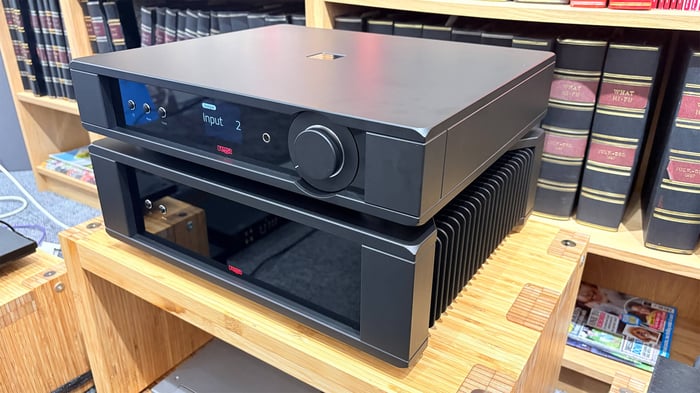
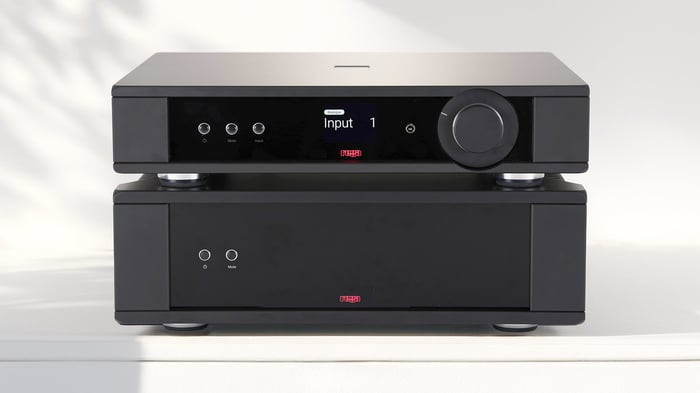
The build quality here is nothing short of phenomenal. Thick, milled aluminum cases radiate durability, crafted as if made to endure lifetimes. Fit and finish meet Rega’s highest standards—exactly what you'd expect at this price.
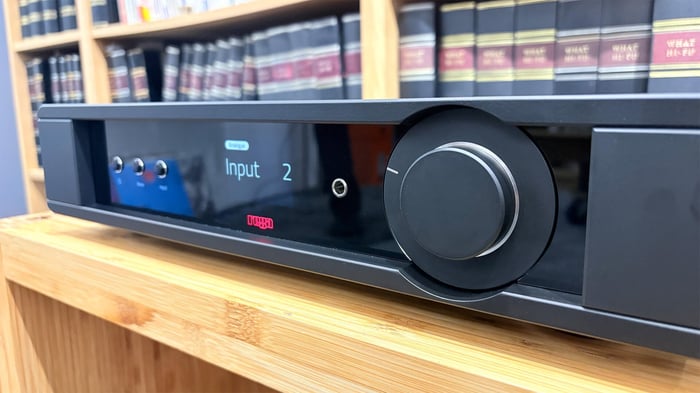
Mercury’s front sports a sharp red LCD screen, easily readable from the couch, simplifying setup. Physical controls are minimal, lending a sleek, disciplined look. Realistically, most users will rely on the bundled Orbit remote, a hefty metal block with illuminated buttons. It’s not flashy, but it feels solid and performs flawlessly.
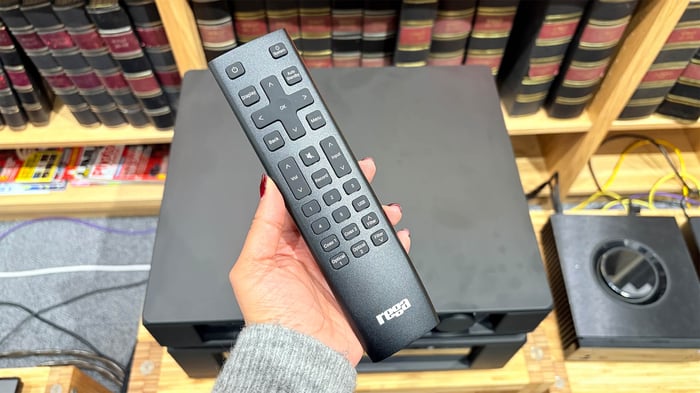
A couple of ergonomic niggles emerge: With the front panel display, why not show volume digitally? Instead, users must squint at a tiny notch on the knob, tough in dim light.
Also, input selection on the front panel only scrolls forward. Miss your input? You must cycle through the entire list again. Thankfully, the remote offers direct input buttons, which softens this annoyance.
Sound Experience: Where Magic Happens
If I say this pair reminds me of the affordable Brio Mk7 integrated amp, take it as a huge compliment. Both share an infectiously musical character that puts the heart of music front and center, squeezing maximum emotion from every track.
Of course, at a fraction of the Mercury/Solis price (around $1,200), the Brio Mk7 doesn’t match the scale or resolution of this top-tier duo.
Playing Hans Zimmer’s monumental Interstellar soundtrack reveals the pair’s hallmark—a pitch-black background. Music emerges from complete silence, free from low-frequency hum or amplifier noise common to powerful amps.
Rega crafts a dense, tactile soundstage that feels solid and commanding—rare even in this price class. Instruments gain startling physical presence, making music strikingly real.
Take Cornfield Chase, a complex, nearly chaotic swirl of sounds. Yet Rega’s amps unravel it with cold precision. Every instrument is sharply pinned in space, preserving the track’s inner structure and drive. Crucially, these amps never lose sight of conveying the piece’s nerve and drama—they absolutely nail it.
With 168 watts per channel, it’s no surprise Solis handles towering volume effortlessly. What truly impresses on quality recordings is the thunderous low end—tight, muscular bass that’s lightning-fast yet melodious, blending seamlessly with the full frequency range.
The stereo image is equally on point—wide and instrument placement surgical. On busy passages, the amps maintain remarkable focus, never smearing sounds into a mush.
That said, face-to-face with the similarly priced Yamaha C-5000/M-5000 combo, Rega shows slightly less air and spaciousness. The Japanese pair delivers finer microdynamics in mids and highs, sounding more delicate and transparent than the robust Solis.
But don’t count Rega out. When it comes to rhythm, drive, and raw punch, they leave competitors in the dust. Good hip-hop or gritty rock tracks especially shine with this British muscle.
Kendrick Lamar’s fresh GNX, the gritty Grinderman debut, or Lenny Kravitz’s Are You Gonna Go My Way — all benefit from Rega’s muscular, driving attitude. Vocals sound eerily convincing, and the instrumental backbone hits exactly where it should.
No matter the genre or album, the result is always captivating—sometimes downright mind-blowing. Rega’s secret sauce? Perfectly balanced delivery that’s bold yet refined, with beautifully rendered instrument textures and flawless spatial staging. Dive into details? Go for it.
Most impressively, despite stellar resolution, Mercury/Solis don’t obsess over flaws in poor recordings. Yes, subtle technical flaws are audible if you hunt them, but the amps always spotlight the music’s soul over studio imperfections. For those who choose music with their heart, that’s priceless.
The built-in DAC, however, feels like the weak link. Though it preserves Rega’s driving, balanced character and plays PCM/DSD files smoothly, it can’t quite match the analog section’s sublime level.
We experimented with digital filters and settled on minimum phase soft knee or linear phase soft knee for PCM, and standard Response 1 for DSD. Differences are subtle, and your preferences may vary.
Whether streaming from a MacBook Pro via Audirvana or using a top-tier Naim ND555 music streamer, a slight loss of openness and refinement compared to a high-end external DAC like the Chord Qutest DAC (~$1,300) is evident. Still, Rega offsets this with denser, more corporeal and powerful sound.
On the headphone front, Mercury’s amp thrills. We tested with wooden Grado RS1x headphones, luxurious Austrian Audio The Composer headphones, and closed-back Focal Stellia headphones — Rega handled them all effortlessly. The headphone sound is crystal-clear, focused, and full-bodied, matching the speaker output’s character.
Final Verdict
Rega’s launch of this two-box amplifier set is a daring and ambitious move. They’ve crafted devices that stay true to their motto—“music matters more than sound”—while delivering the transparency, microdynamics, and scale that savvy High-End buyers crave.
If your budget allows for gear in this range, don’t overlook the Mercury/Solis duo. Their driving, emotional sound might just be the missing spark your system needs.
“Музыка возникает из абсолютной, гробовой тишины, без малейшего намека на низкочастотный гул… Инструменты обретают пугающую телесность.” – Review Author
FAQ
- What kind of power output does the Solis amplifier deliver?
It provides 168 watts per channel into 8 ohms, doubling to 305 watts at 4 ohms. - Does the Mercury preamplifier have a built-in phono stage?
No, but Rega offers the external Aura phono preamp as an excellent companion for vinyl lovers. - Can the Mercury process high-resolution digital audio?
Yes, it supports PCM up to 32-bit/192 kHz and standard DSD files. - Is balanced XLR wiring recommended for home use?
Surprisingly, Rega suggests standard RCA cables suffice for home environments, as balanced cables mainly benefit long cable runs or studio settings. - How does the headphone output perform?
Exceptionally well, powered by a separate symmetrical circuit that can drive demanding headphones with clarity and punch.
If you’re inspired by the sonic magic of the Rega Mercury/Solis, consider shopping for your favorite album cover poster at our store for a perfect complement to your audio sanctuary: architeg-prints.com.
 | DISCOUNTGET 30% OFF*Use code on your next order:
|
* This post may contain affiliate links, meaning we earn a commission if you make a purchase through these links, at no additional cost to you.