RHYTHM Music Player Revives Focused Listening in the Smartphone Era


 See more Architeg Prints stories on Google.
RHYTHM Music Player Revives Focused Listening in the Smartphone Era
RHYTHM music player brings dedicated audio hardware, tactile controls, and local lossless playback back to the everyday listening experience.
What if listening to music could feel like listening again—not checking, tapping, scrolling, and waiting for the next notification? The RHYTHM music player takes that idea seriously, creating a dedicated device for people who want their albums to stay intact and their attention to stay in the room.
A Music Player Built for One Job
The smartphone made music incredibly convenient, but convenience came with a small catch: music became just one more app fighting for attention. A song can be interrupted by a message, an album can be broken apart by a calendar reminder, and a quiet listening session can quickly turn into an accidental tour through notifications.
RHYTHM steps away from that arrangement. Rather than borrowing a smartphone’s internal hardware and adding a headphone jack as an afterthought, it’s designed from the ground up as a digital audio player. Its purpose is simple and refreshingly narrow: play music properly without placing a bright screen, a queue of alerts, or a dozen unrelated apps between the listener and the recording.
That focused approach gives RHYTHM the character of a modern pocket hi-fi device. It doesn’t try to replace a smartphone’s convenience. Instead, it asks whether music sometimes deserves its own space.
The Audio Hardware Does the Heavy Lifting
The most important part of any music player is what happens after you press play. RHYTHM puts that responsibility in dedicated audio hardware rather than relying on an all-in-one codec chip, a common shortcut in more basic portable players.
At the heart of the design is a genuine ESS SABRE DAC. It belongs to the same broad category of digital-to-analog converter hardware used in dedicated hi-fi equipment, giving the device a more purpose-built audio foundation. The DAC handles the crucial work of converting digital music files into an analog signal that can be sent to headphones.
RHYTHM also uses a discrete amplifier stage instead of folding everything into one simplified solution. That separation matters because the device isn’t treating audio reproduction as a minor feature attached to another system. The signal path is the main event.
An ESP32-S3 manages file parsing and processing, but it isn’t responsible for doing everything. The actual sound reproduction moves through hardware selected specifically for that role. It’s a little like giving the stage crew, lighting team, and musicians their own stations instead of asking one person to play every part of the show at once.
Designer: Mithilesh Gupta Konda
Two Headphone Outputs, No Shared Shortcut
The philosophy becomes especially clear at the headphone output. RHYTHM includes two completely independent, actively buffered 3.5mm outputs, and each one is supported by its own dedicated amplifier chip.
That means two listeners can connect two different pairs of headphones at the same time. More importantly, each person receives a full signal through an independent path. The second connection isn’t treated as an inconvenience or forced to share the same internal circuit with the first.
For a portable player, that’s an unusually thoughtful detail. Sharing music can be as simple as passing one earbud across a seat, but that familiar solution has never been especially comfortable—or particularly good for the music. RHYTHM’s two-output setup turns listening with someone else into a deliberate feature rather than a workaround.
It also reflects the larger design goal: avoid compromises where they can be avoided. One person can listen through one pair of headphones while another uses a completely different pair, with both outputs receiving their own properly driven signal.
Keeping Digital Noise Away From the Music
Good audio design isn’t only about the most recognizable components. Much of the real work happens in the less glamorous areas, especially power management and circuit layout.
RHYTHM physically separates its digital logic and high-frequency switching lines from the analog circuitry responsible for shaping the sound. Those two areas have different jobs, and the player keeps them from stepping on each other’s toes.
Each side is regulated through its own dedicated ultra-low-noise power regulator. That choice may not make for the flashiest product photo or the easiest specification to explain, but it can influence how cleanly the audio signal is handled. In particular, careful power separation helps protect quiet passages from unwanted interference.
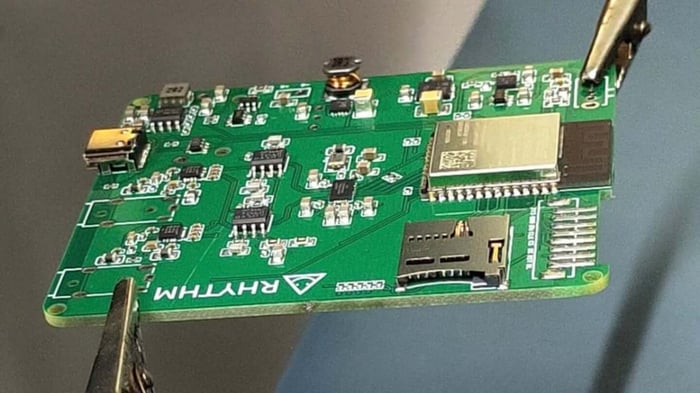
Think of it as keeping a busy kitchen away from a recording studio. The kitchen can be doing important work, but you probably don’t want every clatter, buzz, and appliance hum reaching the microphone. RHYTHM applies a similar principle inside the player, separating the noisy parts of digital operation from the delicate analog audio path.
The result is a design that pays attention to the spaces between notes, not just the notes themselves.
Physical Controls Bring Back the Tactile Experience
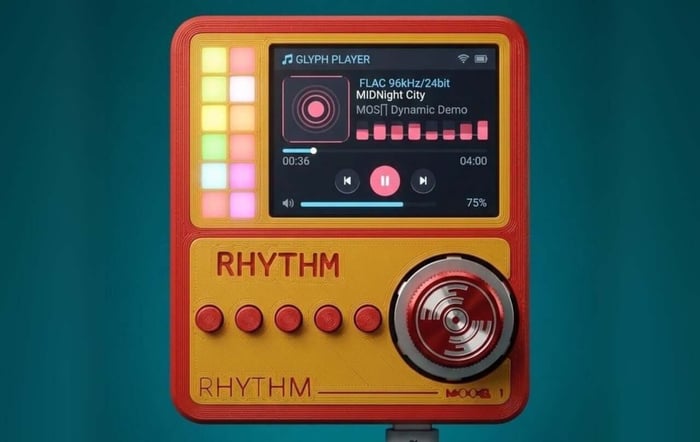
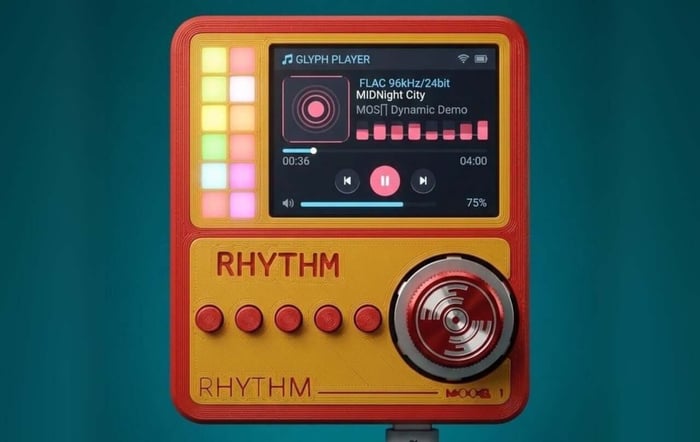
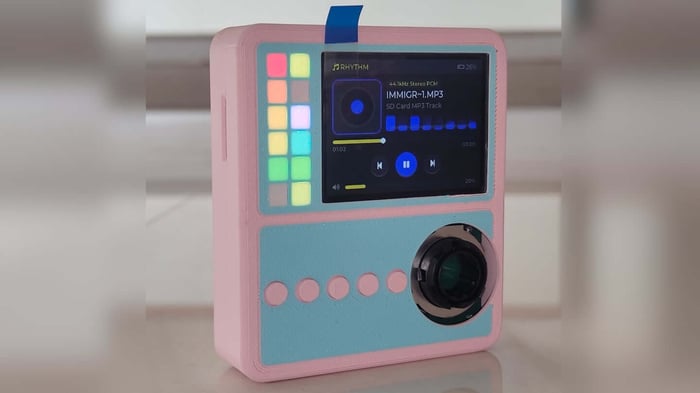
Once the audio architecture is in place, RHYTHM turns its attention to how the device feels in the hand. Navigation is handled by a precision mechanical rotary encoder alongside a group of tactile buttons.
That combination gives the player a physical personality. A rotary encoder can be turned, clicked, and operated by feel, while buttons provide a clear physical response when pressed. A touchscreen, by comparison, offers a smooth glass surface that can display almost anything—but rarely tells your fingers much about what they’re doing.
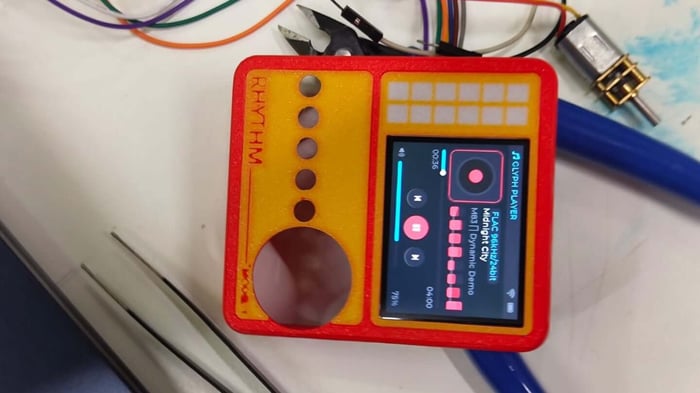
The controls work alongside a compact 2-inch color display. That screen is large enough to support the interface while remaining small enough to keep the device from feeling like a shrunken smartphone.
This distinction matters. RHYTHM isn’t trying to recreate the phone experience in a smaller shell. It reads more like a purpose-built instrument—something that can live in a pocket or bag and be operated without demanding constant visual attention.
There’s a particular pleasure in physical controls. You can reach for a button, turn a dial, and make an adjustment without looking down every few seconds. It’s a small rebellion against the idea that every interaction needs to happen on glass.
Local Music Instead of Constant Connectivity
The practical side of RHYTHM is completed by a microSD slot, allowing users to store lossless music files locally. Playback doesn’t depend on a streaming connection, an app ecosystem, or the availability of a particular service.
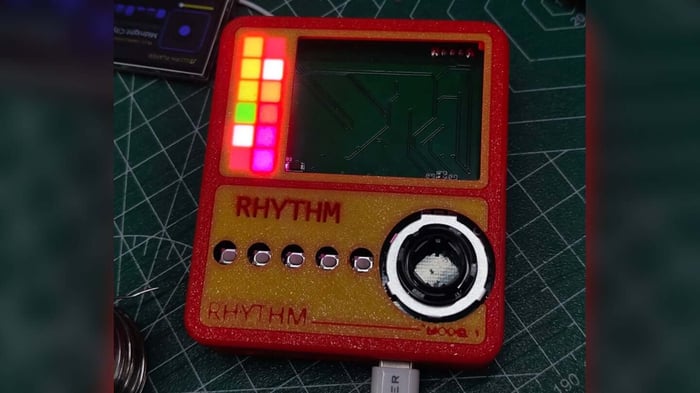
That local-first approach fits neatly with everything else about the design. If the player’s goal is uninterrupted listening, then removing the need for a constant connection is a natural step. Your music lives on the device, ready to play without a signal, account screen, or app update getting between you and the first track.
It also gives albums a little more room to breathe. Instead of selecting one song from a constantly shifting stream, listeners can keep their own files close at hand and move through them with the device’s physical controls.
RHYTHM isn’t claiming that streaming is useless. Smartphones remain excellent at quick access and convenience. The point is that convenience isn’t the only way to listen. Sometimes the better experience comes from choosing a device that does less—and does that one thing with more intention.
A Focused Alternative to the Smartphone
Taken together, RHYTHM’s choices create a clear identity. The dedicated ESS SABRE DAC, discrete amplifier stage, separate power regulation, independent headphone outputs, tactile controls, compact display, and microSD storage all support the same idea: music should be allowed to stand on its own.
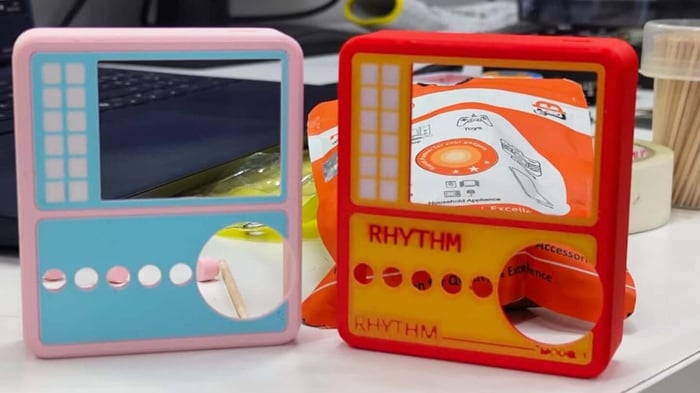
There’s no need to pretend this device offers the same broad convenience as a smartphone. It deliberately gives some of that convenience up. In exchange, it offers a calmer experience built around a single uninterrupted task.
That trade-off is the entire appeal. RHYTHM feels designed for the moment when you don’t want another screen competing for your attention. You want to press play, put on your headphones, and let the album occupy the foreground again.
In an era when nearly every gadget wants to become a phone, RHYTHM chooses to become something else: a focused instrument for listening.
Conclusion: Can a Dedicated Player Make Music Feel More Personal Again?
The RHYTHM music player makes a persuasive case for stepping away from all-purpose devices when the goal is serious, distraction-free listening. With carefully separated audio hardware, two independent headphone outputs, hands-on controls, and local lossless storage, it turns music playback into a more intentional ritual. Would you return to a dedicated player for your favorite albums, or is smartphone convenience too hard to leave behind?
FAQ
- What is the RHYTHM music player designed to do?
RHYTHM is a dedicated digital audio player created primarily for playing music without the distractions of smartphone notifications, apps, and constant connectivity. - What DAC does RHYTHM use?
The player uses an ESS SABRE DAC, a dedicated digital-to-analog converter from a family of components associated with hi-fi audio equipment. - Can two people use RHYTHM at the same time?
Yes. RHYTHM includes two independent, actively buffered 3.5mm headphone outputs, each powered by its own dedicated amplifier chip. - How does RHYTHM reduce unwanted audio interference?
Its digital logic and high-frequency switching lines are physically separated from the analog audio circuitry, with each side receiving power through its own ultra-low-noise regulator. - How is music stored on the device?
RHYTHM includes a microSD slot for local storage of lossless music files, allowing playback without relying on a streaming connection or app ecosystem.
If the dedicated listening experience brings back memories of favorite albums and simpler music players, a beautifully displayed album cover can keep that feeling alive on the wall. Browse the favorite album cover posters at Architeg Prints for a warm, music-inspired addition to your space.
 | DISCOUNTGET 30% OFF*Use code on your next order:
|
* This post may contain affiliate links, meaning we earn a commission if you make a purchase through these links, at no additional cost to you.