RØDE Wireless Go Gen 3 Review — The Benchmark for Wireless Audio Systems


 See more Architeg Prints stories on Google.
RØDE Wireless Go Gen 3 Review — The Benchmark for Wireless Audio Systems
Explore the cutting-edge features of the RØDE Wireless Go Gen 3 and why it sets a new standard in wireless sound for creators and professionals alike.
When I'm not diving into gadgets for Digital Camera World, I often moonlight as a camera operator for corporate shoots. The gear I use is frequently supplied by clients, and more often than not, it comes from the renowned Australian brand RØDE Wireless Go Gen 3 microphone. With over 50 years in crafting top-tier microphones for vlogging and professional filmmaking, RØDE has built a legacy of excellence. Beyond flagship products like the RØDE Wireless Pro microphone, 2024 brought a fresh gem to the table: the compact and budget-friendly RØDE Wireless Micro microphone, tailored specifically for smartphone users and content creators growing in numbers every day.
The original RØDE Wireless Go microphone launched in 2019, winning hearts among videomakers for the sheer freedom it offered — cutting the cord between mic and camera. The 2021 Wireless Go II microphone stepped it up with a two-channel receiver for dual-voice capture, plus onboard recording on the transmitters themselves, ensuring a clean audio track even if the signal dropped. Fast forward to December 2024, and the third generation Wireless Go arrives. I grabbed one to test its sleeker features and see if it truly lives up to its promise.
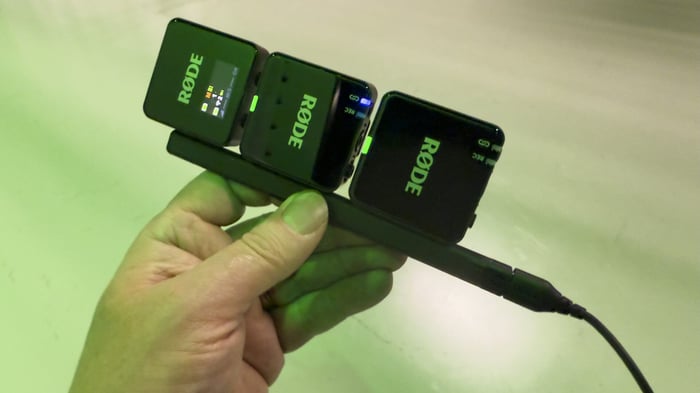
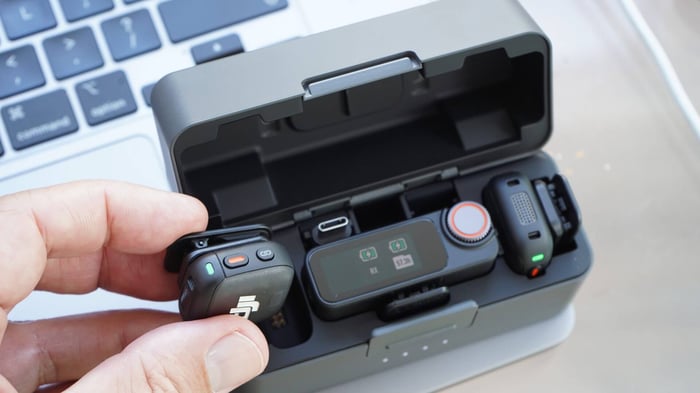
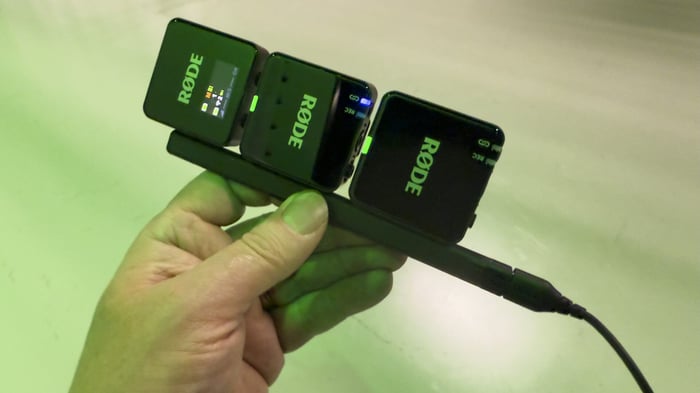
The receiver and two transmitters of the RØDE Wireless Go 3 charge together via USB-C, clipped into a handy plastic holder connected to power.
RØDE Wireless Go Gen 3 Specs at a Glance
| Parameter | Details |
|---|---|
| Polar Pattern | Omnidirectional |
| Frequency Response | 20 Hz – 20 kHz |
| Max Sound Pressure Level (SPL) | 123.5 dB |
| Signal-to-Noise Ratio (SNR) | 72 dB |
| Battery Life | Up to 7 hours |
| Maximum Range | 260 m (line of sight) |
| Built-in Recording | Yes |
| Dimensions | 46.5 mm (W) x 44 mm (D) x 20 mm (H) |
| Weight | 35 g |
Buying and Using the Wireless Go Gen 3
In local markets, you can find the Wireless Go Gen 3 on popular platforms like Ozon and Avito, as well as specialized audio stores. Prices roughly range from $230 to $400 depending on the seller and delivery options. Official supply chains might be limited, so warranty coverage often depends on the individual retailer. It's wise to check the package contents and return policies beforehand.
Operating on the common 2.4 GHz frequency, the device requires no special permissions and pairs smoothly with most cameras and smartphones available locally. The receiver’s interface and RØDE Central software are primarily in English but intuitive enough for easy navigation. To tweak settings fully or offload recorded audio, installation of the proprietary software on Windows, macOS, or mobile devices will be necessary. Grey-market units might lack localized manuals, but online communities offer plenty of helpful guides. Charging via USB-C is hassle-free, compatible with standard power outlets using an adapter.
Design and User Experience: Familiar Yet Refined
If you already own Wireless Go II microphone, the third generation won't surprise you much in size or shape, though the new transmitters shed about 5 grams each.
Each transmitter clips snugly to your subject’s clothing. Alternatively, it can be attached to a belt, and there’s a 3.5 mm TRS port for connecting an external lavalier mic (sold separately)—perfect for discreet lapel placement since the transmitters themselves are quite noticeable on shirts.
At first glance, the square black transmitters look nearly identical to the receiver. But once powered on, the receiver’s OLED screen lights up with vital info such as input sound levels. Transmitters sport a blue connection indicator and a button to trigger onboard recording.
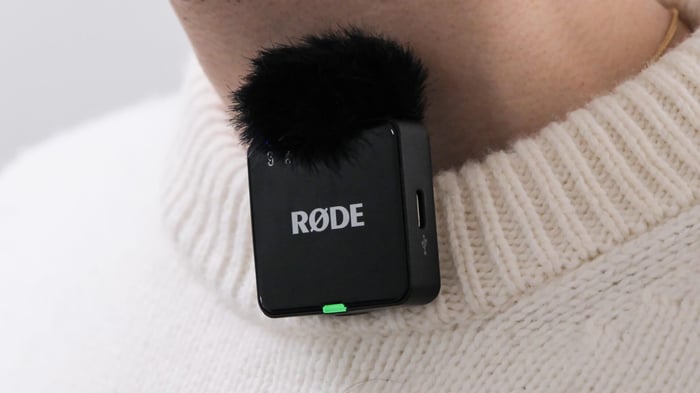
The included furry windscreen effectively cuts unwanted noise. Just twist and snap it onto the transmitter’s built-in mic. The blue LED confirms connection to the receiver.
Performance Upgrades That Matter
A standout upgrade in Wireless Go 3 microphone is its extended transmission range — now up to 260 meters in direct sight, compared to 200 meters on the previous gen.
But the real game-changer is the advanced onboard recording capability: 32-bit float audio quality, previously reserved for the pricier Wireless Pro microphone. This format offers an extensive dynamic range, meaning loud sounds won’t clip or distort, and quiet moments can be boosted without introducing hiss or noise.
This lets you relax while recording — no more obsessively watching levels as you would with traditional mics. Just hit the record button on the transmitter, and a red LED confirms your audio is being captured in pristine 32-bit float format. The receiver’s OLED shows a matching red icon next to the transmitting channel. You can even control recording remotely from the receiver’s “Ø” button.
Transmitter recordings plug straight into your PC or Mac for editing in your favorite video software. Keep in mind, 32-bit float is only available for onboard recordings; audio streamed live to the camera won’t use this format, so you still need to monitor input levels there.
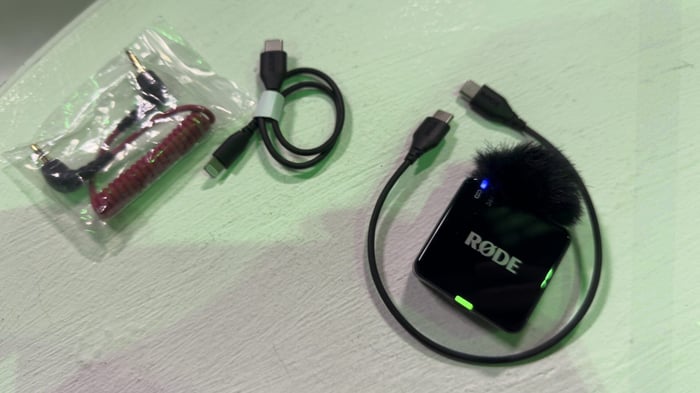
The kit includes cables to connect the receiver to smartphones or mirrorless/DSLR cameras.
Charging and Storage Simplified
Most wireless mic kits, including RØDE Wireless Micro microphone, come with a plastic charging case acting as a power bank for transmitters and receiver. Wireless Go 3 swaps this for a slim charging bar—a plastic holder with three USB-C ports spaced evenly. Pop in the two transmitters and receiver, connect the bar via USB-C, and you’re charging.
Everything tucks neatly into a soft fabric pouch that holds the charging bar, windshields, and cables. Packing it all up can be a bit fiddly due to the soft closure, but it’s more compact than bulky hard cases. If you prefer, you can buy a sturdier case separately.
Sound Performance: Real-World Testing
With a background in sound recording, I’m used to monitoring and tweaking audio levels constantly. But the Wireless Go 3’s GainAssist feature took that worry off my plate. Clipping the transmitter to my lapel, connecting the receiver to my iPhone 16 Pro smartphone, and hitting record was easy—all while the receiver automatically adjusted levels for a crisp, steady sound.
During a video review of the Neewer AS 600B LED light, I noticed some rustling when the mic brushed the fabric during movement. After repositioning the transmitter away from the shirt, the noise vanished—my setup error, not the mic’s fault.
The digital Series IV transmission on 2.4 GHz delivered crystal-clear and stable audio throughout. I did boost volume slightly in Final Cut Pro to reach my preferred -6 dB peaks, but the quality remained excellent. Check out my review video to hear for yourself.
Latency, often a pain point with wireless setups causing lip-sync issues, was nearly nonexistent thanks to the low-latency codec and robust 128-bit encryption. This saved me precious editing time as I didn’t need to nudge the audio track to sync perfectly.
What Wireless Go 3 lacks is built-in noise suppression—but that’s actually a plus. Many onboard noise filters sound artificial. I get far better results applying noise reduction during post-production with tools like Final Cut Pro.
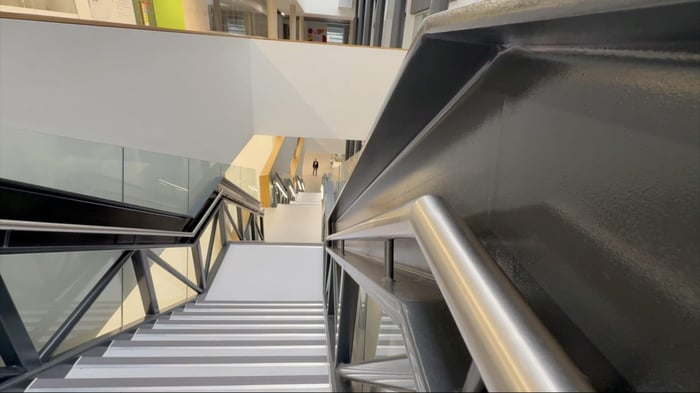
Barely visible at the bottom of this staircase, yet the audio remains crisp, just like standing next to the camera.
Testing the Limits: Signal Range in Challenging Spaces
Next, I took the Wireless Go 3 to the longest staircase in the building to test signal transmission over distance and through obstacles. Often, signals drop when the transmitter and receiver lose line of sight or when thick concrete and metal get in the way.
I connected the receiver to my iPhone 16 Pro smartphone at the top and walked down about 50 meters while talking. Upon reviewing the recording, my voice stayed clean and clear, even when I wasn’t facing the camera. Impressive reliability in a tough environment!
Verdict: Is Wireless Go Gen 3 Worth It?
If you’re rocking the Wireless Go II microphone, upgrading isn’t a must. Both share the clever Intelligent GainAssist that smooths levels in real-time. But the stellar 32-bit float recording on the Wireless Go 3 can be a lifesaver when rescuing overly loud or very quiet takes, without artifacts like distortion or hiss. Just remember this is exclusive to files recorded on the transmitter itself.
The extended range without dropouts is a standout feature, though I never needed the full 260 meters. Near-zero latency sped up my editing workflow, which is a blessing for tight deadlines.
With 14 color options, RØDE clearly also wants to charm social media creators craving a slick, wireless mic that looks great on camera. But most pros will probably stick with the classic black.
| Category | Rating | Notes |
|---|---|---|
| Features | 4.5/5 | 32-bit float onboard recording, Intelligent GainAssist for smooth auto-leveling |
| Design | 4.5/5 | Square plastic transmitters/receiver with many color choices |
| Performance | 5/5 | Superb sound quality even at distance, stable connection |
| Value for Money | 4.5/5 | More affordable than Wireless Pro, yet nearly as capable |
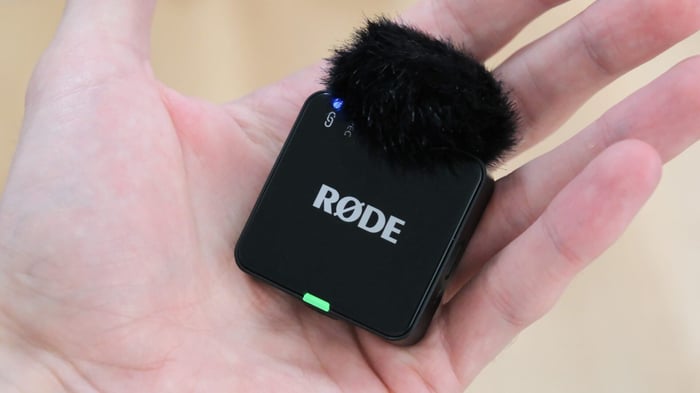
Compact, stylish, and highly functional – the Wireless Go Gen 3 feels right at home in any creator’s toolkit.
Alternatives to Consider
RØDE Wireless Pro
For those with Wireless Go II microphone, Wireless Pro microphone might be the natural upgrade with beefier features. Interestingly, Wireless Go 3 competes directly with Wireless Pro on specs like 32-bit float recording and 260-meter range, but at a lower price point.
Boya Mini
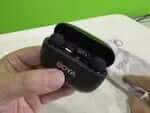
If you want a simpler, budget-friendly "plug and play" mic for social content on smartphones, the Boya mini microphone is worth a look. Its transmitters are much smaller and less conspicuous than the boxy Wireless Go 3. The Boya mini also offers clear audio at comparable distances. As an iPhone shooter, I’d lean toward Boya mini for casual use, especially given its affordability.
- What is the maximum operating distance of the RØDE Wireless Go Gen 3?
It can transmit audio up to 260 meters in direct line of sight. - Does the Wireless Go Gen 3 support onboard recording?
Yes, it records directly on the transmitters in 32-bit float audio. - Can I use external lavalier microphones with the Wireless Go Gen 3?
Absolutely, the transmitters have a 3.5mm TRS input for wired lav mics. - Is the charging solution portable and convenient?
Yes, it uses a compact USB-C charging bar that powers the receiver and both transmitters simultaneously. - Does the system have low audio latency?
Yes, it features near-zero latency, ideal for sync-critical video work.
For fans of flawless wireless sound and sleek design, why not bring the vibe home? Shop your favorite album cover poster at our store to celebrate your audio gear in style: Architeg Prints.
 | DISCOUNTGET 30% OFF*Use code on your next order:
|
* This post may contain affiliate links, meaning we earn a commission if you make a purchase through these links, at no additional cost to you.