Spendor A7.2 Review: A Precise Upgrade Focused on Clarity and Detail



Spendor A7.2 Review: A Precise Upgrade Focused on Clarity and Detail
Explore the Spendor A7.2 speakers—an elegant update delivering pure, detailed sound while facing the challenge of following a legendary predecessor.
You know the "second album curse" all too well. A band drops a brilliant debut that rocks the charts and becomes an instant classic. Then comes the sequel, burdened with sky-high expectations. It often ends up polished, technical, but somehow sterile—missing that spark that made the original unforgettable. Hi-Fi speakers face a similar predicament.
For six years, the Spendor A7 floorstanders stood as the gold standard in their price range, snagging award after award and leaving competitors in the dust. Now, we have their eagerly awaited successor: the Spendor A7.2. The engineers faced a monumental task—how do you improve what was already near perfection?
This is one of those moments where a tiny tweak could either elevate the product to legendary status or shatter its magic. Can the A7.2 repeat the triumph, or will it fall flat in the shadow of its iconic predecessor?
A Legacy of Excellence Continues
We’ve long been fans of the original Spendor A7 speakers. These sleek floorstanders, launched in early 2018, snagged our top award that very year and held onto the crown for a staggering six years—only yielding to the superb ProAc D20R in 2024.
The new Spendor A7.2 was expected to carry this proud torch forward. At first glance, it seems the designers chose a cautious path. The cabinet height remains at an ideal 93.4 cm, preserving the original’s brilliant fit for typical listening rooms—not too bulky, not too imposing.
Availability and Price Range
Although Spendor is officially available in select markets, including well-known Hi-Fi salons, the A7.2 model can be found in high-end audio stores where audiophiles gather. The price, depending on finish, ranges roughly around $5,300 to $5,700 per pair. Generally, these speakers are special order items, but many dealers offer demo pairs for in-store listening sessions.
System Pairing and Setup Tips
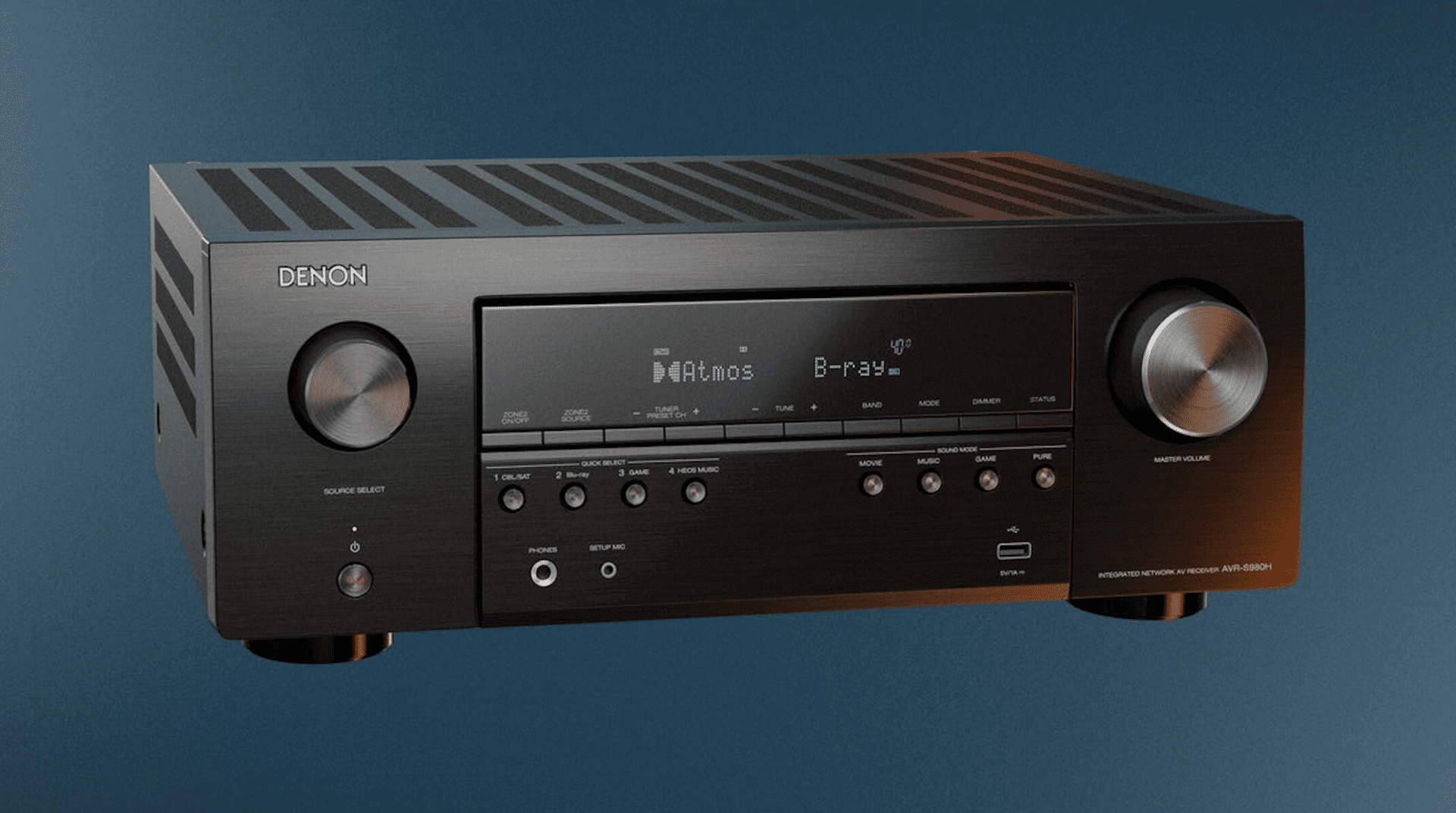
One key to getting the most from the A7.2 is pairing them with the right amplifier. Due to a slight decrease in sensitivity compared to the original, these speakers require more power and tight bass control from your amp.
Thanks to many stores allowing you to bring your own amplifier or try various options in-house, you can experiment easily to find the perfect synergy. Just remember: the bass reflex port sits at the back, so give these beauties some breathing room—pushing them flush against a wall may result in boomy, loose bass.
Build Quality and Design Elegance
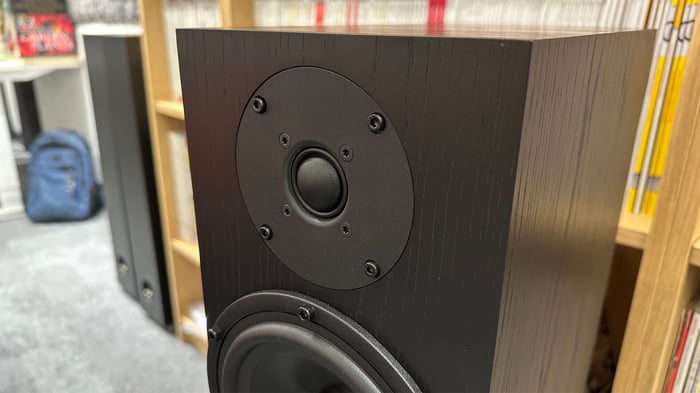
Like their predecessors, the A7.2 cabinets are impeccable. Every edge is flawlessly straight, and the structure feels rigid yet well-damped. Spendor’s attention to detail shines—from the thoughtfully designed floor spikes to the high-quality natural wood veneer that graced our test sample.
Though these are premium speakers, they’re not overly heavy at 17.7 kg each—easy enough to reposition if needed without breaking a sweat.
Spendor A7.2 Technical Specs at a Glance
- Type: Floorstanding speakers
- Drivers: 27mm soft dome polyamide tweeter, 18cm EP77 polymer mid/woofer
- Enclosure: Rear-ported bass reflex
- Bi-wiring: No
- Impedance: 6.75 Ohms (min 5.4 Ohms)
- Sensitivity: 85 dB
- Dimensions (HxWxD): 93.4 x 18 x 30.5 cm
- Weight: 17.7 kg each
- Finish options: Black oak, oak, walnut, matte white
Innovations Under the Hood
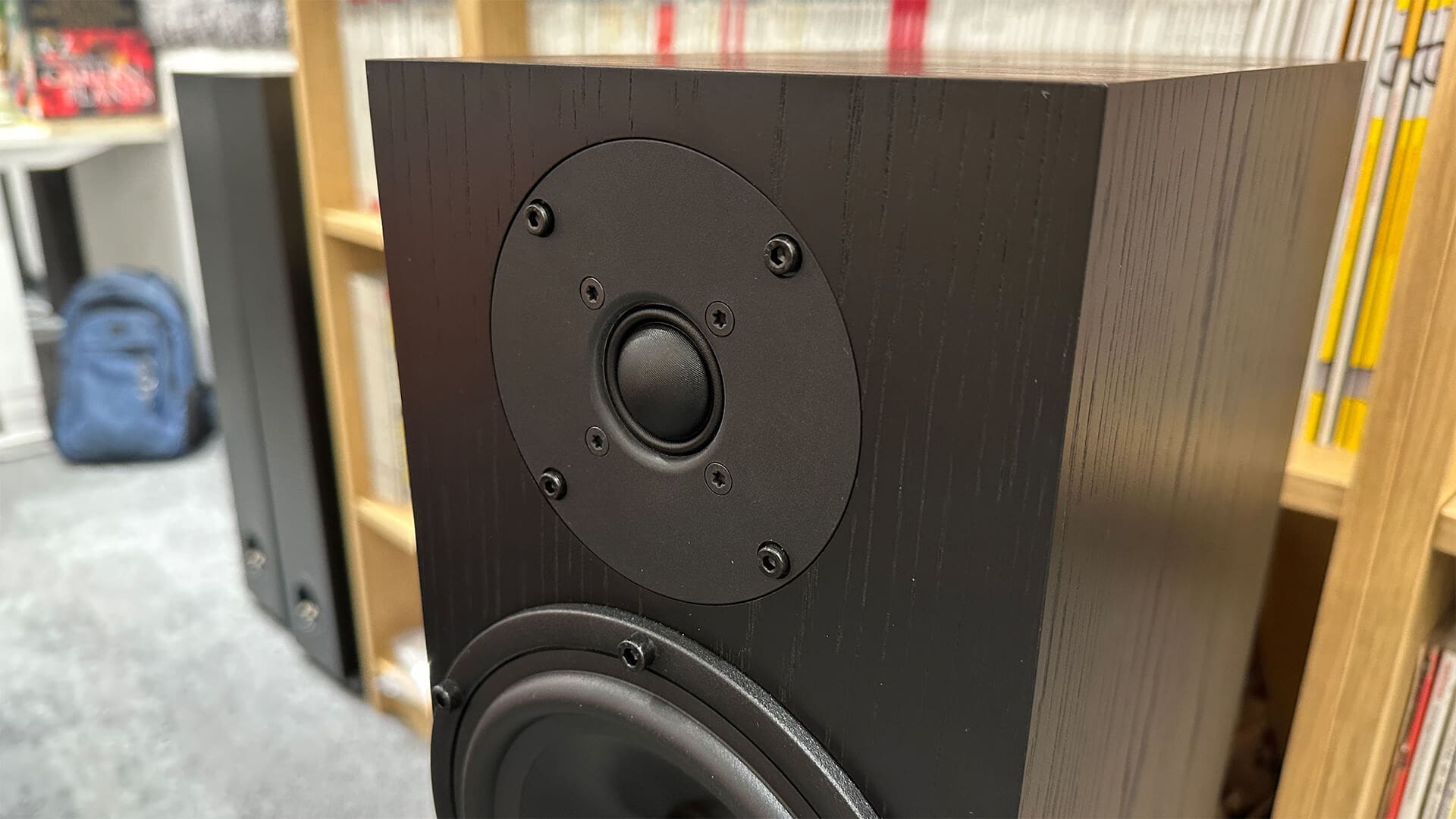
The engineers didn’t just rest on their laurels. The A7.2 sports a more traditional 27mm soft dome tweeter instead of the original’s 22mm version. Gone is the protective grille that once shielded curious fingers from the tweeter’s delicate dome.
The crossover has been completely redesigned. Now the trusted 18cm EP77 mid/woofer takes over sound reproduction from 2 kHz—lower than the unusual 3.7 kHz crossover point of the original.
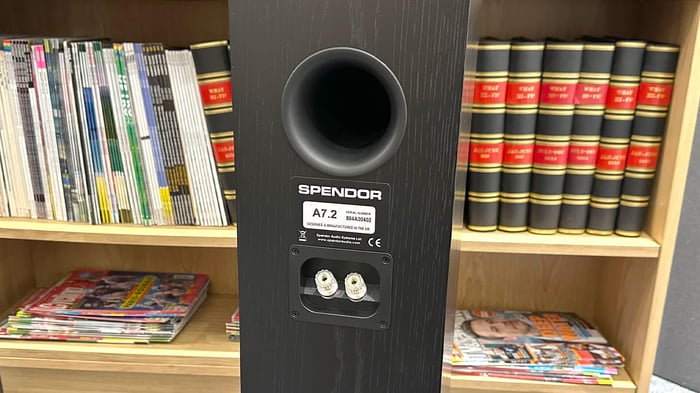
Spendor also swapped the signature slot-shaped bass port for a classic round tube, repositioned closer to the center on the rear panel. The speaker terminals were bumped higher, a move that’s arguably less tidy than their previous tucked-away placement at the bottom.
These changes brought a slight drop in sensitivity from 88 dB to 85 dB and a nominal impedance shift down to 6.75 Ohms, making the speakers a bit more demanding on amplifiers.
Compatibility and Room Setup
While the impedance shift isn’t a big deal, the sensitivity drop means you’ll want a more powerful amplifier, especially in larger rooms or for louder volumes.
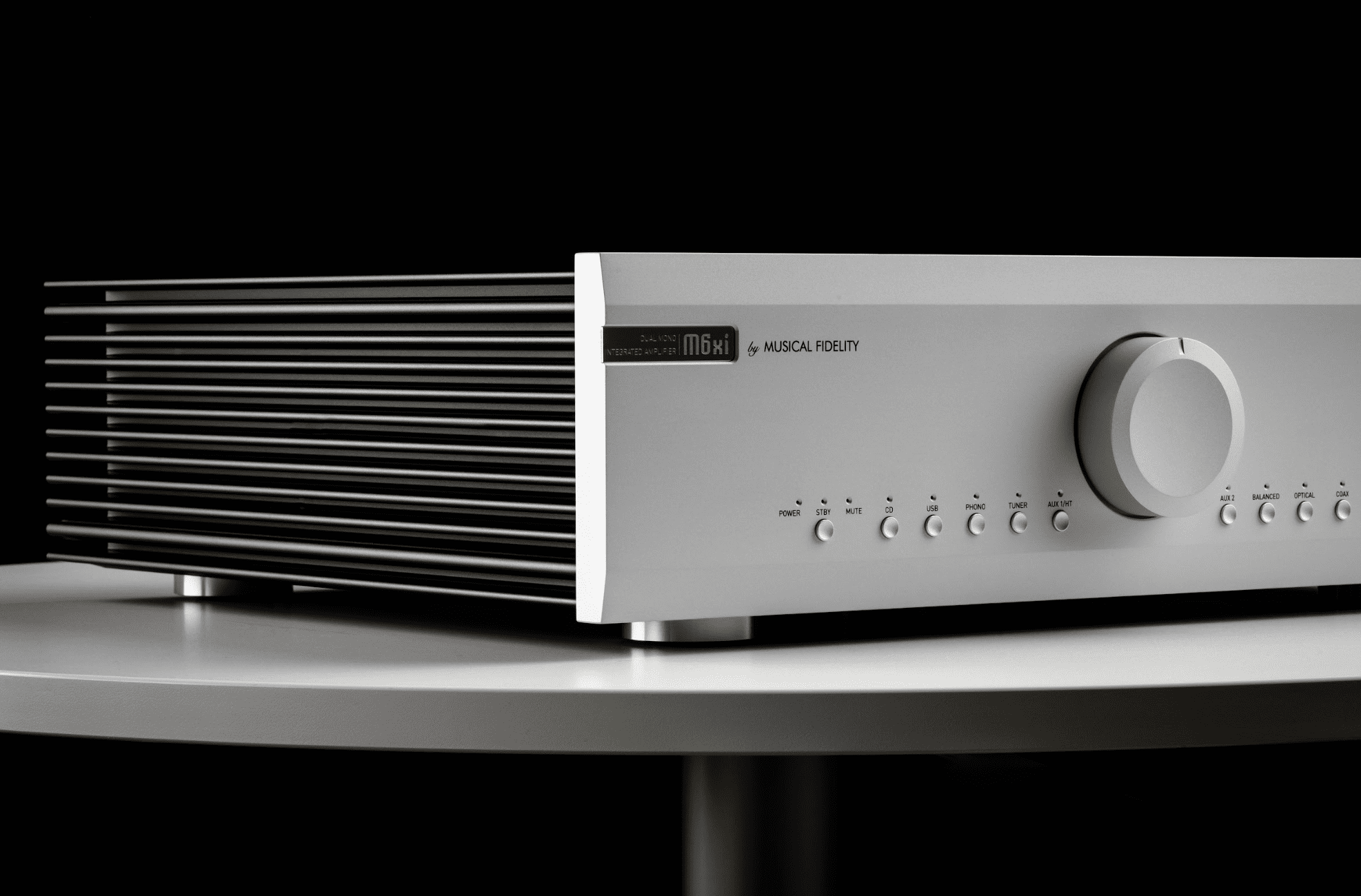
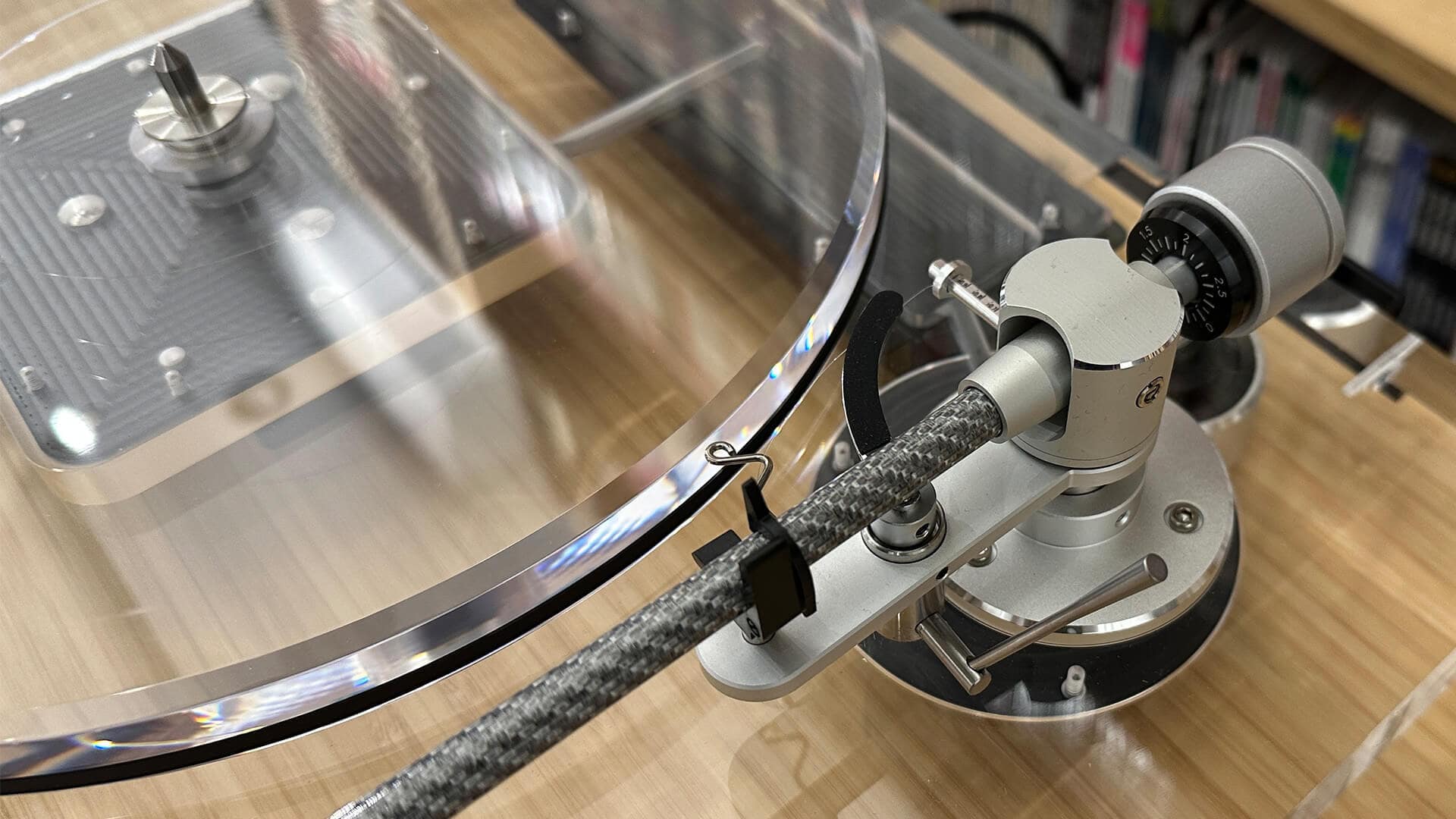
To do justice to these speakers, pairing them with quality electronics is key. Our main tests used a Naim ND555 streamer alongside a Rega Planar 6 turntable. Amplifiers like the Naim Nait XS3 amplifier and Cyrus 40 AMP amplifier proved excellent partners, with the Cyrus delivering particularly impressive results. For a peek at ultimate potential, we also tried a Burmester 088/911 MkIII pre/power combo.
As competition, we lined them up against Epos ES-14N bookshelf speakers, PMC Prodigy 5 floorstanders, and reference monitors ATC SCM50.
Though we lacked the original A7 for side-by-side comparison, memory suggests the new model is fussier about distance from the rear wall. The originals rarely exhibited bass bloom near walls, whereas the A7.2 is noticeably more sensitive to placement.
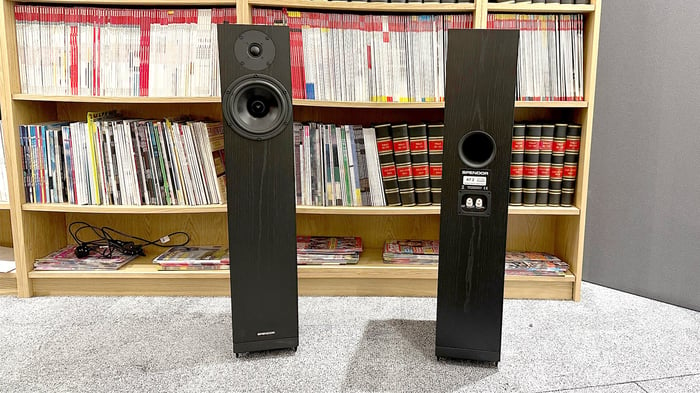
Our 3 x 7 x 5 meter listening room led us to place the A7.2 roughly 80 cm from the back wall, set well apart laterally, and slightly toed-in so their sound axes met just behind our head. This arrangement provided a dense, expansive stereo image with precise focus and satisfying depth.
Sound Experience: Clean, Precise, Yet Reserved
Cueing up John Williams’ “Imperial March,” the A7.2 reveals a ton of good qualities. The delivery is detailed and insightful, with well-organized sound staging. Even the faintest instrumental lines stand out clearly, filling the soundscape with richness.
The sound projects superbly throughout the room, practically detaching from the physical speaker cabinets—a testament to Spendor’s work on asymmetric bracing and cabinet damping. The bass punches with surprising weight for the driver size, while tonal balance leans slightly fuller than before, yet remains neutral—not overly warm or colored.
Instrumental textures come through in fine detail. In terms of clarity and finesse, the A7.2 is hard to fault. These speakers unflinchingly reveal any flaws in your system or recordings, which is exactly what you want in this price tier.
However, those familiar with Williams’ dramatic piece know its dynamic complexity. The A7.2 handles this well, though a touch more energy and drive would have elevated the experience.
Similar feelings came when spinning Michael Jackson’s “Jam.” The speakers offer a measured delivery we appreciate, but they fall just short of delivering the dynamic punch and groove that this track demands.
We also question the new port design’s impact. The lows may have gained some authority and weight, but we miss the original’s lightness, smoothness, and precision in bass. The initial model was freer of such reservations.
Final Thoughts: The Trap of Perfect Sound
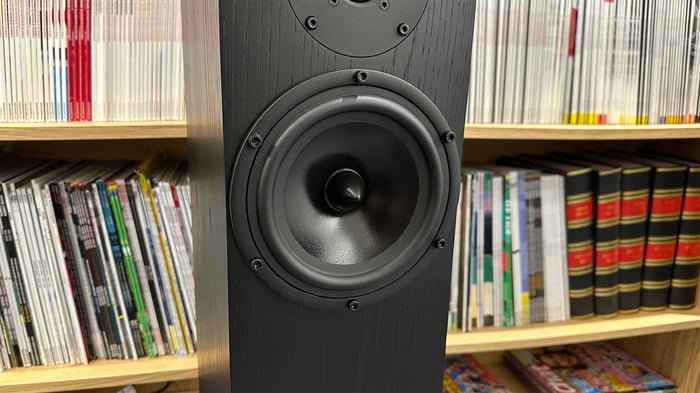
Listening through an array of music, from Bach to Prince to Jill Scott, we found the new Spendor floorstanders impressive but less captivating than expected. They tick nearly every box—detail, purity, stereo imaging, seamless driver integration—but they don’t envelop you in music quite like the best speakers in their class.
The A7.2 performs admirably but no longer claims the crown as the obvious category leader.
Ratings
- Sound: 4/5
- Build Quality: 5/5
- Compatibility: 4/5
“The A7.2 is a speaker that sounds incredibly even, clean, and technically correct. But in the process of chasing perfect frequency responses, it seems to have 'cured' the unique character that made the first version beloved.”
— Hi-Fi Enthusiast
This review leaves me pondering the true essence of Hi-Fi. Are we chasing sterile studio monitor accuracy or the emotional pull that makes us tap our feet? The Spendor A7.2 exemplifies how pursuit of objective perfection can sometimes erase the subjective magic. It’s a beautifully crafted speaker that plays notes. The original played music. And that difference is the crucial lesson: sometimes, a little imperfection is exactly the special ingredient turning good into beloved.
FAQ
- What are the main differences between the Spendor A7 and A7.2?
The A7.2 features a larger 27mm tweeter, redesigned crossover, a classic round bass port instead of a slot port, and slightly lower sensitivity requiring a more powerful amplifier. - Can the A7.2 speakers fit well in smaller rooms?
Yes, thanks to their moderate cabinet height and design, but they require careful placement, especially with some distance from the rear wall to avoid bass bloom. - What amplifier power is recommended for Spendor A7.2?
Due to an 85 dB sensitivity, a powerful amplifier with good bass control is recommended, ideally above 50 watts per channel. - Are there different finish options available?
Yes, there are four finishes: black oak, oak, walnut, and matte white. - How do the A7.2 compare to similarly priced competitors?
They offer excellent build and clarity but may lack the dynamic punch and soul found in some rivals.
For those who cherish music and the artistry of speaker design, why not bring this passion to your walls? Shop your favorite album cover posters today and celebrate sound and style in your own space at Architeg Prints.
 | DISCOUNTGET 30% OFF*Use code on your next order:
|
* This post may contain affiliate links, meaning we earn a commission if you make a purchase through these links, at no additional cost to you.