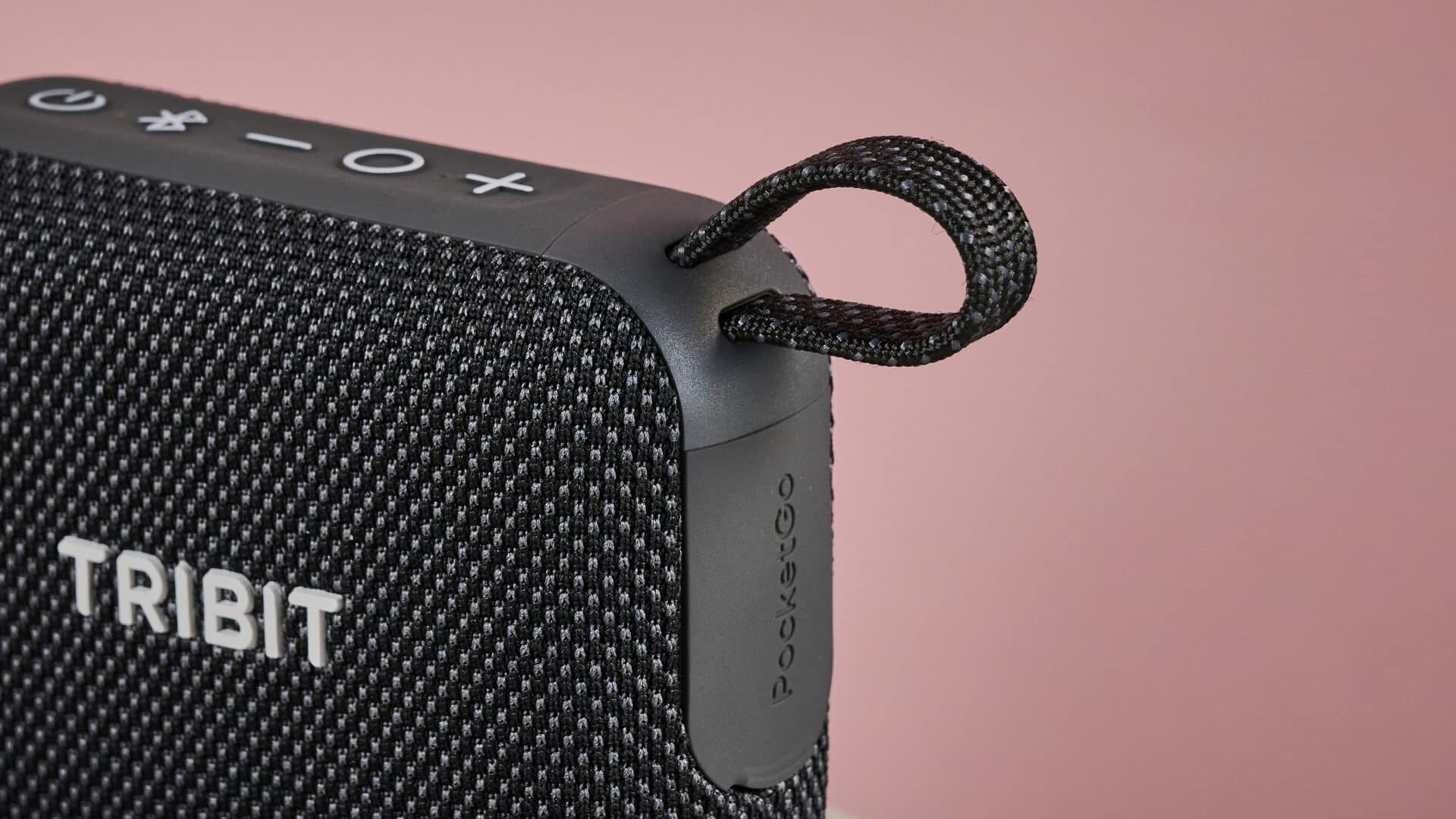
Tribit PocketGo Review — Compact and Affordable Bluetooth Speaker



Tribit PocketGo Review — Compact and Affordable Bluetooth Speaker
Explore the features and sound quality of the Tribit PocketGo, a compact Bluetooth speaker designed for on-the-go music lovers.
An Ultra-Portable Speaker for Every Adventure
If you're hunting for a pocket-sized Bluetooth speaker that’s both budget-friendly and rugged enough to tag along on your daily adventures, the Tribit PocketGo might catch your eye. This little device packs some surprising features into its tiny frame, making it a tempting option for those who need sound on the move without breaking the bank.
Availability and Price Points
The Tribit PocketGo is widely available on major marketplaces, making it easy to find. Prices generally hover between $23 and $40 depending on sales and platform, placing it comfortably within reach for most buyers.
- Where to Buy: Available on popular sites like Wildberries, Ozon, Yandex Market, and AliExpress.
- Price Range: Approximately $23 to $40.
- Warranty: Usually provided by the seller on these platforms, though official service centers may be limited. Always check store return and warranty policies before purchase.
First Impressions and Overview
This Bluetooth speaker is ultra-compact and surprisingly lightweight, weighing just 220 grams (about 0.5 pounds). It’s easy to clip onto backpacks or hang anywhere thanks to its small fabric loop. Designed for active lifestyles, its IP68 rating means it’s dustproof and waterproof—ready to handle showers, pools, beaches, or just rough outdoor use.
One of the standout features is its impressive 20-hour battery life, which rivals or even surpasses other contenders in this size category. However, the real test of any speaker is its sound quality—and here, the PocketGo delivers mixed results.
Pricing and Release Details
- Price: $34.99 (~$23-$40 depending on current exchange and discounts)
- Release Date: November 2025
The PocketGo launched in late 2025 and comes in a trio of colors: black, blue, and green. It undercuts its closest rival, the JBL Go 4, which retails around $50. Like the PocketGo, the JBL Go 4 has set a high bar for budget portable speakers.
Technical Specifications
| Feature | Details |
|---|---|
| Weight | 220 g |
| Dimensions | 108 x 81 x 42 mm |
| Connectivity | Bluetooth 6.0 |
| Battery Life | 20 hours |
| Speaker Driver | 1x 7W full-range |
| Waterproof Rating | IP68 |
Features Worth Noting
- Customizable 9-band equalizer with various presets to suit your music style.
- Impressive 20-hour battery life, perfect for extended use.
- Ability to pair multiple speakers for stereo sound (though no Auracast support).
- MicroSD card slot for direct music playback—an uncommon but welcome feature.
The accompanying Tribit app allows for EQ adjustments, playback control, sleep timer settings, and toggling voice prompts. However, it’s a fairly basic app with a dated interface. Firmware updates have been spotty; some users, including myself, struggled to update the speaker despite having the latest app version. Still, your experience may vary.
Notably, the built-in microphone supports speakerphone use and voice assistants but delivers “okay” call quality—somewhat distant but intelligible.
Sound Quality: A Mixed Bag
Let's be upfront: the Tribit PocketGo isn’t going to win any audiophile awards. But for a tiny speaker, it holds its own in some respects.
- Mid and high frequencies sound clean at moderate volumes.
- Bass frequencies are largely absent due to the small driver size.
- The speaker lacks the dynamic range and expressiveness of its competitor, the JBL Go 4.
In songs like Black Eye by Allie X, rapid drum machine beats remained tight without becoming muddy, though the overall sound lacked depth. Percussive hits missed some of the sharpness I hoped for, and the speaker’s dynamics never truly impressed. Vocals stayed clear at volumes around 50%, but pushing past 60-70% introduced noticeable distortion and compression.
Tracks heavy on low-end bass, like M-High’s 12 O.C Riddim, lost their punch, which is expected given the PocketGo’s size limits. On the flip side, less demanding tracks such as Ned Doheny’s I’ve Got Your Number showcased cleaner acoustic guitars and vocal clarity, though compression was still present at higher volumes.
Comparing directly to the JBL Go 4, the latter generally outperformed the PocketGo in sound separation and dynamics, despite the PocketGo’s ability to play louder.
Design: Familiar Yet Functional
The PocketGo’s design is, frankly, a near twin to the JBL Go 4. It sports the same fabric grille, rubberized control panel, and a small hanging loop. However, it lacks the refinement and premium feel of the JBL and doesn’t offer the same wide color variety.
That said, its compactness and featherweight build make it a breeze to carry around. The IP68 rating is a huge plus, promising full dust protection and water resistance that can survive 30 minutes in 1.5 meters of water. The rugged build should also handle accidental drops with ease.
Value for Money
At around $35, the PocketGo is a budget-friendly option. It delivers solid battery life, excellent durability, and the convenience of a microSD slot. However, sound quality and design originality fall short of more polished rivals.
If you're after the best sound at a low price, the JBL Go 4 remains the wiser choice—even at a slightly higher cost—thanks to its superior audio and more stylish appearance.
Scorecard at a Glance
| Feature | Notes | Score |
|---|---|---|
| Functionality | Great battery life, limited app, no Auracast | 3.5/5 |
| Sound Quality | Good mid/high at moderate volume, weak bass | 3/5 |
| Design | Too close to JBL Go 4, but compact and rugged | 3/5 |
| Value | Solid features for price, but not outstanding | 3.5/5 |
How It Compares
| Feature | Tribit PocketGo | JBL Go 4 | Edifier ES20 |
|---|---|---|---|
| Price | ~$35 | ~$50 | ~$90 |
| Weight | 220 g | 285 g | 300 g |
| Dimensions | 108 x 81 x 42 mm | 94 x 78 x 42 mm | 90.4 x 93.7 x 49.7 mm |
| Bluetooth Version | 6.0 | 5.3 | 5.4 |
| Battery Life | 20 hours | 7 hours | 15 hours |
| Driver Size | 45 mm full-range | 45 mm full-range | 43 mm full-range |
| Waterproof Rating | IP68 | IP67 | IP67 |
JBL Go 4
The JBL Go 4 is essentially the speaker Tribit PocketGo aims to emulate. It’s not the best-sounding speaker out there but boasts clear mids, controlled highs, and an equalizer to tailor your sound. It’s colorful, well-made, and lightweight—earning a spot in many “best Bluetooth speakers” lists.
Edifier ES20
The Edifier ES20 was one of the standout Bluetooth speakers of 2025. A bit larger than the PocketGo and Go 4, it impresses with detailed mids, punchy bass, and expressive highs, all wrapped in a highly water-resistant body.
Testing Methodology
During a week-long test mostly conducted at home, I spent hours listening to a wide variety of music on the PocketGo. I primarily used streaming through Tidal and compared its performance directly with the JBL Go 4.
I’m no stranger to Bluetooth speakers, having reviewed over 30 models, so I approached this test with a clear idea of what works and what doesn't in the crowded portable speaker market.
Usage Tips for Different Climates and Streaming Situations
If you’re considering the Tribit PocketGo for use in varying environments, here are some helpful notes:
- The Tribit app is available in major app stores and generally works well, although the interface isn’t fully localized.
- The microSD card slot is a lifesaver if streaming services are restricted or cumbersome—allowing local playback without internet hassles.
- Charging is via USB-C, with the usual 5V smartphone chargers working perfectly.
- The IP68 rating ensures the speaker can withstand rain, dust, and snow—ideal for unpredictable weather conditions. However, battery life may shorten in extreme cold.
Overall, the PocketGo is a solid option, especially for those who value offline music and durable design.
“Tribit PocketGo is not the worst speaker I've heard by any means. The mids and highs sound quite clean at moderate levels, and less demanding tracks play decently.” — TechRadar Reviewer
Conclusion
The Tribit PocketGo brings a lot to the table for a tiny and affordable Bluetooth speaker. Its rugged design, stellar battery life, and microSD playback make it a practical choice for casual listeners on a budget. But when it comes to sound quality and polish, it falls short of the stellar JBL Go 4, which still holds the crown as my go-to compact speaker.
If you’re after pure value and don’t mind a bit of roughness in sound or design, PocketGo could be your next companion. For those who crave better audio and aesthetics, spending a little extra on JBL Go 4 or Edifier ES20 might be worth it.
What’s your go-to portable speaker, and how do you weigh features vs. sound? Let us know!
FAQ
- How long does the Tribit PocketGo battery last?
It offers an impressive 20 hours of playback, though higher volumes may reduce this time. - Does the PocketGo support stereo pairing?
Yes, you can pair two PocketGo speakers for stereo sound, but it lacks Auracast support. - Can I use the speaker without Bluetooth?
Yes, thanks to the microSD card slot, you can play music directly from a memory card. - How water-resistant is the Tribit PocketGo?
It has an IP68 rating, meaning it’s dust-tight and can survive 30 minutes submerged in 1.5 meters of water. - Is the Tribit app fully functional?
The app offers basic controls and EQ presets but can feel rudimentary and has had some firmware update issues.
Enjoy the vibe? Shop your favorite album cover poster at Architeg Prints for wall art that hits all the right notes!
 | DISCOUNTGET 30% OFF*Use code on your next order:
|
* This post may contain affiliate links, meaning we earn a commission if you make a purchase through these links, at no additional cost to you.