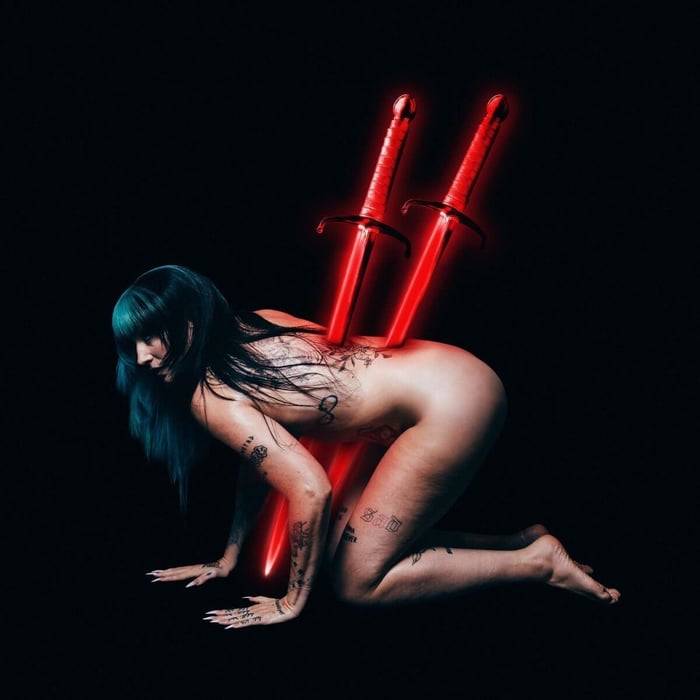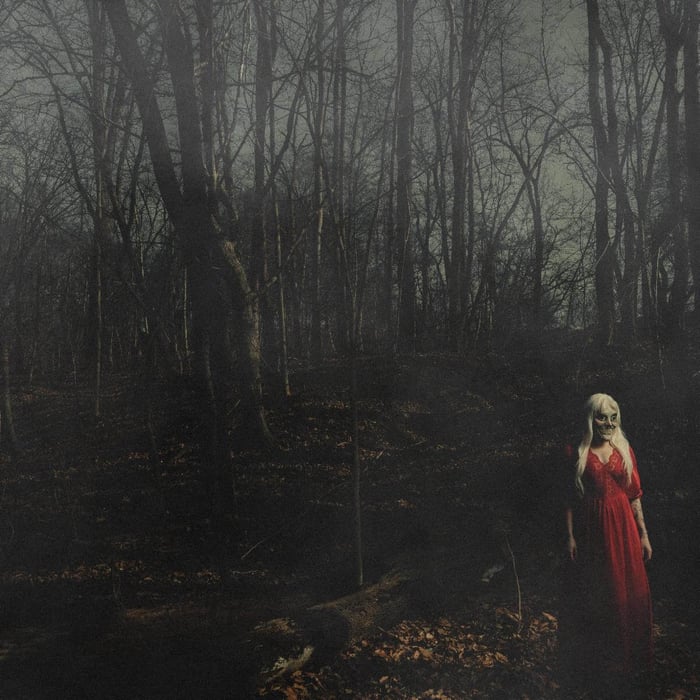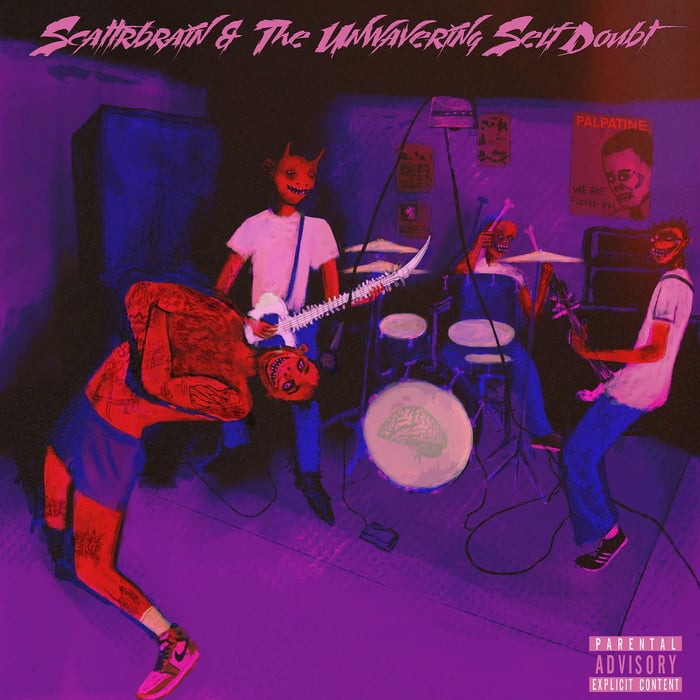
Unwavering Self-Doubt Album: GRIP Quits Winning and Starts Bleeding Loud


 See more Architeg Prints stories on Google.
Unwavering Self-Doubt Album: GRIP Quits Winning and Starts Bleeding Loud
Unwavering Self-Doubt turns GRIP’s swagger inside-out—punk guitars, short verses, and a persona built to survive failure instead of pretending it’s not real.
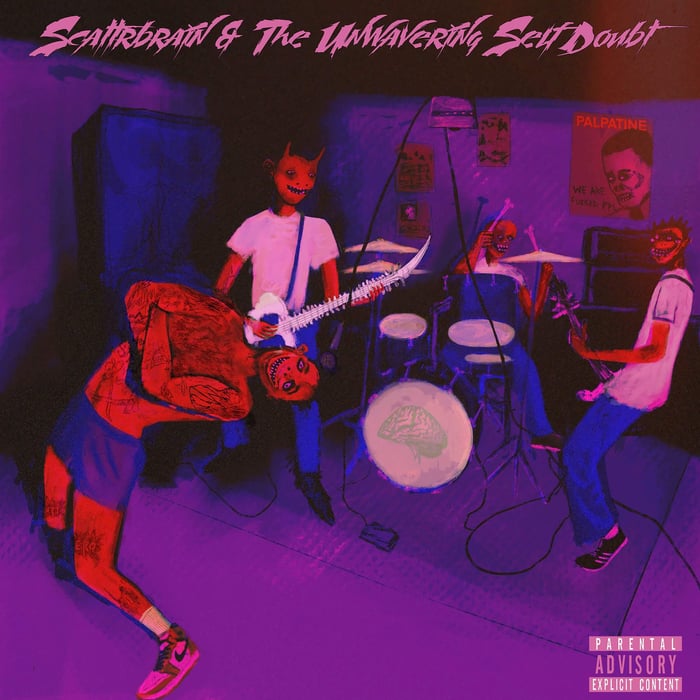
Courtesy of Stray Society LLC.
A record that walks in like a dare
This album doesn’t show up asking to be liked. It shows up asking what happens when a rapper—someone trained to sound like a winner—tries to tell the truth about losing without dressing it up as romance or irony.
And yeah, it’s louder than his rap work, but that’s not the point. The point is he’s trying to build a new container strong enough to hold the one thing rap culture generally refuses to sell: failure.
That Eminem feature isn’t a flex—it’s a warning label
One of the most revealing moments here isn’t even a guitar riff—it’s the track “Walkthrough!” with a guest verse from Eminem, the same superstar who signed GRIP to Shady Records back in 2021. Eminem drops a line that lands like a workplace safety lecture: as soon as you reach the top, people will want you to fall.
It’s supposed to sound motivational, I guess. But hearing it inside this album’s emotional weather, it reads differently: like an omen GRIP can’t un-hear.
GRIP spends plenty of time elsewhere sounding confident, and when his Atlanta accent pushes through, he’s got that snap that makes technical rapping feel effortless. Still, I couldn’t shake the feeling that his bravado is doing CPR on a career anxiety he doesn’t want to name outright. Especially with the detail hanging over all of this: he walked away from an option to sign with Shady again. That’s not a casual decision. That’s the kind of decision you make when “success” starts feeling like a costume you can’t breathe in.
Why punk? Because rap doesn’t like “I failed” unless it’s about love
Listening to Scattrbrain & The Unwavering Self Doubt, it’s obvious GRIP isn’t treating rock as a novelty field trip. This is reinvention with teeth: he’s dragging his writing into punk because the subject matter practically demands it.
Hip-hop can hold sadness. It can hold grief. It can even hold death. There’s a long, very public history of artists turning depression, addiction, and heartbreak into entire eras. But career failure—plain, unsexy, ambition-rotting failure—is a story rap mostly avoids unless it can be reframed as betrayal or a breakup.
That’s the catch: rap rewards winning narratives. Even the “sad” songs tend to come from a position of power. The heartbreak usually happens in a mansion.
This album isn’t trying to be a mansion record. It’s a “staring at the ceiling at 4 a.m.” record. And I don’t think that story would survive in his old format—not for long, not without getting forced into punchlines and posture.
So he moved the whole fight into a different room.
He doesn’t expand his writing here—he compresses it
A big change on this record is structural. The writing doesn’t sprawl across long rap verses where an idea can loop for twenty-four bars with extra flourishes. Here, the same emotional material gets squeezed into tighter chunks—four to eight bars that have to hit fast or die.
GRIP even says it outright:
“I took where I was at and thought, if I was to make characters out of this situation, this unwavering self-doubt, what would it look like? What would it sound like? What color would it be?” — GRIP
That’s not just an artsy thought experiment. That’s him admitting he needed distance from his own head, so he invented a frontman—Scattrbrain—as a louder, exaggerated version of the thing stalking him.
He pulls inspiration from Robert De Niro’s big, twitchy Taxi Driver energy, which makes sense. This isn’t subtle insecurity. This is insecurity turned into a character that paces the room and won’t let you sleep.
At first, I assumed the “persona” thing would feel like a gimmick—another alter ego with a costume and a font choice. But on second listen, it’s clearer: he isn’t hiding behind Scattrbrain. He’s cornering himself with it.
“Bombs Away” makes him the villain, then dares him to deny it
“Bombs Away” is where the album starts telling on him. He throws out a warning—if I were you, I’d run away; take cover before I self-destruct—and it’s not performative danger. It’s the kind of line that sounds like it came from someone who knows exactly which button they press to ruin their own day.
The song’s nasty trick is how it moves responsibility around. He gestures outward like maybe the world did this to him, maybe other people loaded the gun. Then the track swings back and forces the admission: no, it’s him. He’s the problem in the room. He’s picturing a bleak future and hearing an old warning in it—reap what you sow—like the universe is keeping receipts.
It’s an arguable move, sure: some listeners will hear it as melodrama. I hear it as strategy. He’s making self-blame sound ugly on purpose, so it can’t be mistaken for “accountability content.”
“Switch” is the most adult panic attack on the album
If “Bombs Away” is cinematic, “Switch” is painfully domestic. It’s the track where he lines his life up next to his friends’ lives and doesn’t like what the comparison shows.
He’s partying, drinking, traveling—living that floating, unstable musician rhythm. Meanwhile, his peers look “settled”: mortgages, kids, corporate ladders, the whole shiny treadmill. The contrast isn’t framed like jealousy exactly. It’s closer to confusion: Did I pick the wrong door?
The detail that sticks is the money reality. He’s dealing with past-due bills while other people are building stability. He can feel pride—like celebrating his little sister becoming the first in the family to earn a doctorate—while still feeling stalled out in his own lane. Those emotions aren’t contradictions. They’re roommates.
And then he drops the line that makes the whole album’s argument unavoidable: this music thing has been a disaster for him, but he’s contractually obligated. It’s funny in a bleak way—like the one thing keeping him in the game is paperwork. But it also lands as a genuine crisis: he knows other options exist, and he hates that he doesn’t know what to do with them.
I’m not totally sure whether the song wants me to root for him to quit or to push through. That uncertainty feels intentional—like he’s refusing to give the listener the tidy ending rap usually demands.
This band setup isn’t aesthetic—it’s a survival mechanism
The big practical effect of Scattrbrain & The Unwavering Self Doubt is that it gives GRIP a live identity that can exist outside mixtape logic. Performing with a band changes what counts as “energy.” You can’t just ride a backing track and posture through pain. A live drummer makes you commit.
He’s already been taking this persona into rooms rap doesn’t always hit—touring alongside Ecca Vandal, Portugal. The Man, and Manchester Orchestra—skipping through venues that many rap tours ignore. And that matters, because this material would get swallowed in the usual spaces where he performs. In rap rooms, vulnerability can be treated like a soft spot to exploit. In rock rooms, vulnerability is often the ticket price.
This album seems built for those crowds: people who actually want to watch someone unravel a little, in public, with guitars and drums behind them like a storm system.
That said, the move isn’t flawless. Sometimes the “rock band” framing feels like it’s trying to bully the emotions into hitting harder—like volume is being used as emphasis when the writing already had the punch. It doesn’t ruin anything, but there were moments I kept waiting for the arrangements to do something stranger instead of just doing “loud.”
“How Many” turns rockstar bragging into a countdown to escape
“How Many” is the track where the album’s personality becomes undeniable. It starts with boasts—guitars, women, cars—stuff you’d expect from a reckless rockstar stereotype. Then the hook swings in with a bleak little math problem: How many rounds until you call Earl? Who cares when you’re on top of the world?
It’s not subtle. It’s also not empty. The countdown vibe feels like an exit ramp for anyone who’s trapped in their own routines and secretly fantasizing about vanishing for a while.
By the second verse, he’s flipping off his day job, expecting death as the only real silence, and painting the whole scene as something cheap and disposable—like a crushed koozie can and a handful of loosies. That image is gross in a very human way. It’s not poetic; it’s defeated.
If you want the album’s mission statement, it’s basically that: a summary of somebody realizing the “dream” might just be a different kind of trash pile.
He starts by mocking easy targets, then realizes he’s the target
A chunk of the record points outward first. Hecklers and comment-section critics get swatted with lines like “Have you ever peaked in high school?” That’s a clean insult—almost too clean. It works, but it’s not the interesting part.
“Buzzworthy” groups together conspiracy-brained complainers—laced groceries, chemtrails, population decline—and “Woke Mind Virus” leans into savage satire. Then “Second Wind” follows, like the hangover after laughing too hard at people you don’t respect.
Kenny Mason shows up on “Buzzworthy” and addresses the crowd that’s been wondering what happened to him, brushing off the career-speculation noise. That guest verse doesn’t just add variety—it reinforces a theme: people feel entitled to your trajectory, like artists are public utilities.
And then GRIP turns that entitlement inward. The questions become self-directed: where did the artist who made these songs go? What happened to the version of himself that believed?
That pivot—mocking the outside world, then collapsing into self-interrogation—is the album’s real engine. Anyone can sneer. This record is about what happens when sneering stops working.
“Somethin’ Bout Mary” makes addiction sound like a romance you can’t block
“Somethin’ Bout Mary” is the most straightforward personification on the album: his vice becomes a woman. She’s the only one who can take his breath away in more ways than one. She shows up late enough that he wonders if he’ll die before they meet.
When she finally arrives, the track frames her like relief—gray skies turning blue, nothing filling her shoes. Addiction-as-love isn’t a new metaphor, but the way he plays it feels less like clever writing and more like resignation. Like he’s not proud of the analogy—he’s stuck with it.
This is one of the album’s more tender moments, weirdly, because it admits dependence without dressing it up as rebellion. It’s not “I do what I want.” It’s “I want what I do,” which is a different and uglier confession.
“Second Wind” catches him lying to himself in real time
“Second Wind” is where the self-myth breaks down. He says he told himself he was done drinking—then immediately admits he’s drunk. That’s the whole song in miniature: promises made to survive the morning, broken to survive the afternoon.
What I find most interesting is how the album uses performance as a container for self-destruction. The songs are built to hit live. The persona is built to be watched. And in a twisted way, that spectacle gives him a place to put the chaos so it doesn’t just leak into everything else.
It’s arguable whether that’s healthy. It might be a coping mechanism or it might be a trap with better lighting. I can’t fully tell yet, and I don’t think he can either.
This isn’t his “most beloved” project—and that’s the whole point
I don’t expect this to be the project everyone points to as the easiest entry point. It’s not built for that. It’s built to justify why he’s onstage with a band now, why Scattrbrain exists as something that can outlive a single release cycle.
There’s also a sense of “more coming,” with Scattrbrain in a Big Ass Scary World framed as an eventual next step—an externalized version of the world around him now. But this record isn’t acting like a trailer. It’s acting like proof of life: Scattrbrain survives by being performed.
And if that sounds dramatic, well—so does the album. That’s kind of the deal.
Tracks that actually hit hardest (and why)
The three songs that feel like the sharpest summary of what he’s doing here:
- “Somethin’ Bout Mary” — addiction framed as the only relationship that shows up consistently
- “Bombs Away” — self-destruction presented as a threat, then as a confession
- “Second Wind” — the blunt moment where the “I’m done” lie collapses instantly
Conclusion
Unwavering Self-Doubt doesn’t try to make failure inspirational. It makes it loud, bodily, and a little embarrassing—the way it actually feels when you stop performing competence and realize you’ve been running on fumes. GRIP didn’t switch genres to cosplay punk. He switched because punk is one of the few places you can scream “I might not make it” and not get laughed out of the room.
Our verdict: This album will hit people who are tired of “winner” music and want a front-row seat to someone arguing with their own impulses. If you need your artists to sound certain, polished, and upwardly mobile, you’re going to hate this and call it “a phase”—which, honestly, might be exactly the kind of person this record is written against.
FAQ
- Is Unwavering Self-Doubt more rap or more punk?
It’s GRIP’s writing habits forced into a punk-shaped cage—shorter bursts, louder backing, less room to flex. - Does the Eminem feature dominate the album?
No. It lands more like a caution sign than a centerpiece, and GRIP clearly doesn’t build the project around it. - What’s the album’s main theme?
Career doubt and self-sabotage—failure that isn’t romantic, and doesn’t get rescued by a “love story” excuse. - Is this an easy album to replay casually?
Not really. The best moments are blunt enough that they don’t always behave like background music. - Which songs should I start with?
“Bombs Away” for the self-destruction narrative, “Somethin’ Bout Mary” for the vice-as-relationship idea, and “Second Wind” for the brutal honesty.
If you’re the type who bonds with an album visually as much as sonically, you can always shop a favorite album cover poster at our store—something like this record deserves wall space: https://www.architeg-prints.com
 | DISCOUNTGET 30% OFF*Use code on your next order:
|
* This post may contain affiliate links, meaning we earn a commission if you make a purchase through these links, at no additional cost to you.