4 Big Audio Technologies by Theoretica Applied Physics: A Deep Dive


 See more Architeg Prints stories on Google.
4 Big Audio Technologies by Theoretica Applied Physics: A Deep Dive
Unlock the power of groundbreaking audio tech with Theoretica Applied Physics’ innovative approach to spatial correction and room acoustics.
Theoretica’s Unique Audio Products
If you’re a devoted audiophile like me, the name Theoretica Applied Physics might just ring a bell now. Their suite of seven consumer products is quite distinctive, crafted specifically for spatial error correction in audio playback. Here’s what they bring to the table:
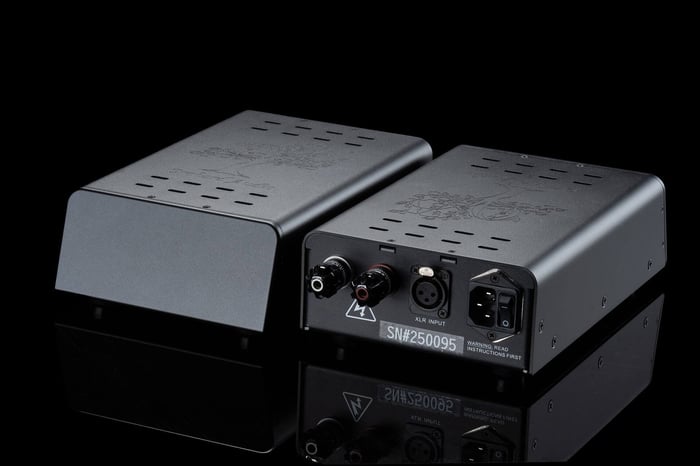
These are a mix of software and hardware platforms designed to process and correct spatial errors in sound reproduction. Then there’s:
A specialized software for optimal room correction on the aforementioned hardware platforms running BACCH.
Software designed to emulate Dolby Atmos experiences, running on the same BACCH hardware.
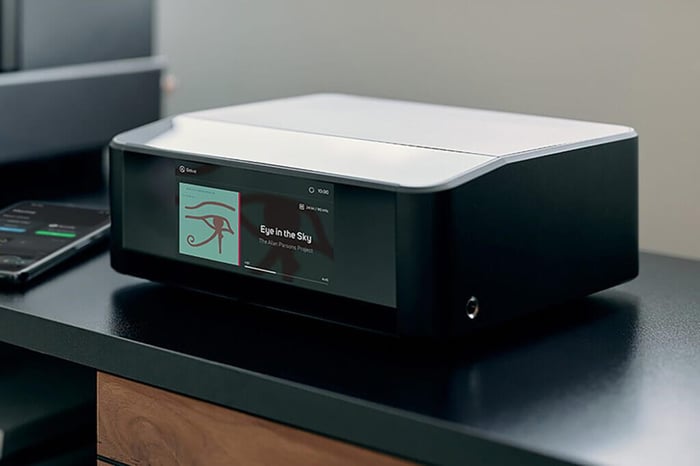
A desktop speaker, amplifier, and 3D renderer combo that plays back music with BACCH processing built in.
If you’re wondering about cost, it starts at $980 for the basic BACCH4Mac software, and the system itself is modular, letting you build up or customize as you like. For those interested in the recording side of music reproduction, Theoretica offers products there too.

Image showing Theoretica’s product lineup and audio technology framework.
Inside Theoretica Applied Physics
Taking a closer look at Theoretica Applied Physics reveals a company laser-focused on fixing some of the biggest hurdles in audio believability, a term I hold close. Believability in audio means that the music sounds real and compelling, not just technically clean but emotionally immersive. After nearly a century of audio tech, we still wrestle with playback flaws that distract from this experience.
Here’s a nugget for you: Theoretica is harnessing modern computing power to tackle the computational audio challenge — a feat not feasible 20 years ago. Thanks to Moore’s Law, affordable real-time processing can now address issues previously unsolvable without expensive, bulky equipment.
They’ve honed in on four core problems that bog down everyday listening:
- Spatial imaging errors
- Bass reproduction challenges in real rooms
- Inconsistencies in recording standards
- Group listening difficulties
What sets Theoretica apart is their approach to solving these by processing the digital signal rather than relying on better amps or speakers. They focus on error correction, not just enhancement.
The Brains Behind The Magic: Dr. Edgar Choueiri
Behind Theoretica’s success is the brilliant Dr. Edgar Choueiri, CEO and chief scientist. He’s a Princeton professor steering the Plasma Propulsion Laboratory funded by NASA, working on engines for interplanetary travel — yes, real Mars-bound tech!
His dual passion for advanced math and music led him to lead Princeton’s 3D Acoustics Lab, blending serious science with audiophile dreams. Dr. Choueiri recognized that decades of research on how our ears and brains interpret sound could be harnessed to correct audio errors computationally.
Think of it this way: unlike some audio systems that "dress up" sound with effects, Theoretica resets the sound “bone” and puts it in a cast — correcting core issues rather than masking them.
"Theoretica mainly develops error-correcting systems...identifying systematic errors with the recording and playback chain, then developing solutions to correct them."
— Dr. Edgar Choueiri
Problem 1: Spatial Errors Due to Crosstalk
Stereo playback architecture is almost a century old, thanks to Alan Blumlein’s genius in 1931, who patented stereo recording. Despite its age, his ideas remain fundamental and unchallenged in home music reproduction.
However, “as practiced today,” stereo is not flawless. The biggest spatial culprit? Crosstalk — but not the electronic kind you might think. This crosstalk happens acoustically: sound from your left speaker inevitably reaches your right ear, and vice versa, muddling spatial accuracy.
Imagine the left microphone capturing a signal. Ideally, your left ear hears only that signal, but your right ear also catches it bouncing through the room — this is the spatial error. These crosstalk errors aren’t due to faulty gear but are inherent in the stereo speaker-room-listener setup.
Theoretica’s solution? BACCH (Binaural Ambience Cancelling Crosstalk Hardware) — a real-time processing system that cancels the wrong signals reaching the ears, customized to your unique ear, head, and torso shape.
Having used BACCH for over a year, I can attest to the remarkable difference it makes. It enlarges the soundstage, tightens image placement, and revives spatial cues, making your music feel uncannily lifelike. Some older recordings might sound exaggerated with BACCH, but for about 90% of music, it’s game-changing.
Problem 2: Tonal Error Due to Bass in Real Rooms
Next up: room acoustics can wreak havoc on bass frequencies. Every room has resonances causing wild frequency swings, sometimes as much as ±10 dB, which no amount of speaker repositioning or acoustic treatment can fully fix.
Enter Optimal Room Correction (ORC) — Theoretica’s software answer to taming these bass beasts.
ORC:
- Focuses on direct sound corrections based on time-windowed data, separating direct sound from reflections.
- Splits frequency response correction into three bands, preserving the listener’s unique head-related transfer function (HRTF), which shapes how we perceive sound.
- Uses in-ear microphone measurements at the listener’s actual ear position (not just room averages), combined with head-tracking to dynamically adjust the EQ for transparency.
Unlike typical brute force EQ, ORC’s nuanced approach results in smoother, more natural bass and tonal balance.
Problem 1, Part B: Spatial Errors Due to Speaker Artifacts
ORC also corrects subtle spatial errors from your speakers and room. Stereo imaging relies on precise timing, level, and spectral cues to localize sound. While BACCH handles crosstalk, ORC works on spectral cues — the frequency fingerprints that help your brain identify where the speakers are in space.
The goal? Reduce spectral cues so your brain doesn’t mistakenly anchor the image to the speakers themselves but lets you focus on the virtual positioning of performers.
ORC analyzes speaker-room impulse responses with advanced smoothing and spectral entropy techniques. It then applies custom filters to cancel out these localization cues, cleaning up the image.
Importantly, ORC is not about adding artificial enhancements. It measures errors and inverts them, much like a smart audio surgeon.
Together, BACCH and ORC form a dynamic duo: BACCH removes stereo architecture-induced crosstalk errors, and ORC fixes speaker and room spectral imperfections, delivering a spatially pure listening experience.
Problem 3: The Recording Itself
Stereo recordings hold more potential than most realize. Theoretica’s approach means almost the entire vast catalog of stereo music can be improved without switching to exotic new formats.
But there is a catch: stereo recordings don’t encode height information, which limits realism compared to live performances.
Dolby Atmos addresses this by encoding height with multiple speakers and channels, but setups often require 12-14 speakers and complex amps.
Theoretica tackled this with Stratos, an Atmos emulator running on their computational audio system, delivering a convincing Atmos soundfield through just two speakers.
I caught a demo in Princeton, and honestly, Stratos was as good — if not better — than typical multi-speaker Atmos experiences. The soundfield felt more continuous and natural, unlike some channelized multi-speaker rigs.
Reviewer Andy Quint found Stratos’ two-speaker approach advantageous since all channels utilize high-quality full-range speakers without the compromises of tiny monitors scattered around. Plus, virtualizing surround speakers means placing them in “ideal” spots in the room, even inside doors or windows — impossible physically!
Besides sound quality, Stratos offers massive cost savings and simpler setup, making immersive audio more accessible.
Problem 4: Listening In Groups
Stereo rocks for one listener perfectly centered, but group listening has always been tricky. Theoretica’s experiments here are fascinating.
They developed a speaker and processor system letting multiple people hear independent audio channels in the same room. Imagine a car trip:
- Mom listens to an audiobook.
- Dad watches a movie.
- Jacob plays a video game with immersive sound.
- Sophia wants some quiet for texting.
The system cancels unwanted channels at each listener’s ears, so everyone hears their chosen audio with reduced interference — about 30 dB down for unwanted signals.
This tech stems from BACCH’s core crosstalk cancellation method but applied to multiple listeners.
While practical group music listening setups require special speaker arrays and remain a challenge, Theoretica’s work is a promising step toward personalized shared audio environments.
Summary
Theoretica Applied Physics is tackling massive audio issues with elegant, science-based solutions that genuinely improve music believability. Their combination of computational power, deep research, and audiophile passion results in systems like BACCH, ORC, and Stratos that deliver remarkable spatial accuracy, tonal balance, and immersive sound — all with minimal side effects.
If you love music and crave a more authentic listening experience, their work is worth watching closely.
FAQ
- What is BACCH in Theoretica’s audio system?
BACCH is a crosstalk cancellation system that removes unwanted spatial audio errors caused by stereo speaker playback, improving spatial accuracy. - How does Optimal Room Correction (ORC) differ from regular EQ?
ORC uses precise in-ear measurements and advanced filtering to correct room and speaker errors without degrading tonal transparency, unlike typical brute force EQ. - Can Stratos really emulate Dolby Atmos with just two speakers?
Yes! Stratos simulates an immersive Atmos soundfield through two high-quality speakers by virtualizing surround channels, creating a continuous and natural audio experience. - Does Theoretica’s technology work for group listening?
They have developed experimental systems allowing multiple listeners to hear separate audio streams in the same space through advanced channel cancellation. - Are Theoretica’s products expensive?
Their modular software starts at around $980, offering a cost-effective entry point into high-end computational audio processing.
Enhance your music space with the perfect album cover poster that complements your listening sanctuary — shop your favorite designs at Architeg Prints and bring your passion for great sound into your décor.
 | DISCOUNTGET 30% OFF*Use code on your next order:
|
* This post may contain affiliate links, meaning we earn a commission if you make a purchase through these links, at no additional cost to you.