Bluesound Node Icon Streaming DAC: A Reference-Class Audio Powerhouse


 See more Architeg Prints stories on Google.
Bluesound Node Icon Streaming DAC: A Reference-Class Audio Powerhouse
Explore the Bluesound Node Icon streaming DAC and its remarkable blend of cutting-edge technology and audiophile-grade sound quality.
A New Benchmark in Streaming Audio
If you’ve ever dipped a toe into the world of high-fidelity streaming gear, you know it can be a jungle out there. But the Bluesound Node Icon Streaming DAC sets itself apart with a stellar reputation and a nod to serious audiophiles. Hailing from Canada’s Lenbrook Group alongside NAD Electronics and PSB Speakers, Bluesound has been crafting music servers since 2013 — mostly under their trusty Node series. I’ve had a personal journey with the Node 2i since 2019, tucked into my office system, and it’s always punched above its weight in performance and value.
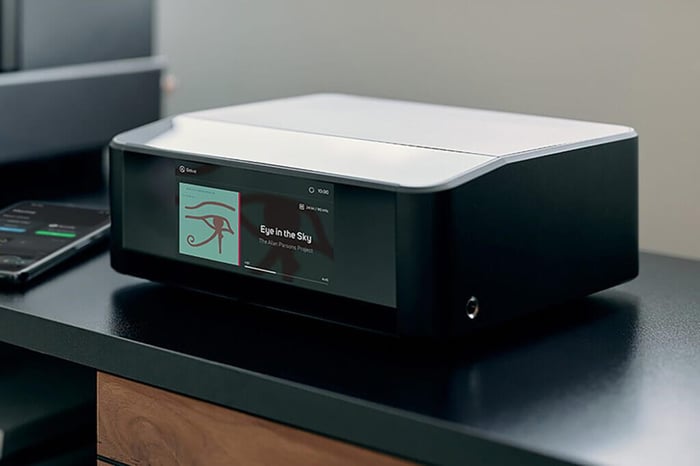
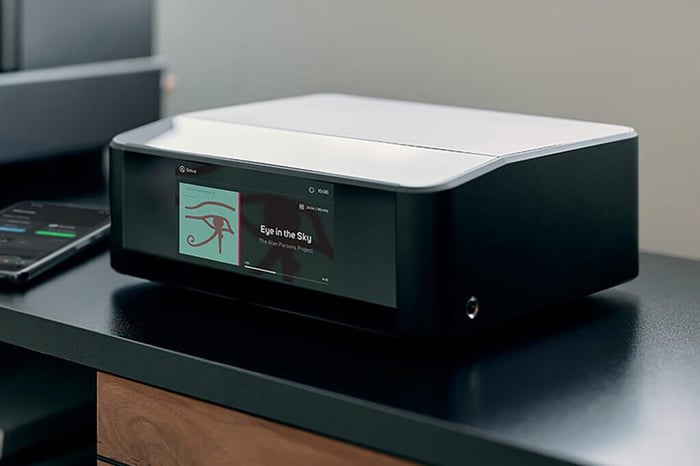
The Node Icon, launched late last year, is not just another streamer in the lineup. It’s branded as a reference-class wireless music streamer designed for the audio obsessed. With its sleek aluminum chassis and a dazzling 5" full-color display, it promises to set "a new benchmark" in its category. The footprint remains delightfully compact — think slightly smaller than two paperbacks stacked — but it’s a powerhouse inside. Sure, the $1199 price tag is about double that of previous Nodes, but relative to competitors boasting similar features (built-in server, DAC, preamplifier functions, and proprietary control apps) running into the tens of thousands, this is genuinely a steal.
First Impressions: Design Meets Practicality
One of the first things to catch your eye on the Icon is that vibrant front-panel LCD. It displays album art, track info, time, and even alerts like firmware updates — a nice touch that brings the music to life visually. The top panel has touch buttons for volume, play/pause, skipping tracks, and five presets, lighting up as your hand approaches thanks to a proximity sensor. It’s a neat feature, but honestly, I find the BluOS app far more intuitive for navigating your entire music universe. In fact, the app is so slick I rarely needed to use Roon (though the Icon supports it as an endpoint, should you want).
A friend of mine, a fellow audiophile who owns the Icon, swears it was the glowing display that sealed the deal for him. It’s funny — the app offers album art too, and on an iPad, it’s even bigger and sharper. Still, that little front display just has this irresistible cool factor.
“It’s just a really cool feature,” he told me. “I love it.”
— A fellow Bluesound enthusiast
Connectivity and Internal Engineering: Serious Upgrades
The back panel of the Icon is an audiophile’s dream playground with a wealth of connections:
- Balanced XLR and unbalanced RCA outputs
- RCA coaxial and subwoofer outs
- Optical in/out
- USB A in/out ports and a USB C port for PC connectivity
- 12-volt trigger out and IR input
- HDMI input for ARCe connection to your TV (which works flawlessly)
- Ethernet port that automatically switches from Wi-Fi once connected
Internally, Bluesound has loaded the Icon with premium components. The heart of the DAC is a dual-mono configuration built around a pair of ESS ES9039Q2M DAC chips, each channel getting its own chip for fully balanced operation. Morten Nielsen, Lenbrook’s associate product manager, explained how these parts are carefully implemented to minimize noise — including low noise regulators directly on the DAC’s power pins, an improved power supply, long-term stable Nichicon capacitors, and a PI filter stage to block high-frequency noise.
One of the coolest tech innovations here is the proprietary Qrono d2a filter, developed by MQA Labs shortly after Lenbrook acquired the company. This filter enhances timing accuracy, a big deal in digital audio fidelity. The Icon now even supports DSD playback up to DSD256, transcoding DSD files into PCM with careful timing preservation via Qrono DSD technology.
Dirac Live & Headphone Lovers Unite
Bluesound has bundled the Icon with Dirac Live room correction, which is making waves in the audiophile community. Simply purchase a license and calibration mic (available as a kit through Bluesound), and you can tailor your listening environment like a pro.
For headphone aficionados, the Icon has a built-in THX AAA headphone amplifier and two 1/4" jacks — meaning your cans are all you need to dive into millions of tracks with pristine sound quality. (Though I’m more of a speaker guy, I can appreciate this feature for those late-night listening sessions.)
Streaming Services and Preamp Functionality
The BluOS app is your gateway to over 20 streaming platforms including Qobuz, Tidal, Spotify, and a ton of internet radio stations. What’s nifty is that you can switch the Icon’s output to variable mode and use it as a preamplifier with volume, tone controls, subwoofer integration, mono/stereo switching, and source selection for connected inputs like phono preamps or CD players.
While I prefer my Townshend Allegri Reference preamplifier for ultimate control, the Icon’s all-in-one capability is impressive and works well for those wanting a streamlined system.
If you want to bypass the built-in DAC and run your own external one, no problem — the Icon transforms into a dedicated music server. Bonus: if you activate Dirac Live, its correction filters can be applied even when using external DACs via coaxial or optical outputs — handy if you want the Icon as a digital transport.
User Experience and Support
At first, I hit some snags connecting external hard drives and dealing with Wi-Fi on my mesh network, but Bluesound’s customer support was outstanding. Quick email responses, helpful phone calls, and even remote desktop assistance helped me sort everything out swiftly. Once I was up and running, the BluOS app and Icon combo performed flawlessly day after day. It felt like the kind of service AppleCare used to promise but rarely delivers.
Listening Experience: The True Test
I mainly listen to physical media—LPs, CDs, SACDs, Blu-ray audio discs—and streaming is more for exploring new music or comparisons during reviews. Streaming audio remains tricky because so many factors affect the sound: the original recordings, mastering quality, server, DAC, filter settings, and even connection type.
Still, the Bluesound Node Icon Streaming DAC consistently delivered exceptional sound. Starting with Benjamin Britten’s War Requiem (available on Hi-Res 24/192 streaming), a recording I hold as a benchmark, the Icon impressed profoundly. The spatial imaging, clarity, and dynamic range were so convincing that even against high-end players like the Denon DCD-1700NE CD/SACD player ($1699) and Luxman D-07X CD player ($10k), the Icon held its own brilliantly.
In true audiophile fashion, the SACD players offered a tad more spaciousness and solidity, but those differences were minor. More importantly, the Icon swept me into the music's emotional depth, which for me, is the ultimate sign of excellent sound.
Other favorites like Dave Brubeck’s Blue Rondo à la Turk revealed the Icon’s punchy drive and articulation. Mitsuko Uchida’s Beethoven Diabelli Variations transported me right into the concert hall, capturing presence and ambient detail beautifully.
Linda Ronstadt’s What’s New was another revelation — her voice felt present and stylish, backed by lush strings reproduced with honesty and warmth. Vocal recordings in general tend to challenge streaming, but the Icon handled them compellingly, narrowing the gap between digital and the fuller-bodied analog experience.
Timing and Filter Innovations
Bluesound boldly claims the Icon’s Qrono filter reduces timing errors common in digital audio. Though hard to prove in isolation without swapping DACs, I can attest to moments where the Icon’s streamed playback felt lively and dynamic, even rivaling CD versions of recordings like Solti’s Aida. That’s a huge win in my book.
Final Thoughts: A Streaming Star to Count On
If your current music server feels like it’s aging or you crave a significant upgrade without breaking the bank, the Bluesound Node Icon makes testing easy. It offers a 30-day return policy — try it out and if it’s not for you, get your money back. For my part, after months of regular use and comparing it to my favorite physical media, the Icon has earned a permanent spot in my reference system.
It’s a standout value — a true reference-class streamer that delivers both in features and sound quality.
Specs & Pricing
- Analog outputs: RCA unbalanced, XLR balanced, subwoofer
- Digital outputs: SPDIF (RCA), TosLink
- Digital inputs: TosLink, HDMI ARCe, Ethernet, USB
- DAC: ESS ES9039Q2M x2, dual mono
- Bit depth: 16–24 bits
- Supported file formats: MP3, AAC, WMA, WMA-L, OGG, ALAC, OPUS
- High-quality formats: FLAC, MQA, ALAC, WAV, AIFF, MPEG-4 SLS
- DSD support: DSD256
- Multi-channel audio formats: Dolby Digital®
- Max sampling rate: Up to 192kHz
- Dimensions: 8.7″ x 3.3″ x 7.6″
- Weight: 4.92 lbs
- Price: $1199
FAQ
- What kind of DAC does the Node Icon use? It houses a dual-mono ESS ES9039Q2M DAC chipset, one chip per channel for fully balanced output.
- Can the Node Icon support DSD files? Yes, it supports DSD up to DSD256 using proprietary Qrono DSD transcoding technology.
- Does the Icon include room correction features? Yes, it supports Dirac Live room correction with an optional license and calibration mic.
- Is it possible to bypass the built-in DAC? Absolutely. You can use the Icon purely as a music server and output digital signals to an external DAC.
- What streaming services are compatible with the Bluesound Node Icon? The BluOS app integrates over 20 streaming services, including Qobuz, Tidal, Spotify, and internet radio.
If you love the idea of elevating your music listening with a device that combines style, tech, and sonic excellence, why not shop your favorite album cover poster at our store? Bring that same passion to your space and celebrate the magic of music visually. Check out the collection here.
 | DISCOUNTGET 30% OFF*Use code on your next order:
|
* This post may contain affiliate links, meaning we earn a commission if you make a purchase through these links, at no additional cost to you.