AI Music Future: How the UK Can Protect Artists and Lead Globally

AI Music Future: How the UK Can Protect Artists and Lead Globally
AI music future debates are moving fast. Here’s how UK creators and industry leaders want consent, credit, fair pay, and human creativity protected.
A Creative Industry at a Turning Point
Artificial intelligence is already reshaping music, but the biggest question isn’t whether the technology will change the industry. It’s who gets to guide that change—and whether artists will have a meaningful say in it.
At Manchester’s Beyond The Music Festival, artists, industry leaders, policymakers, and technology experts gathered for an AI summit focused on protecting creative work while making room for responsible innovation. The central idea was refreshingly human: art is a human right, and the people who create it deserve both moral recognition and material reward.
The gathering produced the “Manchester Principles,” presented as an industry-wide plan and rights-based roadmap for generative AI. Its purpose is to bring creators, rights-holders, technology platforms, AI laboratories, and governments into the same conversation before the future is written entirely by corporations with the deepest pockets.
Mayor of Greater Manchester Bev Craig framed the challenge in broad social terms. She asked how economic change and technological progress could lead to a better society while protecting creativity—and, as she put it, “our very soul.”
That may sound grand, but music fans understand the feeling. A song isn’t merely a file or a data point. It can be the background to a first kiss, a long drive, a family memory, or a moment when somebody finally feels understood.
The Manchester Principles Put Rights First
The summit’s working group identified three key objectives for the future of AI and music:
- Licensing and consent: Create clear minimum conditions for using human-created work to train generative AI systems.
- Provenance and tracking: Protect and trace where creative work comes from and how data is used.
- Attribution and equity: Ensure artists receive proper credit and financial compensation when their work influences AI-generated results.
These principles aim to replace uncertainty with something much more practical: permission, documentation, and payment. In other words, the industry wants AI systems to know the difference between material that has been licensed and work that has simply been scraped from the internet.
During the summit, speakers described the current moment as “the first five minutes of the next industrial revolution.” That metaphor captures both the opportunity and the danger. The technology may still be young enough to shape, but it’s developing quickly enough that waiting for perfect answers could mean allowing unfair systems to become normal.
Ian Murray, the UK Minister for Creative Industries, said the issue was particularly sensitive because 66 percent of music creators believe AI poses a direct threat. He argued that artists shouldn’t have to choose between embracing innovation and protecting their rights. At the same time, he said the UK should aim to become “the safest place to develop and adopt AI technology in the world.”
Why the UK Wants More Than a Playlist
That ambition leads to a larger question: can Britain do more than consume AI tools created elsewhere?
Clive Dickens, founder and CEO of The Meliora Company and the founder of Absolute Radio, argued that “the UK must own more than the playlist” when it comes to AI and music. His point is that the country shouldn’t simply provide culture and creative data while overseas companies control the platforms, models, infrastructure, and profits built around it.
Dickens also stressed that technology can strengthen human creativity rather than replace it. He noted that artificial intelligence is now used by just under two billion people every week, despite becoming a familiar presence only within the last several years.
He described AI as a basic human right, comparable to water, shelter, and power, because of the impact it could have on billions of people. But rights also come with responsibilities. For Dickens, the UK needs to move faster on regulation, trust, and guardrails.
His preferred idea is a fairer version of GPT: “Fair GPT,” meaning systems that are fairly governed, fairly powered, and fairly trained.
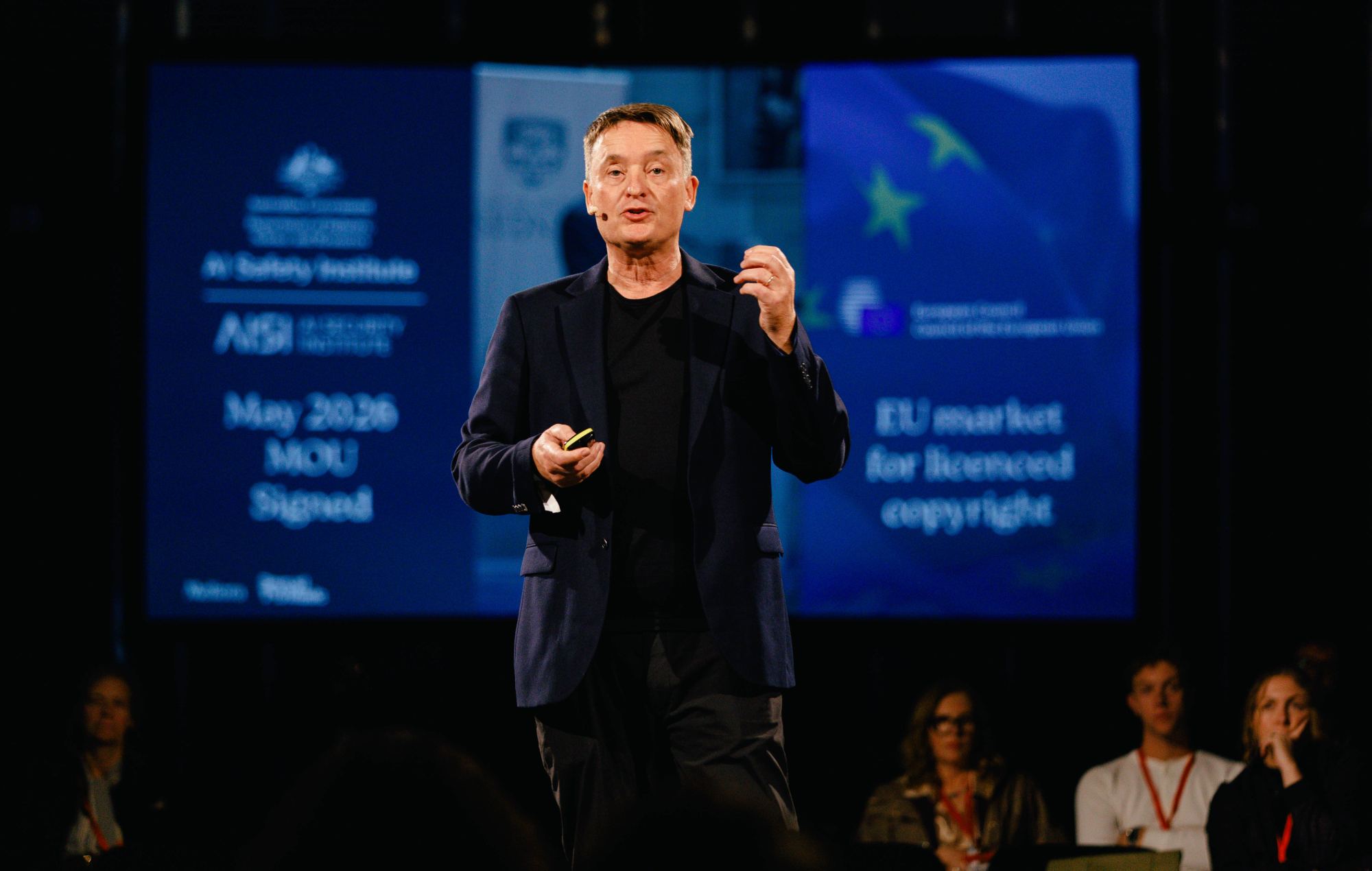
What “Fair GPT” Would Actually Mean
Dickens broke the idea into three connected parts.
Fair governance would require regulations and laws designed to make AI operate responsibly. He called for mandatory reporting across society and even suggested a treaty aimed at preventing the spread of harmful AI. His analogy was blunt: medicine cannot be released without regulatory approval, so AI models shouldn’t automatically enter public life without some form of pre-approval.
Fair power would focus on the enormous energy demands of data centers. Dickens argued that more renewable energy should be used to power the systems driving artificial intelligence, connecting creative technology to the wider environmental challenge.
Fair training would mean creative work could not simply be scraped, taken, or repurposed without permission. Provenance, consent, and payment would need to be mandatory, giving creators a clear record of how their work entered an AI system.
Dickens believes the UK could develop a sovereign model of its own and use it to demonstrate a version of AI that protects creators while supporting economic growth. He rejected the idea that Britain had already missed its chance, saying, “It’s not too late: we are in the first five minutes of the next industrial revolution. We can train our own model.”
He floated the hypothetical name “Hope V.1” for such a system. It could potentially be trained on the UK’s significant body of knowledge that has not yet been digitized, with a target of having it created by November 2027, when Manchester is scheduled to host the next G20 summit.
His larger vision is a model that is fairly governed, powered, and trained—one where creators earn from the creative economy and everyone contributing to that economy has a path to income. With control over its own model and electricity supply, he argued, the UK could also have greater influence over how its creative culture is shared at home and abroad.
The Search for a Digital Birth Certificate
Big national models are only one piece of the puzzle. Another solution is already being developed at the level where music begins: the recording itself.
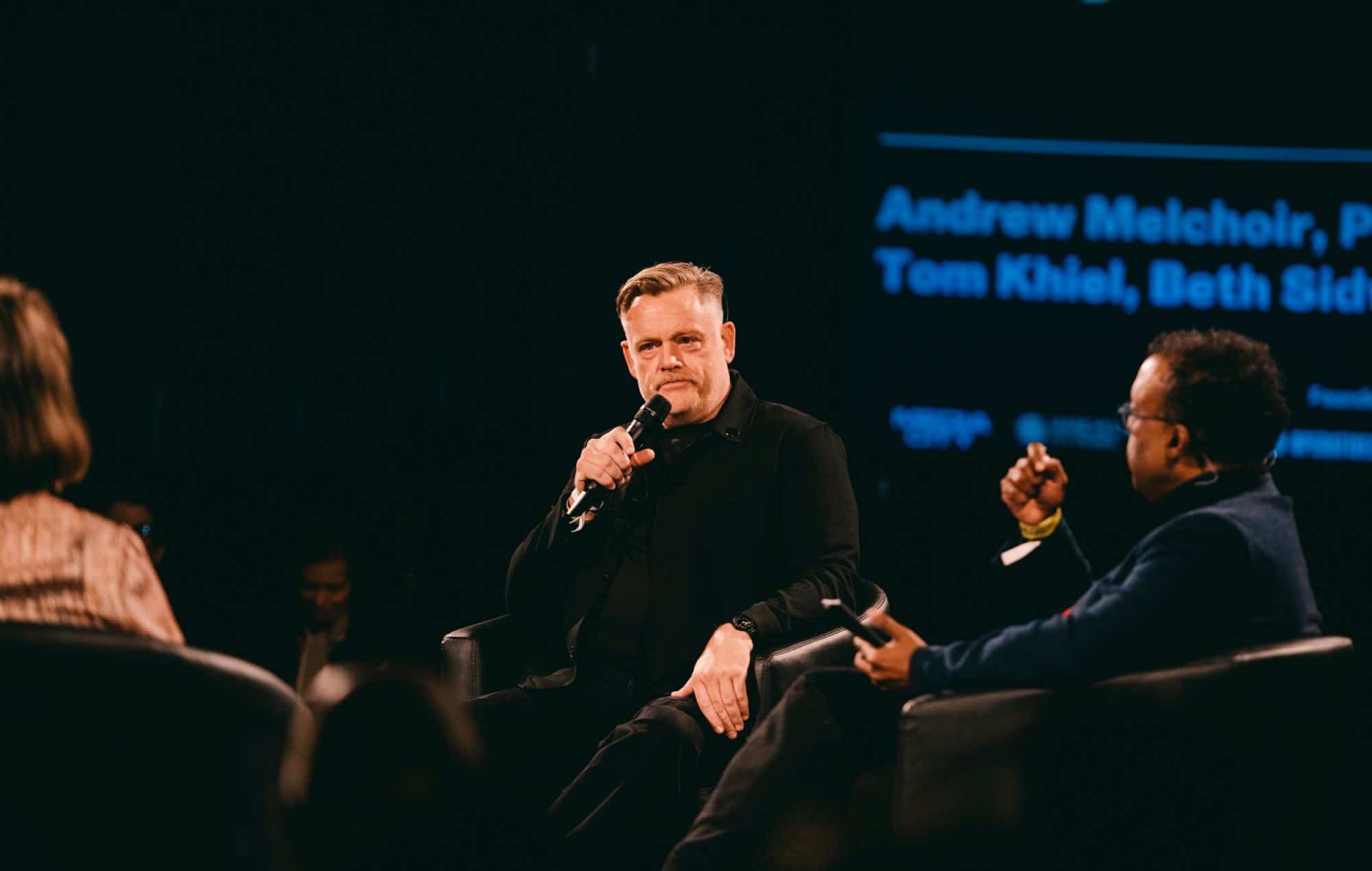
Andrew Melchior, chief technical officer for Massive Attack and CEO of Genotone, is working on technology intended to prove the human origin and authorship of recorded music. He said the industry urgently needs clarity, shared standards, and tools that don’t force users into isolated, proprietary systems.
Genotone is developing inaudible provenance markers and watermarks that can be placed inside audio files. These markers could help distinguish human-created music from AI-generated material or trace an AI output back to the original creators whose work influenced it.
Melchior described the ambition as a “Holy Grail”: embedding artist rights at the moment a piece of music is created, then allowing those rights to travel with the recording through the wider system.
If adopted as public infrastructure, such a standard could create a machine-readable source of truth. It might show what an artist has opted into or opted out of, making the process easier to understand at scale. Melchior compared the concept to a birth certificate for recorded media—a permanent identity card for a song’s origin, permissions, and creative history.
That kind of system could become especially important as listeners struggle to identify what they’re hearing. One study reported that AI was detected in 40 percent of all music released during July 2026. Another study from 2025 found that 97 percent of people could not tell the difference between human-made and AI-generated music.
Jason Grishkoff, founder of SubmitHub, said disclosure could be the way forward. Listeners, he argued, should be able to decide for themselves whether they want to engage with AI-generated music.
Artists Are Worried About Control, Not Just Competition
Tom Kiehl, CEO of UK Music, described mass scraping, consent, deepfakes, and low-quality AI output as huge concerns for the sector—and deeply personal issues for artists.
The problem isn’t limited to whether a machine can imitate a voice or generate a convincing track. It’s also about what happens when an artist’s work is altered, manipulated, or presented with a different meaning. Kiehl emphasized that music is an ecosystem, and everyone involved has a responsibility to ensure people receive fair rewards.
Baroness Beeban Kidron expanded that argument by focusing on the emotional purpose of art. She has campaigned for stronger transparency around the use of copyrighted work in AI systems and for an end to unlicensed scraping.
At the summit, Kidron argued that music and art need special protection because they contain emotion, intention, and choice. When we read a book, watch a movie, hear a song, or look at a painting, somebody made a deliberate decision about what they wanted us to understand or feel.
“It is that art of human creation—the intention, the choice, the meaning—that is stripped of value in this race to control artificial intelligence.”
— Baroness Beeban Kidron
Her warning was stark: “Lose copyright and you lose the means of earning a living, lose control of your work and you lose control of its meaning.”
For Kidron, any responsible future for AI in music must be built around four pillars:
- Ownership and consent
- Transparency and traceability
- Fair licensing
- New markets for creators
Without agreement from the arts sector, she warned, the future could be shaped by billionaires and technology companies that already know what they want—even if creators haven’t yet agreed on what they need.
The Future Is Still Being Made
Kidron also connected the debate to children and young people. Through her work on children’s rights in the digital environment, she said she had been shocked and saddened when one teenager told her that “the future is disappearing” and that he could no longer see himself in it.
That comment cuts deeper than any policy document. If young people begin to believe that human creativity is being replaced or made irrelevant, the damage won’t be limited to jobs. It could affect their ability to imagine themselves as writers, performers, designers, producers, and artists.
Kidron rejected the claim that technology is too fast to govern. She described that argument as a choice rather than destiny. The decisions being made now will determine whether the next generation can see a place for itself in the future.
Her definition of sovereignty was equally important. It doesn’t mean doing everything alone. It means retaining the freedom to decide who gets to tell the story of the future.
Cliff Fluet, the summit chair and a specialist media and entertainment lawyer, concluded that the UK music industry is seeking “creative sovereignty” because culture is shared wealth—and that wealth is quietly being worn away.
He called for human creativity to come first, supported by consent, fair payment, transparency, and enforcement that works for everyone. Whatever systems are built, he said, they should feed back into the society that created them instead of extracting from it.
The urgency is underscored by concerns that music workers could lose nearly a quarter of their income to AI over a four-year period. Recent UK government action has aimed to prevent AI companies from using existing work without permission, but industry figures have argued that this first step is not enough.
The AI music future isn’t a distant science-fiction plot anymore; it’s being negotiated in studios, boardrooms, parliaments, and festival halls right now. The real challenge is making sure innovation doesn’t erase the people whose imagination gave the technology something worth learning from in the first place.
FAQ
- What are the Manchester Principles? The Manchester Principles are a proposed framework for generative AI focused on licensing and consent, creative provenance and tracking, and fair attribution and payment for artists.
- Why does the music industry want AI disclosure? Disclosure would allow listeners to know whether music was created or significantly generated with AI, giving them the ability to make informed choices about what they hear.
- What does “Fair GPT” mean? “Fair GPT” is a concept built around AI that is fairly governed, fairly powered through responsible energy use, and fairly trained using consented and compensated creative work.
- How could provenance markers protect musicians? Inaudible markers and embedded watermarks could help identify the origin of a recording, show whether rights were granted, and trace creative contributions through AI systems.
- Why is a sovereign UK AI model being discussed? Supporters believe a UK-based model could help the country control how its cultural knowledge is used, reward creators more fairly, and develop AI rules aligned with public and creative interests.
If the future of music should still feel human, a favorite album cover deserves a place on the wall, too. Browse the thoughtfully designed collection at Architeg Prints and bring a little musical history home.
 | DISCOUNTGET 30% OFF*Use code on your next order:
|
* This post may contain affiliate links, meaning we earn a commission if you make a purchase through these links, at no additional cost to you.