Album Wall Art Ideas for Every Music Fan's Space


Table of Contents
- Why Album Cover Art Belongs on Your Walls
- Album Wall Art Ideas by Room Type
- Framed Album Cover Posters vs. Unframed Prints
- Choosing the Right Size for Album Cover Prints
- Custom Album Cover Wall Art: Personalize Your Space
- Top Music Genres and Artists for Album Wall Art
- Where to Buy High-Quality Album Cover Posters
The best album wall art starts with a story, not a shopping list. Choose a small group of records connected by a memory, mood, color palette, or era, then scale the display to the room. A bedroom can handle an energetic collage; a living room usually benefits from fewer, better-framed pieces; a studio can mix art with instruments and records. The practical formula is simple: measure first, settle on one visual rule, and leave enough empty wall around the arrangement to let it breathe.
Why Album Cover Art Belongs on Your Walls
Album artwork turns music you cannot see into something you can live with. A cover can mark the record you played through a difficult year, the concert you still talk about, or the first album you bought with your own money. That personal meaning is what separates an album wall from generic décor.
It also solves a practical design problem. Square cover art provides a repeatable shape, while posters, tracklists, photographs, and ticket stubs add variety. You can build a neat grid from matching frames or a looser arrangement that grows over time. The result can be expressive without feeling random—as long as one element, such as frame color, spacing, or palette, ties the pieces together.
The Cultural Power of Album Cover Posters
Many album covers outlive the campaign that introduced them. They become visual shorthand for an artist, a scene, or a period in music history. Displaying them says something about your influences without requiring a long explanation.
That does not make every image found online printable. Album covers and artist photography are generally copyrighted. Buy authorized or publisher-created wall art, or use imagery you own or have permission to reproduce. For personal photographs, playlists, or an original design inspired by your listening history, a custom layout can make the connection even more specific.
Album Wall Art Ideas by Room Type
The same display should not be copied unchanged into every room. Start with viewing distance, furniture width, lighting, and how permanent the installation needs to be. The table below gives a quick starting point.
| Room | Useful approach | Scale | Practical priority |
|---|---|---|---|
| Bedroom | Personal collage or one large focal poster | Small-to-medium grouping | Reflect your taste, not a showroom |
| Living room | Coordinated gallery wall | Roughly two-thirds of furniture width | Consistent framing and calmer spacing |
| Dorm or rental | Lightweight unframed prints | Modular, easy to move | Removable hanging method |
| Office or studio | Mix art with records, instruments, or shelves | One inspiration zone | Avoid glare and workspace clutter |
Bedroom Album Wall Art: Build Your Music Identity
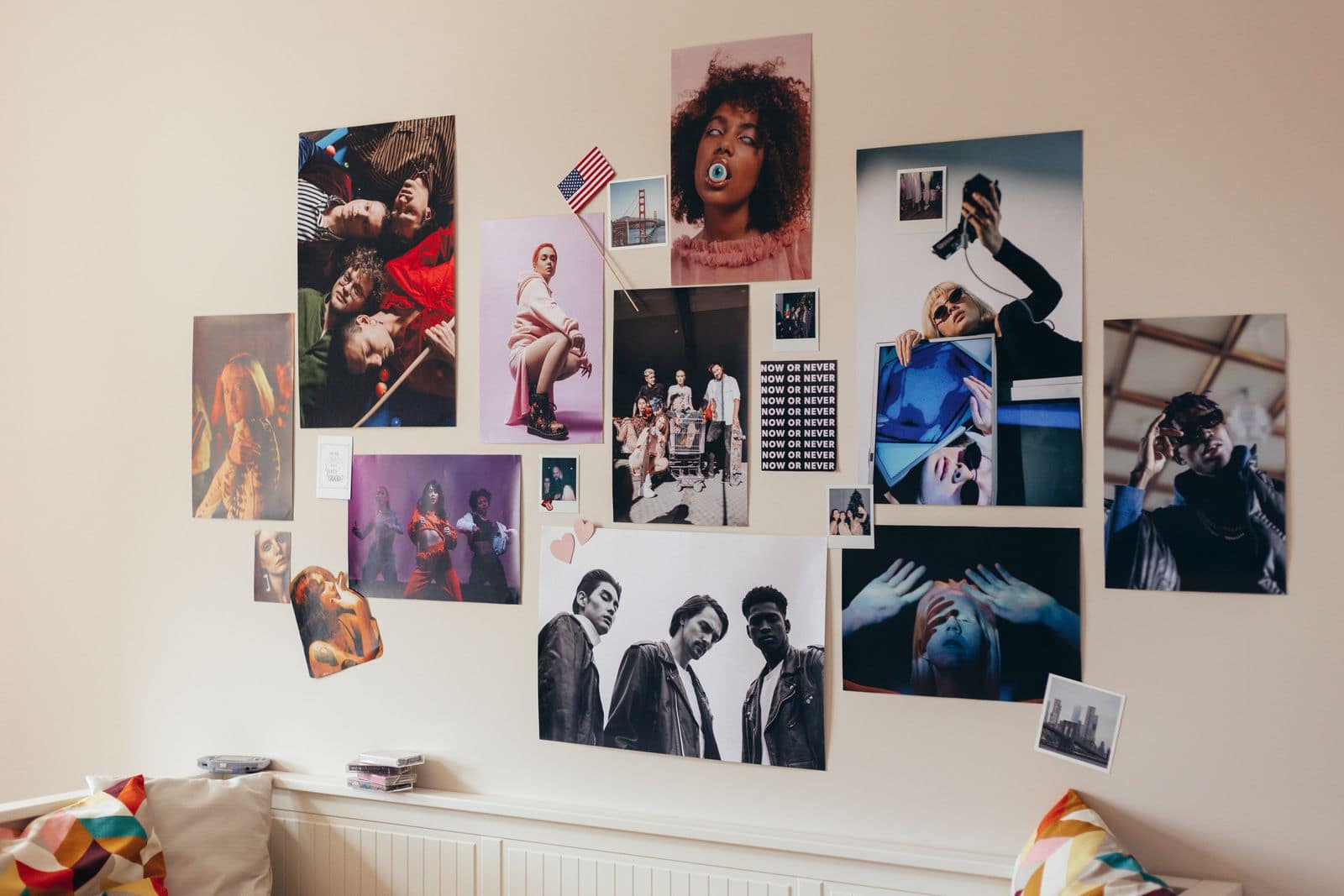
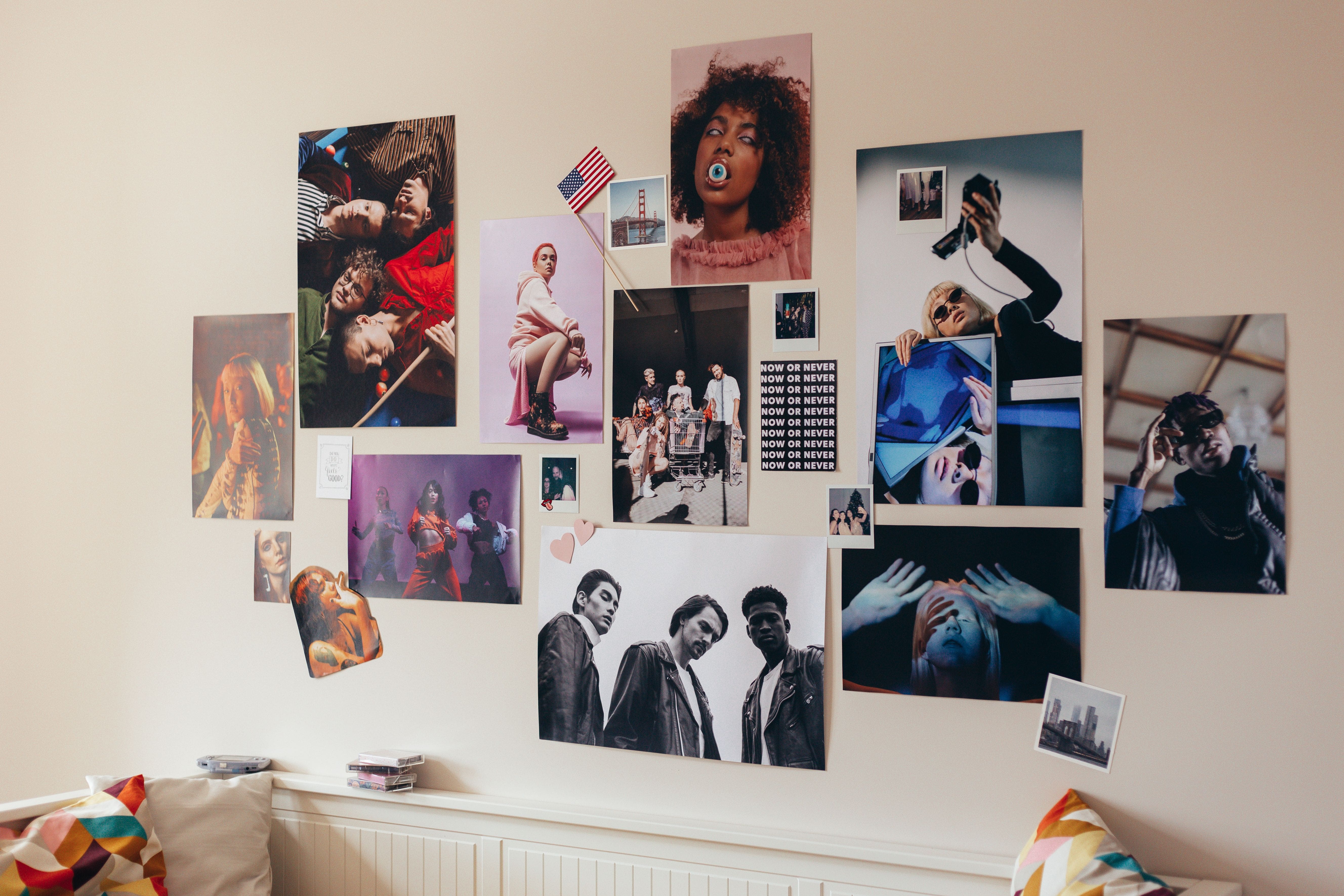
A bedroom is the easiest place to be personal. Begin with three to five albums you genuinely return to rather than trying to represent every genre you like. Place the emotional centerpiece at eye level from the main viewing position—often the bed or desk—and build outward.
- For a calm room: choose covers with related neutrals, muted color, or generous negative space.
- For an energetic room: mix bold covers, tour-style typography, and one contrasting color.
- For a memory wall: combine a main print with a ticket, photo, set list, or handwritten note.
Keep art a safe distance from lamps, heaters, and areas where pillows or doors may strike it. If you use small prints over a headboard, secure them properly rather than relying on loose adhesive.
Living Room Gallery Wall with Album Covers
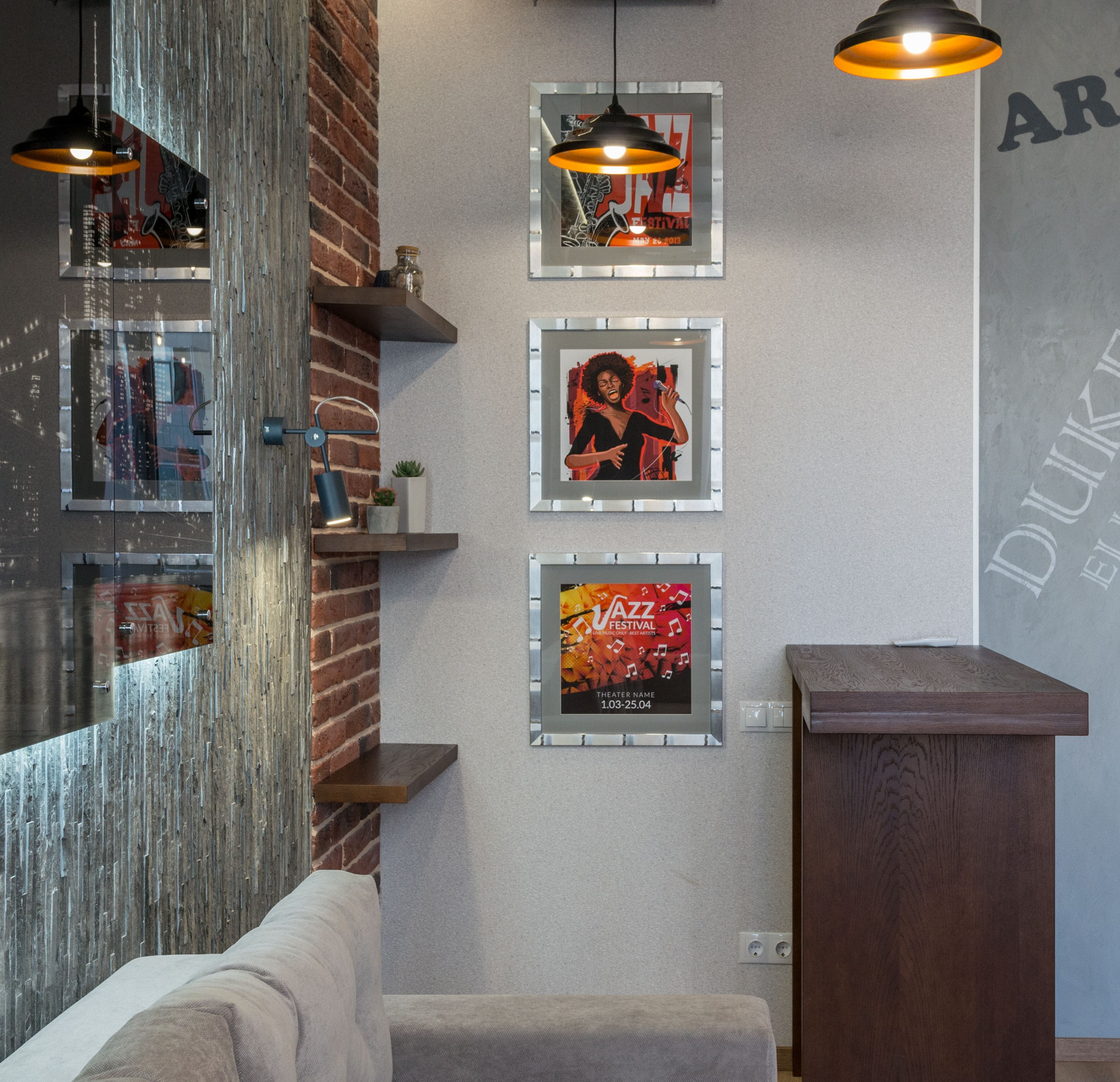
In a shared space, edit more aggressively. Pick one organizing rule: identical frames, a limited palette, equal outer edges, or a single musical era. You can mix square album art with rectangular posters if the gaps remain consistent.
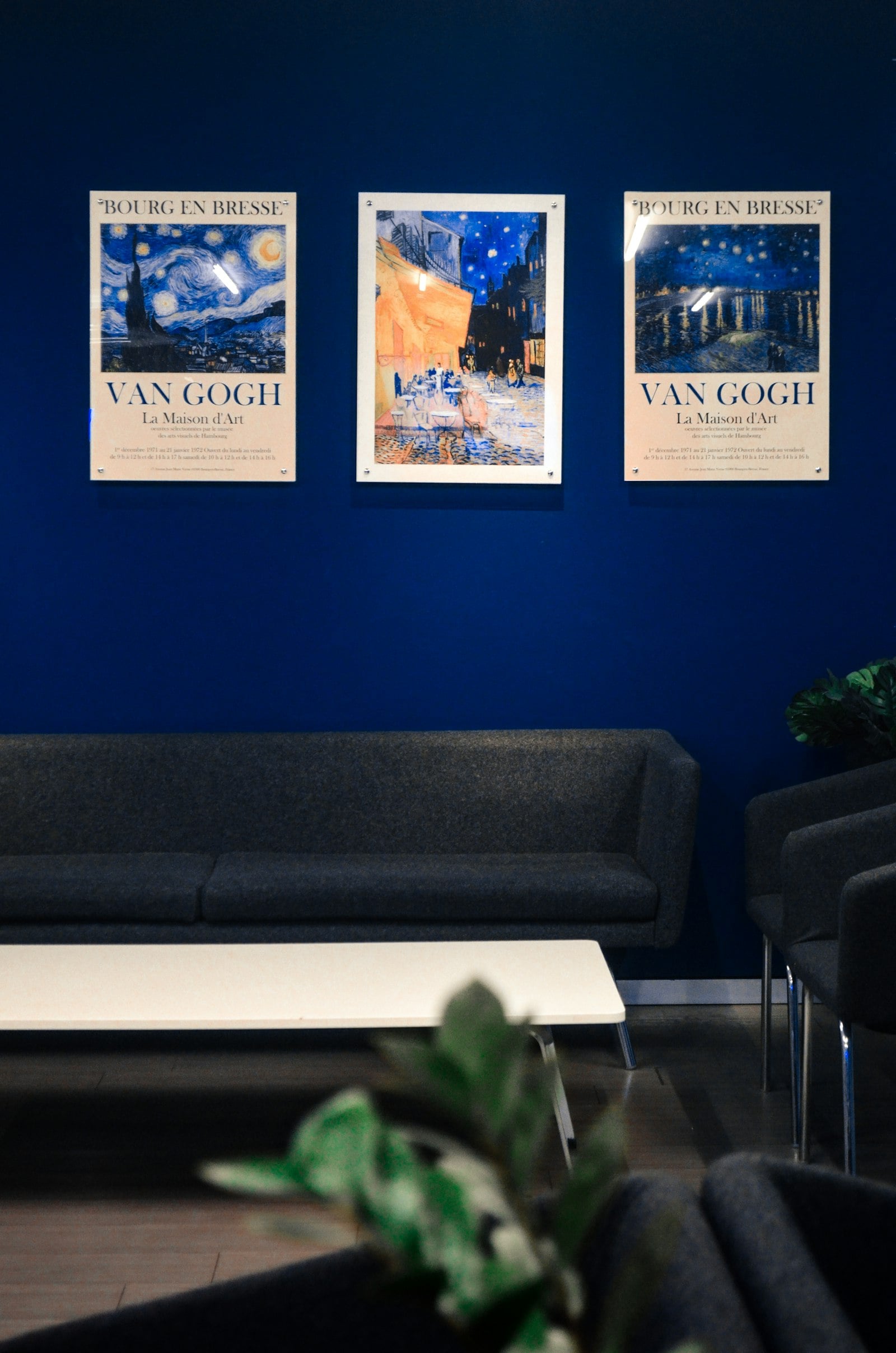
For a gallery above a sofa or console, make the arrangement visually related to the furniture below it. A useful starting point is a total art width around two-thirds of the furniture width, with the lower edge roughly 6–10 inches above the furniture. Treat those numbers as a test, not a law: use paper templates and adjust for your ceiling height and actual sightline.
Dorm Room Decor: Affordable Album Cover Posters
Dorm walls need flexibility. Lightweight unframed prints cost less to move and can be rearranged as the room changes. Use removable strips or hooks rated for the wall surface and the object’s weight, and follow the residence rules. Test any adhesive in an inconspicuous spot.
A simple low-cost layout is a row of three medium prints above a desk. Another is a nine-piece square grid made from smaller cover-inspired art. Measure equal gaps with a scrap-cardboard spacer; two inches between pieces often feels deliberate without wasting wall area. Avoid putting irreplaceable original record sleeves on the wall, where sunlight, humidity, and adhesive can damage them.
Home Office and Studio Spaces
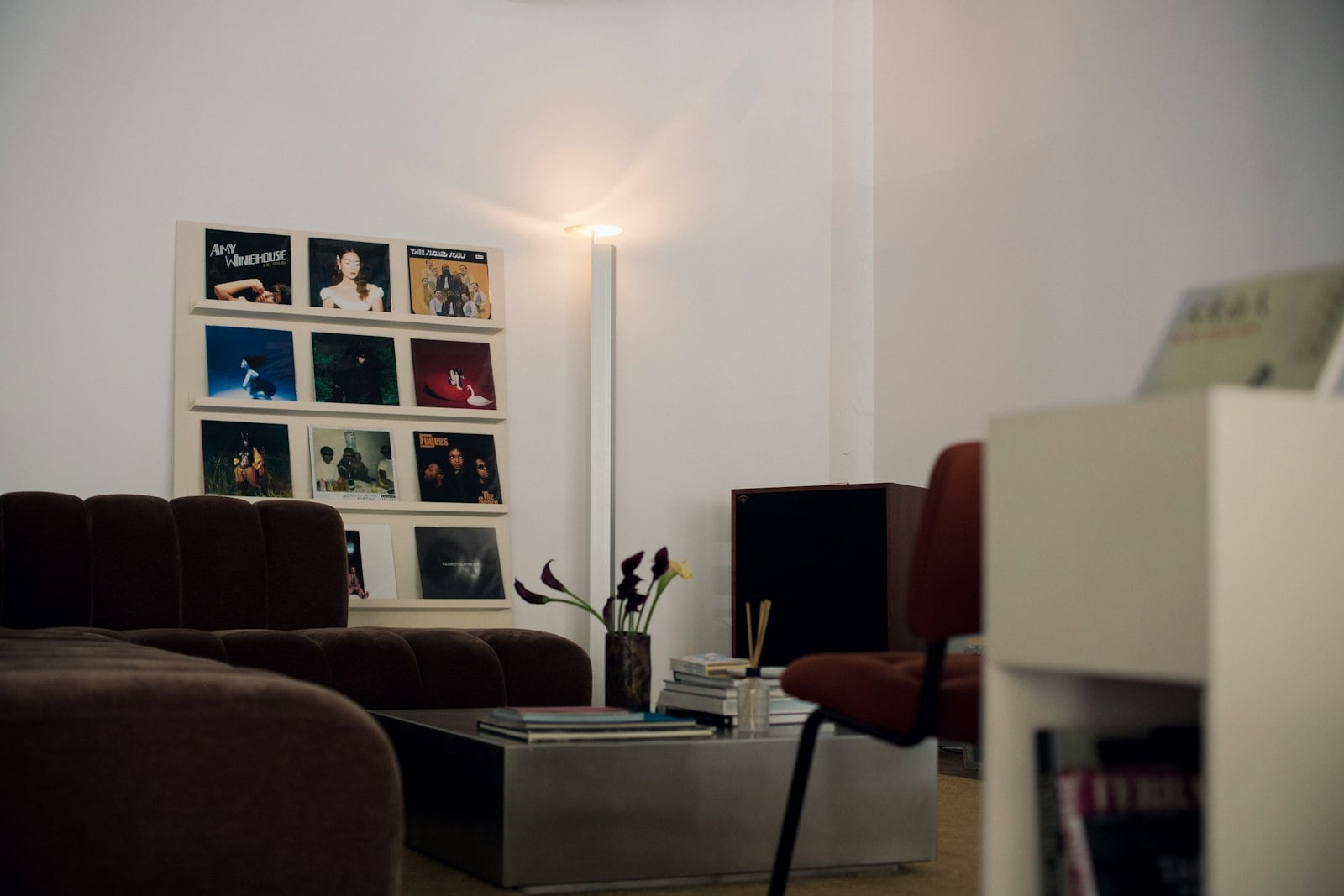
Use album art in a workspace as a cue rather than background noise. One focused cluster near an instrument stand, listening chair, or record shelf can define the creative zone while leaving the monitor wall calm. Dark, glossy surfaces reflect task lighting, so matte paper or non-glare glazing usually works better near a desk.
Framed Album Cover Posters vs. Unframed Prints
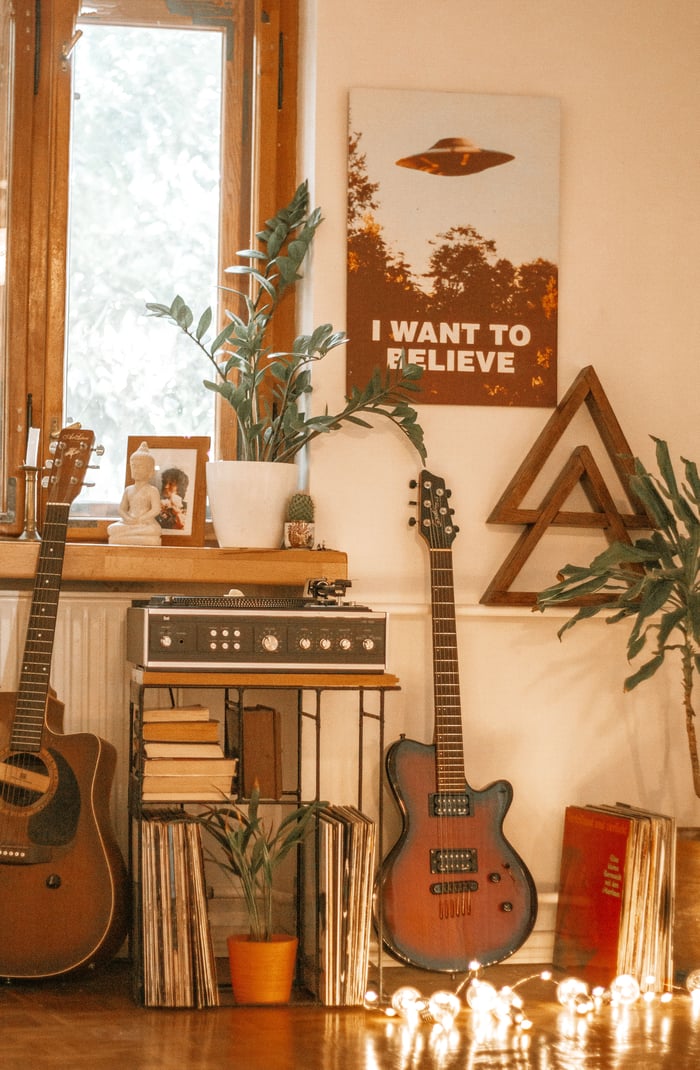
Frame art you expect to keep; leave it unframed when flexibility and low cost matter more. A frame protects edges, keeps paper flat, and makes several different covers feel like one collection. An unframed print is lighter, cheaper, and easier to change, but it is more exposed to dust, creases, humidity, and accidental contact.
| Display | Best for | Advantages | Trade-offs |
|---|---|---|---|
| Unframed paper | Dorms, rentals, rotating collections | Lowest cost; easy to move | Less protection; hanging method matters |
| Framed paper | Living rooms and long-term displays | Clean edges; glazing protects the print | Higher cost and weight; possible reflections |
| Canvas wrap | Large focal pieces | Ready-to-hang feel; no glazing | Texture softens tiny text and fine detail |
| Framed canvas | Statement art and gifts | Finished presentation; added visual depth | Highest price and deepest profile |
Benefits of Framed Album Covers for Wall Display
Matching frames create order even when the artwork spans different genres. Black frames emphasize contrast and typography; natural wood softens saturated colors; white frames recede on pale walls. A mat adds breathing room but increases the overall dimensions, so calculate the complete frame footprint before planning the grid.
For valuable prints, look for acid-free backing and UV-filtering glazing. Avoid pressing the artwork directly against ordinary glass in humid rooms. If the piece arrives rolled, let it relax flat under clean, even weight or have a framer mount it safely—do not crease it in the opposite direction.
When to Go Unframed for a Casual Aesthetic
Unframed prints suit relaxed bedrooms, music corners, and collections that change seasonally. Magnetic poster hangers can look cleaner than visible tape, while removable strips keep the installation rental-friendly when used correctly. Avoid putting tape directly on the printed face or the back of art you want to preserve.
To stop an unframed wall from feeling unfinished, align one edge across the arrangement or repeat the same gap. Casual does not have to mean crooked.
Choosing the Right Size for Album Cover Prints
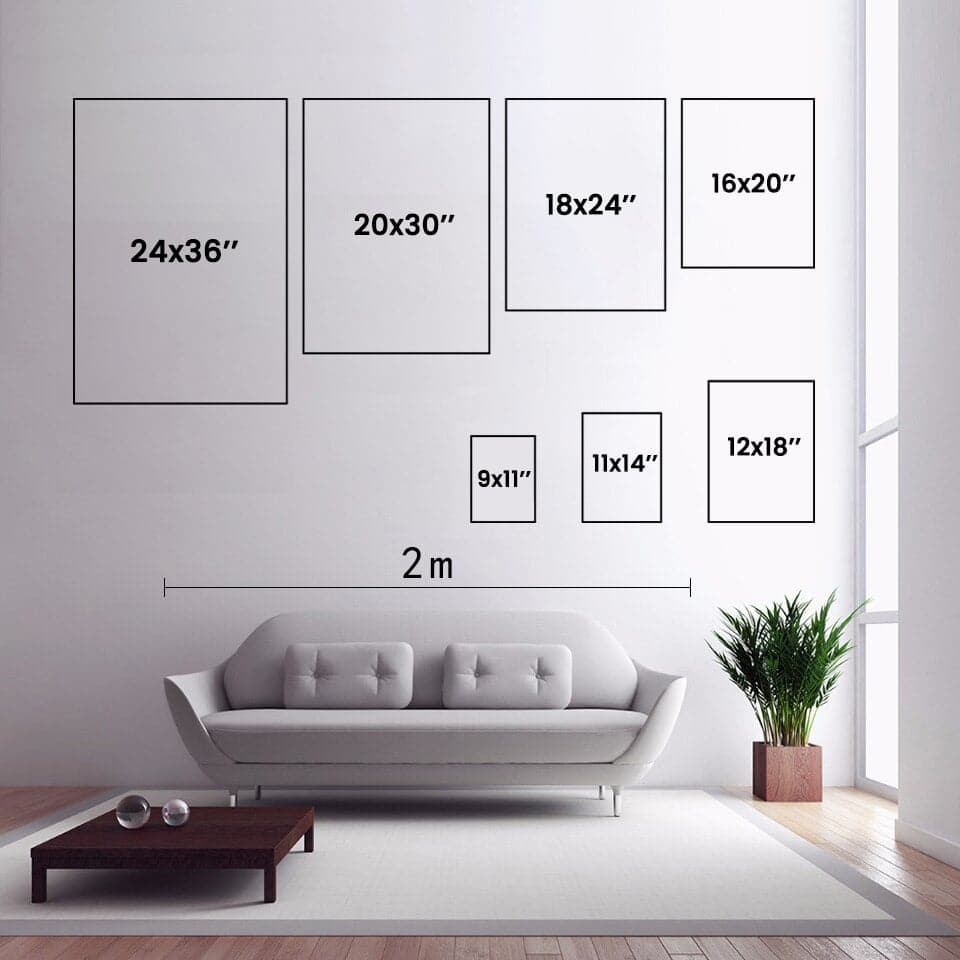
Measure the wall and the furniture, then mock up the exact outside dimensions with painter’s tape or paper. Consider the distance from which you will see the art. Small tracklist text may be appropriate beside a desk but unreadable across a living room; a bold 24x36 image can carry a wall from several feet away.
| Print size | Good use | Approximate role |
|---|---|---|
| 12x12 in. | Square grids, record shelves, small walls | Close to the familiar vinyl-cover format |
| 12x18 or 16x20 in. | Desk walls, pairs, mixed gallery layouts | Medium accent |
| 18x24 or 20x30 in. | Bedrooms and compact focal walls | Strong single piece |
| 24x36 in. | Living rooms and large blank walls | Statement poster |
Why 12x12 Album Cover Prints Are the Classic Choice
A 12x12 print echoes the square presence of a vinyl jacket, so it feels familiar beside records and shelves. It is also easy to repeat: three squares form a tidy row, while six or nine create a compact grid. Keep the frames and spacing consistent if you want the wall to read as a collection rather than separate decorations.
Before ordering, confirm whether “12x12” describes the print, the opening, or the outside frame. A mat can reduce the visible opening, and a frame can add several inches to the final footprint.
Larger Format Options for Statement Walls
Go larger when the artwork has a strong silhouette, readable typography, or a simple composition. Oversizing a low-resolution web image will not create detail; inspect the source at full size and follow the printer’s resolution guidance. A 24x36 poster is rectangular rather than square, so album artwork may need a designed border, tracklist, photograph, or supporting typography instead of a destructive crop.
One large print often looks calmer and costs less to frame than a wall of many medium pieces. Leave clear space around it, especially when the artwork is visually dense.
Custom Album Cover Wall Art: Personalize Your Space
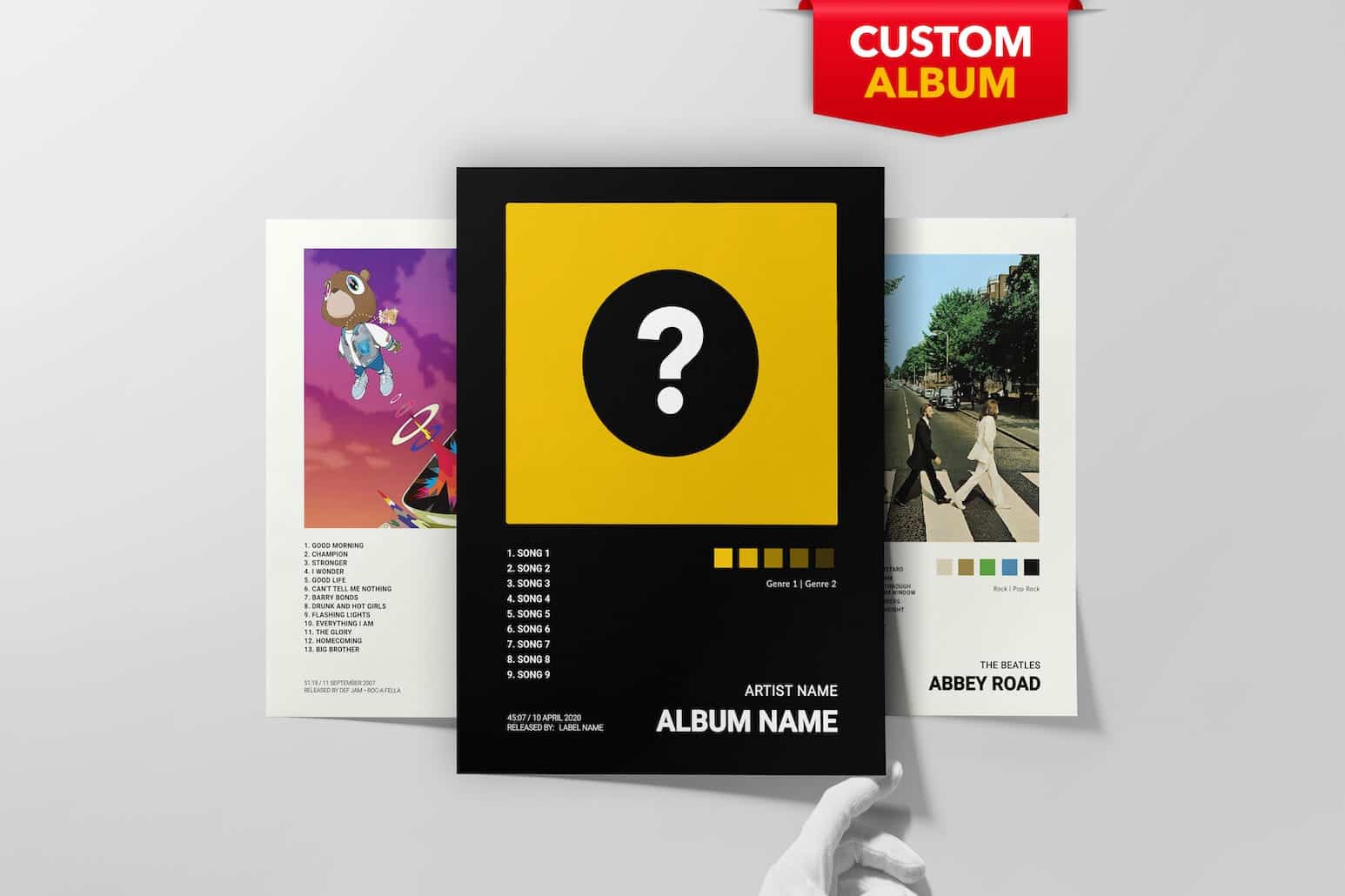
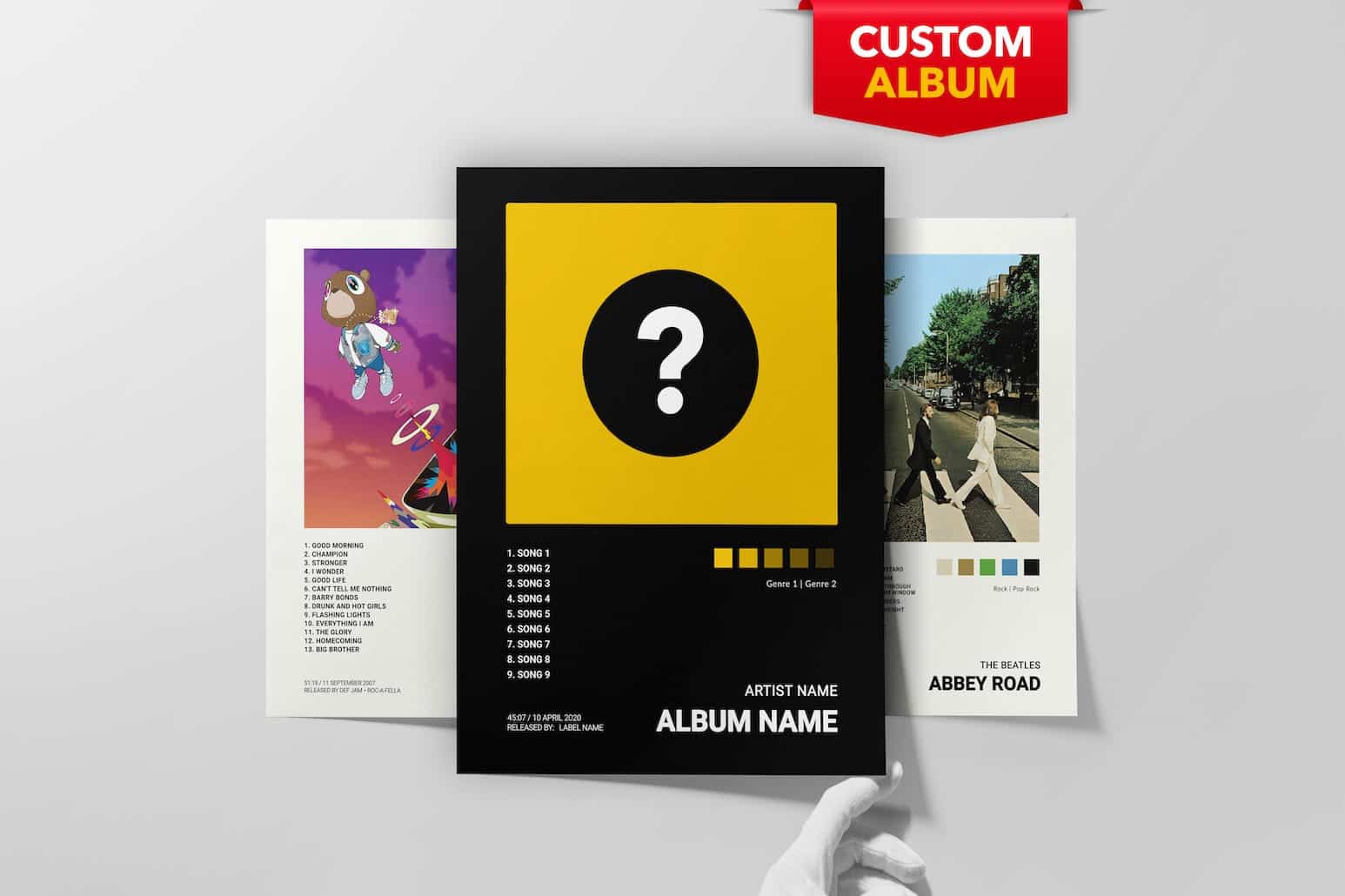
Custom art works best when it adds something a standard cover cannot: a personal tracklist, a group of meaningful albums, a date, a dedication, or a composition made for your wall’s proportions. Keep the concept readable. If every title, lyric, photograph, and color is treated as the main event, the result will feel crowded.
At Architeg Prints, the Music Albums collection provides a starting point for music-focused wall art, while the custom collection covers personalized requests. The store is the publisher of its wall décor; it is not selling the music recording itself.
How to Create a Custom Framed Album Cover
The Custom Album Cover Poster – Choose Your Own Music Album allows buyers to specify albums or artists in the checkout note, then choose from 180gsm matte paper, 400gsm cotton canvas, or framed canvas in several rectangular sizes. The page displayed a range of $28.80–$198.85 on October 8, 2026, depending on size and format. It states normal production in 3–5 business days; delivery is separate, and custom-item return and discount conditions apply.
- Choose the story. Decide whether the piece centers on one record, several favorites, or a gift recipient’s listening history.
- Check your rights. Submit only artwork and photographs you are authorized to reproduce.
- Select the footprint. Tape the proposed outer size on the wall, including the frame.
- Choose the material. Matte paper keeps fine detail crisp; canvas adds texture; framed canvas arrives with a finished presentation.
- Provide clear notes. Spell artist and album names carefully, state the desired order, and review any available proof.
- Allow real lead time. Add production and delivery rather than treating them as the same estimate.
Top Music Genres and Artists for Album Wall Art
Genre is a useful starting point, but color and composition matter more to the room. A hip-hop cover with restrained typography may suit a minimalist wall; an experimental rock cover may be the brightest object in the space. Choose the artwork first, then decide whether neighboring pieces should match it or deliberately contrast.
A strong three-piece arrangement often follows one of these rules:
- one artist across three eras;
- three albums connected to one life period;
- different genres sharing one dominant color;
- one cover, one tracklist design, and one concert photograph;
- two quiet pieces supporting one visual centerpiece.
Hip-Hop and Rap Album Posters
Hip-hop and rap covers often combine portraiture, bold type, collage, luxury cues, street photography, or stripped-back symbolism. When displaying covers associated with artists such as Kendrick Lamar, Drake, Tyler, the Creator, or Outkast, do not assume all of them need to be equally loud. Use one high-contrast work as the focal point and support it with quieter typography or monochrome photography.
In a square grid, repeat either the frame color or the crop style. For a looser streetwear-influenced wall, mix sizes but keep a shared baseline so the arrangement still feels intentional.
Rock, Indie, and Alternative Album Cover Art
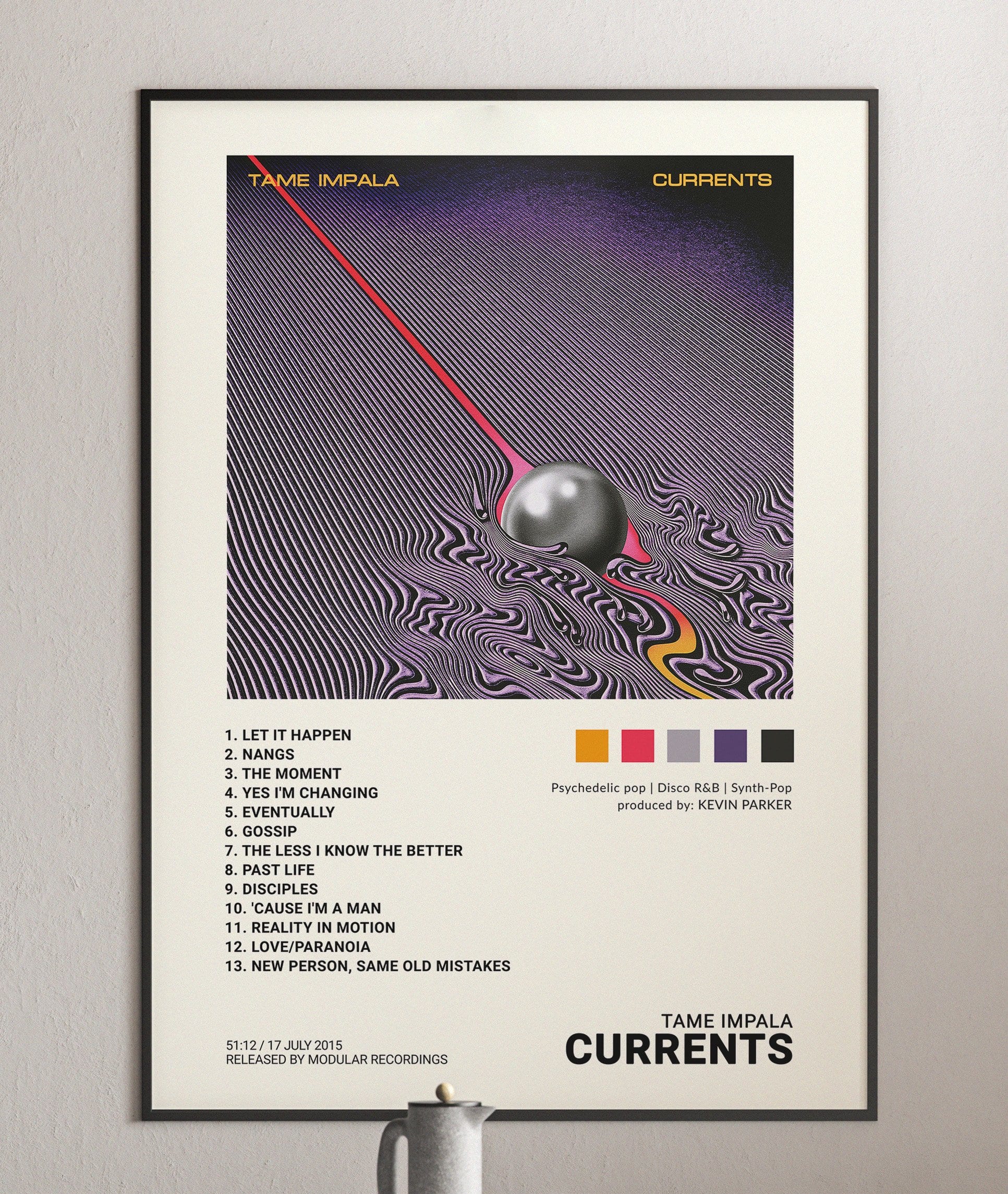
Rock, indie, and alternative artwork ranges from stark band photography to surreal illustration and handmade collage. A wall built around Pink Floyd, The Cure, Radiohead, Tame Impala, or Arctic Monkeys can move through very different palettes, so organize by visual mood rather than forcing chronological order.
For a vintage feel, pair warm-toned artwork with natural wood or black frames and leave room for a record shelf or instrument. For a contemporary look, use white space, thin matching frames, and fewer pieces. Keep actual records and sleeves out of direct sun; use prints for the wall and preserve the collection separately.
Where to Buy High-Quality Album Cover Posters
Buy from a seller that identifies the material, sizes, production process, delivery terms, and return conditions. Marketplace listings can be useful for artist-made work, but quality and licensing vary by seller. Read the individual listing rather than relying on the marketplace name.
For Architeg Prints, the official Materials & Quality page specifies 180gsm museum-grade matte paper and 400gsm cotton canvas, and the product pages show the available formats and current configured price range. The music wall-art collection is the most direct place to browse without naming dozens of individual products.
Before checkout, confirm:
- the printed dimensions and the outside frame dimensions;
- paper or canvas weight and finish;
- whether framing hardware is included;
- image resolution and cropping;
- production time versus delivery time;
- custom-item return rules;
- that the artwork is authorized for sale or reproduction.
The best album wall art idea is the one that remains meaningful after the trend changes. Start with one record that matters, test its size on the wall, and build only when the next piece adds to the story.
FAQs
Should I hang original vinyl record sleeves on the wall?
How much space should I leave between album-cover prints?
What frame size fits a 12x12 album print?
Can I print album cover images found online?
How high should album wall art be hung?
 | DISCOUNTGET 30% OFF*Use code on your next order:
|
* This post may contain affiliate links, meaning we earn a commission if you make a purchase through these links, at no additional cost to you.