Custom Album Wall Art: Build Your Dream Gallery Wall


Table of Contents
A good album gallery wall starts with a measuring tape, not a shopping cart. Choose the records that tell your story, decide whether you want a clean grid or a looser salon layout, map the full arrangement at actual size, and only then order the prints and frames. That sequence prevents the two most common mistakes: art that is too small for the wall and a collection that feels random rather than personal.
Why Custom Album Wall Art Changes a Room
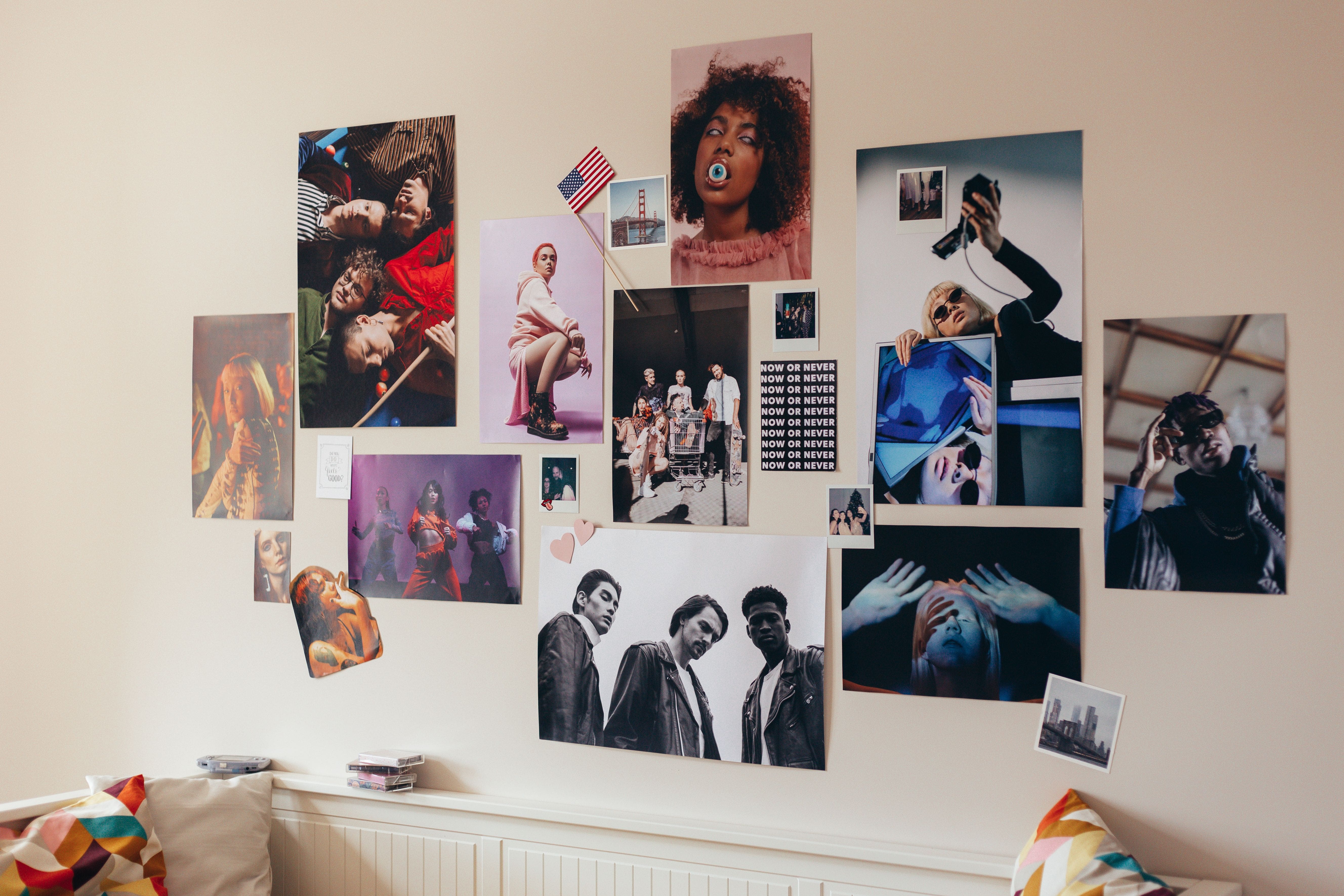
Custom album wall art gives a room a point of view. Instead of decorating with unrelated images, you can build a visual autobiography from records associated with people, places, discoveries, and stages of your life. The result works because the subject is already meaningful to you; the design task is simply to make those different covers feel like one deliberate display.
Album art also provides ready-made color, typography, photography, and illustration. A wall can be energetic without becoming chaotic if you repeat one or two elements—frame color, print size, spacing, or background tone—across the group.
Why Gallery Walls Suit Pop-Culture Décor
Gallery walls solve a useful problem: they let several interests share one defined area. A single oversized cover makes one record the hero; a group can show a wider musical identity. Because individual pieces can be added or rearranged, the format also suits renters, dorm rooms, collectors, and anyone whose taste evolves.
Who Should Build an Album Cover Gallery Wall?
This approach is especially useful when you have three or more albums with real personal value, a blank wall above furniture, and enough room to view the full group from several feet away. If you own rare original sleeves, keep them stored safely and display printed reproductions instead. A print is easier to replace and avoids exposing collectible packaging to light, dust, and handling.
Step 1: Curate the Album Collection
Begin with 10–15 candidates, then reduce the list. The final selection should have a reason for being together: one era, a personal timeline, a genre journey, a shared color palette, or simply the records you play most. A wall is more convincing when the logic is clear to you, even if visitors do not immediately see it.
Choose Albums That Tell Your Story
Write one sentence about why each album belongs. If you cannot, remove it from the first version of the wall. Useful prompts include:
- What record changed how you listened to music?
- Which album is tied to a friendship, trip, concert, or milestone?
- What release represents your current taste rather than nostalgia?
- Which cover supplies the color or visual calm the arrangement needs?
A balanced wall can include one or two quiet designs, one visually dominant cover, and several mid-intensity pieces. Every print does not need to shout.
Mix Genres Without Making the Wall Feel Random
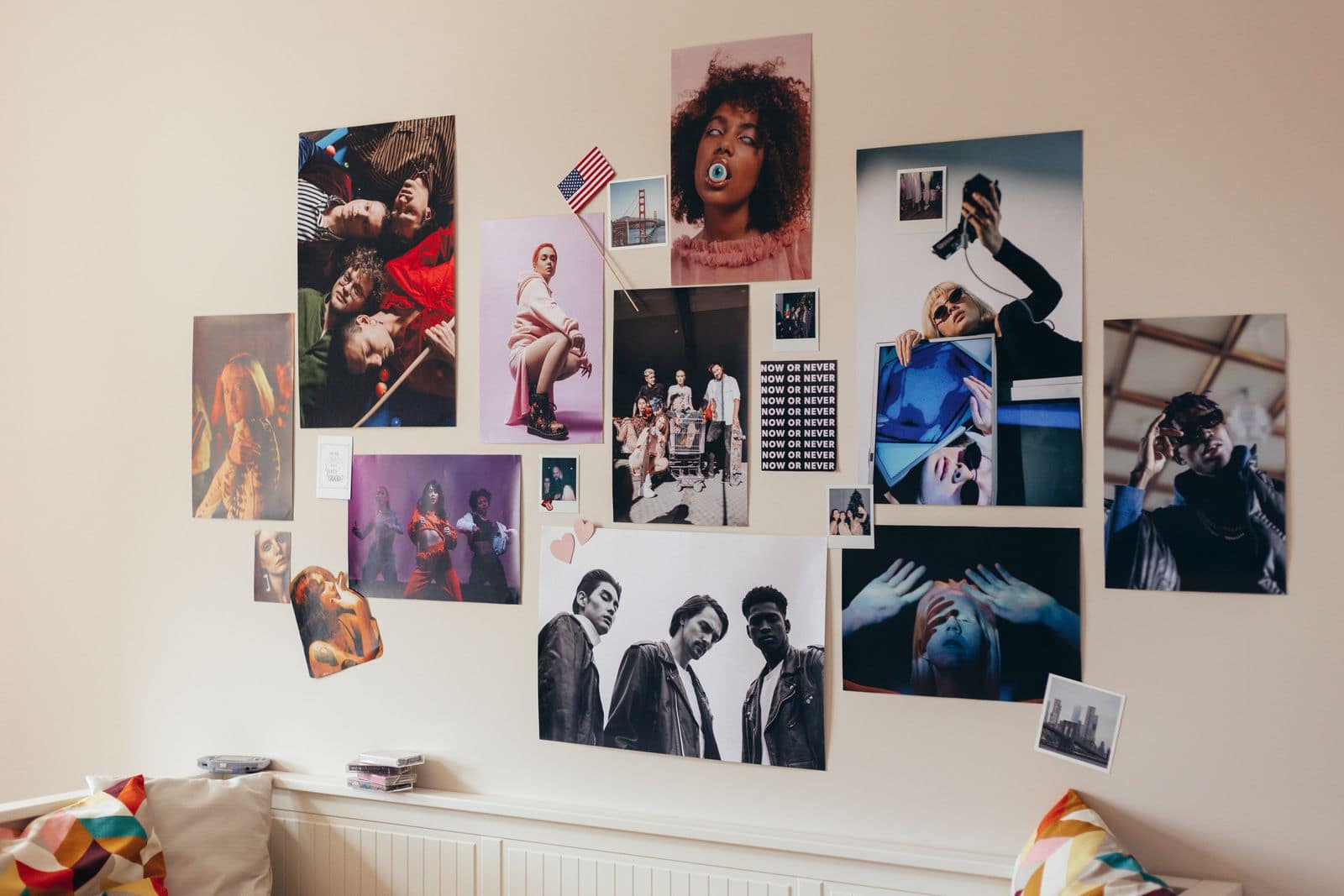
Hip-hop, rock, electronic, jazz, pop, and indie artwork can coexist if you repeat a framing system. Black frames unify high-contrast covers; natural wood softens colorful art; frameless matte prints keep the display casual. You can also arrange albums chronologically or move from dark to light across the wall to create a visual path.
Step 2: Choose the Right Size and Format
Measure the usable wall width and height, including the furniture below it. Then calculate the group, not just one print. For a grid, the total width is:
(number of columns × outer frame width) + (number of gaps × gap size)
For example, three 14-inch-wide frames with two 2.5-inch gaps need 47 inches. Add several inches of breathing room on both sides before deciding that the arrangement fits.
When 12 × 12 Works—and When a Standard Poster Size Is Better
A 12 × 12-inch square echoes an LP sleeve and makes a tidy, record-like grid. It is an excellent format when a printer offers square crops and when the artwork can survive without extra text. Rectangular sizes work better for track lists, artist details, or vertical rooms, and ready-made rectangular frames are often easier to source.
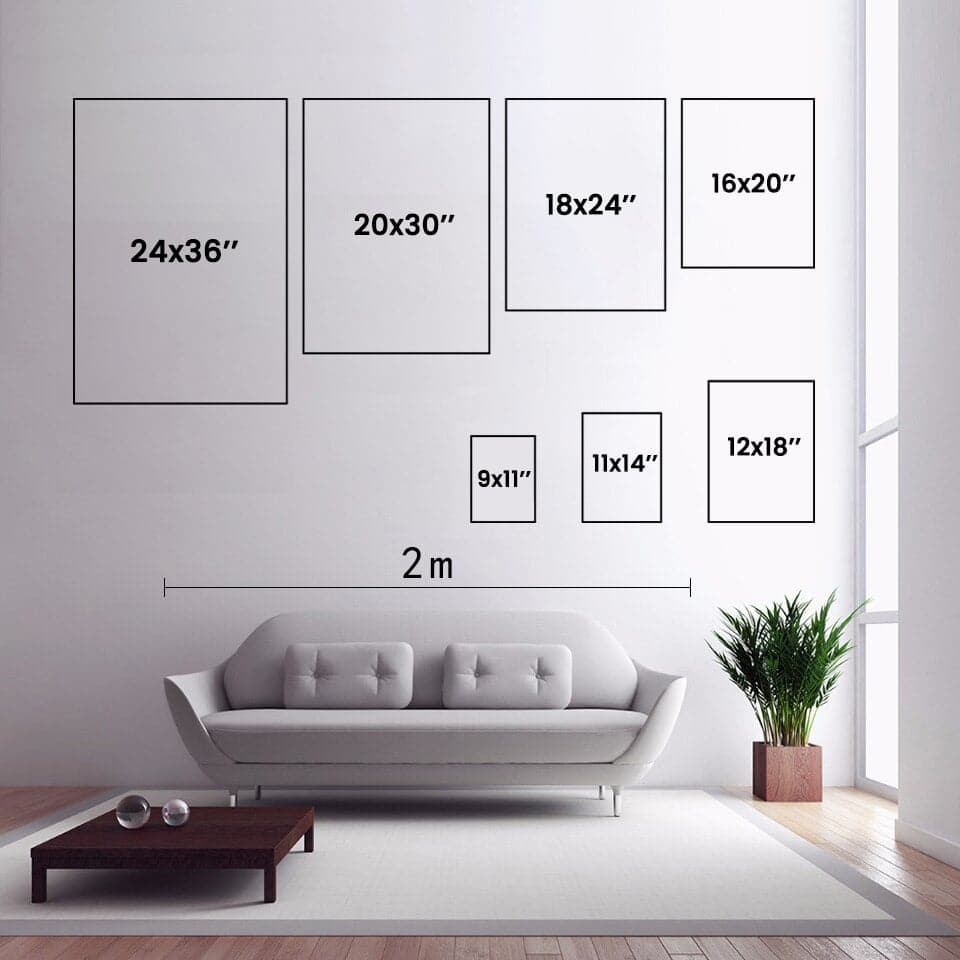
Do not assume every custom listing offers 12 × 12. The current Architeg Prints custom configuration lists 11 × 14, 12 × 18, 16 × 20, 18 × 24, 20 × 30, 24 × 36 inches, and A3. Ask before ordering if a square crop is essential.
Framed Album Cover Posters vs. Unframed Prints
| Format | Best for | Watch for |
|---|---|---|
| Unframed matte poster | Lower weight, flexible framing, renters, larger grids | Frame and glazing cost; paper should stay dry and flat |
| Canvas gallery wrap | Depth without glazing; one or a few statement pieces | Thicker profile; edge crop; less “record sleeve” feel |
| Framed canvas | Finished, ready-to-hang presentation | Higher price and visual weight; larger outer dimensions |
| Square framed print | Uniform LP-inspired grids | Square availability and crop quality |
Are Custom Framed Album Covers Worth It?
They are worth considering when the wall is a long-term feature, the frames will be difficult to source locally, or you want a ready-to-hang gift. For a large multi-print grid, buying standard-size unframed prints and matching frames locally can be more economical and easier to replace. Compare the complete installed cost, not only the print price.
Step 3: Plan the Gallery-Wall Layout
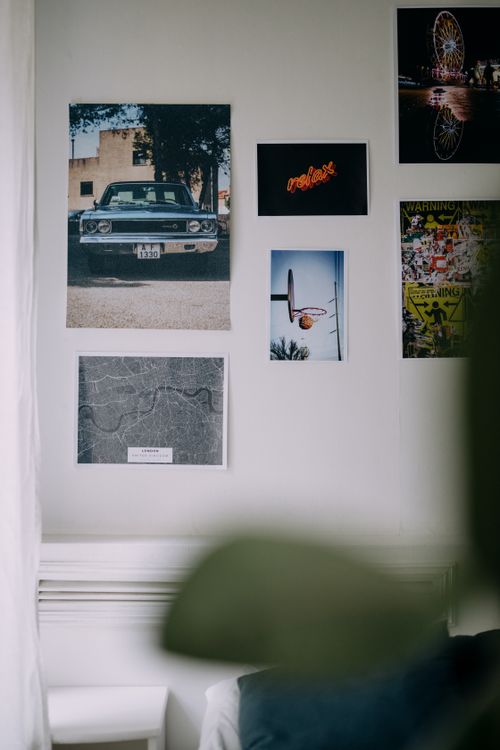
Build the arrangement on the floor first. Photograph each promising version from directly above, then recreate the winner with paper templates cut to the exact outer frame sizes. Mark the hanging point on each template. Tape them to the wall with a removable low-tack tape and live with the mockup for a day before drilling.
Grid Layout vs. Salon-Style Arrangement
| Layout | Visual effect | Best choice when |
|---|---|---|
| Equal-size grid | Calm, graphic, record-store rhythm | Prints share a size and frames match |
| Offset grid | Structured but less formal | You want room to add another row later |
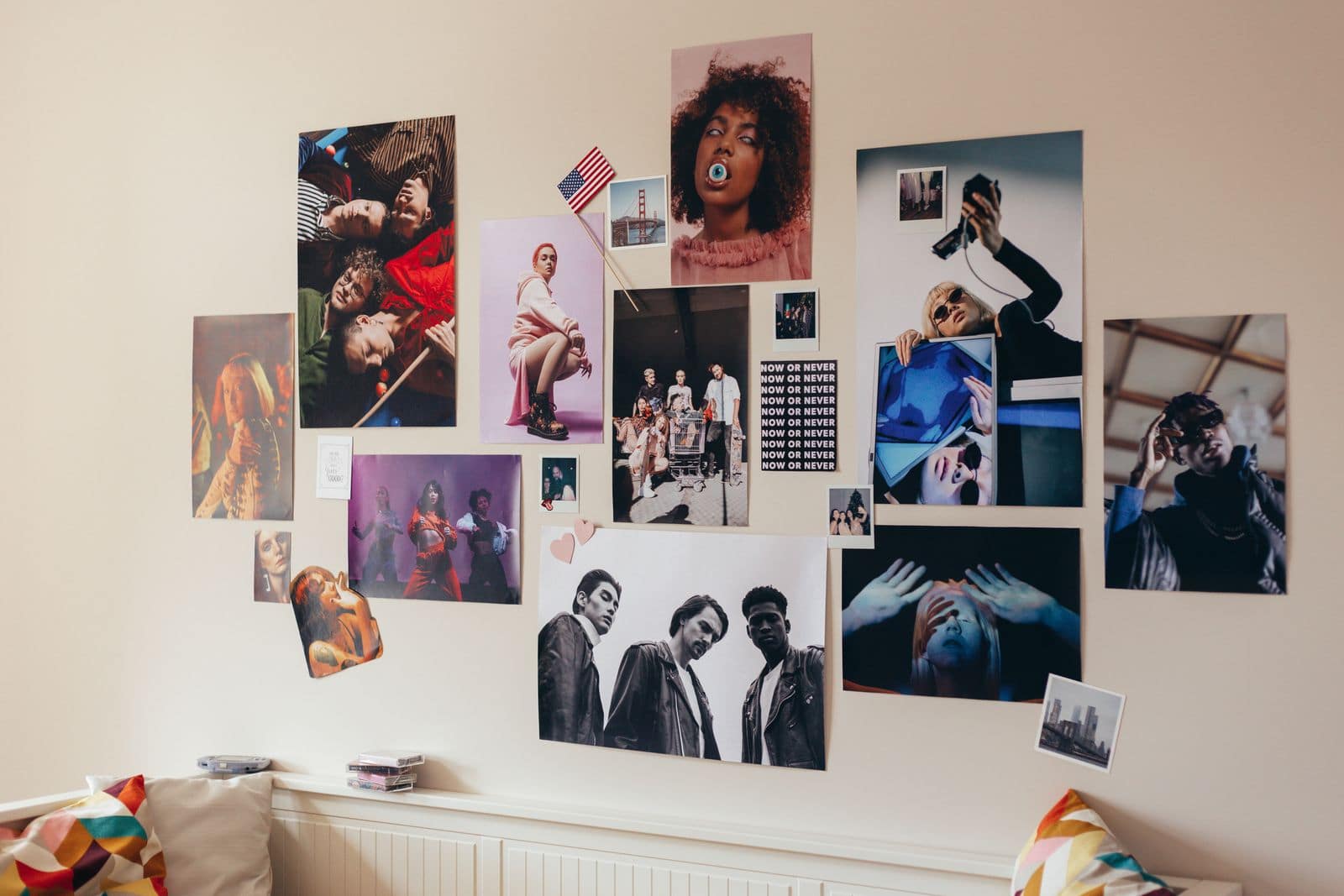
| Salon layout | Eclectic and collected over time | Sizes and formats vary |
| One hero plus smaller pieces | Clear focal point | One album matters most or has the strongest artwork |
Use consistent 2–3-inch gaps for a tight grid. A salon wall can vary more, but keeping one alignment line—such as a shared center or baseline—prevents it from floating apart.
How Many Posters Do You Need?
Start with the wall width and frame size. Three pieces create a small composition; four or six make a clear grid; nine have stronger visual impact but need much more wall space. A useful first version is four prints in a 2 × 2 arrangement or six in a 3 × 2 grid.
- Narrow wall: two or three prints vertically.
- Above a desk or console: three prints in one row or four in a 2 × 2 grid.
- Above a sofa: four to six medium prints, or one large hero with smaller companions.
- Full music-room wall: six to nine prints with consistent spacing and room for future additions.
Aim for the group to occupy roughly two-thirds of the furniture width below it, then check the actual template on the wall. The physical mockup matters more than a universal percentage.
Step 4: Hang and Style the Album Wall
Hang the central or largest piece first, then work outward. Use a tape measure, pencil, level, paper templates, and hardware appropriate to the wall material and combined weight. Adhesive strips can suit light frames where permitted, but follow the strip maker’s weight limits and the property rules.
Tools and Placement Tips
- Confirm the furniture and rug positions before centering the art.
- Measure each frame’s actual outer dimensions and hanger position.
- Place the group’s visual center near standing eye level, adjusting for furniture and the room’s users.
- Use one spacer cut to the intended gap rather than measuring every gap independently.
- Check the entire arrangement from the doorway and primary seat before making the final holes.
Mix Album Posters With Other Wall Art
Photographs, concert tickets, typography, small shelves, and abstract prints can make the wall feel collected rather than catalog-like. Keep memorabilia behind protective glazing and avoid crowding every gap. Negative space is part of the composition. One small object or non-album print is often enough to break the grid without distracting from the music.
Where to Buy Album Cover Posters Online
Choose a seller that publishes the material, print dimensions, production time, delivery estimates, and custom-return rules. Marketplaces offer breadth, local print shops are useful for urgent pickup, and specialist stores can provide a more focused music selection.
For curated music and personalized wall art, explore the Architeg Prints store, its music album collection, and its custom poster options. Use collection pages when you are still comparing; choose a specific product only after checking its current size, material, and delivery configuration.
What to Look for in Print Quality and Materials
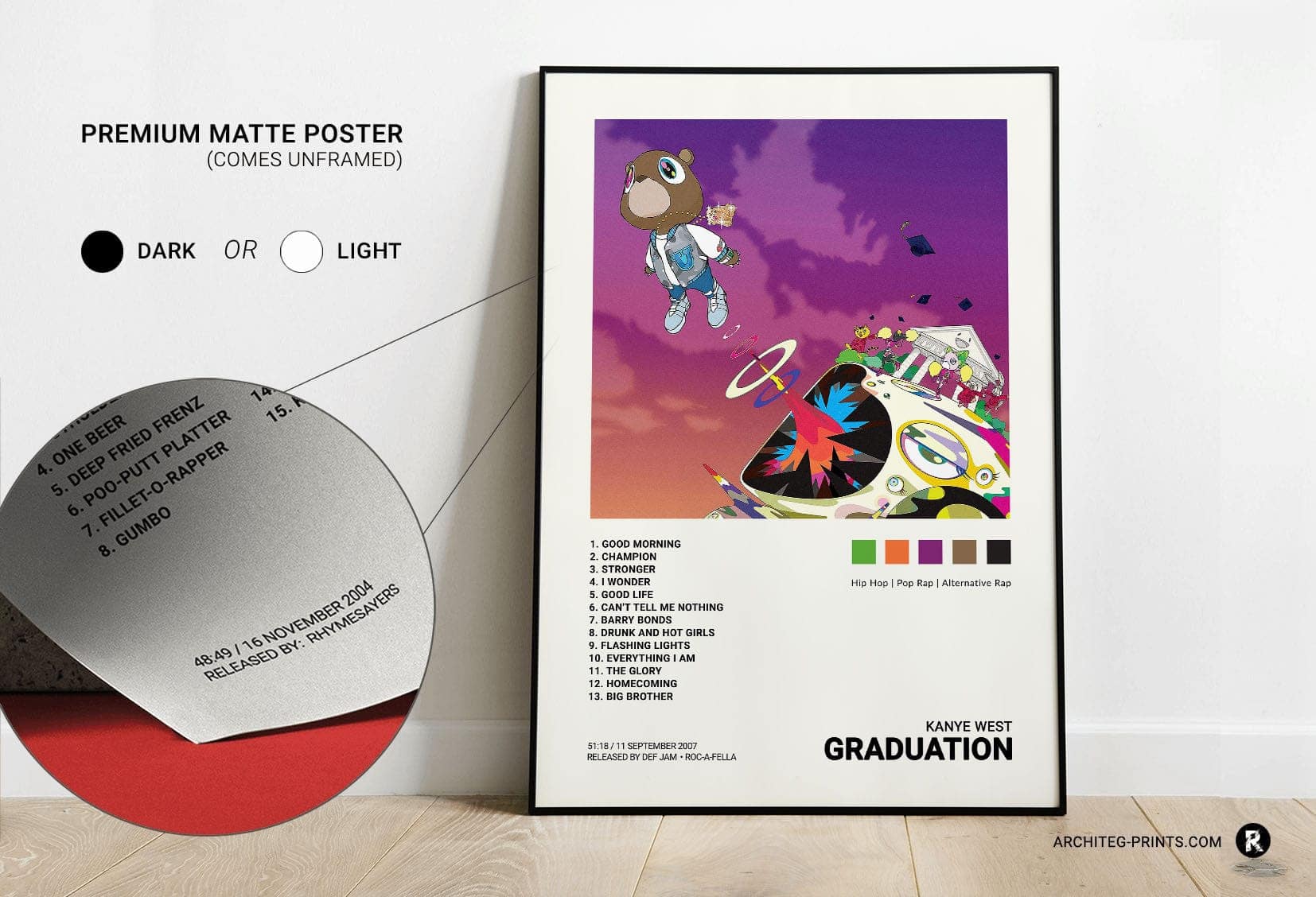
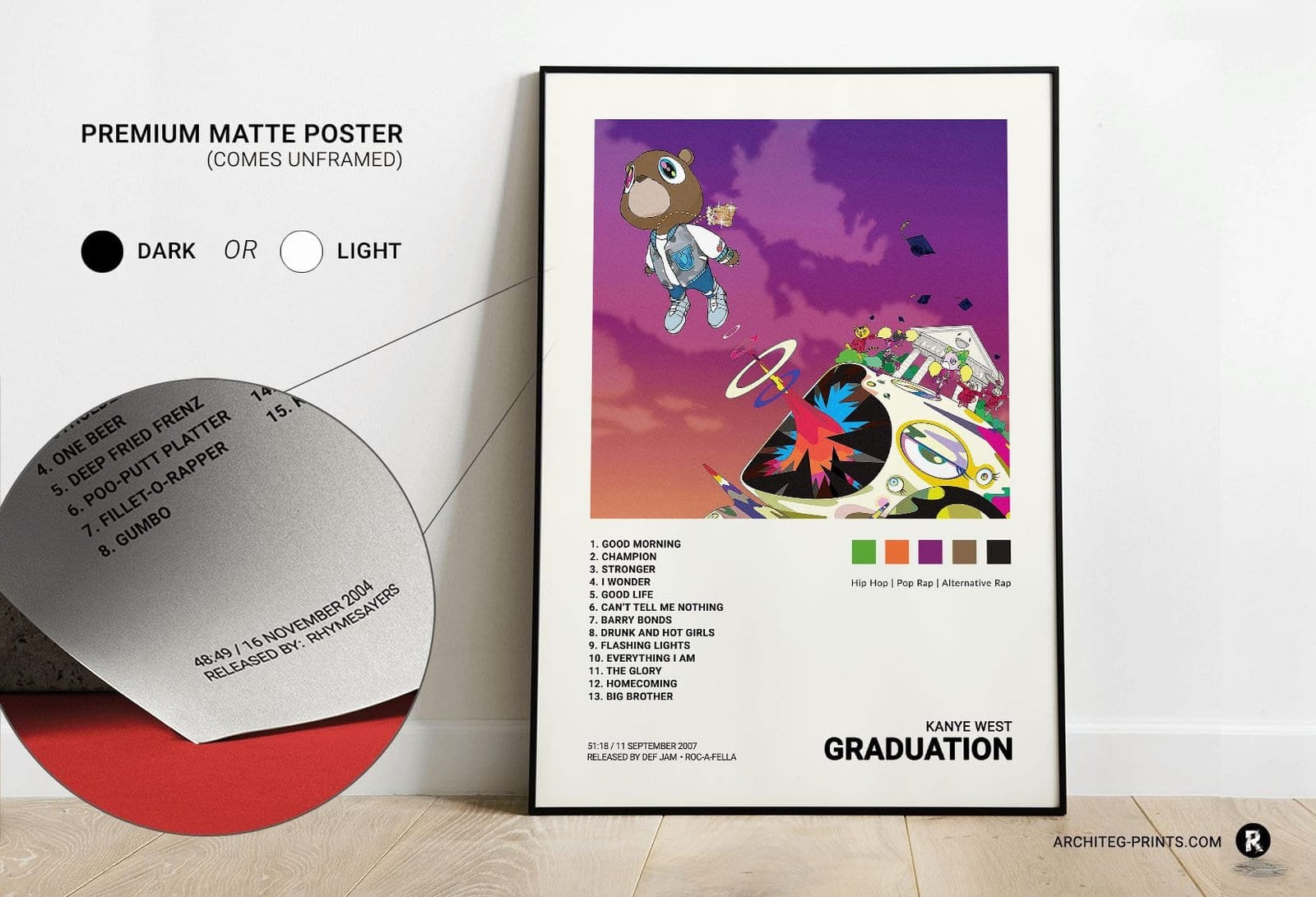
Paper weight affects handling and how substantial a poster feels. Architeg Prints currently describes its matte posters as 180gsm museum-grade paper and its canvas gallery wraps as 400gsm 100% cotton on a 1.25-inch pine stretcher. Its framed canvas uses a black pinewood floating frame and includes hanging hardware. Check the live configuration because not every size or material is available for every design.
Also inspect crop previews, color treatment, frame inclusion, packaging, and the seller’s damaged-item process. “Framed” can mean paper behind glazing, stretched canvas in a floating frame, or a digital mockup; the product description should make the construction clear.
A Verified Custom Album Option
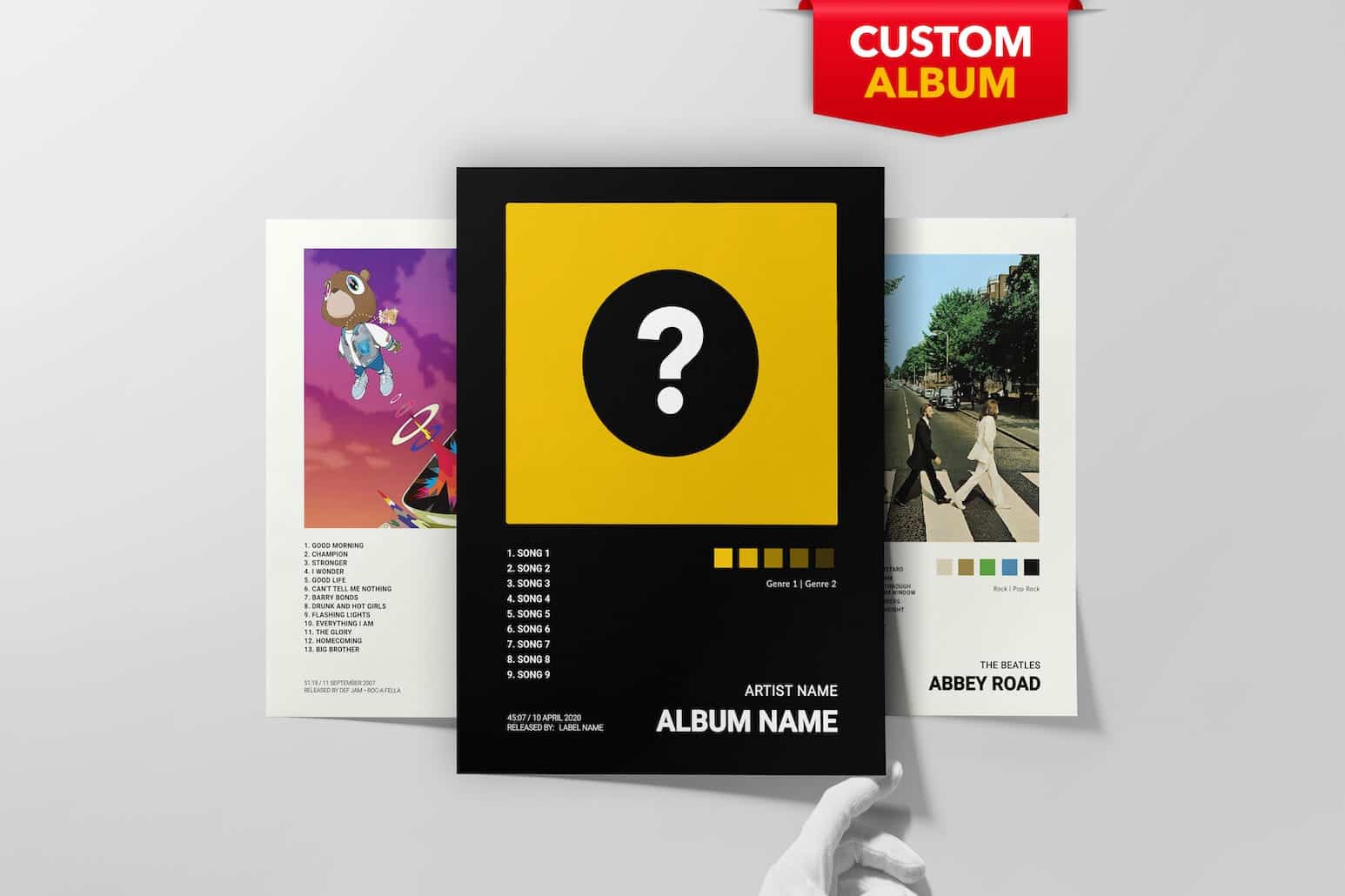
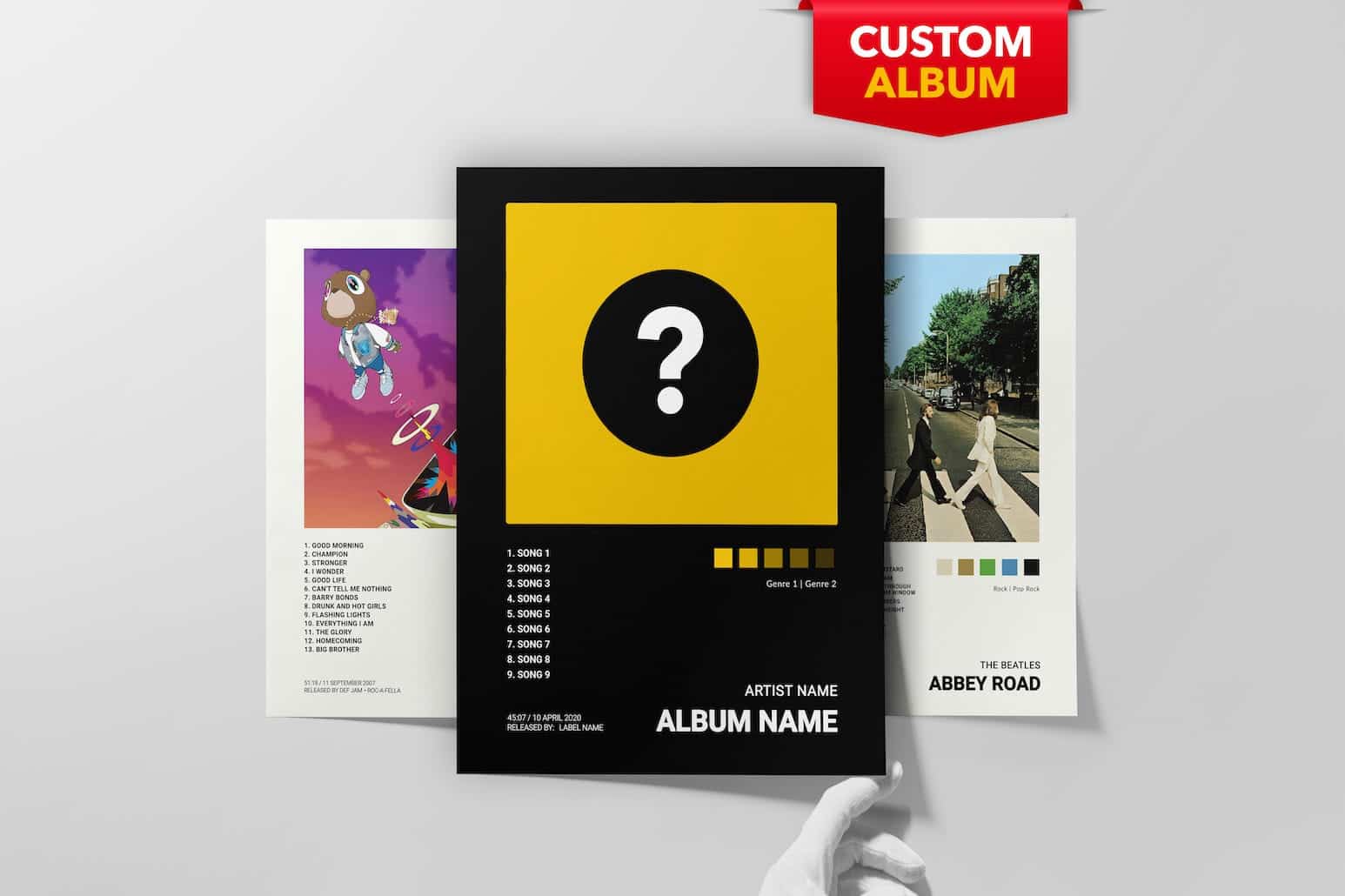
Architeg Prints offers the Custom Album Cover Poster – Choose Your Own Music Album. Its live page lists matte poster, canvas, and framed-canvas formats in seven rectangular sizes, with dark or light styling. Buyers provide the desired albums and artists in the checkout comment. On October 10, 2026, the displayed range was $28.80–$198.85; the page also states that regular custom-poster discounts do not apply.
The listing gives 3–5 business days in its ordering instructions and 2–5 business days in its production-and-shipping section. Use five business days as the safer production allowance, then add the delivery estimate shown for your destination. Custom returns are limited to damaged or defective items, so confirm the album details before checkout.
Build the Wall on Paper First
Curate the story, calculate the full group dimensions, test paper templates, and then order. A simple four- or six-print arrangement with consistent frames will usually look more finished than a larger wall assembled without a plan. Start with the albums that matter most and leave enough room for the collection to grow.
FAQs
How many album posters should I use for a gallery wall?
What spacing looks best between album posters?
Are 12 × 12-inch prints the best size for album art?
Should album posters be framed?
How do I test a gallery-wall layout before making holes?
 | DISCOUNTGET 30% OFF*Use code on your next order:
|
* This post may contain affiliate links, meaning we earn a commission if you make a purchase through these links, at no additional cost to you.