Music Posters Aesthetic: Top Trends Right Now


Table of Contents
The best music-poster aesthetic is not a wall covered at random—it is a small visual system. Pick one dominant mood, repeat two or three colors, keep frame spacing consistent, and let one larger print lead the arrangement. That simple rule works whether your taste is retro, minimalist, streetwear-inspired, anime-adjacent, or abstract.
This guide breaks down the music poster aesthetics that feel current in 2026, then shows you how to choose sizes, frames, and sources without turning your room into a merch shelf. You can use the ideas with favorite-album art, tracklists, concert graphics, or custom album wall art.
Why Music Posters Still Define a Room in 2026
Music artwork does two jobs at once: it adds color and graphic structure, and it tells visitors something specific about you. Unlike a generic landscape, an album image or tracklist connects the room to a memory—your first concert, a record you played through a difficult year, or the soundtrack shared with a friend.
The format is also unusually flexible. A renter can use an unframed 12 × 18-inch print and removable strips; a homeowner can build a framed grid; a collector can mix square album art with tall concert-style posters. The same subject can feel quiet or loud depending on typography, scale, and framing.
What Makes a Music Poster Aesthetic?
An aesthetic is a repeatable set of visual choices, not merely a popular image. Four elements do most of the work:
- Palette: choose a dominant neutral plus one or two accent colors.
- Typography: repeat a similar type mood—clean sans serif, condensed gig-poster lettering, or expressive hand-drawn text.
- Image treatment: keep photography, illustration, halftone texture, or collage consistent across the main pieces.
- Presentation: repeat frame color, border width, or mounting method so different albums still look related.
You do not need every print to match. A coherent wall often comes from one repeated feature: black frames around wildly different artwork, or a shared cream-and-red palette across several eras.
Who Is Driving the Trend?
Students and renters favor flexible arrangements that can grow one print at a time. Record collectors often prefer artwork that preserves album identity and liner-note details. Design-focused decorators may treat music imagery as source material, choosing prints for shape and color even when the references span genres. The practical lesson is the same: start with the listener and the room, not a list of “must-have” albums.
Music Poster Aesthetic Trends Shaping Walls Right Now
The strongest current directions are less about chasing a single viral look and more about combining recognizable music culture with a clear design language. Here are five useful directions and the rooms they suit.
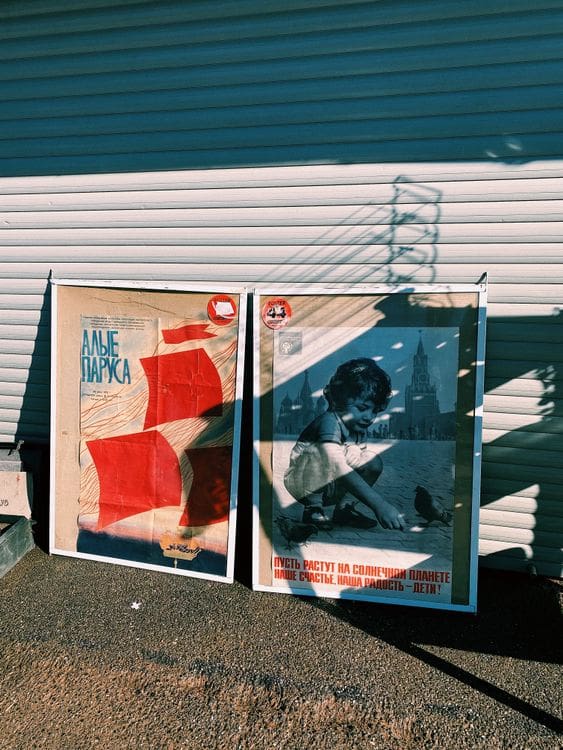
Retro and Vintage Album Posters
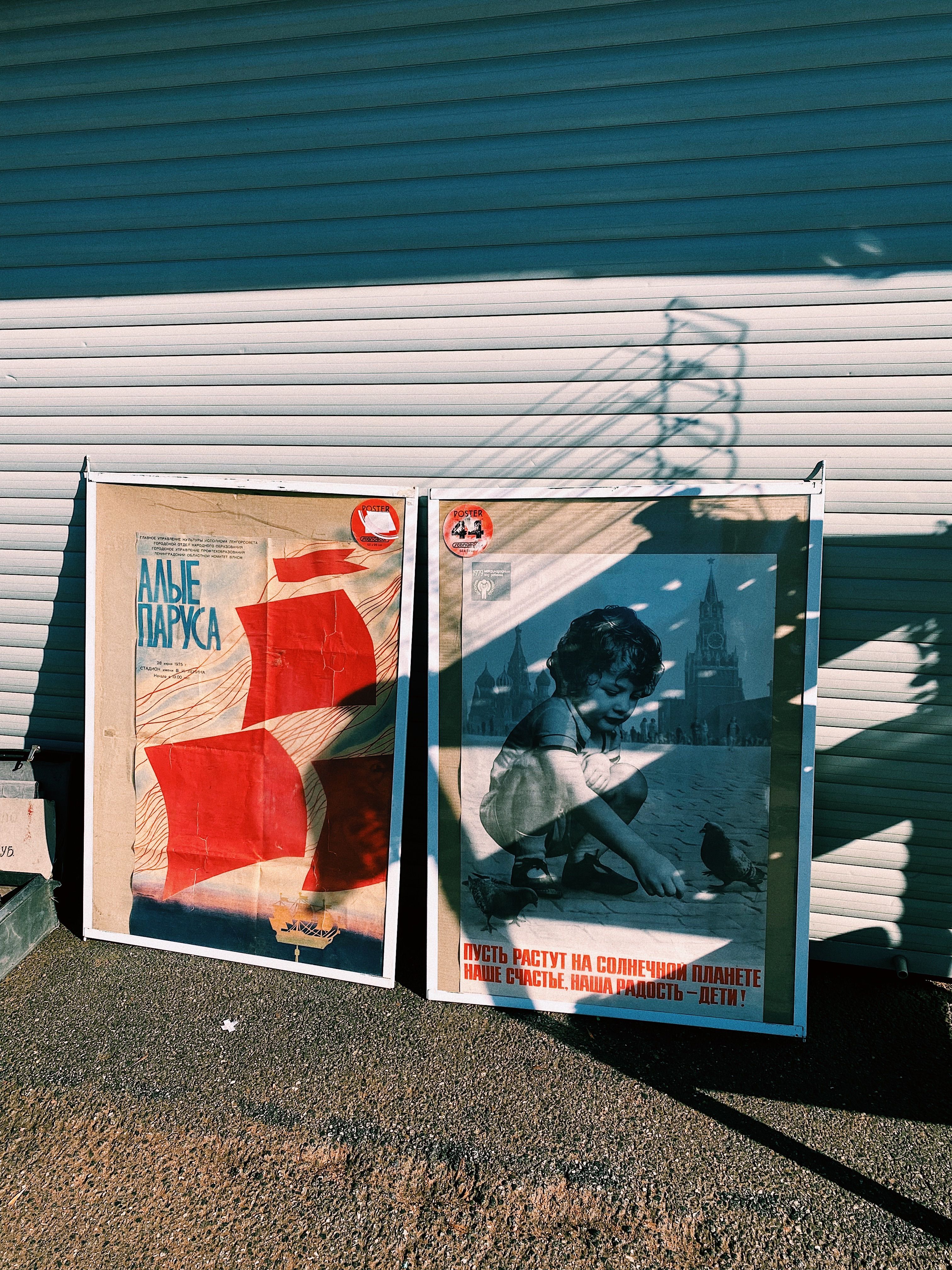
Warm off-white backgrounds, muted orange and brown, halftone dots, worn paper effects, and condensed type can evoke 1960s–1990s print culture. The look works especially well with wood furniture, record storage, warm lamps, and natural textiles.
“Vintage-inspired” should describe a design treatment, not misrepresent a new reproduction as an original artifact. If authenticity matters, check whether a listing is an original concert poster, an authorized reprint, or a newly designed print inspired by the era. Those are different products and should be priced and described accordingly.
Minimalist Tracklist Posters
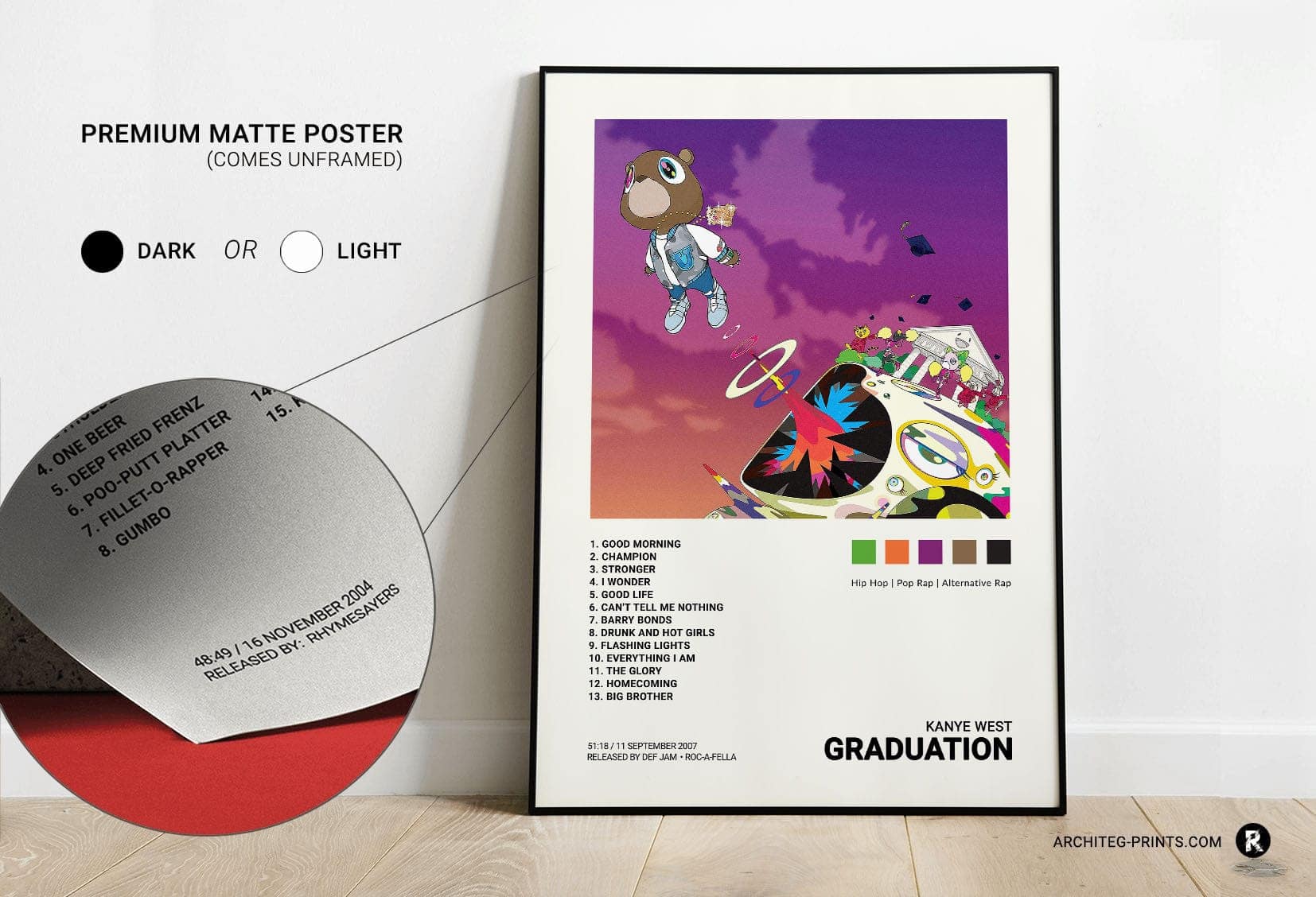
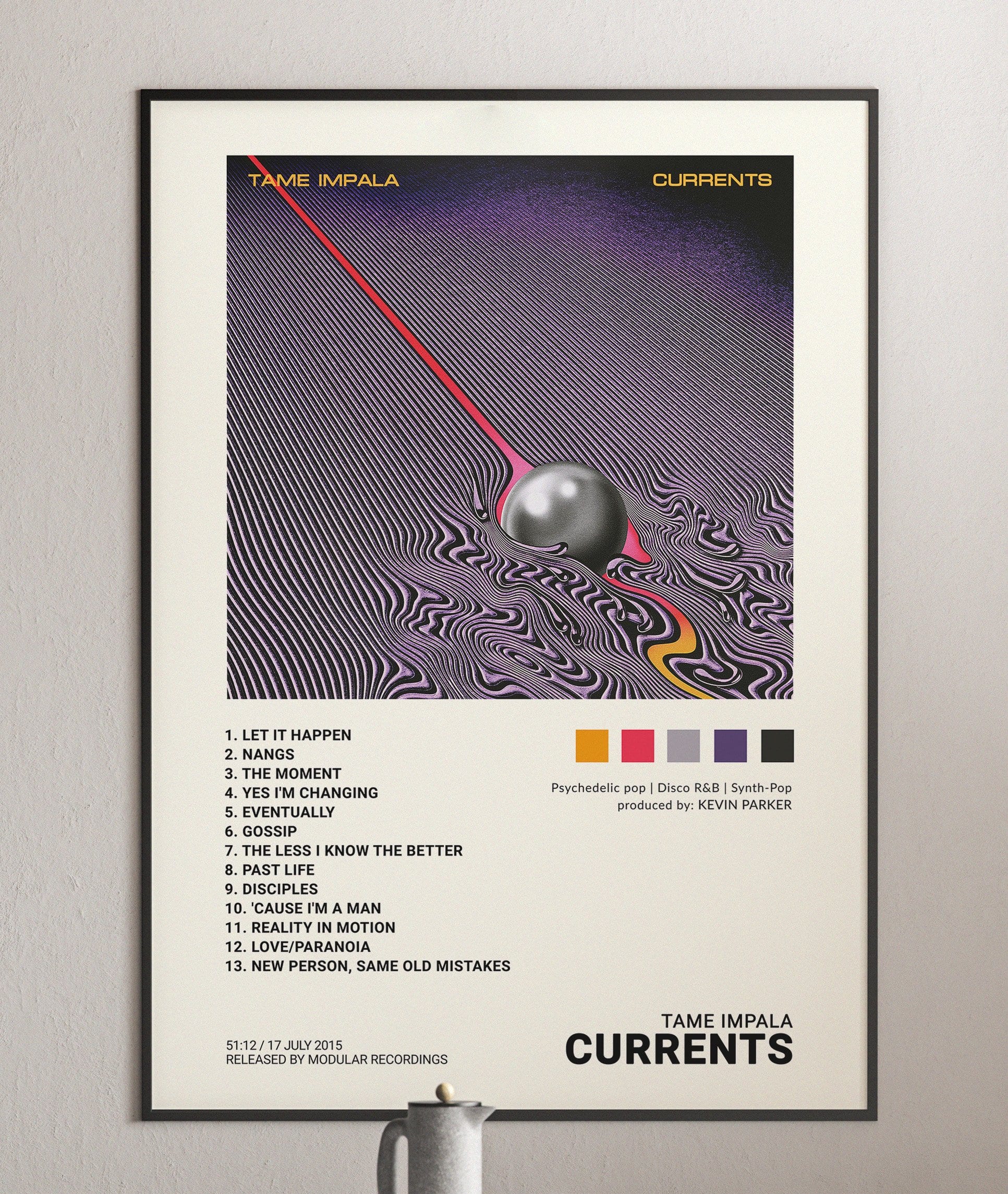
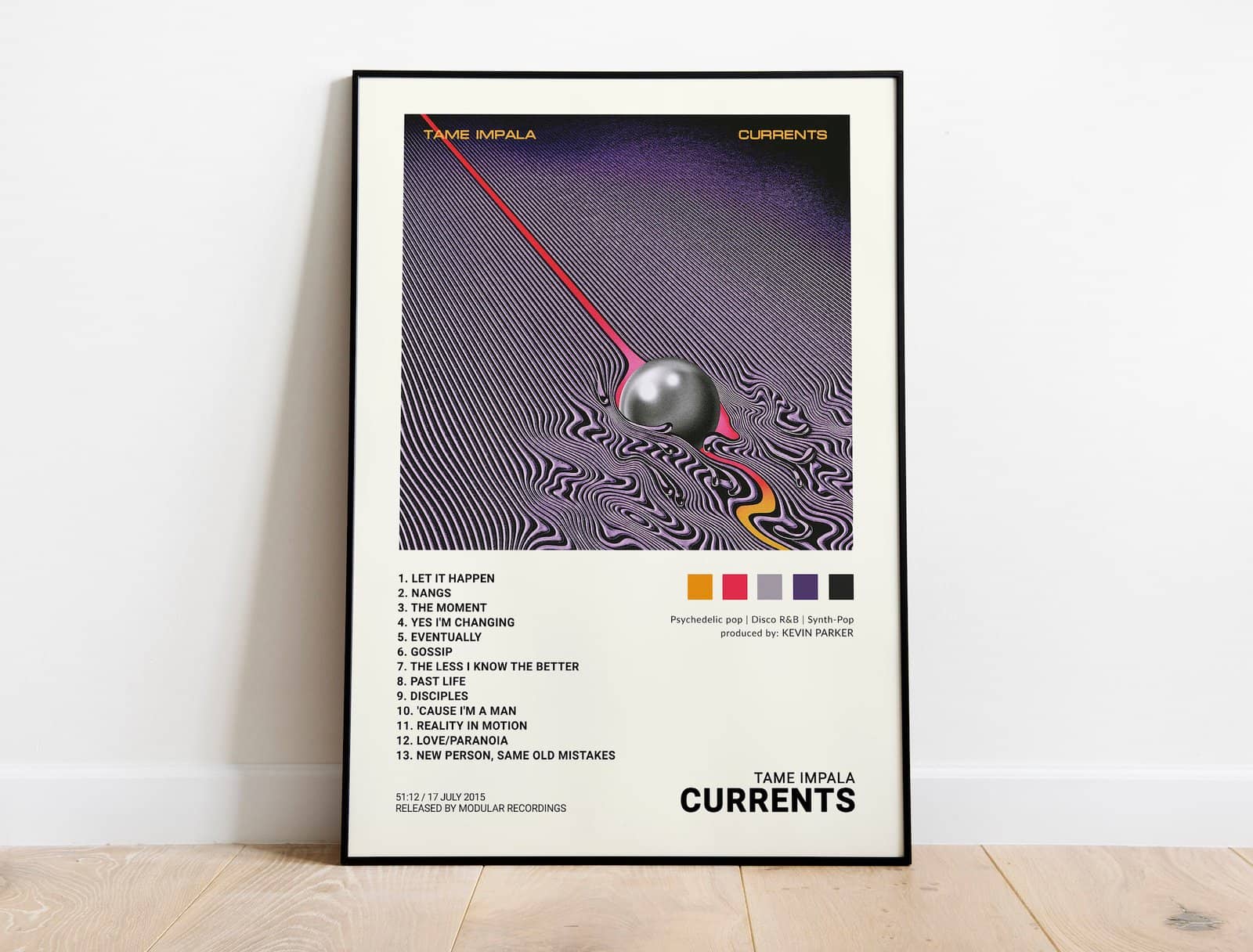
A minimalist tracklist poster reduces the artwork to a few elements: album title, artist, songs, restrained color, and generous empty space. It is a good choice for bedrooms, home offices, or narrow walls where a busy collage would compete with furniture.
For a concrete example, the Tame Impala – Currents Album Cover Poster Print (Tracklist) pairs recognizable album imagery with track information. The product page currently lists digital, matte poster, canvas, and framed-canvas options from 9 × 11 to 24 × 36 inches; the displayed range is USD 8.85–198.40, so check the selected format and size for the actual quote.
Hip-Hop and Streetwear-Inspired Album Art
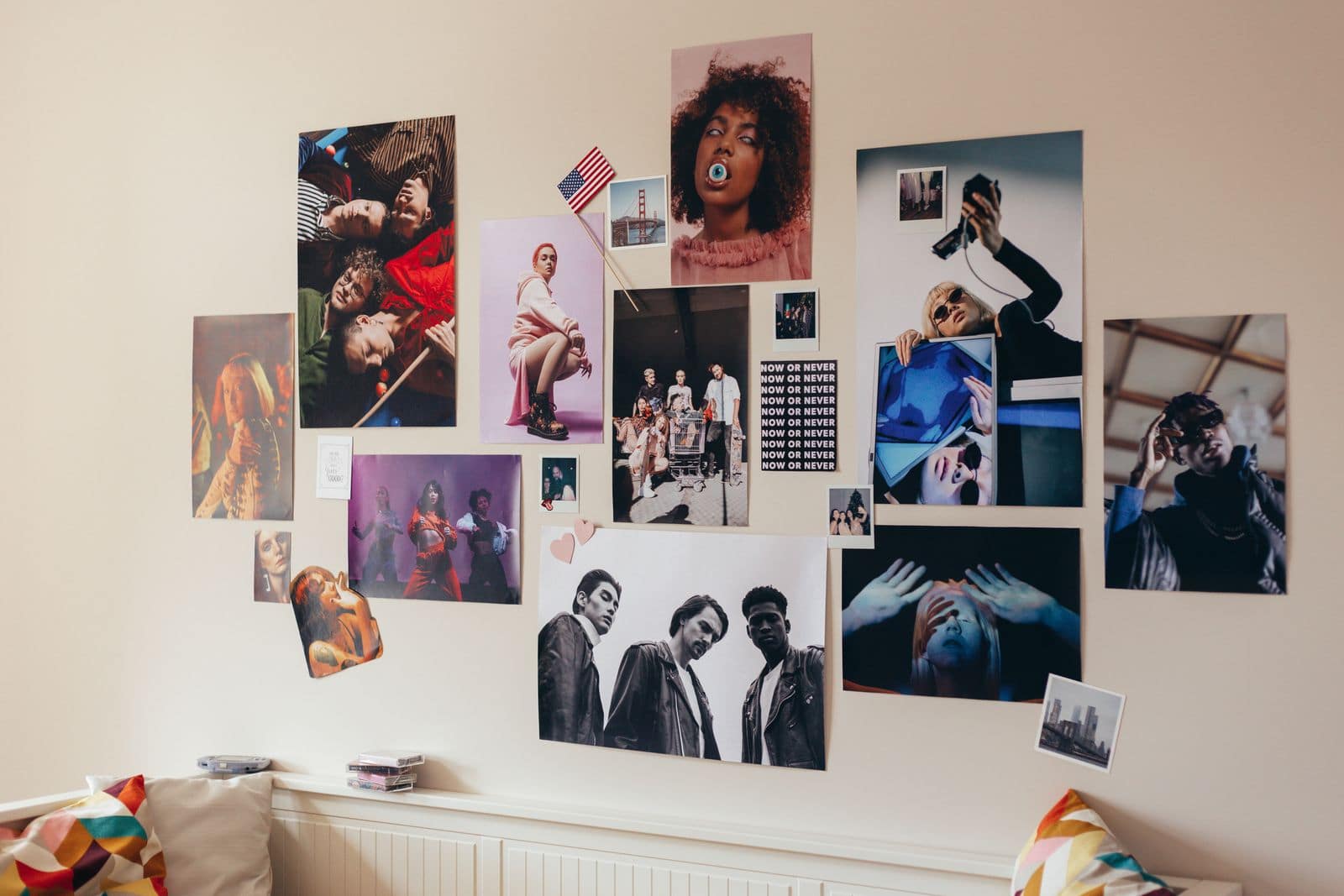
Bold cropping, flash photography, stencil or marker lettering, high-contrast black, and saturated accent colors create a streetwear-adjacent wall. Give this style breathing room: one oversized print above a desk often has more impact than six competing graphics.
If you build a cluster, repeat a single device—black-and-white photography, one neon accent, or matching black frames. Avoid adding logos only because they are recognizable; the wall feels more personal when the imagery relates to artists, tours, or records you actually enjoy.
Anime and Pop Culture Crossover Prints
Crossover walls blend music with animation, film, games, or comic-inspired graphics. The safest styling move is to connect categories through color rather than subject. A blue-violet album print can sit comfortably beside an anime illustration if their saturation and frame treatment match.
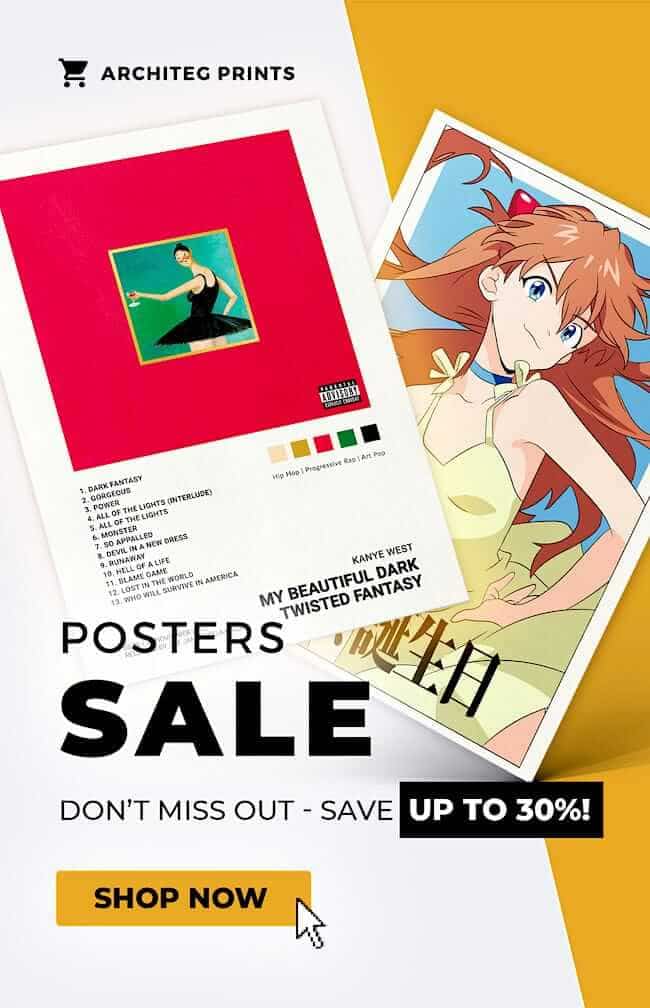
Check licensing and listing language before buying character or artist imagery. A seller should make clear what is being offered; a wall print is not the album, film, or game itself. If you want to browse by theme without committing to a named piece, the Architeg Prints music-album collection is a useful starting point.
Abstract and Postmodern Album Wall Art
Abstract music walls use warped grids, geometric forms, gradients, oversized type, and intentionally uneven layouts. This direction fits modern rooms because the references can be subtle: from across the room, the pieces read as graphic art; close up, titles and track details reveal the musical connection.
Limit the composition to one strong tension—perhaps a rigid grid filled with expressive artwork, or free-form placement held together by identical frames. When every element is unconventional, the result becomes visually noisy rather than postmodern.
How to Style Album Posters for Your Room
Measure first. Photograph the empty wall straight on, note nearby furniture width, then mock up paper rectangles with painter’s tape. A poster arrangement should relate to what sits below it: above a 60-inch desk, for example, an art grouping around 36–45 inches wide usually feels connected without stretching edge to edge.
- Choose one anchor print.
- Pull two colors from it for the supporting pieces.
- Decide on a consistent gap—about 2 to 3 inches is an easy starting point.
- Test the full arrangement on the floor.
- Hang the center of the composition near eye level, then adjust for furniture and ceiling height.
Gallery Wall Ideas Using Music Album Posters
Three layouts cover most rooms:
| Layout | Best for | How to keep it coherent |
|---|---|---|
| Clean grid | Minimal rooms and matching print sizes | Use identical frames and equal gaps. |
| Anchor plus satellites | One favorite album or concert image | Place the largest print first, then balance smaller pieces around it. |
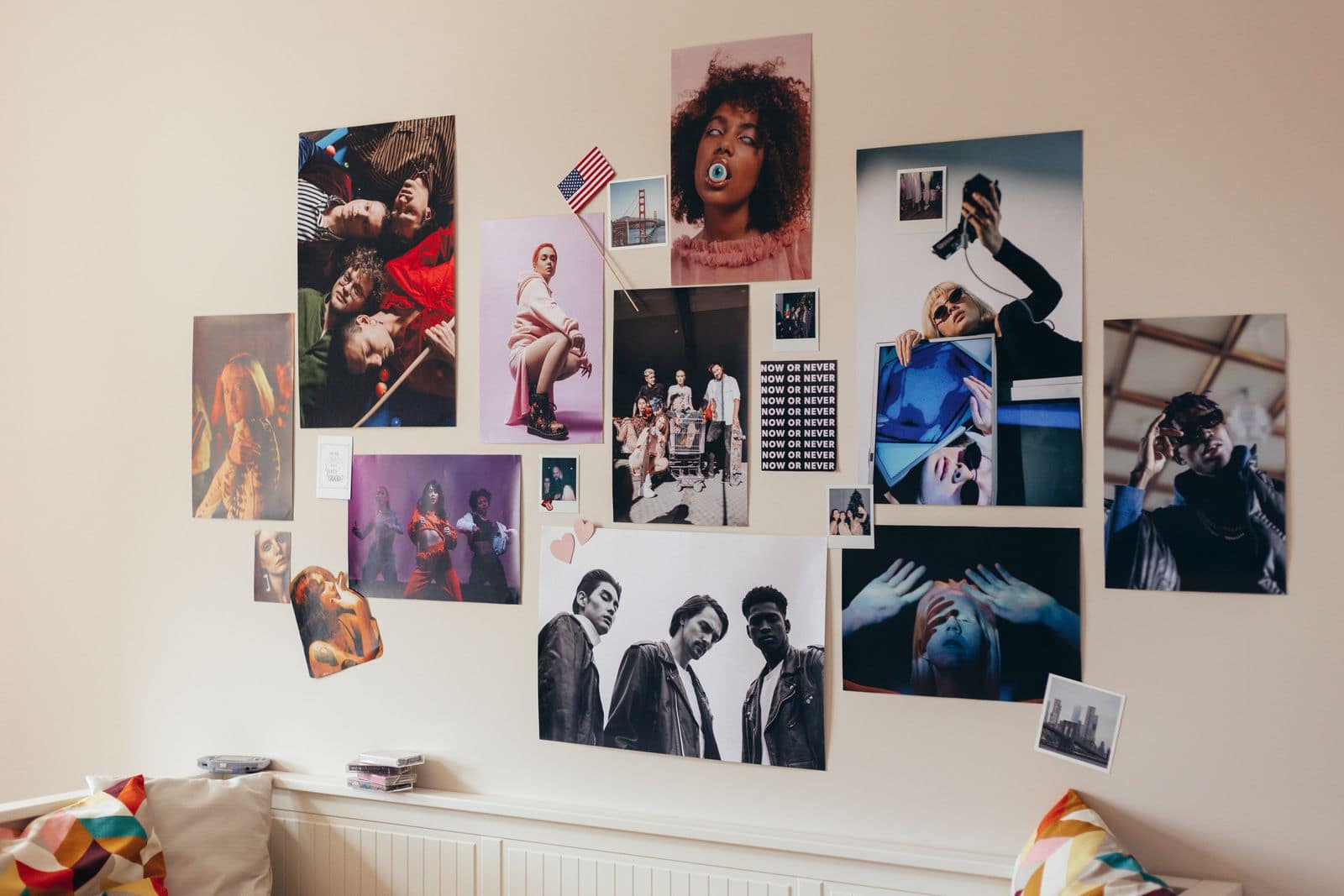
| Salon mix | Eclectic collections that grow over time | Repeat one color or frame finish and keep outer edges visually balanced. |
Choosing the Right Size and Frame for Your Poster
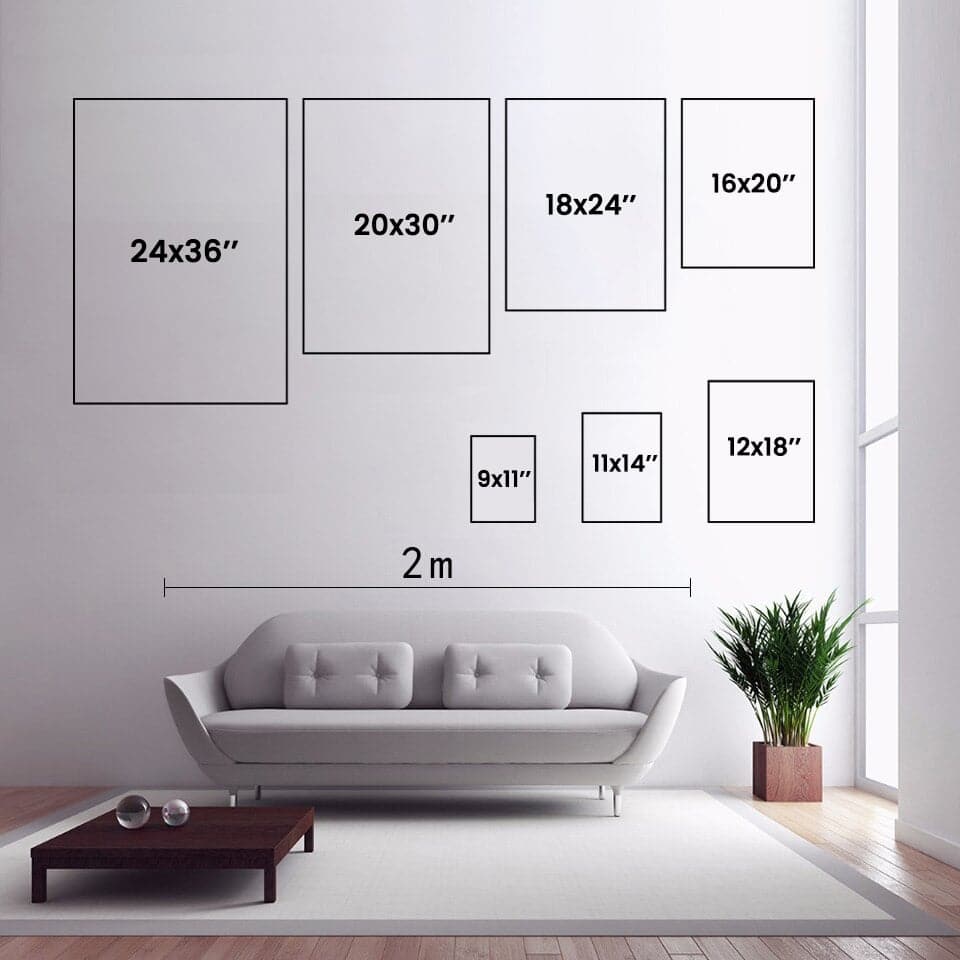
Use viewing distance and furniture scale as your guide. Small 9 × 11 or 11 × 14-inch prints suit shelves, bedside walls, and multi-piece grids. Sizes around 16 × 20 or 18 × 24 inches are flexible anchors. A 24 × 36-inch poster can stand alone above a desk, console, or bed.
Matte paper is light and easy to reframe; canvas has more texture and depth; framed canvas arrives as a more finished object. On its materials page, Architeg Prints describes 180gsm matte fine-art paper, 400gsm cotton canvas, and black pine framed-canvas options. Confirm the exact material available on the listing you choose.
For paper prints, a mat can make mixed sizes feel intentional. For busy artwork, use a simple frame. For monochrome typography, a natural-wood frame can add warmth. Keep valuable or irreplaceable prints away from direct sun and ask a framer about UV-filtering glazing and acid-free backing.
Custom and Personalized Tracklist Posters: Make It Yours
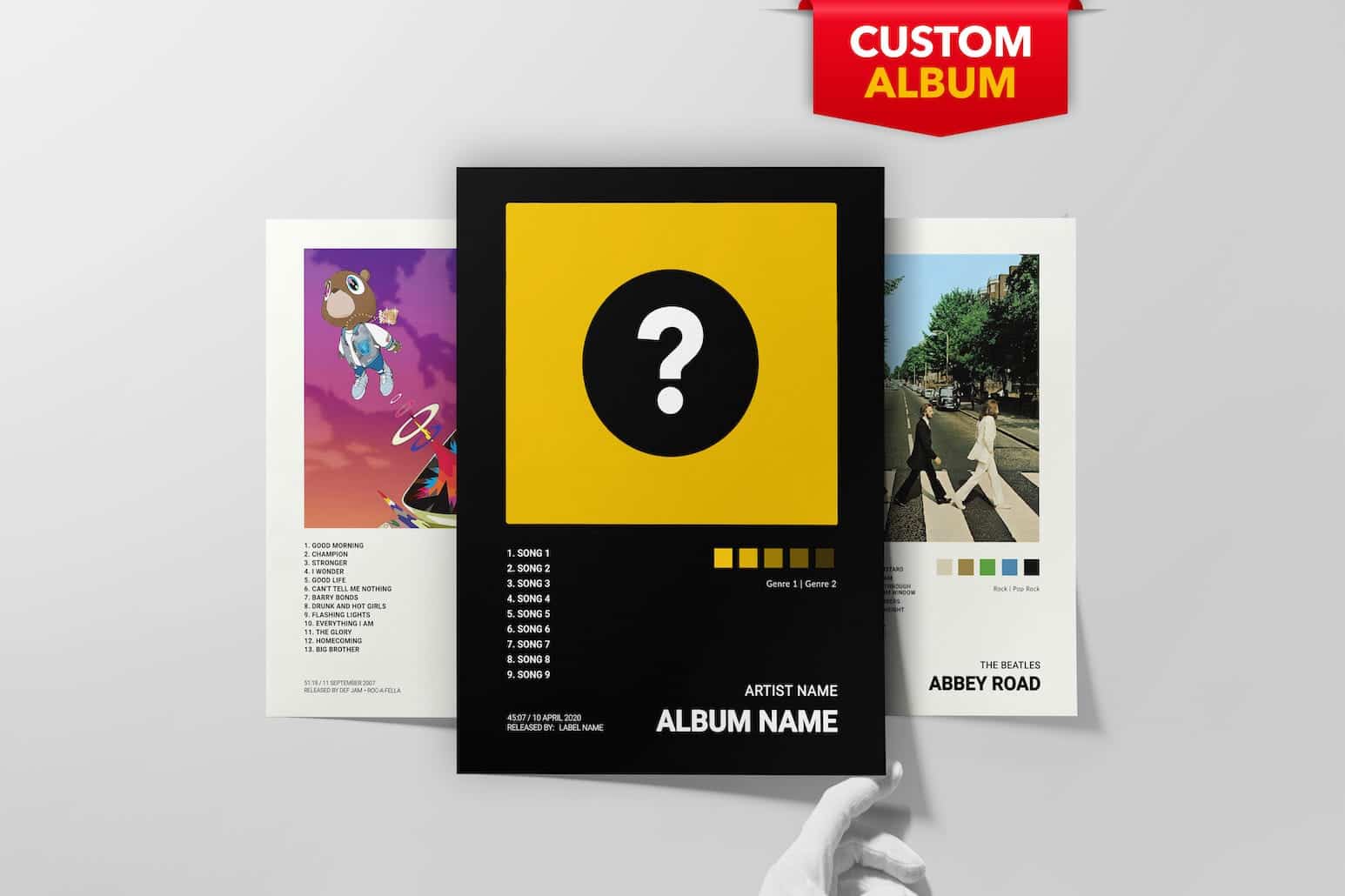
Customization is most useful when the memory matters more than finding a ready-made listing. It can preserve a wedding playlist, a first-dance album, a concert date, or a record shared between friends. Before ordering, gather the exact artist and album spelling, track order, preferred colors, orientation, final print size, and any date or dedication.
What Is a Tracklist Poster and Why Is It So Popular?
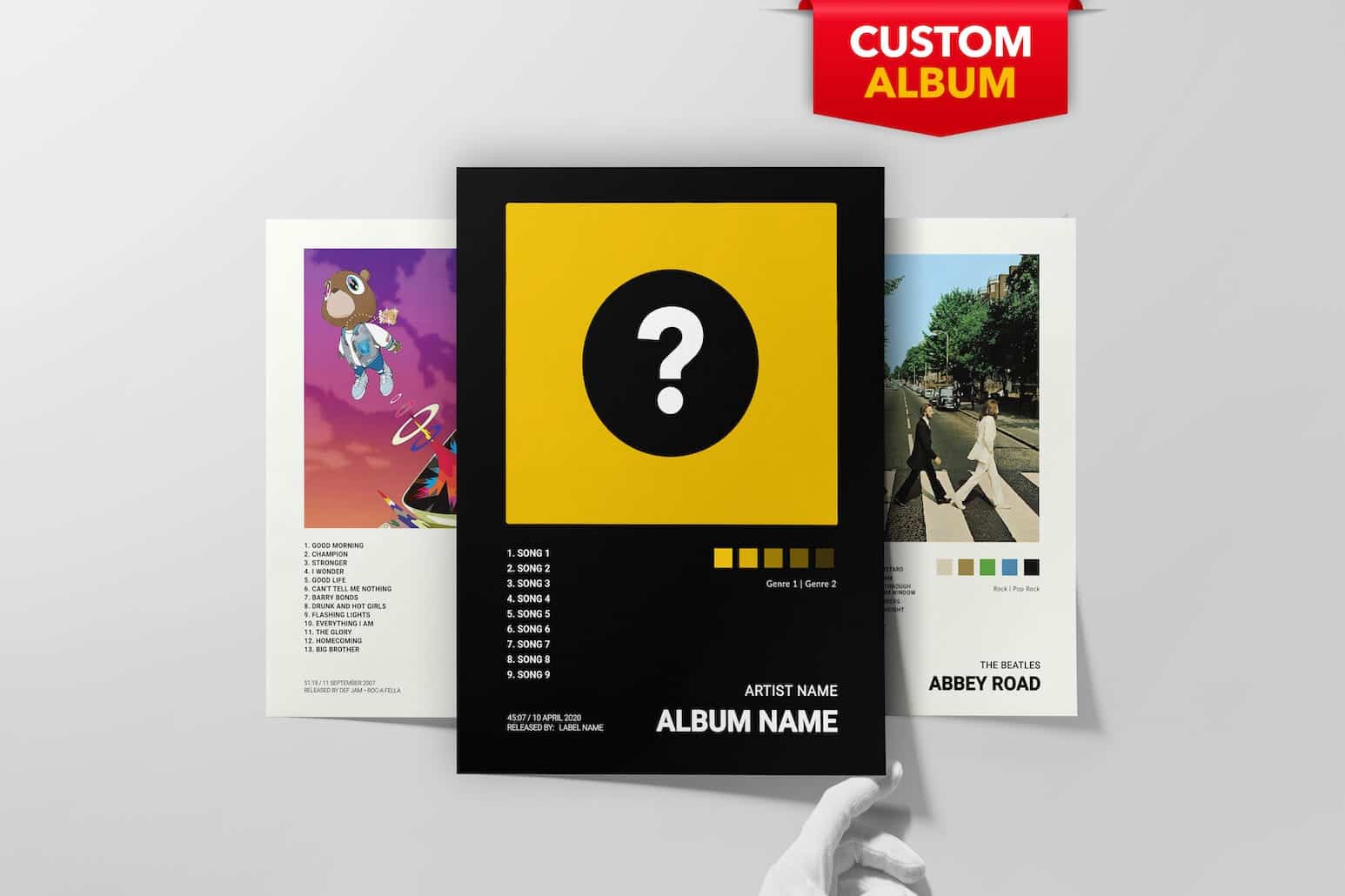
A tracklist poster turns song information into a designed composition. Some versions reproduce album-cover imagery; others use only type, color, and small metadata. The format is personal without requiring a portrait, and it remains readable as both music reference and wall art.
The best layouts prioritize hierarchy. The album or event name should read first, the track names second, and small details last. Long tracklists need enough size and contrast; squeezing twenty lines into a small print may look elegant in a mockup but become hard to read on the wall.
How to Use a Tracklist Poster Maker
You can build an album poster template in a design tool or order a managed custom design. Follow this checklist:
- Verify the text. Copy track titles from a reliable source and proof accents, punctuation, and featured-artist names.
- Choose the final size first. Design at the intended aspect ratio so nothing important is cropped later.
- Use print-resolution artwork. Do not enlarge a small streaming thumbnail.
- Check rights. Personal photos and original graphics are simpler to use than unlicensed logos or copyrighted artwork.
- Request or review a proof. Look for legibility, crop, margins, and color before production.
For a made-to-order route, the Custom Album Cover Poster – Choose Your Own Music Album accepts album and artist details at checkout. Its verified page lists matte, canvas, and framed-canvas formats from 11 × 14 to 24 × 36 inches plus A3, with a displayed range of USD 28.80–198.85. The page says normal production is 3–5 business days; delivery time is separate, custom prints are excluded from the advertised coupon, and returns are limited to damage or defects.
Where to Buy Music Album Posters Online
The best seller depends on what you need. Compare like with like—paper weight, physical size, frame inclusion, production time, delivery estimate, and licensing—rather than comparing a digital file with a framed canvas on headline price alone.
| Source | Best fit | What to verify |
|---|---|---|
| Architeg Prints | Music, movie, pop-culture, and personalized wall art in several physical formats | Selected size and material, current quote, production time, shipping, and custom-item restrictions |
| Artist or label store | Official tour and release merchandise | Edition details, restock policy, and whether the item is an original or reproduction |
| Independent print marketplace | Broad style variety and niche designers | Seller rights, paper specification, print partner, and return policy |
| Local print shop | Urgent pickup or printing your own authorized file | File rights, color profile, paper stock, turnaround, and trimming |
A local shop is often the better choice when you need same-day pickup. A specialist online store is more useful when you want a prepared design, coordinated size options, canvas, or customization. Prices and availability change, so treat displayed ranges as starting information and check the configured cart before ordering.
Build a Wall That Sounds Like You
Start with one record or artist that genuinely matters, then choose the visual rule that will connect everything else. A retro palette adds warmth; a minimalist tracklist keeps the room calm; a streetwear composition brings energy; a custom piece makes the wall specific to your own story.
Measure the wall, test the arrangement at full scale with paper, and add pieces slowly. The result will feel more intentional—and more personal—than buying a complete matching set in one afternoon.
FAQs
How do I make music posters look aesthetic instead of cluttered?
What size music poster works best above a desk?
Should album posters be framed?
What is a tracklist poster?
Can I mix different music genres on one gallery wall?
What should I check before ordering a custom album poster?
 | DISCOUNTGET 30% OFF*Use code on your next order:
|
* This post may contain affiliate links, meaning we earn a commission if you make a purchase through these links, at no additional cost to you.