Cambridge Audio Evo 150 SE Review: Premium Streaming Amplifier Highlights & Buying Tips



Cambridge Audio Evo 150 SE Review: Premium Streaming Amplifier Highlights & Buying Tips
Explore the versatility and sound of the Cambridge Audio Evo 150 SE streaming amplifier and learn how to get yours in Moscow with this detailed review.
A New Chapter in Streaming Amplifier Excellence
Back in 2021, Cambridge Audio shook up the audio world with the Evo 75 streaming amplifier and 150 models—streaming amplifiers that weren’t yet mainstream but already packed with power, style, and versatility. These sleek boxes combined a power amplifier, DAC, preamplifier, and network streamer all in one neat chassis—just plug in your speakers and enjoy. Both models earned top marks then, and since, a flood of competitors has hit the market with streaming amps of all shapes, sizes, and price tags.
Fast forward to today, and Cambridge Audio is back with an upgraded version of the flagship, the Evo 150 SE streaming amplifier. While the Evo 75 quietly bowed out, the 150 SE promises better sound without sacrificing the rich features that made the original a hit. The “SE” tag usually screams “Special Edition,” but here it’s a full-fledged model meant to win over hardcore audiophiles and stylish gadget fans alike. So, did it hit the mark?
Officially priced at $3,299, it sits in a competitive league. The NAD C 3050 streaming amplifier with an MDC2 BluOS-D module, costing significantly less at $2,199 and crowned “Product of the Year” by What Hi-Fi?, is tough competition. The new Evo 150 SE must really deliver to justify that price tag.
Features and Connectivity: All You Could Ever Need
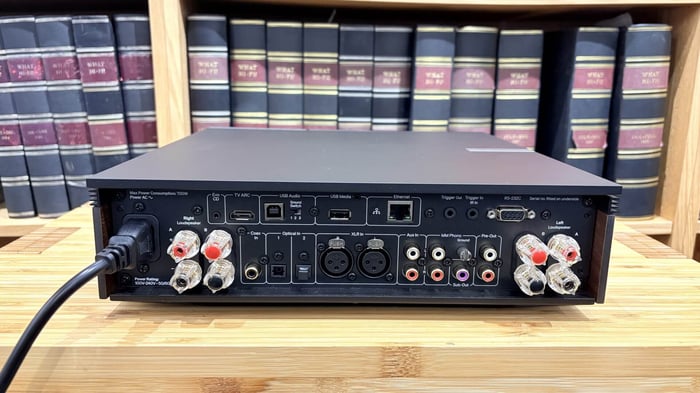
At first glance, the SE version looks almost identical to its predecessor. It still pumps out 150 watts per channel at 8 ohms, uses the same ESS Sabre ES9018K2M DAC, and even the rear panel connections haven’t changed a bit.
That might disappoint some, but honestly, the original Evo 150 was a connectivity beast. As I mentioned in my first review: “You can literally connect anything to the Evo 150.”
Key Specs:
- Streaming capabilities: UPnP, AirPlay 2, Google Cast, Spotify Connect, Tidal Connect, Qobuz Connect, Amazon Music, Deezer, internet radio, Bluetooth aptX HD, Roon Ready
- Output power: 150 watts per channel at 8 ohms
- Network: Wi-Fi and Ethernet
- Inputs: MM phono preamp, RCA line-in, balanced XLR, coaxial, two optical, HDMI ARC, USB Type-B
- Outputs: 3.5mm headphone jack, preamp out, subwoofer out, two pairs of speaker terminals
- Supported formats: PCM up to 32-bit / 384 kHz, DSD256
- Dimensions (HxWxD): 8.9 x 31.7 x 35.2 cm
- Weight: 5.3 kg
- Finish: Black with interchangeable side panels
Availability and Usage Challenges
Though official Cambridge Audio shipments have paused here, the Evo 150 SE is still easy to find in major audio salons and marketplaces thanks to parallel imports. Prices hover between $4,100 - $4,500 depending on the seller and currency fluctuations, with a one-year local warranty provided by larger retailers.
Streaming Services in Today's Market
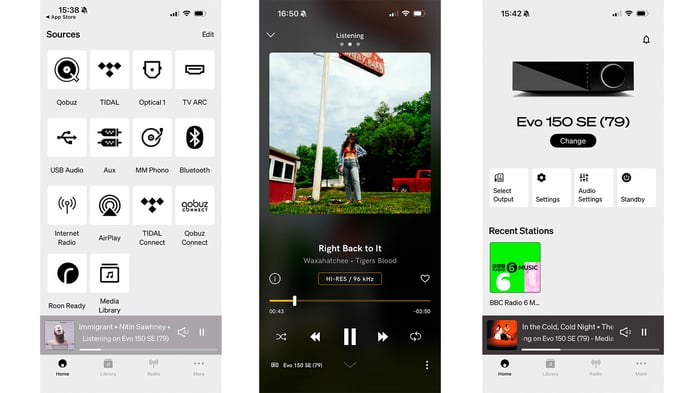
One hurdle with streaming devices around here is service restrictions. The StreamMagic app runs smoothly, but Spotify Connect, Tidal, and Qobuz often require foreign accounts and sometimes custom DNS settings on your router. Thankfully, AirPlay 2, Chromecast, and Bluetooth work flawlessly, letting you stream local services directly from your smartphone. Plus, UPnP support is a lifesaver for playing high-res local files from home servers or NAS devices—probably the most reliable way to enjoy quality music nowadays.
Inside the Evo 150 SE: Strengthened Sound with Hypex NCoreX
Cambridge didn’t break what worked—they refined it. The standout upgrade is the new Hypex NCoreX Class D amplification modules, specially tuned for a warmer, dynamic, and more controlled sound experience. Higher-grade components and an optimized signal path complete the internal makeover.
At its core is the fourth-generation StreamMagic platform—fast, logical, and ideal for streaming. All major services, including Spotify, Qobuz, Tidal, Amazon Music, and Deezer, are supported. Plus, it’s Roon Ready and picks up thousands of internet radio stations.
For quick smartphone streaming, Bluetooth (aptX HD supported), AirPlay 2, and Google Cast are on board. Cool bonus: Bluetooth supports output too, letting you wirelessly connect your favorite headphones. And UPnP easily handles massive FLAC collections from your NAS.
The DAC easily digests PCM files up to 32-bit/384kHz and hefty DSD256 formats. Streaming is solid across both wired and Wi-Fi connections.
When it comes to physical inputs, there’s no shortage: balanced XLR, RCA, built-in MM phono preamp, HDMI ARC for TV, coaxial, optical, and USB Type-B for direct computer connection. The front panel’s 3.5mm headphone jack shines with high-quality wired headphone playback. Plus, you can use the Evo 150 SE as a pure preamp, switching between two speaker pairs in different rooms.
Honestly, what can’t this amp do? Many streamers costing twice as much offer far fewer connections.
Design & Build: Compact Elegance
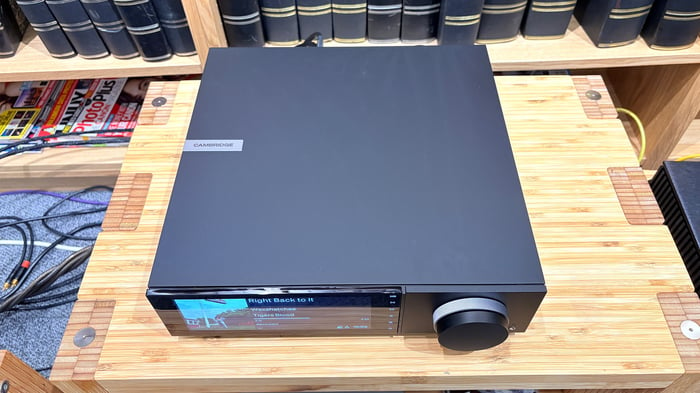
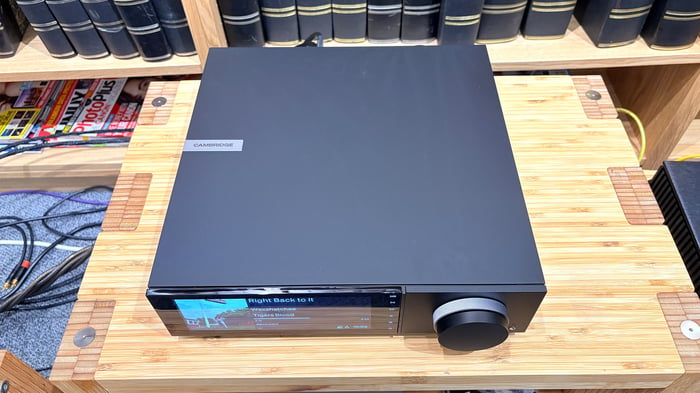
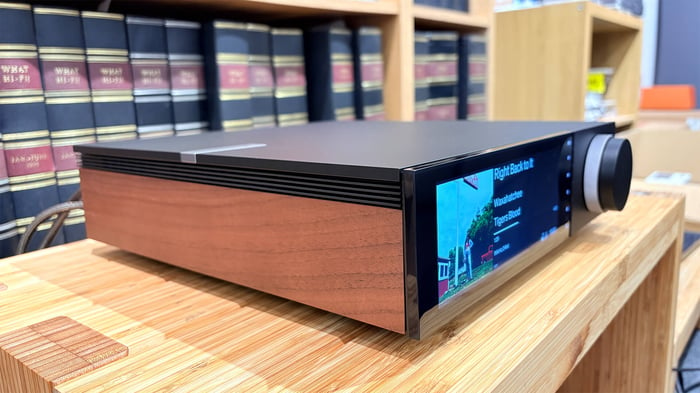
The look hasn’t changed much, but why fix what isn’t broken? The Evo 150 SE is stunning—about the size of a vinyl record sleeve, with clean, modern lines that beat the bulky, clunky Hi-Fi boxes of many rivals. The chassis is monolithic black anodized aluminum.
One of the Evo line’s coolest design features is the magnetic, interchangeable side panels. The box includes two options—classic natural wood and new textured black panels—so you can swap them in a snap to suit your mood or decor.
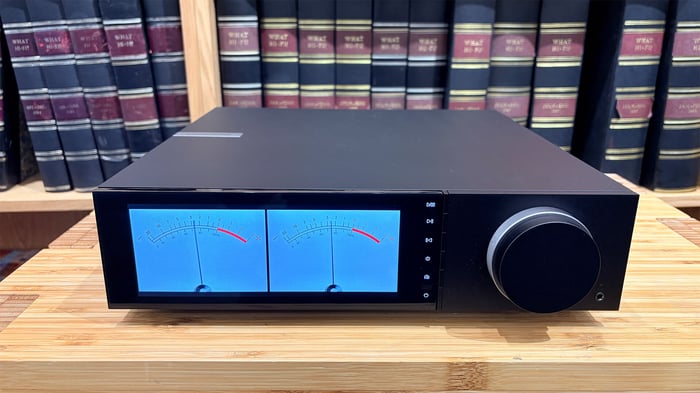
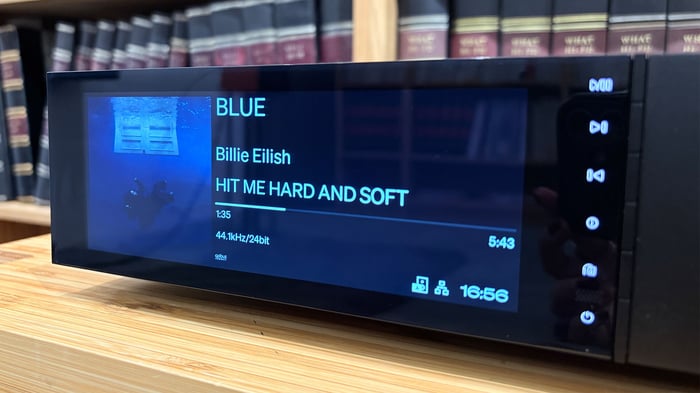
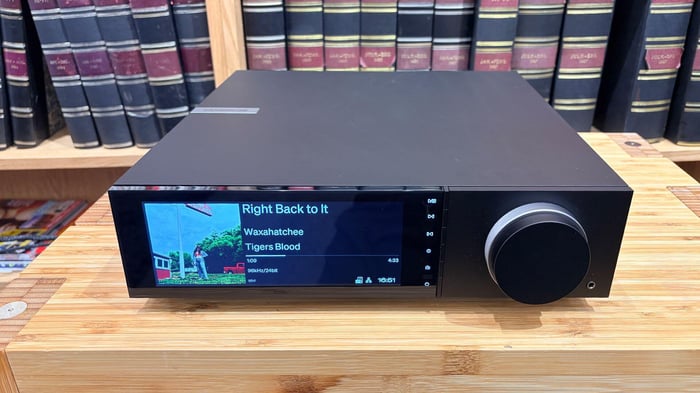
The front sports a gorgeous 6.8-inch color display with excellent contrast and rich album art. Big, bold fonts ensure track titles and sources are readable from across the room. The double rotary knob feels premium with a satisfying click when selecting sources.
One minor gripe: the volume knob spins a bit too freely without that gratifying resistance, which feels a bit cheap for such a premium device. The slim button strip next to the screen remains, offering handy shortcuts, though the buttons feel slightly less refined than expected at this price.
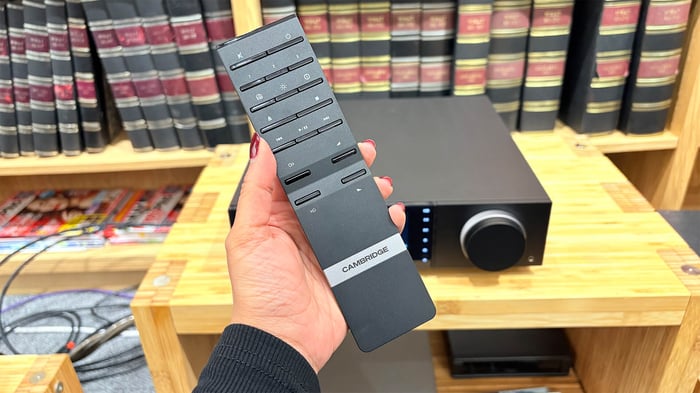
Included is a responsive remote control—the system instantly obeys commands from any control method. Through all testing, the Evo 150 SE never once froze or glitched.
Main music control resides in the excellent StreamMagic app software, which is uncluttered, fast, and intuitive. A simple bass/treble tone control and EQ are included, but mostly it’s a “plug and play” delight. You can hide unused inputs in the app, store presets, and effortlessly browse huge libraries on servers like Naim Core.
Sound: Power Meets Precision, But With a Character
Hooking the Evo 150 SE to the reference Epos ES-7N bookshelf speakers and diving into M83’s Midnight City was like plunging into a neon-lit soundscape. The soundstage is impressively wide and deep; synth parts are airy and detailed with highs that never sting.
Switching to Aphex Twin’s Meltphace 6 brought a lush ambient vibe with clearly sculpted attacks and a punchy electronic bass that hits the chest. The Evo 150 SE loves to crank up the heat—high volumes stay crystal clear with barely any distortion.
But here’s the catch: that powerful bass can overwhelm delicate tracks like Waxahatchee, Norah Jones, Nick Cave, or Billie Eilish. The muscular low end suits energetic electronic tunes but smothers the fragility of acoustic recordings. Sure, you can tame the bass with EQ, but over time it’s clear the amp lacks innate rhythmic sensitivity and dynamic nuance.
There’s a missing spark. Funky tracks like Fat Larry’s Band’s Act Like You Know come through strong but miss the snappy drive that makes you tap your foot. Each note yearns for more grip and elasticity.
Norah Jones’ voice on A Case Of You loses some magic; mids feel boxed in, the vocals slightly compressed and lacking emotional texture. As the song builds, I subconsciously wait for a dynamic lift that never comes—the playing remains too even.
Plugging in the NAD C 3050 streaming amplifier instantly brought back rhythmic cohesion, microdynamics, and emotion. Yes, NAD is simpler and less grandiose but sounds far livelier.
“The voice comes alive again, with subtle nuances and intonations that truly move you.”
Anonymous reviewer
The NAD also sharper defines acoustic instruments and plays more flexibly and naturally. Its sound just feels more musically meaningful.
Returning to the Cambridge, the sound grows a bit more distant and flat, although the scale, air, and polish are objectively greater.
However, synergy with speakers is key here. Swapping the neutral Epos and ATC speakers for softer Acoustic Energy AE300 Mk2 didn’t improve things much. But connecting the Evo 150 SE to KEF LS50 Meta speakers or PMC Prodigy 5 speakers transformed the sound—warmth, energy, and drive blossomed.
The amp seemed to breathe. The White Stripes’ In The Cold, Cold Night sounded sharp and aggressive, with guitar overloads rich in texture. Norah Jones’ vocals gained tenderness and presence. Music flowed naturally, making the overall presentation much more enjoyable.
Still, even with better speakers, the amp’s inherent character can’t be completely tamed. Nina Simone’s My Baby Just Cares For Me showed impressive scale and detail differences between ’60s jazz and modern K-pop, but NAD still better captured the vocalist’s spirit and mood. In dynamics, the cheaper NAD remains the winner.
That said, the Evo 150 SE’s transparent, clean, and grand sound remains consistent across inputs. Compressed Bluetooth or AirPlay audio loses some sparkle but is still comfortable to listen to. Playing Hi-Res files over network or USB delivers a finely detailed, balanced soundscape.
The headphone output (tested with Grado SR325x headphones) maintains the amp’s signature accuracy and clarity. Testing the DAC with a Cyrus CDi CD transport yielded excellent results.
One disappointment: the built-in MM phono preamp (tested with Rega Planar 3 RS Edition turntable) sounded flat, dull, and lacking detail. Serious vinyl lovers should plan on investing in an external phono stage.
Final Verdict
The Evo 150 SE is a vivid lesson in component synergy. Match it with the right speakers, and you get a massive, smooth sound with stunning clarity and a well-crafted soundstage. Pick the wrong pair, and its key flaw—lack of dynamic drive and rhythmic flair—comes to the fore.
It might not be the most universally flattering amplifier soundwise, but its design, software convenience, and feature density near the all-in-one class crown are unmatched. Three years after the original, the competition has gotten fiercer, but if you want a stylish, modern device that does everything, the Evo 150 SE definitely deserves a spot on your shortlist.
FAQ
- What streaming services are supported by the Evo 150 SE?
The Evo 150 SE supports Spotify Connect, Tidal Connect, Qobuz, Amazon Music, Deezer, internet radio, AirPlay 2, Google Cast, and Bluetooth aptX HD, among others. - Can the Evo 150 SE be used with vinyl turntables?
Yes, it has a built-in MM phono preamp, but for serious listening, an external phono stage is recommended due to the built-in preamp’s lackluster performance. - Is the Evo 150 SE compatible with high-resolution audio files?
Absolutely. It supports PCM up to 32-bit / 384 kHz and DSD256 for ultra-high-quality playback. - How does the Evo 150 SE handle headphone listening?
The front 3.5mm headphone jack delivers accurate and detailed sound, maintaining the amp’s signature clarity with quality headphones. - What makes the Evo 150 SE stand out in design?
Its compact size, premium anodized aluminum build, interchangeable magnetic side panels (wood and textured black), and a vibrant 6.8-inch color display make it a stylish centerpiece.
Looking to add a touch of audio sophistication to your space? Browse and shop your favorite album cover posters at our store Architeg Prints—the perfect complement to your stylish sound system.
 | DISCOUNTGET 30% OFF*Use code on your next order:
|
* This post may contain affiliate links, meaning we earn a commission if you make a purchase through these links, at no additional cost to you.