Onix Zenith XDA20 DAC and SCD1-3 CD/SACD Transport Review: A High-Performance Digital Duo



Onix Zenith XDA20 DAC and SCD1-3 CD/SACD Transport Review: A High-Performance Digital Duo
Experience flagship-level audio fidelity with the Onix Zenith XDA20 DAC and SCD1-3 transport’s precise SACD and streaming capabilities.
A Solid Start: Onix Audio’s Quiet Rise
If you haven't come across Onix Audio in high-end audio discussions, you're not alone. This brand is more of a well-kept secret than a household name, yet its story is rich and quietly impressive. Founded in 1979 in the UK, Onix operated independently for nearly 20 years before joining forces with Mr. Pu Hsao Hsiung’s Sound Art Company in Taiwan. This partnership ushered in a collaboration with Chinese manufacturer Shanling that began in 1988 and still thrives.
Though Onix keeps a distinctly British identity, with marketing often highlighting this heritage, the actual manufacturing has been streamlined into Shanling’s state-of-the-art factories in China. This fusion of craftsmanship and modern manufacturing techniques sets the stage for the Onix Zenith XST20 SACD/CD Transport and the Zenith XDA20 DAC, both priced at $2400. These units showcase Shanling’s engineering prowess and offer a compelling look at what’s achievable in this price range.
Tech Tour—The Onix Zenith XST20 Transport
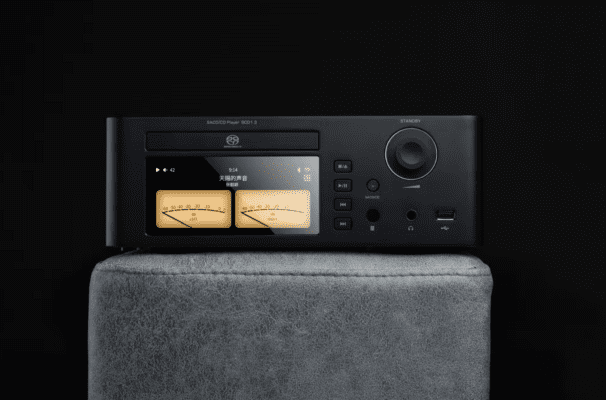
Unboxing the Onix Zenith XST20, paired with its sibling XDA20 DAC, the first thing that strikes you is the sheer heft. Despite its modest three-quarter size, the CNC-machined aluminum chassis weighs in at a solid 11.62 pounds, a reassuring sign of robust build quality.
This transport supports an impressive array of disc formats: Red Book CDs, single- and multi-layer SACDs, MQA CDs, and standard CDRs. For MQA discs, it offers up to 4x expansion, though it stops short of supporting DSD formats beyond DSD64 (the SACD standard) and doesn’t play DVD-Audio.
Connectivity is generous and thoughtful, including optical, coaxial, BNC, AES, I2S, and USB outputs. The standout is the FPGA-assisted I2S output designed for maximum DAC compatibility, with 10 different pin-out configurations to tailor to various DAC implementations.
DSD signals can be sent over optical, coaxial, BNC, or AES as DoP or D2P, while the I2S connection supports native DSD transmission. However, the USB output is limited to 44.1kHz signals only, which means SACD playback over USB isn’t an option.
One key detail: the XST20 is a pure digital transport with no analog outputs or headphone jacks. Native DSD output is exclusive to I2S, so if your DAC lacks I2S compatibility, native DSD won’t make it through.
Inside, the build quality continues to impress. The transport includes a Talema 25VA iron-core toroidal transformer, a bright 3.4-inch color touchscreen, and a precise 45.1584MHz timing clock to keep jitter at bay.
Tech Tour—The Onix Zenith XDA20 DAC
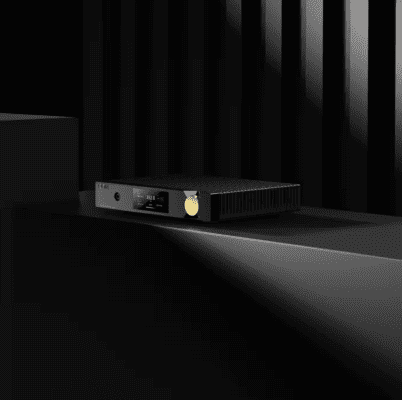
Matching the transport, the Zenith XDA20 DAC flaunts a similarly formidable design, with a heavy chassis, ribbed side panels, and a handsome gold control knob on its front-right panel.
Inside, it packs a dual ESS9030Pro DAC chip setup partnered with eight OPA1611 output devices, ensuring rich, detailed sound. USB connectivity is handled by a capable XMOS XU316 interface.
Powering the DAC is a robust dual-transformer system—one Talema transformer rated at 15W and another at 25W—offering stable, noise-free performance. Its FPGA-controlled I2S input echoes the transport’s versatility with 10 configurations to guarantee broad compatibility.
The DAC’s I/V conversion stage is a proprietary in-house design, adding to the unique sonic signature.
Output options include balanced XLRs, single-ended RCAs, and a front-panel headphone jack powered by a TI TPA6120 amplifier, capable of delivering up to 1.6 watts into 32 ohms—plenty of juice for demanding headphones.
The analog outputs are equally robust: RCA outputs reach up to 2.1 volts, while balanced XLRs deliver 4.2 volts. This DAC boasts a 127dB A-weighted signal-to-noise ratio and 126dB channel separation, putting it among the elite performers in its category.
Setting Up the Onix Digital Duo
Getting the Onix transport and DAC working together is refreshingly straightforward. The XST20 transport must be placed on a top shelf since discs load from above—a small but important consideration.
In my setup, the XST20 connected to the XDA20 via a PS Audio I2S cable without the need to tweak the default FPGA I2S settings. Additionally, a six-inch BNC SPDIF cable from StereoVox linked the two components.
For streaming, the DAC’s USB input connected to an AnCaolas/Diretta dual Raspberry Pi Ethernet endpoint, which interfaced with the router using 50 feet of CAT8 cable. This setup proved stable, clean, and glitch-free.
The entire system featured a Schiit Kara F preamplifier (running passive mode), driving either a Pass Labs X150.8 amplifier or a Pass-designed A30 Class A amplifier from China, powering Spatial X-2 loudspeakers supported by JL Fathom f112 subwoofers. Magic Beans speaker correction software was in play when the XDA20 functioned as a Roon endpoint.
During installation, Roon immediately recognized the AnCaolas/XDA20 DAC. Switching inputs on the DAC from USB to SPDIF or I2S caused Roon to lose connection briefly, requiring a reinitialization. However, USB playback remained flawless with no artifacts or dropouts.
Both units come with identical wand-shaped remote controls, which at first can be confusing due to minimal labeling but quickly become intuitive. They reliably operate all three Onix X-series components, including an upcoming streamer, offering solid range and responsiveness.
SACD Playback: The Heart of the XST20
SACD playback is arguably the main draw for this transport. Native SACD discs play flawlessly without transcoding when connected via I2S to a compatible DAC.
The catch? Gapless playback isn’t supported for the SACD layer due to hardware design choices made by Shanling for the transport. While this may be a deal-breaker for fans of continuous classical movements, many listeners might find it a minor inconvenience.
SACD’s limited mainstream success was partly due to niche release repertoires. However, many early adopters treasure discs that have yet to be reissued in other high-resolution formats, making SACD playback vital for preserving those collections.
One standout SACD is Super Bass 2, featuring jazz legends Ray Brown, John Clayton, and Christian McBride, recorded live at New York’s Blue Note using Sony/Philips Direct Stream Digital tech. Compared to a 44.1kHz Qobuz stream—even upsampled—the SACD offers richer ambient detail, dynamic speed, and a greater sense of realism.
Older SACDs reveal a wide spectrum of recording qualities. Beethoven’s First and Second Symphonies by the Academy of St Martin in the Fields under Neville Marriner offer a spacious soundstage but less precise imaging. Angela Hewitt’s Hyperion Beethoven sonatas serve sharper imaging but a slightly dry piano tone.
Glenn Gould’s second Goldberg Variations SACD, originally recorded in PCM and converted to DSD, still stands strong. The 44.1kHz PCM Qobuz version offers tighter imaging and a warmer tonal balance in my setup.
Bob Dylan’s SACD releases remain enjoyable, with the recording’s character often more influential than the format.
Throughout, the XST20/XDA20 combo remains transparent, adding no coloration and preserving recording details beautifully.
Streaming with the Onix XDA20
Streaming dominates modern listening habits, and the XDA20 excels as a Roon-connected DAC.
The AnCaolas/Diretta/XDA20 chain delivered rock-solid connection stability with no dropouts, noise, or glitches during extended listening.
This DAC revealed nuances in recording and mastering beautifully, with some tracks offering intimate stages just beyond the speakers, while live recordings expanded the soundstage well beyond.
The “Bare Bones” series with Jerry Garcia and David Grisman captured in a dry acoustic space made the room’s own acoustics shine, creating an almost tactile presence of the musicians.
Headphone Listening: A Valuable Bonus
Though not likely the main reason buyers choose the XDA20, its headphone amp is a welcome addition.
The front panel provides two sensitivity settings to accommodate different headphone types. With Beyerdynamic DT990 600-ohm headphones, the DAC had more than enough power even on the lower setting, reaching comfortable listening levels around 75 on the volume scale. On the high-power setting, the same headphones became quite loud at around 35.
With high-sensitivity in-ear monitors such as the Empire Ears Zeus CIEM, the low-power setting was sufficient to reach high listening levels at just 29 on the scale. The high-power setting introduced a small amount of background noise with these sensitive earphones, so the lower setting is recommended for such models. Fortunately, the low-output mode remained completely silent when no music was playing.
A Dynamic Digital Duo Redefining Expectations
When chatting about these components with a fellow audiophile, the question of whether Chinese manufacturers can truly rival European and American brands comes up often.
The answer is a resounding yes. Brands like Onix, SMSL, Gustard, Topping, FiiO, Singxer, Fosi, and Matrix stand shoulder-to-shoulder with Western makers, differing mostly in pricing, aesthetics, marketing budgets, and customer support rather than core engineering.
The Onix XST20 and XDA20 impressed me with polished sound quality and smooth operation, excelling at both high-resolution streaming and native SACD playback.
Together, they represent a fresh wave of high-performance audio gear that delivers flagship-level sound at far more achievable prices than many traditional reference products. Most importantly, they keep the spotlight where it belongs: on the music itself.
Specs & Pricing
Onix Zenith XST20 Transport
- Type: SACD transport
- Disc Drive: HD870
- Formats Supported: SACD, Red Book CD, single and multi-layer SACD, MQA CD, CDR
- Outputs: Optical, coaxial, BNC, AES, I2S
- Dimensions: 32 x 24 x 7.2 cm
- Weight: 5.2 kg
- Price: $2400
Onix Zenith XDA20 DAC
- Type: Digital audio converter
- Inputs: Coaxial, optical, BNC, AES EBU, I2S, USB
- Formats Supported: PCM up to 768/32 via I2S, DSD512 via USB and I2S
- Output: RCA 2.1V max, XLR 4.2V max, variable-output volume control
- Dimensions: 32 x 24 x 6.2 cm
- Weight: 5.7 kg
- Price: $2400
FAQ
- What formats does the Onix Zenith XST20 transport support?
SACD, Red Book CD, single and multi-layer SACD, MQA CD, and CDR discs. - Can the XST20 transport play SACDs over USB?
No, SACD playback over USB is not supported; native DSD output requires I2S connection. - Does the XDA20 DAC have a headphone amplifier?
Yes, it features a built-in headphone amp delivering up to 1.6 watts into 32-ohm headphones. - Is gapless playback supported for SACD layers on the XST20?
No, gapless playback is not supported due to hardware design decisions. - How stable is the streaming performance of the XDA20 DAC?
Streaming via Roon is highly stable with no dropouts, noise, or glitches during extended use.
Ready to celebrate your favorite music with iconic visuals? Enhance your listening space with our beautifully crafted album cover posters. Shop your favorite designs today at Architeg Prints to bring your passion for music into your decor.
 | DISCOUNTGET 30% OFF*Use code on your next order:
|
* This post may contain affiliate links, meaning we earn a commission if you make a purchase through these links, at no additional cost to you.