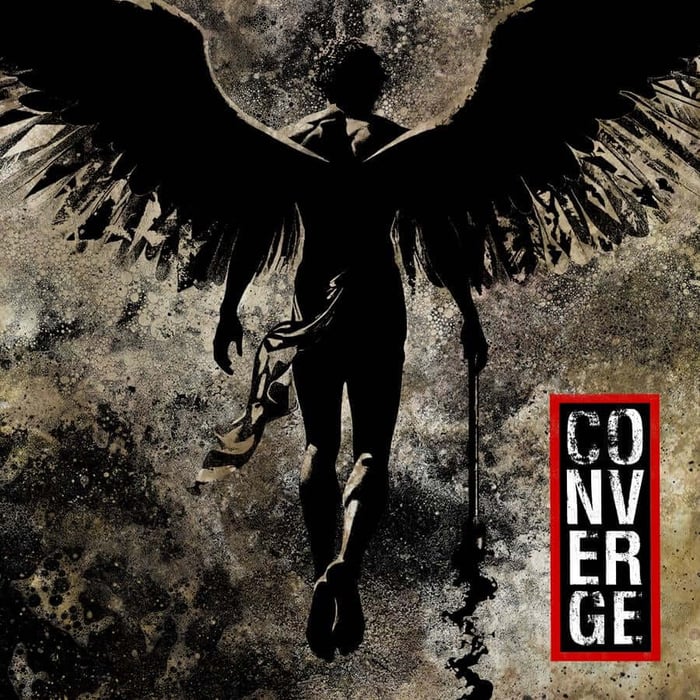
Converge Love Is Not Enough Album Review: A Controlled Return to Chaos


 See more Architeg Prints stories on Google.
Converge Love Is Not Enough Album Review: A Controlled Return to Chaos
Converge’s Love Is Not Enough runs on dense metalcore pressure, sharp pacing, and a practical refusal to soften. Out now via Epitaph Records.
Album context and release details
Converge’s Love Is Not Enough arrives as the band’s eleventh full-length release, issued via Epitaph Records. It follows Bloodmoon: I (2021), a collaborative album made alongside Chelsea Wolfe, and it lands after The Dusk in Us (2017), with enough time between records for expectations to develop and congeal into something relatively firm.
Where Bloodmoon: I moved through gothic atmosphere and a more deliberate sense of arrangement, Love Is Not Enough functions like a reset to Converge’s more fevered operating mode. The band presents itself here as a quartet returning to familiar tools: speed, abrasion, and tightly managed disorder.
A direct opening: the album begins without courtesy
The record opens in what can be described as a brutish posture, with the instruments arriving already mid-swing. The playing is frenetic rather than decorative, and the vocals enter as harsh, clipped signals—less narrative performance than urgent transmission.
“Bad Faith” keeps the album in that first gear of sustained pressure. The riffs are heavy in the plain, literal sense: thick in tone, forward in placement, and unwilling to step aside. The lyric presentation leans dark, and the track treats that darkness as a practical setting rather than a special event. Nothing here asks permission to be intense; it simply proceeds.
“Distract and Divide” pushes further into activity and crowding. The drumming is especially busy, creating a physical sensation of constant motion—like standing too close to machinery that is running at full capacity. The track doesn’t “build” so much as it continues adding force until the listener’s internal sense of stillness becomes irrelevant.
Intensity as a baseline: momentum stays high
From there, the album declines to offer meaningful relief. “To Feel Something” is not framed as a breather; it behaves like another wave arriving before the previous one has finished clearing. The vocal delivery comes in severe bursts, with the repeated line
“I just wanted to feel something”functioning as a blunt statement of need rather than a poetic flourish. The track’s force is consistent enough that the phrase lands less like a confession and more like a status report.
This is one of the album’s defining habits: emotion is present, but it is delivered through urgency and volume rather than softness. The feeling is not abstract. It is made physical through pressure, speed, and repetition.
A brief instrumental shift, then back to the grind
“Beyond Repair” appears as a haunting instrumental interlude, and its main job is structural: it changes the lighting in the room. The album briefly trades direct impact for tension and implied movement, creating a moment where the listener can register the shape of the record instead of only its force.
That setup matters, because “Amon Amok” follows with hooks that feel menacing in a functional way—tight, memorably shaped, and built to pull attention back into the center of the sound. Compared with the surrounding tracks, it is not paced as manically, but it does not become calm. Instead, it emphasizes seismic stomping and gritty grooves, suggesting a heavier stride rather than a faster sprint. The result is still confrontational; it simply approaches confrontation at a different tempo.
“Force Meets Presence” operates in a similar bludgeoning mindset at first—direct, forceful, and minimally interested in decoration—before shifting into a swift, thrash-like push. The transition happens with the efficiency of a system changing settings, not a band making a dramatic statement. The album remains committed to movement, just with a slightly different gait.
A tighter focus on tension, melody, and phrasing
With “Gilded Cage,” the record begins building tension in a more controlled, gripping way. Chunky bass lines sit prominently in the mix, adding weight that feels less like chaos and more like architecture. Vocals arrive with an impassioned flow, and the line
“Past is behind us, future defines us”comes through as an abrasive refrain—rasped, hard-edged, and delivered as though it needs to be understood immediately.
Melodic elements appear here not as comfort but as contrast. The track lets stirring melodic swathes run alongside vicious undertones, so the listener experiences two simultaneous messages: one that carries shape and lift, and one that keeps dragging the whole thing back into the ground.
Layering and vocal character: the album narrows its aim
“Make Me Forget You” increases the density through dynamic layering, emphatic rhythmic segments, and riff patterns that feel designed to stick in the ear despite the surrounding noise. It’s not “catchy” in a pop sense; it is memorable the way repeated impact becomes memorable—through insistence.
The vocal performance from Jacob Bannon is described in the album’s own language as emotive, and in practice it lands as heightened delivery with a specific kind of strain: a voice pushing hard against its own limits, choosing urgency over polish. The effect is physical. It leaves a residue, the way a strong smell clings to clothing after a short exposure.
A closing track that asks a question and keeps moving
“We Were Never the Same” closes the album with a pointed line:
“Why do we all gather to mourn yet not to cherish?”The question sits inside a volley of boisterous musicianship, which means it is not presented as a quiet reflection. It’s delivered in the middle of motion, where contemplation has to happen quickly or not at all.
As an ending, the track feels determined rather than grand. It doesn’t attempt to summarize everything that came before. It simply maintains the record’s established behavior—high output, firm direction, and an unwillingness to soften just because the runtime is nearly done.
How the full record behaves from front to back
Across Love Is Not Enough, Converge operate with the practiced coordination of a band that knows exactly how much noise it can generate while still keeping the machinery aligned. The album’s dominant sensation is an incendiary spike of adrenaline, not because it keeps “surprising” the listener, but because it holds a consistent level of strain for extended stretches.
The record’s sequencing also supports that sensation:
- The opening stretch prioritizes speed and immediate abrasion.
- The middle section introduces pacing changes without reducing weight.
- The later tracks balance tension, melody, and phrasing while keeping aggression intact.
The overall impression is of a group working at full capacity and treating that capacity as normal workplace conduct. The intensity doesn’t read as celebration. It reads as procedure.
A 9/10 score is attached to the release in the accompanying copy, functioning as a simple numeric stamp of approval rather than something the album itself appears concerned with.
Availability and label
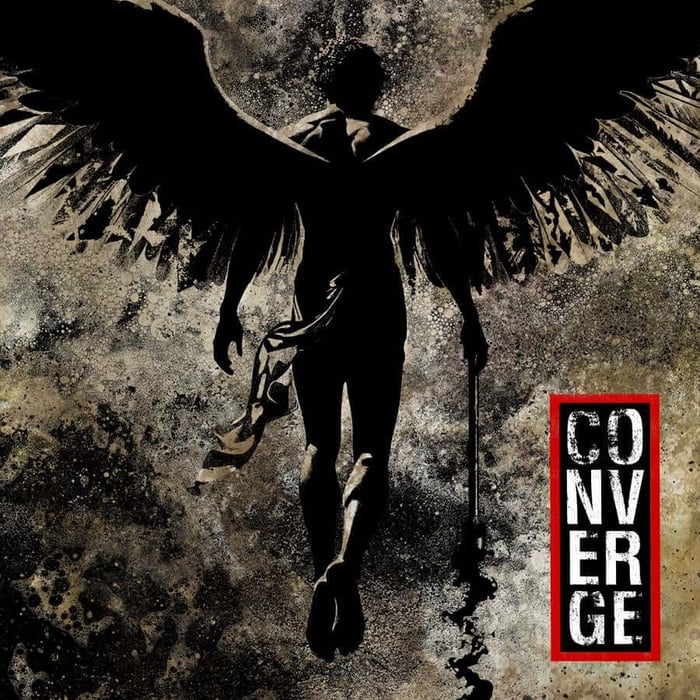
Love Is Not Enough is out now via Epitaph Records.
Conclusion
Love Is Not Enough presents Converge in a direct, force-first mode: dense riffs, rapid drumming, harsh vocal urgency, and brief structural pivots that exist mainly to intensify what follows. The record treats emotional content as something best communicated through impact, repetition, and sustained pressure rather than explanation.
Our verdict: focused, relentless, and highly efficient at maintaining maximum output without turning it into a ceremonial occasion.
FAQ
- What is the core sound of Converge’s Love Is Not Enough?
It runs on fast, abrasive metalcore with heavy riffing, harsh vocal delivery, and tightly controlled chaos. - Is Love Is Not Enough connected to Bloodmoon: I?
It follows Bloodmoon: I chronologically, but it behaves differently in practice, leaning more into Converge’s faster and harsher instincts. - Which tracks stand out for pacing changes?
“Amon Amok” feels less manically paced while staying heavy, and “Beyond Repair” functions as a haunting instrumental interlude. - Does the album include memorable lyrical lines?
Yes—“To Feel Something” repeats “I just wanted to feel something,” while “We Were Never the Same” asks, “Why do we all gather to mourn yet not to cherish?” - Where can I watch a video element tied to the album?
The official visualizer for “We Were Never The Same” is embedded above in this article.
If you want something concrete to hang on the wall after all that controlled turbulence, album-cover posters fit the theme without adding extra noise. A clean option is browsing prints at our store: https://www.architeg-prints.com
 | DISCOUNTGET 30% OFF*Use code on your next order:
|
* This post may contain affiliate links, meaning we earn a commission if you make a purchase through these links, at no additional cost to you.