End of Default Sound Dictatorship: The Custom Equalizer for AirPods We Didn’t Expect


 See more Architeg Prints stories on Google.
End of Default Sound Dictatorship: The Custom Equalizer for AirPods We Didn’t Expect
Apple’s new custom equalizer in iOS 27 gives AirPods users control over sound like never before, shifting personal audio into a new era.
Is the sound signature of Apple’s AirPods headphones about to stay comfortably familiar, or brace yourself for a seismic shift that will redefine personal audio? The answer lies in the upcoming iOS 27 update, promising to upend how we experience music through AirPods headphones.
Let’s be honest: AirPods from Apple headphones have always sounded good—pleasant, balanced, and designed to cover a wide frequency range without any particular sonic character. They’re the audio equivalent of a polite handshake: solid, reliable, but not flashy or unforgettable.
Apple’s AirPods Max headphones, a beautifully engineered flagship in the lineup.
The AirPods Sound Status Quo
From a neutral standpoint, Apple’s wireless earbuds deliver respectable sound quality. There’s little soul or charisma here—just an even-handed approach to audio that aims to please the masses. Regular buyers love this because it guarantees consistent performance like previous versions, but audiophiles? They tend to shy away, craving a distinct audio signature and more control.
Apple has long been the master of a conservative product philosophy: pick any AirPods Pro earbuds color as long as it’s white, and select any preset audio profile—but it’s always the same standard V-shaped curve, emphasizing bass and treble. No surprises, no tweaks.
A New Tool on the Horizon: Custom Frequency Calibration
The upcoming iOS 27 release signals an olive branch to audiophiles everywhere: Apple is introducing a built-in tool for custom frequency calibration directly within the system. Finally, users can personalize the sound to their liking!
"AirPods sound polite and balanced, but now, with iOS 27, Apple is handing the keys over to users to sculpt their audio experience."
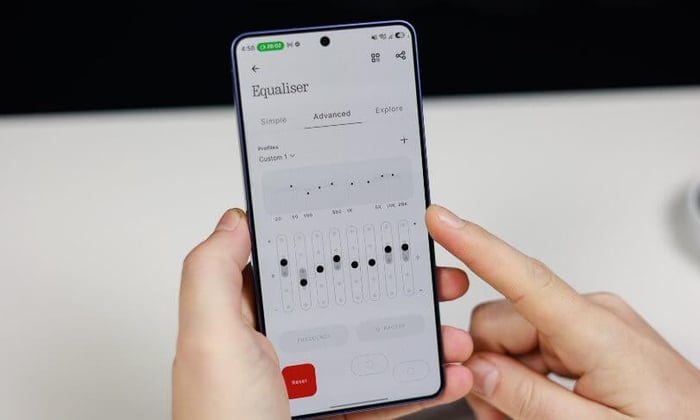
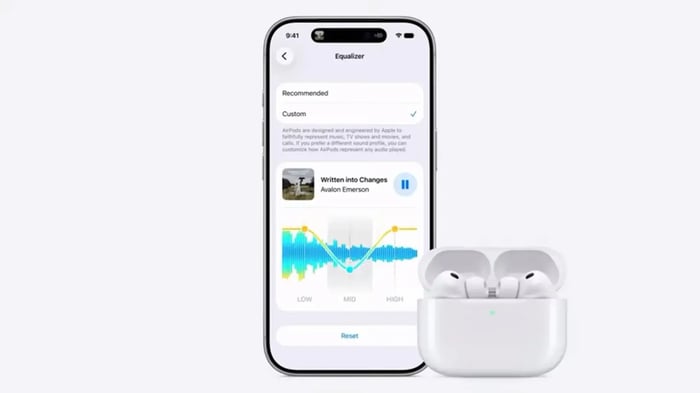
Apple’s own presentation briefly mentioned this feature but gave few details—the demonstration was minimalist, showing just three sliders for bass, midrange, and treble frequencies. Is this the whole story, or just a teaser sketch?
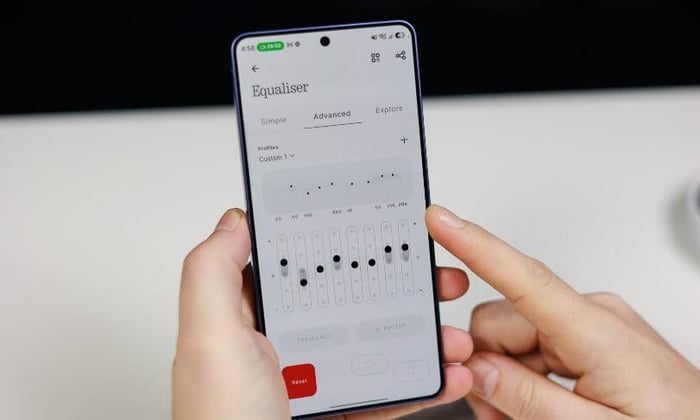
The simple equalizer interface teased by Apple, with just three frequency bands.
Could It Be More Than Just Three Sliders?
Remember Apple’s history? That minimalism may be a front. We might see a robust multi-band equalizer with decibel adjustment capabilities, or a smart system that auto-balances frequencies to prevent distortion. Imagine AirPods earbuds with sensors using onboard sensors to analyze your ear shape and craft personalized presets while guiding you on how to tweak settings effectively.
AirPods earbuds already employ adaptive audio algorithms that could play a supporting role in this new EQ feature.
AirPods earbuds already adapt sound based on track type, ambient noise, and earbud fit—especially the AirPods Max headphones. Integrating manual control over this adaptive system could be a game-changer, blending smart tech with user preference.
iOS 27 and the EQ: Rewriting AirPods DNA
Rumors about a customizable equalizer for AirPods headphones have floated for years, and now Apple has confirmed it. The tool in iOS 27 will allow manual tweaking of bass, midrange, and treble, marking a philosophical shift. No longer will Apple insist on a “one sound fits all” approach.
Separating Fact from Fiction
The custom EQ will be exclusive to AirPods headphones with the H2 chip—AirPods Pro 2 and 3, AirPods 4, and the latest AirPods Max. But don’t expect a studio-grade parametric equalizer. The three-slider setup is straightforward, not a professional tool. The idea that the EQ will auto-adjust based on ear shape seems to be a misinterpretation of existing adaptive EQ tech.
Realistic Expectations
This feature won’t include automatic user training via sensors; instead, it’s a manual, passive tool—slide the knobs, hear the changes. The lack of preset saving or interface demonstrations suggests early days. Still, this is a huge leap compared to zero control in previous AirPods Pro headphones iterations.
Pros and Cons of Apple’s EQ Era
The Upsides
- Bass Control at Last: Users can finally beef up the low end or dial it back if needed—goodbye to complaints about weak bass in stock settings.
- Universal Application: Unlike EQs tied to Apple Music, this equalizer will affect all audio sources—YouTube, games, video calls.
- Marketing Mojo: This feature might nudge users with older AirPods headphones to upgrade to H2-chip models.
The Downsides
- Simplicity Over Sophistication: Three sliders are a blunt instrument for serious audiophiles craving multi-band precision.
- No Preset Saving: Switching between sound profiles will be tedious without quick access.
- Potential for User Error: Novices cranking all sliders high may distort sound and blame their AirPods headphones.
Navigating Risks of Newfound Freedom
Introducing manual EQ isn't just a blessing—it brings challenges. Current AirPods headphones already use adaptive EQ to tweak sound based on ear fit. How this will coexist or conflict with manual adjustments is unclear. Imagine battling settings where you boost bass but the chip cuts it back to protect speakers!
Hardware Durability Concerns
Pumping bass to extremes could stress drivers, accelerating wear—Apple’s famously cautious approach to longevity explains previous sound limitations. Also, confusing duplicate settings between system-wide EQ and Apple Music’s EQ could bewilder users.
Smart Solutions Ahead?
We might see software safeguards that disable adaptive EQ when manual EQ is active or limit extreme adjustments. An integrated sound management hub within iOS could combine all controls, fit tests, and speaker protection alerts, perhaps even enable voice commands for changing presets—making sound tweaking effortless.
What’s Next for AirPods Users?
Who Will Benefit?
- Music Enthusiasts: Those who switch genres daily can tailor soundscapes to fit moods and styles.
- Budget Audiophiles: Fans wanting better sound without switching brands get a chance to tweak their AirPods headphones.
- Listeners with Hearing Sensitivities: Adjusting problematic frequencies can ease discomfort caused by stock EQ curves.
Who Can Skip This?
- Casual listeners who use AirPods headphones mainly for calls or light music might barely notice.
- Audiophiles expecting a studio overhaul will be disappointed by the limited sliders.
- Owners of older models or replica AirPods headphones won’t see this feature, as it requires new chipsets.
Why It’s Not Time to Throw a Party Just Yet
Let’s cut through the hype: this equalizer is less a revolution and more a catch-up. Apple lagged behind competitors who’ve long offered detailed EQs. The feature’s future impact feels modest—improving bass but leaving soundstage and detail largely untouched.
The grand vision of personalized ear-mapping EQs feels like sci-fi for now. Most users will slide these three knobs once and forget them. Apple’s message, though, is clear: the era of one-size-fits-all AirPods headphones sound is ending, making way for customization. But the train is just leaving the station.
"New iOS 27 will solve two major pain points for iPhone and AirPods owners."
FAQ
- What models will support the new custom EQ? Only AirPods headphones with the H2 chip—AirPods Pro 2 & 3, AirPods 4, and the latest AirPods Max.
- Will this EQ replace professional audio software? No, it’s a basic tool for casual tuning, not a full parametric equalizer.
- Can I save different EQ presets? Currently, no preset saving is planned, so switching profiles might be manual and slow.
- How will manual EQ interact with existing adaptive EQ? Manual EQ likely disables or limits adaptive EQ to avoid conflicting settings.
- Is the custom EQ feature available worldwide? Yes, iOS 27 brings it globally, but users with older or unauthorized models won’t have access.
If you’re inspired to celebrate your favorite AirPods headphones experience, why not bring a slice of that vibe home? Shop your favorite album cover posters at Architeg Prints for an artisanal touch to your music sanctuary.
 | DISCOUNTGET 30% OFF*Use code on your next order:
|
* This post may contain affiliate links, meaning we earn a commission if you make a purchase through these links, at no additional cost to you.