EP-35 Amp Review: Teenage Engineering Hides Cables in Plain Sight



EP-35 Amp Review: Teenage Engineering Hides Cables in Plain Sight
The EP-35 amp combines portable sound, guitar and microphone inputs, USB recording, playful effects, and a clever hidden compartment for cables.
A Small Detail With a Big Practical Payoff
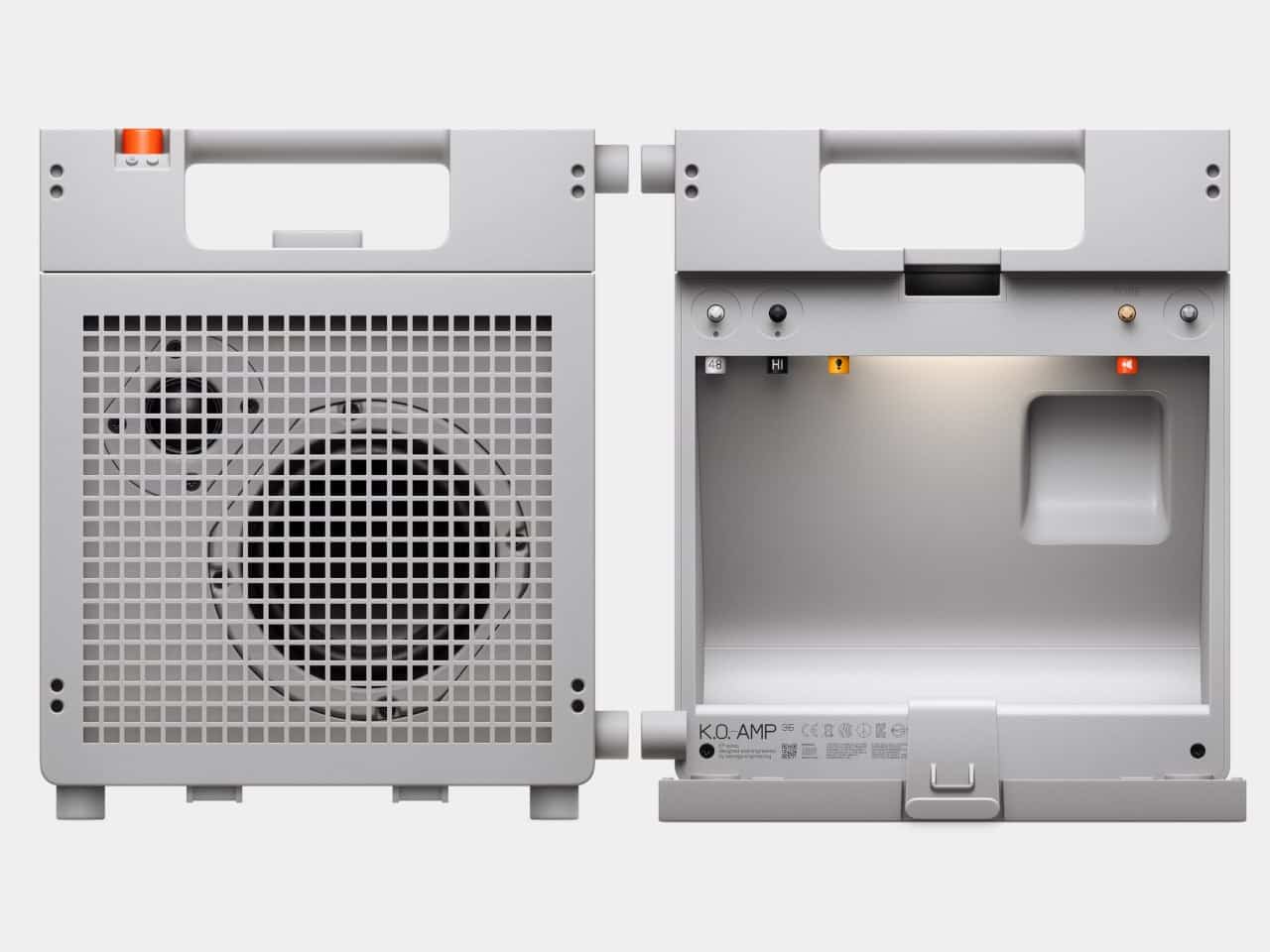
The best design ideas aren’t always the flashy ones. Sometimes they’re the tiny, almost unglamorous touches that make you think, “Why doesn’t every music gadget do that?” Teenage Engineering’s EP-35 amp takes that approach by hiding a cable and accessory compartment inside its rear panel.
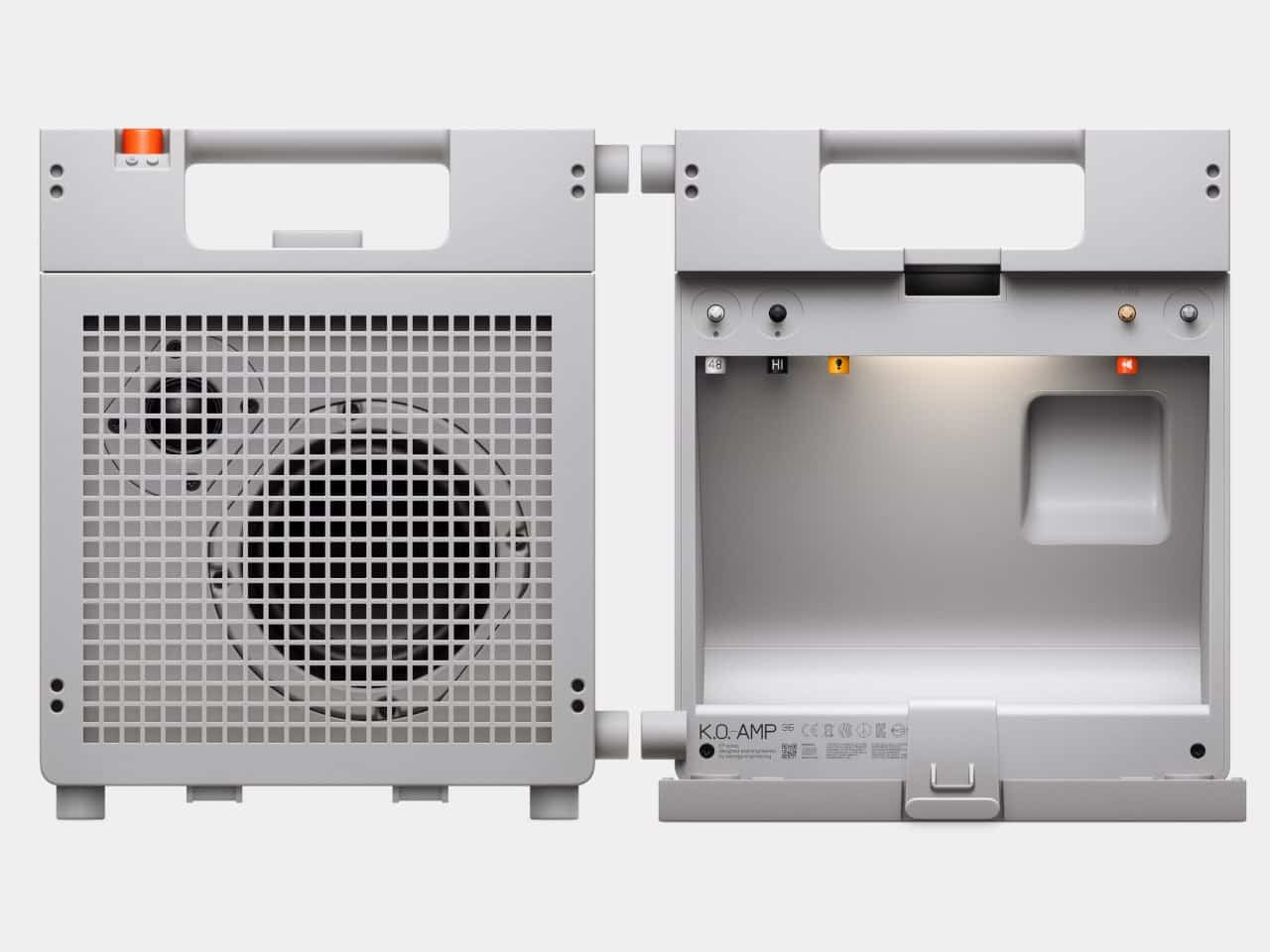
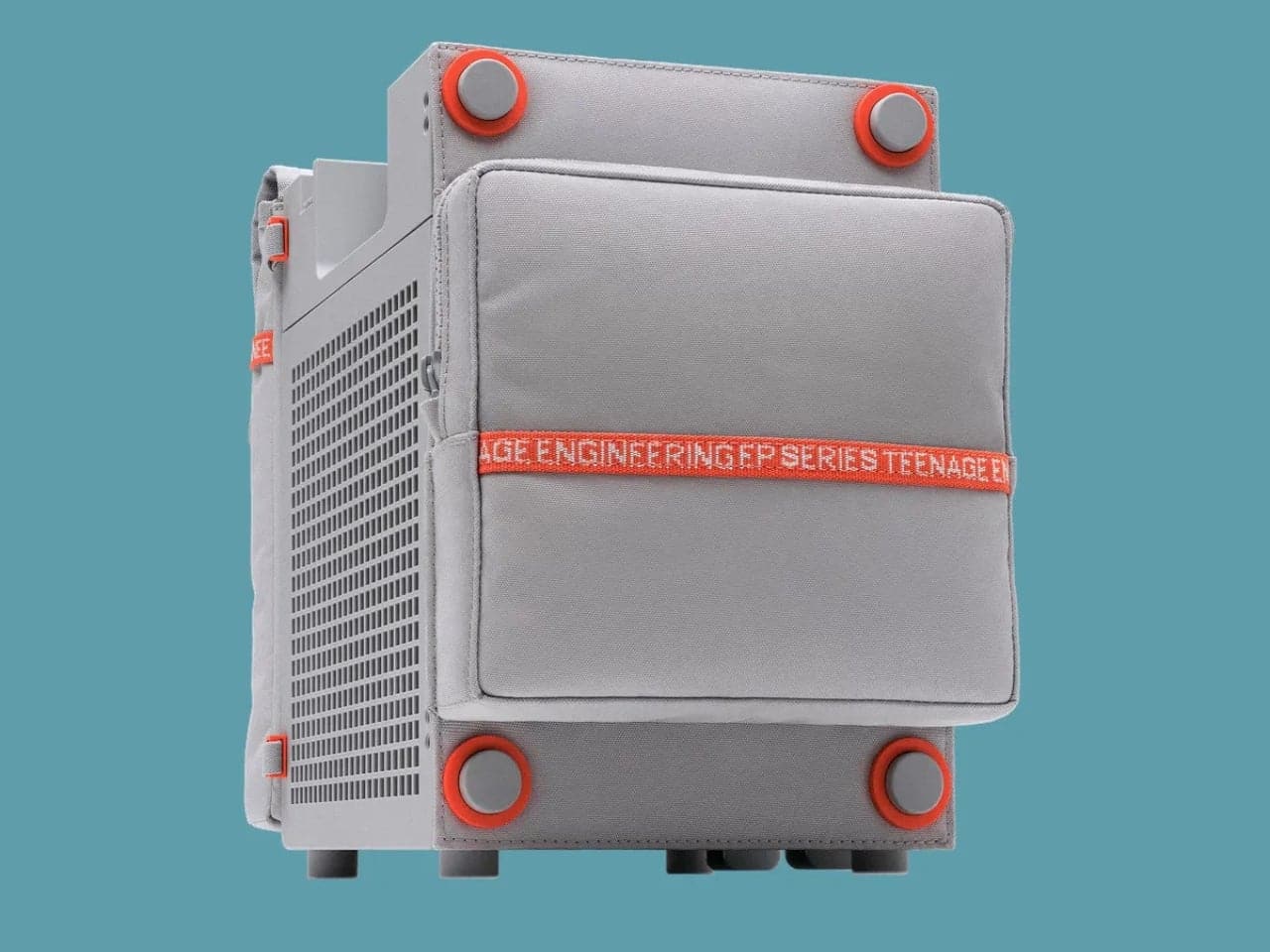
At first glance, the EP-35 looks ready for its close-up: tidy, composed, and remarkably photogenic. But the moment you take a portable speaker or amplifier anywhere, the supporting cast appears. Power cables, instrument leads, adapters, and other little essentials suddenly need a home. They have a habit of gathering in pockets, bags, and the mysterious bottom layer of a gear drawer.
The EP-35’s rear compartment gives those loose pieces somewhere to live. It’s a wonderfully down-to-earth feature for a music device, and honestly, it feels like the kind of thing a regular musician would appreciate immediately. The compartment acknowledges that equipment doesn’t simply sit beautifully in a product photograph. It gets carried, connected, unplugged, packed, and used again.
One Box for Several Musical Jobs
That practical thinking continues beyond cable storage. Listed at $399, the EP-35 brings together a portable speaker, an instrument amplifier, and a USB audio interface in one compact unit.
It accepts guitar, microphone, line-level, Bluetooth, and USB audio. Multiple sources can play together, which addresses a familiar problem for anyone who has tried to make music without building a small control room on the floor. Want to play guitar over a backing track? Add vocals? Connect a computer? The EP-35 is designed to handle those combinations without requiring a separate box for every task.
That all-in-one approach is the amp’s central appeal. It isn’t presented as a device that only amplifies one instrument. Instead, it acts more like a flexible little hub for casual playing, practice, recording, and playback. There’s a certain charm in that. You can imagine it moving from a bedroom desk to a rehearsal corner, then out to a porch or another informal playing space.
The important distinction is that this versatility doesn’t come from burying every function inside a complicated menu. The EP-35 keeps much of the experience physical and immediate, which suits its playful but purposeful personality.
A Retro-Futurist Look With Plenty of Personality
Visually, the EP-35 amp looks like it belongs in a very stylish school science lab—somewhere between practical classroom equipment and a prop from a particularly charming future.
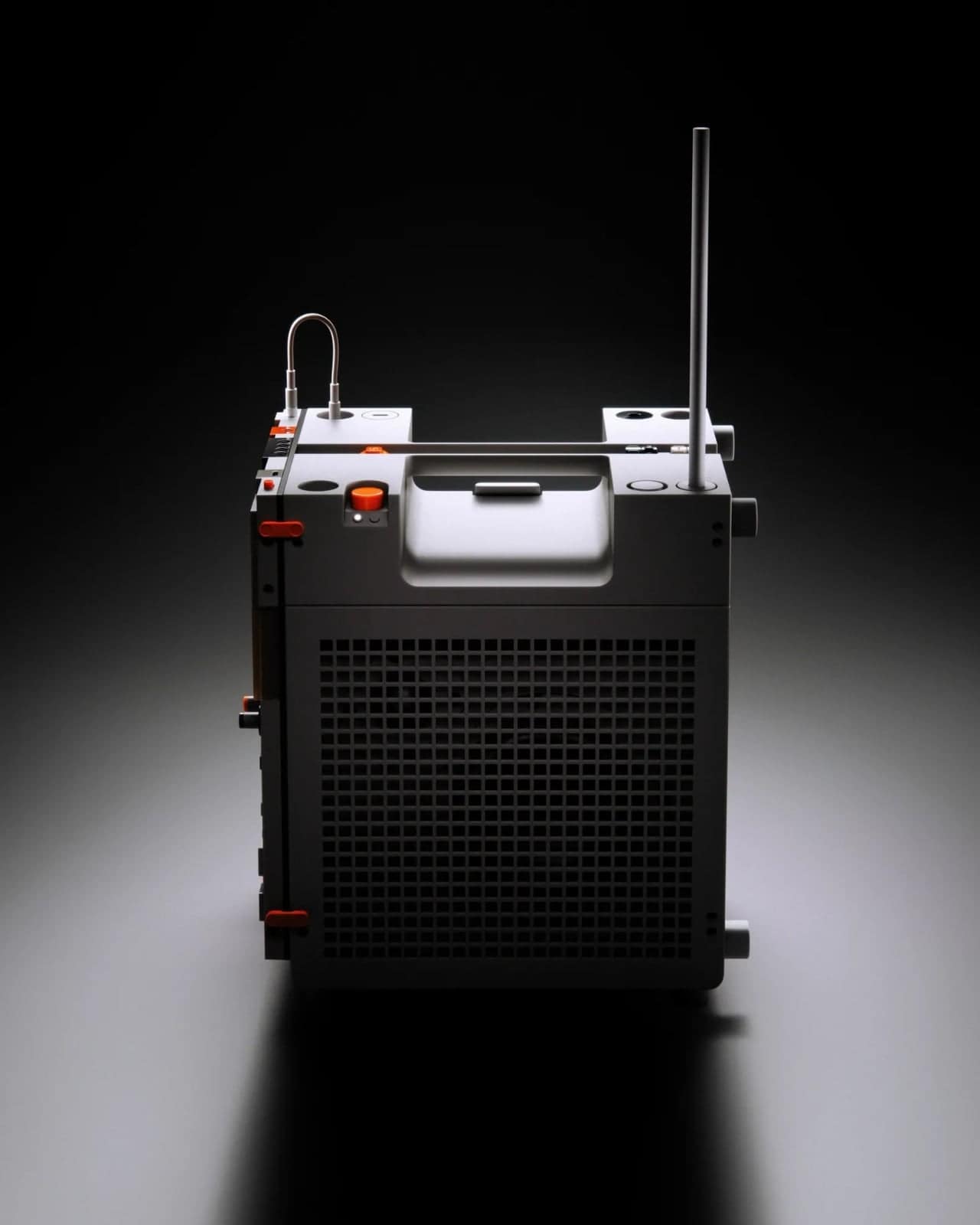
Its gray body, square grille, integrated handle, and orange details create a deliberately matter-of-fact appearance. The design doesn’t seem desperate to blend into the background, and that’s a large part of its appeal. It has the confidence to look like a piece of equipment rather than pretending to be a neutral home accessory.
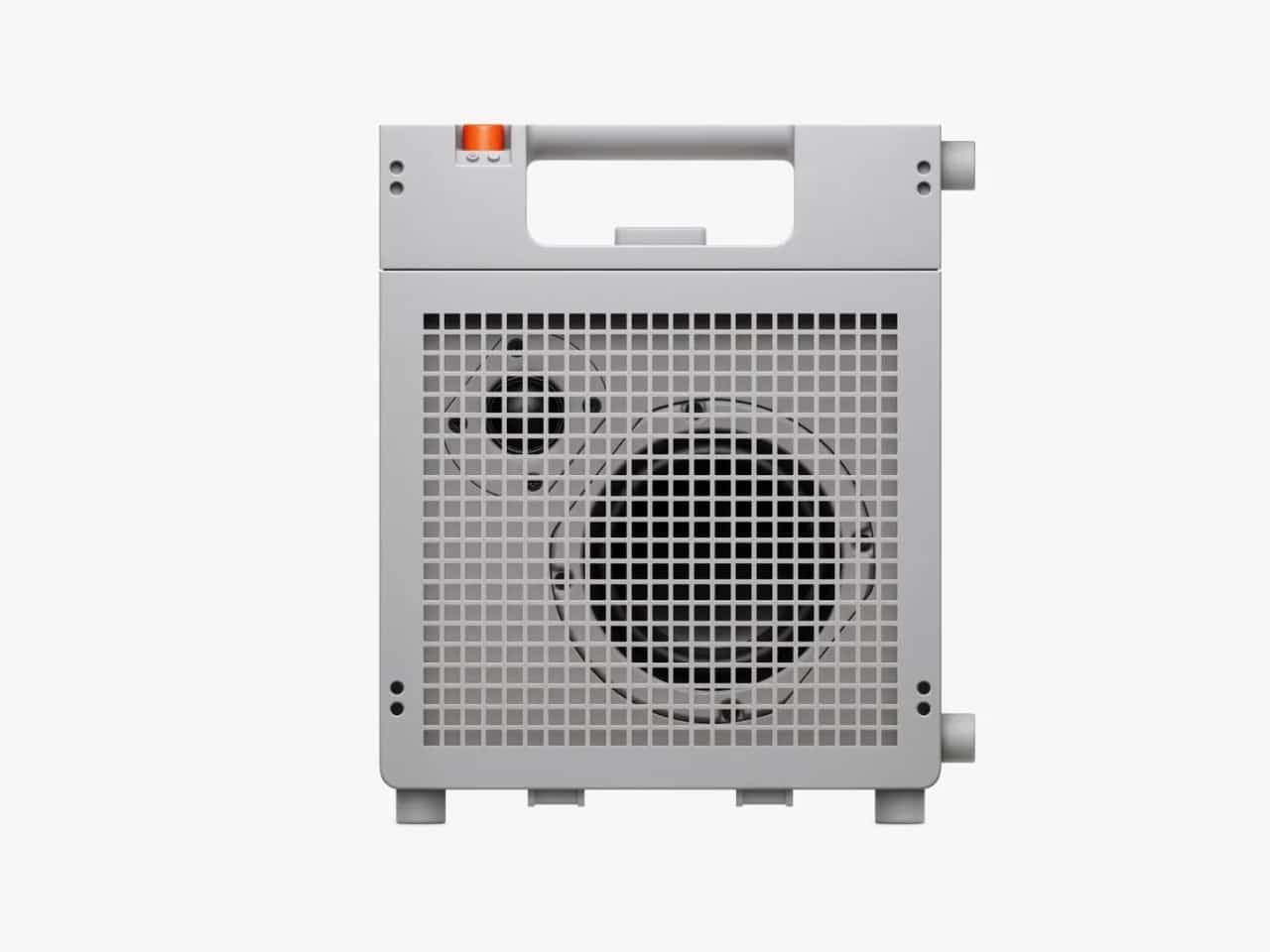
The speaker drivers remain visible behind the grid, giving the front a slightly awkward expression. I mean that affectionately. They make the EP-35 feel more like a character than a featureless slab. You can almost imagine it sitting quietly in the corner, waiting for someone to pick up a guitar and make a questionable first chord.
That visible hardware also reinforces what the object is meant to do. The EP-35 doesn’t hide its musical identity behind soft fabric or decorative minimalism. It shows you the machinery, the controls, and the structure. There’s something refreshing about that directness.
Physical Controls Keep the Fun Close at Hand
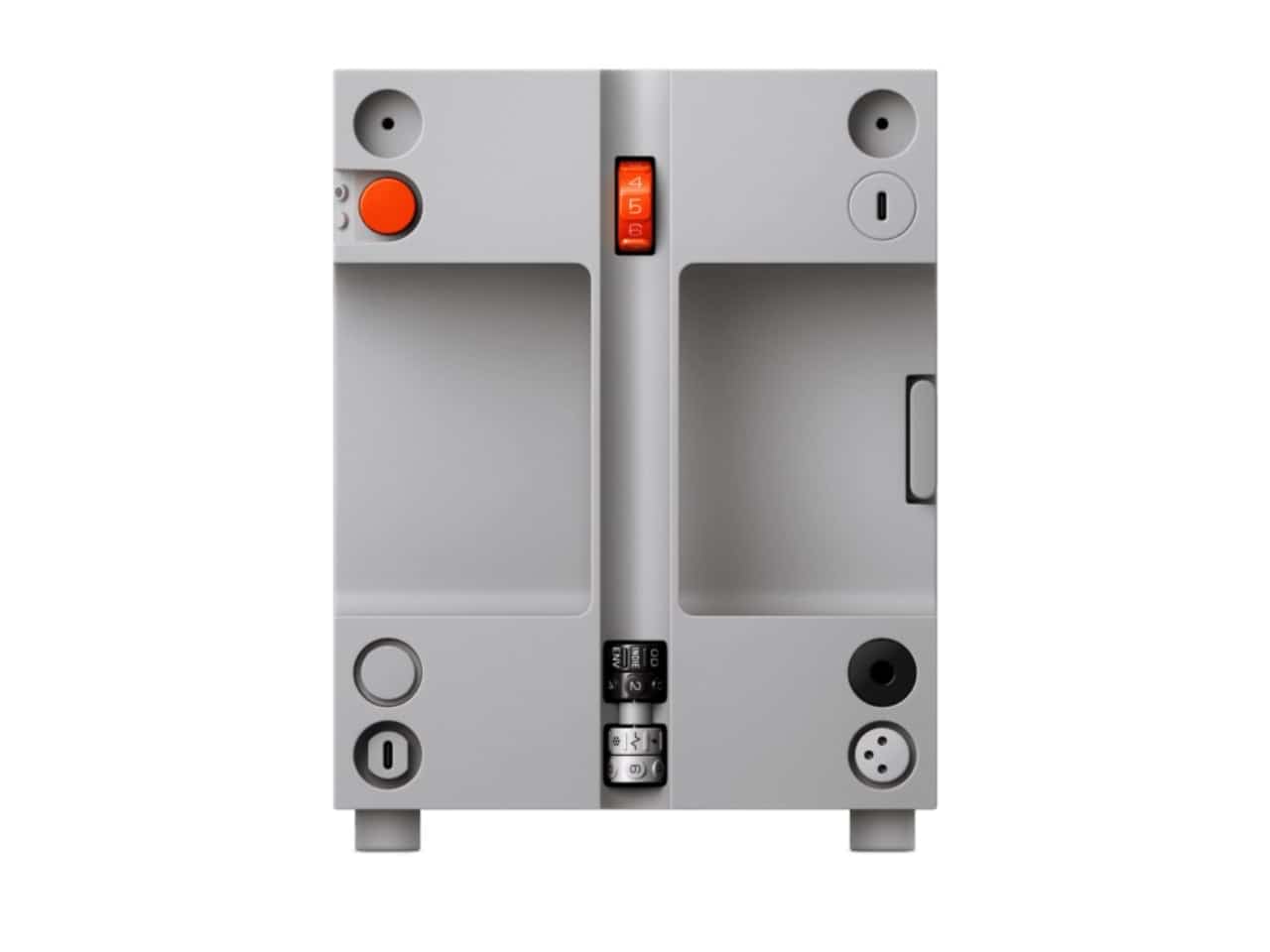
The controls continue the same straightforward philosophy. Physical dials let users choose effects and adjust their intensity, with eight presets available for guitar and another eight for microphone use.
That arrangement feels approachable because the connection between action and result is obvious: choose a sound, turn a dial, and listen to what changes. There’s no need to swipe through a screen or interpret a maze of tiny icons before getting started.
For casual playing, that kind of immediacy matters. The EP-35 seems designed to encourage experimentation rather than punish anyone who hasn’t read a manual cover to cover. You can twist a control, hear an effect, and decide whether it works. If it doesn’t, turn it back. No drama.
The microphone effects add an especially playful touch. Presets named “robo choir” and “frog” make the intended mood pretty clear. This isn’t an amplifier trying to behave like a stern piece of studio equipment. It leaves room for silliness, strange vocal experiments, and the sort of button pressing that often leads to the best accidental moments.
The USB Interface Gives It a Second Life at Your Desk
The USB audio interface is less visually entertaining, but it may prove to be one of the most useful features in daily use. Connect the EP-35 to a computer, and it can function as a recording interface.
That gives the same device a role after the portable session is over. It can leave the house as an amplifier and return to a desk as part of a recording setup. This continuity makes the EP-35 easier to justify because it doesn’t become redundant the moment you’re near a laptop and a power outlet.
A lot of portable gear has a short period of excitement before it gets placed on a shelf. The USB functionality helps push against that fate. It gives the amp another reason to stay connected to your routine, whether you’re recording guitar, trying vocal ideas, or simply using the device as a flexible audio companion.
The broader idea is appealing: one object, several contexts. Rather than separating practice, playback, and recording into different pieces of equipment, the EP-35 keeps them within the same system.
A Camp Light That Knows When to Show Off
Inside the storage compartment, Teenage Engineering has added another unexpected detail: a small camp light.
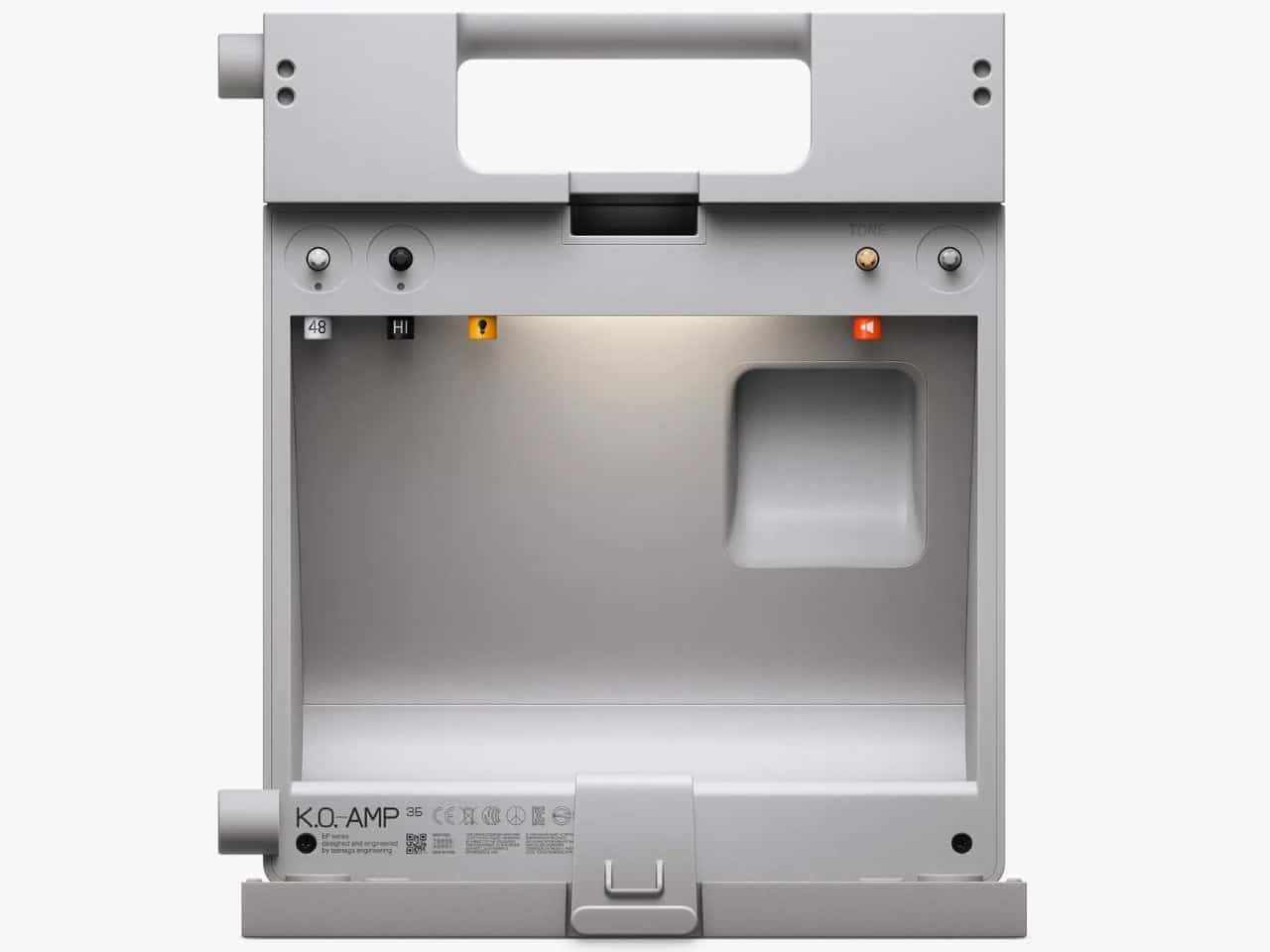
The light can illuminate the compartment automatically when it opens, remain switched on, or respond to incoming audio in a disco mode. It’s a mix of useful design and cheerful excess, which feels very much in keeping with the rest of the EP-35.
Some of those options are practical. Finding a cable in a dim space is easier when the compartment lights itself. Other functions are there simply because they’re fun. I’m entirely fine with that balance. Music equipment doesn’t need to be relentlessly serious, especially when a little visual mischief can make everyday interaction more memorable.
Tilting the speaker backward also allows the LEDs to display the battery level. That’s a more physical and memorable gesture than checking another tiny percentage number on a screen. You tilt the speaker, the light responds, and you get a quick sense of its remaining charge. It’s a small moment, but small moments are often what make a device feel thoughtfully designed.
Portable, Though Not Pocket-Sized
Of course, portability needs a little perspective. At roughly seven pounds, the EP-35 is something you carry by its integrated handle. It isn’t the kind of speaker you casually drop into a small shoulder bag alongside your keys and headphones.
Teenage Engineering rates the battery life at 12 hours with the volume set to five. That figure is useful as a reference point, but it shouldn’t be treated as an all-day promise at every volume level. Louder playing can change the equation, as anyone who has watched a battery indicator tumble during an enthusiastic outdoor session already knows.
The EP-35 is also splash-resistant rather than waterproof. That difference matters. Splash resistance may offer some reassurance around light moisture, but it doesn’t turn the amp into equipment for every weather condition. If the camp light has you imagining a weekend outdoors, it’s worth remembering that the device still has limits.
In other words, the EP-35 is portable in a practical, carryable sense. It’s not pretending to be weightless, indestructible, or ready for every adventure.
Two Speakers, With One Important Limitation
There’s room to expand the setup. Two EP-35 units can play Bluetooth audio in stereo through broadcast mode.
The setup process involves tilting each speaker to assign the left and right channels before starting the mode. It’s a slightly physical solution that fits the product’s broader design language. Instead of making every step feel hidden inside software, the speakers communicate through movement and hardware.
Connected instruments take a different route, however. Linking instrument sound between two speakers requires a line-out-to-line-in cable. That detail is important because it prevents the stereo setup from being mistaken for a completely wireless mini stage.
The wireless convenience applies specifically to Bluetooth playback. If you’re connecting instruments, cables remain part of the picture—which makes the hidden storage compartment feel even more useful. The EP-35 doesn’t eliminate the cable problem; it simply gives the cables a sensible place to go when they aren’t in use.
Is the EP-35 Amp Worth $399?
For me, the $399 price makes the most sense when the musical connections will be used regularly. Guitarists, vocalists, casual recording enthusiasts, and players who want several inputs in one portable unit may find the combination compelling.
Someone who only wants background listening, on the other hand, could be paying for a great deal of capability that never gets touched. The EP-35 isn’t just a standard wireless speaker with a few decorative extras. Its value depends on whether the amplifier, interface, effects, and multiple inputs fit into your actual routine.
Sound quality still deserves a proper listening test, and clever packaging can’t settle that question by itself. A hidden compartment may win a design enthusiast’s heart, but the real verdict will always come from how the device performs with music playing through it.
Still, I appreciate the attention given to what happens between sessions. The music stops. The guitar gets unplugged. The microphone cable comes loose. Then, instead of scattering those pieces across the room, you place them inside the EP-35 and close the panel.
That’s a modest design choice with a very recognizable payoff. And sometimes, that’s exactly what makes a piece of equipment feel like it belongs in real life.
Conclusion
The EP-35 amp is an unusually thoughtful blend of portable speaker, instrument amplifier, recording interface, and playful design object. Its hidden cable compartment won’t sell the whole device on its own, but it captures the larger idea perfectly: good music gear should account for the messy moments, too. Would you choose the EP-35 for its broad musical abilities—or would the cable compartment be the detail that wins you over?
FAQ
- What is the EP-35 amp?
The EP-35 is a portable speaker, instrument amplifier, and USB audio interface combined in one unit. It supports guitar, microphone, line-level, Bluetooth, and USB audio connections. - How much does the EP-35 cost?
The EP-35 is listed at $399. - What can the hidden compartment store?
The rear compartment is designed for cables and accessories, helping keep the supporting gear together with the amplifier. - Can two EP-35 units play in stereo?
Yes. Two units can play Bluetooth audio in stereo through broadcast mode. Instrument audio requires a line-out-to-line-in cable between the speakers. - Is the EP-35 waterproof?
No. The EP-35 is splash-resistant rather than waterproof, so it should be treated carefully around significant moisture.
If the EP-35’s mix of music-making utility and playful industrial design speaks to you, browse your favorite album cover poster at Architeg Prints. It’s a warm way to bring that same love of sound and visual character into your space.
 | DISCOUNTGET 30% OFF*Use code on your next order:
|
* This post may contain affiliate links, meaning we earn a commission if you make a purchase through these links, at no additional cost to you.