AlphaTheta HDJ-F9 Headphones Bring Low-Latency Wireless to DJs



AlphaTheta HDJ-F9 Headphones Bring Low-Latency Wireless to DJs
The HDJ-F9 headphones bring AlphaTheta’s fast SonicLink wireless monitoring to a lighter on-ear design built for demanding DJ sets.

Wireless Monitoring Without the Usual Bluetooth Lag
For DJs, wireless headphones have always come with a tiny but potentially disastrous catch: delay. A fraction of a second might not sound like much in everyday listening, but when you’re matching beats, cueing a vocal, or scratching into a transition, timing is everything. One misplaced beat and the whole mix can wobble like a shopping cart with one bad wheel.
That’s why wired headphones remain the standard in DJ booths. They connect directly to the mixer, deliver an immediate signal, and remove one more thing from the list of possible technical headaches. AlphaTheta’s new HDJ-F9 headphones, however, are designed to make wireless monitoring far more practical.
The headphones use AlphaTheta’s SonicLink wireless connection, which is built specifically for low-latency audio. The company quotes latency as low as 9 milliseconds, describing it as up to 20 times faster than the delay associated with the common Bluetooth SBC codec. That speed is intended to be quick enough for scratching, where even a small lag can make the audio feel disconnected from the movement of the record or jog wheel.
For DJs who have ever reached for wireless convenience only to retreat to a cable at the first sign of timing trouble, that low-latency focus is the main attraction.
A Faster Way to Connect in the Booth
SonicLink isn’t only about reducing delay. AlphaTheta has also tried to make the connection process less fiddly, because the middle of a set is not the ideal moment to dig through menus and pairing screens.
With SonicLink Touch Pairing, the HDJ-F9 can connect to a compatible mixer with a single tap against the unit. One example is the DJM-V5 mixer, although the mixer needs to be running its latest firmware for the feature to work. In theory, that means less time staring at a setup screen and more time paying attention to the mix.
It’s a small touch, but small touches matter in a DJ booth. A quick physical pairing action feels more natural than navigating Bluetooth menus, particularly when the room is dark, the music is loud, and you’ve got a transition coming up.
A Lighter On-Ear Design for One-Cup Monitoring
The HDJ-F9 sits below AlphaTheta’s over-ear HDJ-F10 headphones in the range. At £329, it costs £40 less than that larger model and weighs 285 grams, making it 71 grams lighter.
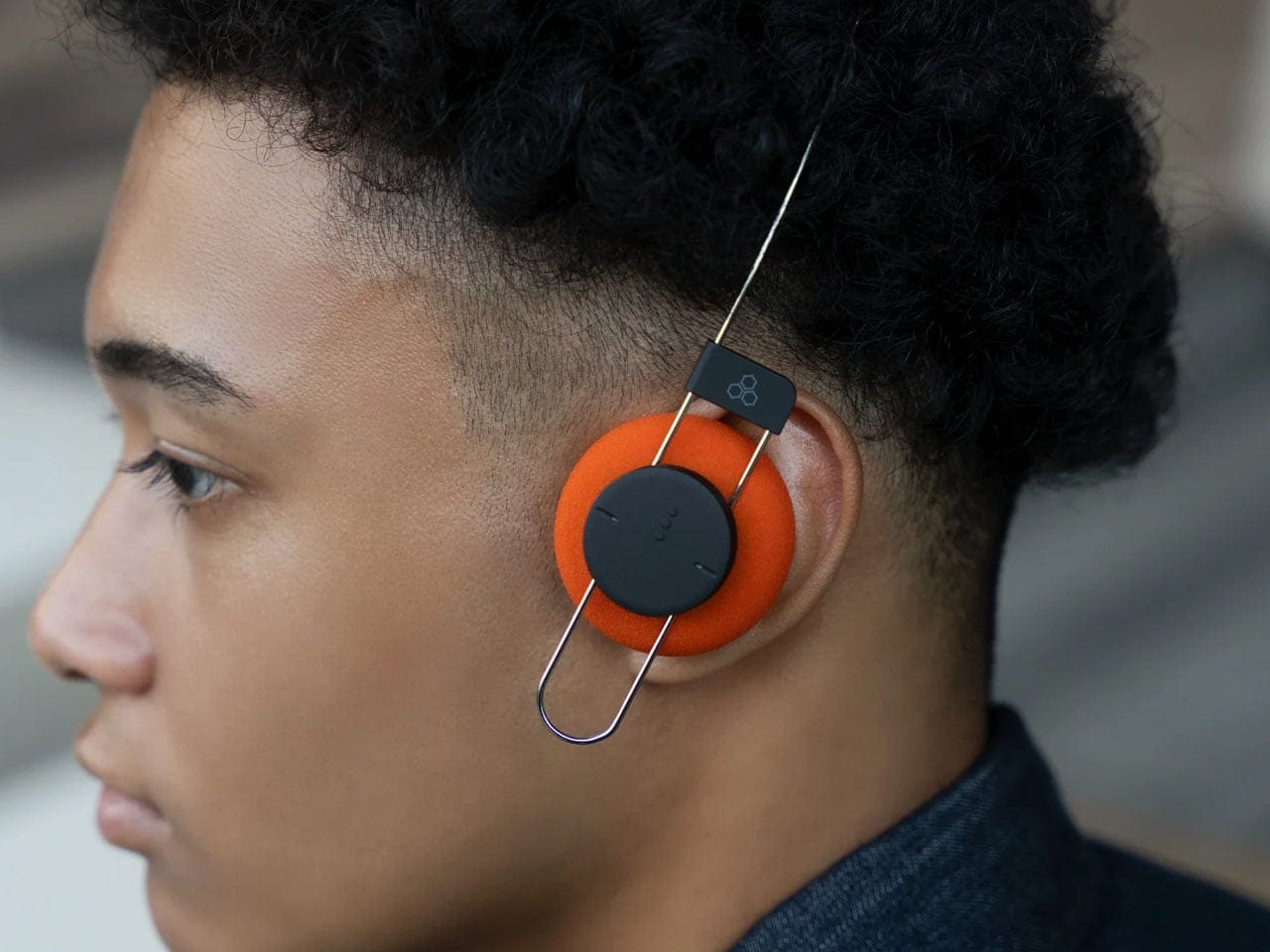
That reduced weight comes partly from the on-ear design. Rather than fully surrounding the ears, the cups rest on them, which suits DJs who prefer to monitor with one side held against an ear while leaving the other ear open to the room. It’s a familiar stance in clubs everywhere: one cup on, one cup off, attention split between the track in the headphones and the energy coming from the speakers.
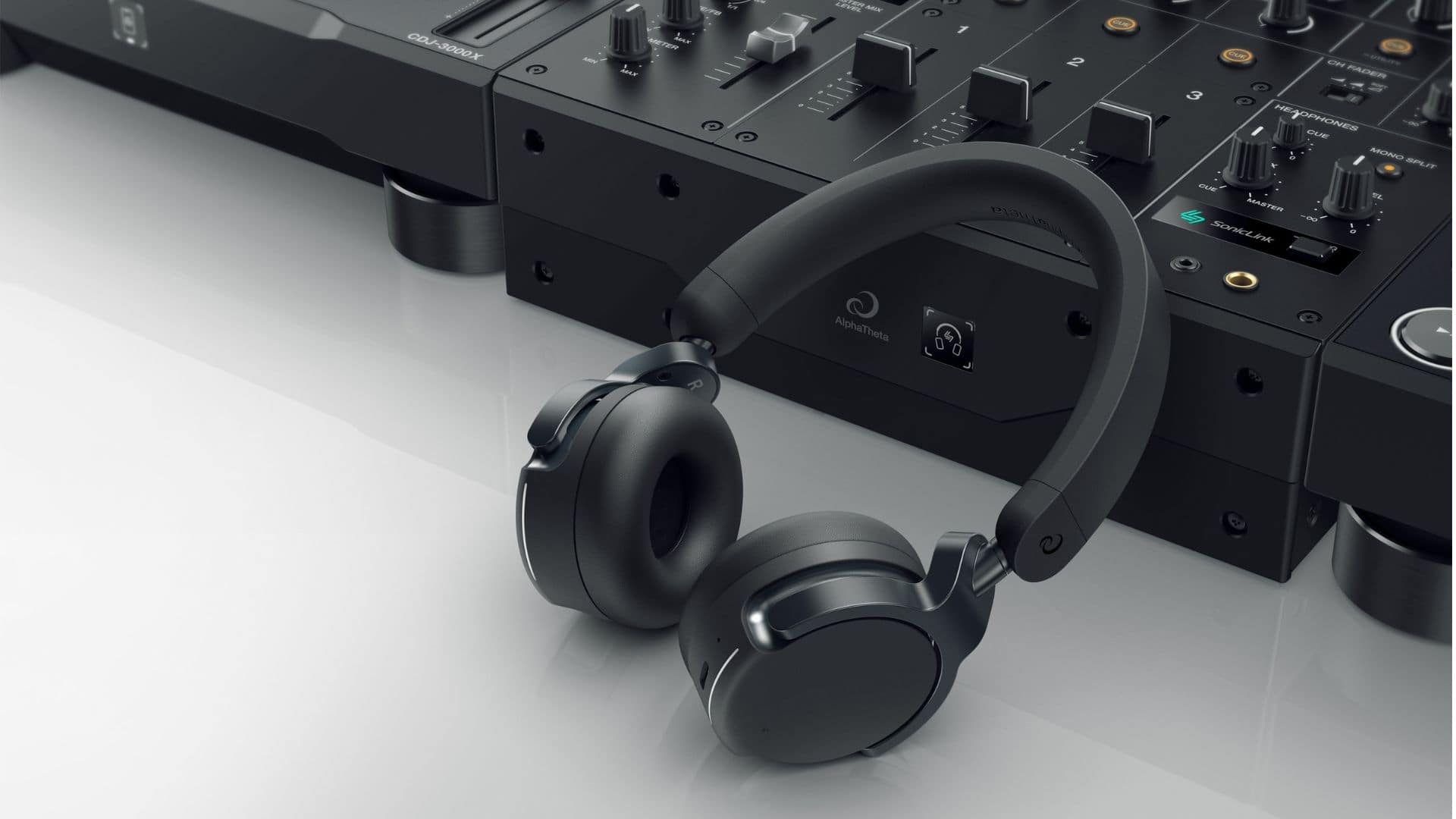
The swivel-mounted hangers give the cups room to move into position. They can sit over one ear for cueing or rest against a shoulder between mixes, helping the headphones stay close without needing to be worn conventionally all the time.
AlphaTheta has used a die-cast aluminum slider and a flexible silicone headband for the structure. The headphones have also passed international durability tests, which should reassure DJs who expect their gear to survive regular travel, crowded booths, and the occasional hurried pack-down after a long night.
Drivers Tuned for Bass, Kicks, and Detail
Under the hood, each earcup houses a newly developed 40mm driver. The drivers are designed to reach into the sub-bass range, giving DJs access to the low-end information that often determines whether a mix feels tight or muddy.
That low-frequency response is supported by a bass-reflex chamber positioned at the top of each housing. Its role is to help keep kicks and basslines controlled, rather than allowing the bottom end to blur together when several tracks overlap.
The midrange and treble are handled by a PEEK-PU-PEEK composite diaphragm. According to AlphaTheta, this construction is intended to keep distortion low across the mids and highs. That matters when listening for vocals, percussion, synth textures, and the smaller details that help with cueing and track selection.
In other words, the HDJ-F9 isn’t only chasing big bass. It’s built around the practical job of helping a DJ separate the important pieces of a track while working in a noisy environment.
Isolation Designed for Loud Booths
A DJ’s headphones need to do more than sound good in a quiet room. They need to remain useful next to monitors, subwoofers, crowd noise, and the constant rumble of a busy venue.
AlphaTheta says the HDJ-F9 provides a higher level of noise blocking than other on-ear models. The goal is to help DJs hear the mix clearly without having to push the volume as high. That kind of isolation can make monitoring more comfortable, especially during longer sessions when listening fatigue begins to creep in.
The on-ear format still keeps the design relatively compact, but AlphaTheta has clearly treated isolation as part of the performance rather than an afterthought. For anyone who likes the freedom of one-ear monitoring, that balance could be especially important.
App Controls and Useful Everyday Features
The HDJ-F9 also brings several controls beyond the booth. Through the Headphones Connect app, users can adjust the color and brightness of the status LED, rename the headphones, and set the automatic power-off function.
The app can also assign a button to a voice assistant, including Siri or Google Assistant. That makes the headphones a little more flexible away from DJ duties, whether you’re using them while traveling, organizing music, or simply trying not to reach for your phone every few minutes.
There’s even a Find My Headphones option. When activated, the headphones play a sound to help locate them if they’ve been misplaced. Anyone who has searched a bedroom, studio, or gig bag for a missing pair knows that this is the sort of feature that seems minor until the exact moment you need it.
The iOS version of the app is expected to arrive on the App Store at a later date. Until then, availability of app-based controls will depend on the platform being used.
Battery Life Depends on the Status Light
The status LED has a direct effect on battery life. With SonicLink active and the light switched on, the HDJ-F9 lasts up to seven hours. Turning the light off increases SonicLink listening time to nine hours.
Bluetooth offers longer playback figures. The headphones last up to 13 hours with the LED on and up to 25 hours with it off. That makes Bluetooth the more practical choice for casual listening away from the booth, while SonicLink is the feature aimed squarely at DJ monitoring.
A full charge takes about two and a half hours. That isn’t an instant top-up, so remembering to charge the headphones before a set remains a good habit. Still, the wired option means a completely drained battery doesn’t have to end the night: simply connect the supplied cable and keep working.
What Comes in the Box
The HDJ-F9 includes a 1.2-meter coiled cable for wired monitoring, a 6.3mm adapter for mixer connections, and a USB-C charging cable. A carrying pouch is also included for transport between home, studio, and venue.
The coiled cable is particularly welcome here. Wireless may be the headline feature, but a dependable wired connection remains the fallback every DJ wants available when battery levels drop or a venue setup doesn’t support SonicLink.
Price, Compatibility, and the Extra Transmitter
The AlphaTheta HDJ-F9 headphones are available now for £329 and include a two-year warranty. That places them below the £369 HDJ-F10 while offering a lighter, on-ear alternative aimed at DJs who prefer a more flexible monitoring style.
DJs whose equipment doesn’t include built-in SonicLink will need the separate HP-TX01 transmitter, which costs £109. That extra purchase is worth keeping in mind when calculating the total setup cost. The headphones may be wireless, but the best version of that wireless experience depends on having compatible equipment or the additional transmitter.
Taken as a whole, the HDJ-F9 headphones are a focused piece of DJ equipment rather than a generic lifestyle headset. AlphaTheta has concentrated on the details that matter during a set: low latency, quick pairing, strong isolation, one-ear positioning, durable construction, and a cable option when wireless isn’t the right tool.
The HDJ-F9 headphones make a convincing case for wireless DJ monitoring by tackling the exact problem that has kept many performers loyal to cables: timing. Would you trust low-latency wireless in your next set, or is a cable still the ultimate booth companion?
FAQ
- What are the AlphaTheta HDJ-F9 headphones designed for?
They’re designed primarily for DJ monitoring, with AlphaTheta’s SonicLink connection offering low-latency wireless audio intended for beatmatching and scratching. - How much latency does SonicLink provide?
AlphaTheta quotes latency as low as 9 milliseconds, which the company says is substantially faster than standard Bluetooth SBC performance. - Can the HDJ-F9 be used with a cable?
Yes. The box includes a 1.2-meter coiled cable and a 6.3mm adapter for wired connections to DJ mixers and other compatible equipment. - How long does the battery last?
SonicLink playback lasts up to seven hours with the status LED on and nine hours with it off. Bluetooth lasts up to 13 hours with the LED on and 25 hours with it off. - Do all mixers support SonicLink Touch Pairing?
No. The feature requires a compatible mixer, such as the DJM-V5, running the necessary latest firmware. Equipment without built-in SonicLink may require the separate HP-TX01 transmitter.
If music gear is part of your creative world, a favorite album cover poster can bring that same booth-side energy into your room. Browse the collection at Architeg Prints and find a piece that feels at home beside your headphones.
 | DISCOUNTGET 30% OFF*Use code on your next order:
|
* This post may contain affiliate links, meaning we earn a commission if you make a purchase through these links, at no additional cost to you.