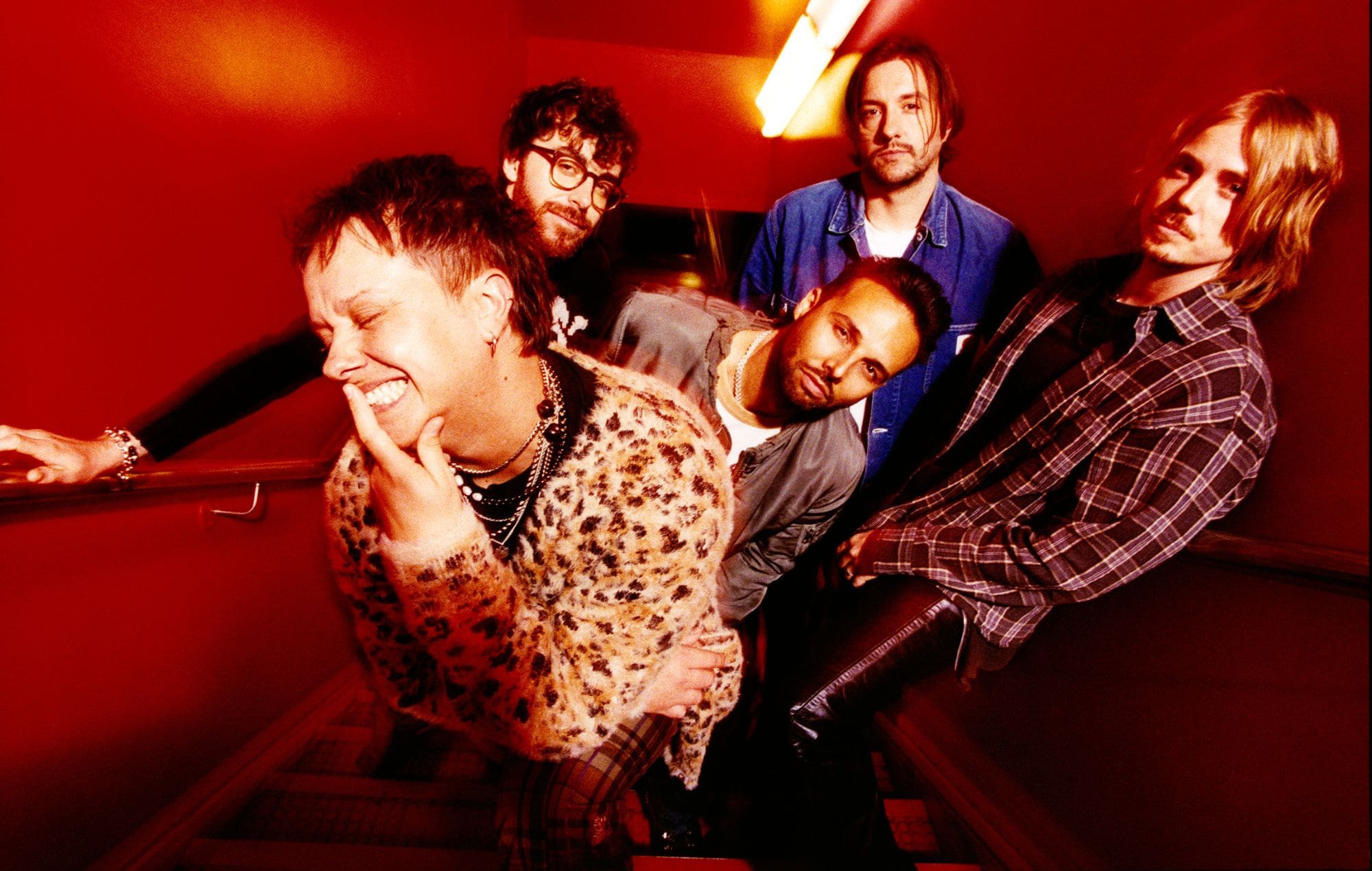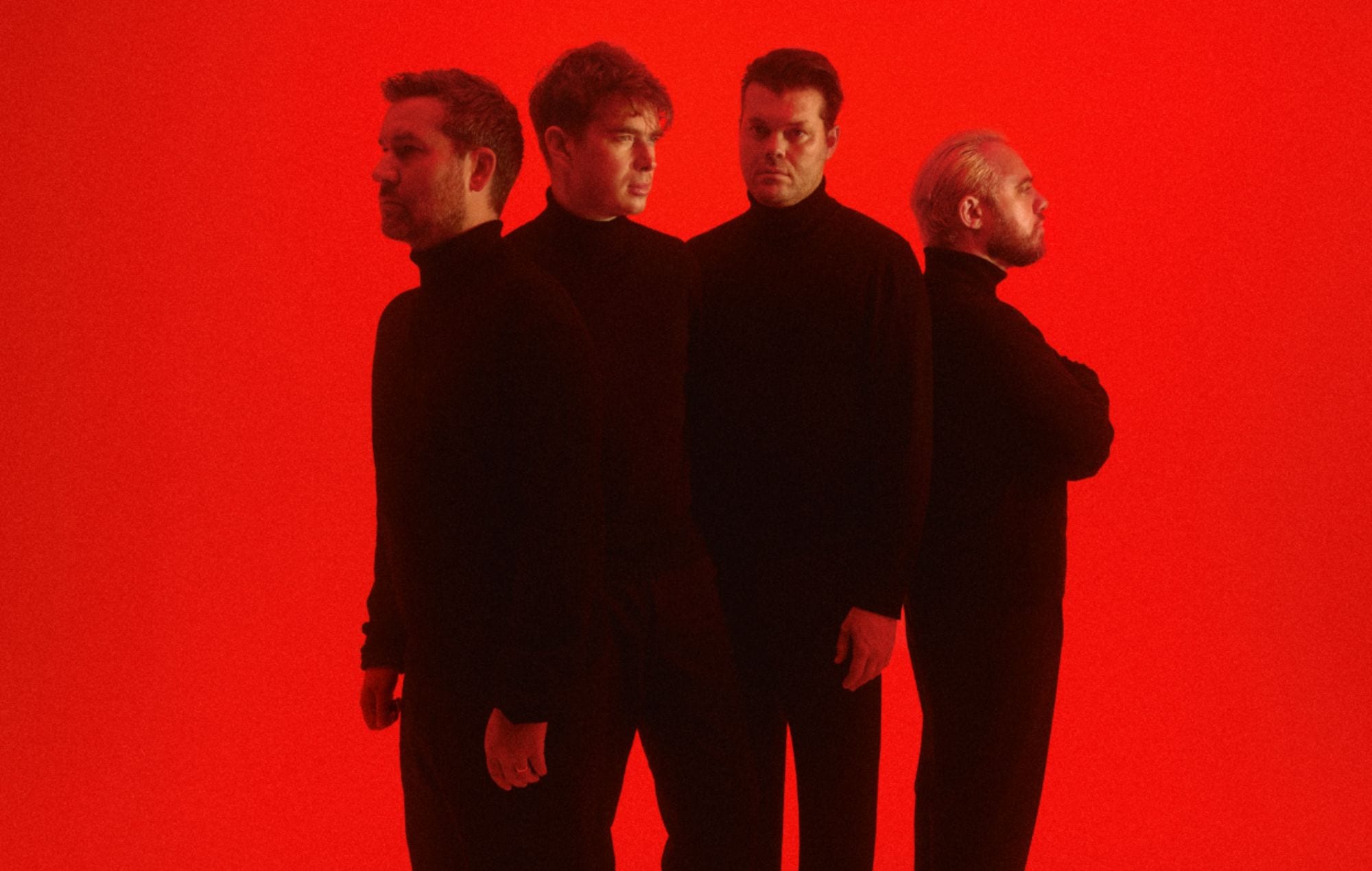
Everything Everything’s Poison Pop Takes Aim at Modern Life


Everything Everything’s Poison Pop Takes Aim at Modern Life
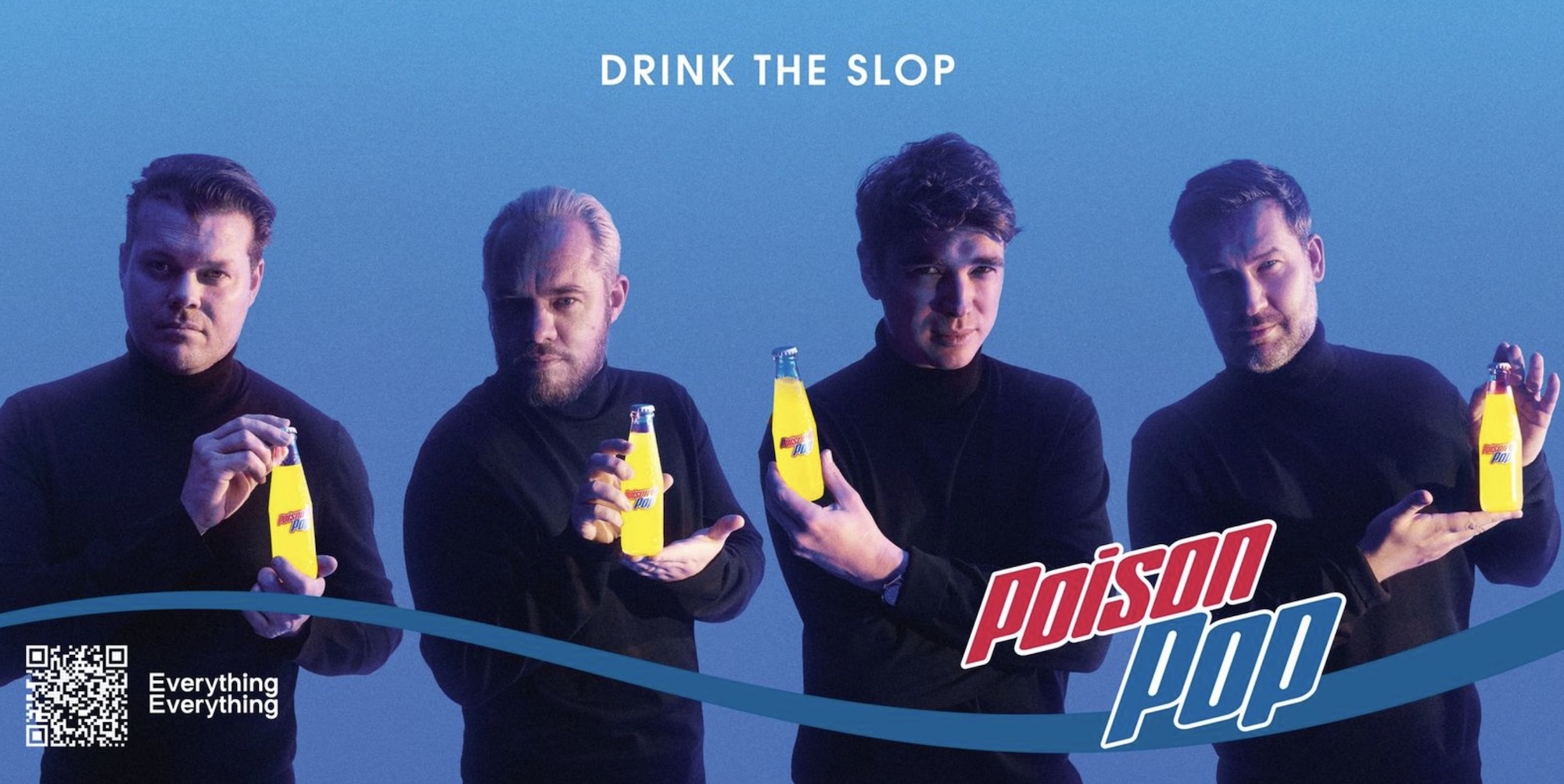
Poison Pop turns social media, AI anxiety, and modern chaos into Everything Everything’s sharpest live-minded record yet.
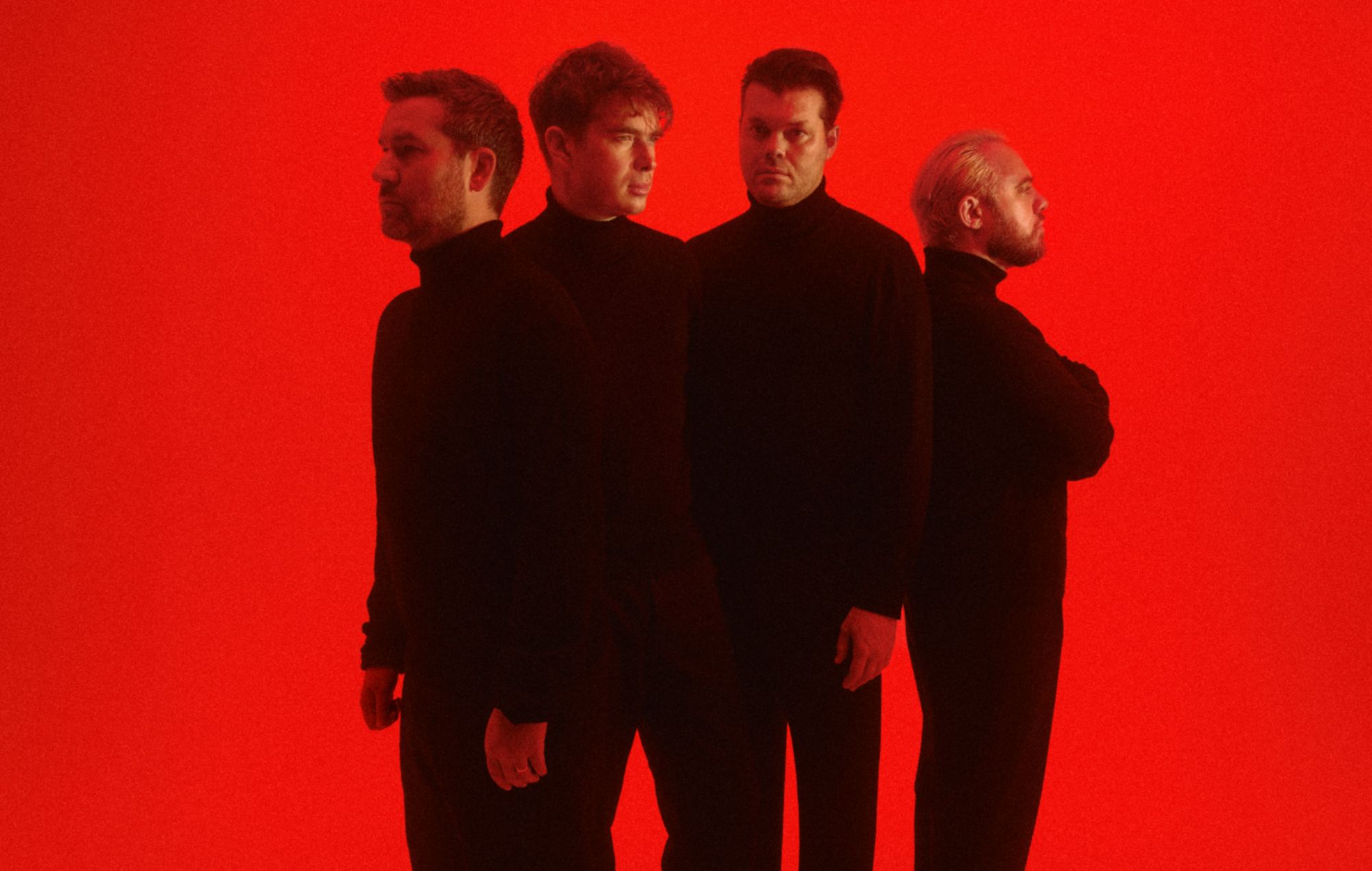
There’s a particular kind of pop song that makes you want to dance while quietly asking whether the world is falling apart. Everything Everything have built an entire art form around that contradiction, and Poison Pop pushes it into especially vivid territory.
A Faster, More Direct Turn
The British art-rock band’s eighth album follows 2024’s intricate Mountainhead, a record shaped by abstraction, metaphor, and synth-heavy experimentation. This time, though, the group wanted something more immediate: faster, louder, more physical, and closer to the punk-leaning energy of their earlier work.
The change began while the band was touring to celebrate the 10th anniversary of Get To Heaven, their blistering third album. Revisiting those songs brought an old intensity back into focus. Suddenly, the idea of making another urgent, full-throttle record didn’t feel like a nostalgic detour. It felt necessary.
Jonathan Higgs, the band’s frontman, described the process as a kind of reunion with their younger, more unhinged selves. He and the group didn’t want to simply repeat the past, but the anniversary shows reminded them how powerful that particular edge could be.
“Hey, guys, remember how fucking insane we used to be?”
That memory helped shape the album’s personality. Where Mountainhead kept its ideas slightly out of reach, Poison Pop steps directly into the mess. Higgs wanted it to feel like a slap in the face rather than a puzzle viewed from across the room.
Why Poison Pop Feels So Uncomfortably Familiar
The album’s central concerns are painfully recognizable: social media’s endless dopamine chase, online rage-bait, culture wars, the spread of artificial intelligence, and the growing acceptance of low-effort machine-made content.
But Poison Pop isn’t a lecture. That distinction matters. Higgs isn’t interested in standing on a stage and telling listeners exactly what to think. Instead, the songs reflect the confusion itself—the contradictory messages, compulsive habits, and strange thrill of participating in systems we know are damaging.
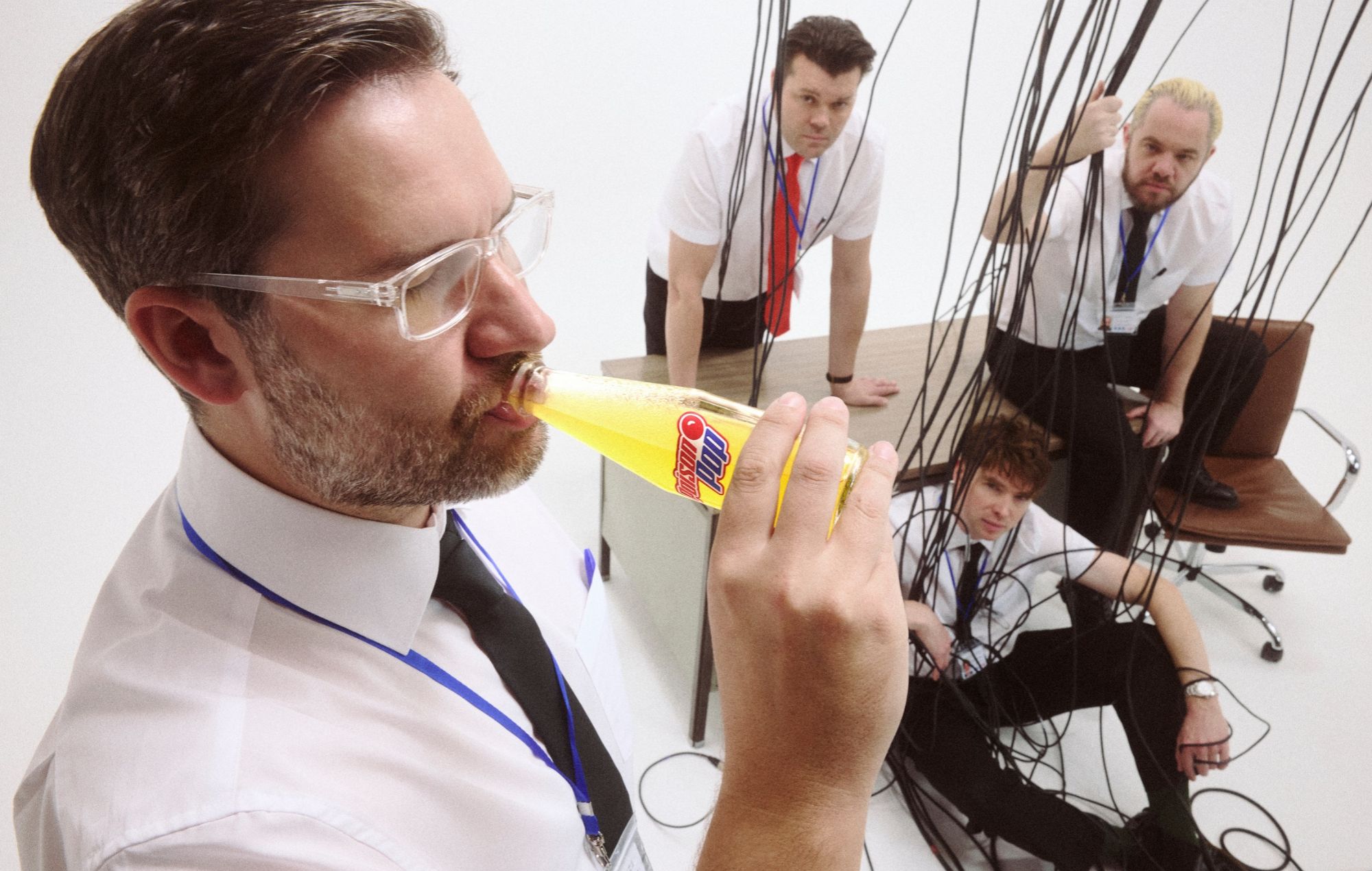
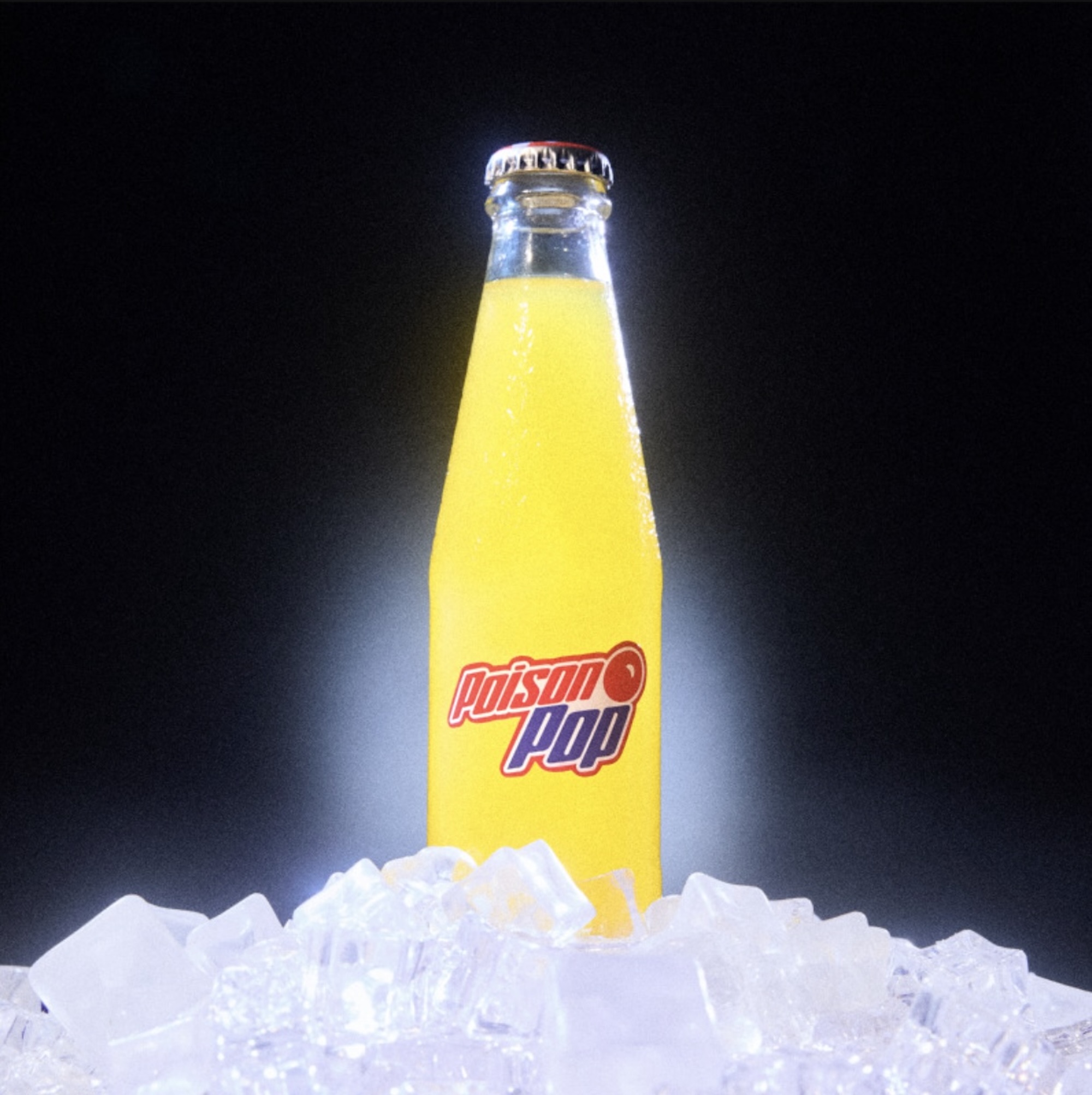
That tension runs through the title track. The song imagines something sweet and tempting that is also quietly lethal. You understand the danger, yet you keep reaching for another sip. It’s a neatly nasty metaphor for the way modern life can work: the thing making us miserable is often the same thing we can’t stop checking.
“Blood Radio” takes a similar route. Its fictional broadcast turns listeners toward uncontrollable anger, yet they continue tuning in. The song captures the addictive charge of outrage—the rush of feeling furious, informed, and involved all at once.
For Higgs, that conflict is personal as well as cultural. The record wrestles with whether people will simply surrender to the decline of the world around them or attempt to push back, even when resistance feels exhausting.
The Long Road to the Final Tracklist
The album also took longer to assemble than usual. Everything Everything often begin work on a new record almost immediately, but this time the band deliberately slowed down and made sure the songs could withstand closer scrutiny.
That patience meant cutting deeply. Around 80 or 90 songs were rejected during the process. Once the pile had been reduced to roughly 20 possibilities, Higgs and guitarist Alex Robertshaw stepped aside and asked the rest of the band to identify the strongest material.
It was a slightly nerve-racking move. Handing over that decision meant giving up some control, but the songs had already earned the group’s trust. The outside perspective helped clarify which tracks truly belonged together.
The result is an album that aims for impact without sacrificing the band’s taste for unusual arrangements and ideas. It’s direct, but not simplistic. In the best Everything Everything tradition, the music can sound bright and combustible even when the subject matter is anything but.
AI, Art, and the Handmade Difference
Higgs’s thoughts on AI remain in motion. The band encountered the technology early through the artwork associated with Raw Data Feel, which was created using AI-generated imagery. At the time, that felt exciting and experimental. Since then, public attitudes have shifted considerably.
His position now is less about simple opposition and more about usefulness, intention, and what humans bring to the work. AI can be a tool in art, but Higgs doesn’t believe it can reproduce the full value of a human creative voice.
His argument is refreshingly blunt: if an artist is genuinely terrified that a machine can do exactly what they do, perhaps they should question what makes their work distinctive in the first place. He doesn’t worry that AI can truly replace his own approach. It might create a convincing imitation, he says, but imitation isn’t the same thing.
There’s also a possible upside. As machine-generated material becomes more common, human-made art may become more valuable precisely because it carries evidence of effort, decision-making, and personality.
Higgs compares it to a mass-produced vase. Thousands can be made in a day, but place one handmade vase beside them and the difference becomes obvious. If the room caught fire, which one would you try to save?
That image says a lot about Poison Pop. The album isn’t simply asking whether technology is good or bad. It’s asking what we value when everything becomes easier to replicate.
Why These Songs Need a Stage
The handmade idea carries naturally into the band’s approach to live performance. As Everything Everything have grown, they’ve become more conscious of whether a song can work onstage with four musicians and two hands apiece.
In earlier years, they were more willing to build tracks that might be impossible to perform as written. Twenty guitars on one recording? Why not. Live practicality could be thrown out the window in pursuit of a stranger, bigger studio creation.
Now the challenge is part of the appeal. The band wants the songs to retain their energy when taken out of the headphones and placed in a room full of people. That doesn’t mean every arrangement works perfectly, but the live show has become a central consideration rather than an afterthought.
It’s also where Higgs sees a clear human advantage. AI might generate a song, imitate a voice, or assemble a convincing arrangement, but it can’t yet recreate the shared physical experience of a gig: the imperfect timing, the crowd’s response, and the electricity between performers and listeners.
That connection is one of the album’s quiet ambitions. The songs may be about isolation, addiction, and cultural exhaustion, but they’re designed to bring people together in the same space.
A Decade Later, Get To Heaven Still Hits Hard
Working on Poison Pop while revisiting Get To Heaven gave the older album a new context. During anniversary shows in the United States and the United Kingdom, its songs felt uncomfortably current.
When Get To Heaven was written, it sat on the edge of several major political shifts. The record arrived around the time of the Brexit vote, Donald Trump’s rise, and the movement then widely described as the alt-right. Its warnings were not tied to one precise prediction, but many of the fears embedded in the music later became reality.
That made returning to the record a complicated experience. It was rewarding to see the songs resonate with listeners in fresh ways, but there was no satisfaction in being proven right about the darker possibilities.
Higgs’s reaction is full of the weary humor that runs through his songwriting: the band could look back and say they hadn’t been wrong, but he wished they had been.
The anniversary also raised questions about the group’s other albums. A Fever Dream will reach its own 10-year milestone next year, yet there are no immediate plans to organize another retrospective celebration. Looking backward can be meaningful, but the band doesn’t want to become trapped by its own history.
Still, Higgs leaves the door open. And, with a grin, he suggests that if everyone dislikes the new record, the band may have no choice but to revisit the past.
The Connection at the Heart of Poison Pop
For all its references to social media, AI, rage, and cultural decay, Poison Pop ultimately reaches for something simple: human connection.
Higgs hopes listeners come away feeling that they’ve encountered a place where connection is still possible. That may sound modest, but in a chaotic era filled with noise and division, it’s a meaningful goal.
The album doesn’t pretend to solve the problems it describes. Instead, it turns confusion into rhythm, anxiety into hooks, and frustration into something people can shout together. That’s the old magic of a live band: taking private unease and making it communal.
Poison Pop is scheduled for release on March 12.
The record’s biggest question may be the one it leaves hanging: when the things we consume are damaging us, can we still find a way to enjoy music, art, and each other without surrendering to the poison?
FAQ
- What is Everything Everything’s Poison Pop about? Poison Pop explores modern anxiety, social media addiction, online outrage, AI, culture wars, and the temptation to accept a declining world rather than challenge it.
- How does Poison Pop differ from Mountainhead? While Mountainhead leaned into abstract themes, synth experimentation, and metaphor, Poison Pop is faster, more direct, and more influenced by the band’s punk-leaning roots.
- Why was Get To Heaven important to the new album? The band was touring to celebrate the album’s 10th anniversary while writing Poison Pop. Revisiting its aggressive sound encouraged them to make another energetic and confrontational record.
- What does Jonathan Higgs think about AI in music? Higgs sees AI as a potentially useful artistic tool but believes human-made work may become more valuable as machine-generated material becomes increasingly common.
- Will Everything Everything celebrate A Fever Dream’s 10th anniversary? The band has no immediate plans, although Higgs hasn’t ruled out marking the occasion in the future.
If Poison Pop speaks to your love of bold, restless music, you can bring that feeling home with a favorite album cover poster from Architeg Prints.
 | DISCOUNTGET 30% OFF*Use code on your next order:
|
* This post may contain affiliate links, meaning we earn a commission if you make a purchase through these links, at no additional cost to you.