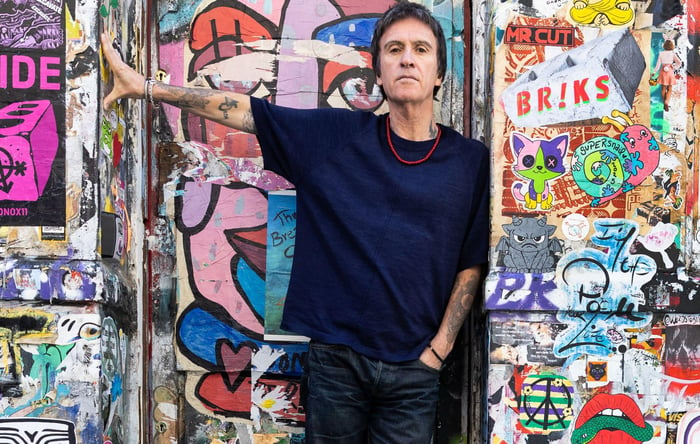
Johnny Marr on Fontaines D.C., New Album, and Fighting Dodgy Views


 See more Architeg Prints stories on Google.
Johnny Marr on Fontaines D.C., New Album, and Fighting Dodgy Views
Johnny Marr’s new album, The Age Of Everything, blends bright guitar pop, cultural reflection, and hope in a complicated era.
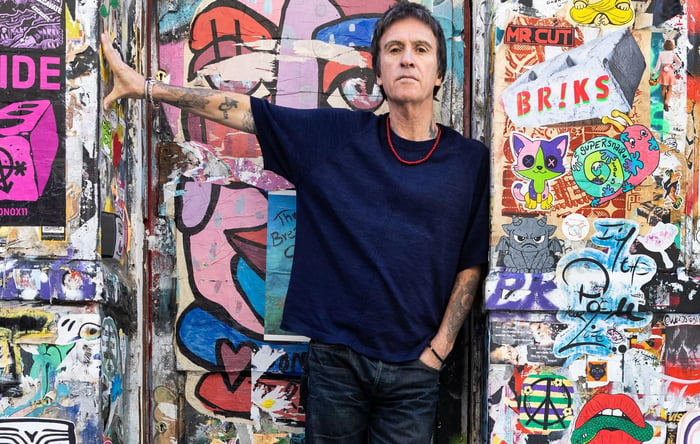
Johnny Marr has spent decades turning restless energy into chiming guitars, sharp melodies, and songs that seem to glow from the inside. Now, with his fifth solo studio album, The Age Of Everything, he’s looking backward, sideways, and straight into the modern world.
The record is full of bright, punchy pop songs, but beneath the hooks is a deeper concern with perception, social pressure, technology, politics, and the strange things people reveal when you simply watch them going about their lives.
A New Album Built From Observation
The album began with people-watching in London and took shape in Marr’s native Manchester. That journey matters. These songs aren’t detached observations from a safe distance; they’re snapshots of human behavior, gathered from streets, conversations, memories, and the emotional weather surrounding everyday life.
Marr describes the record as being inspired by “the idea of perception” — how he sees the world, his own feelings, and the people around him. In classic songwriter fashion, he turns ordinary observation into something more vivid. A look across a crowded street becomes a lyric. A passing attitude becomes a guitar line.
The Age Of Everything contains 10 tracks that lean into pop without sanding away their edges. Marr is more willing than ever to emphasize the distinctive sound he and his band have developed, rather than chasing reinvention simply for the sake of it.
“If you’ve got your own sound, do it and do it loud.”
— Johnny Marr
That doesn’t mean the album is static. Marr has reinvented himself several times, and he understands that every new chapter comes with different expectations. This time, though, the goal was less about abandoning the past and more about making the strongest, most emphatic version of his solo sound.
Why Marr Played the Songs Live First
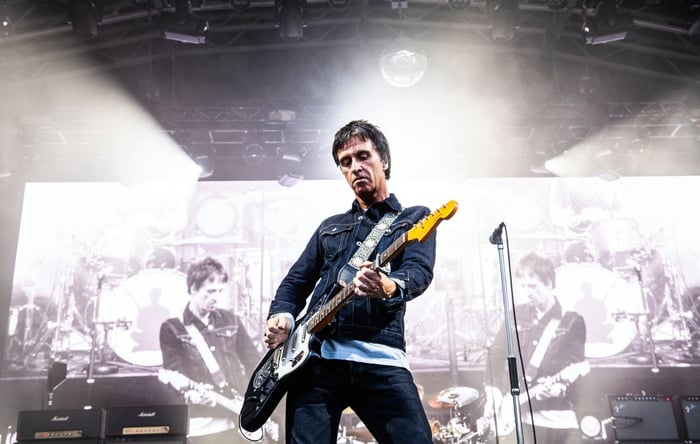
Here’s where the album’s energy really starts to make sense: Marr deliberately tested eight of the 10 songs on the road before recording them.
For years, bands have talked about gigging new songs before entering the studio. It’s one of those excellent ideas that often remains trapped in the rehearsal room, somewhere between “we should definitely do that” and the next round of coffee. Marr actually followed through.
He says he tends to be deliberate rather than impulsive. Once he believes in an idea, he commits to it fully — “a little like a dog with a bone,” as he puts it. That determination shaped the album’s live-ready quality, especially its larger choruses and immediate, sing-along moments.
Marr also sees a connection between his own working style and that of Brian Eno and Damon Albarn. He describes himself as decisive, but open to being redirected if something genuinely compelling appears. That balance — focus without rigidity — became part of the album’s creative method.

From Ambient Records to Fontaines D.C.
The musical palette behind The Age Of Everything is broad but not random. Marr listened to old-school ambient music, Boards Of Canada, Fontaines D.C., Gorillaz, and his own solo catalog while developing the record.
His work with Damon Albarn on Gorillaz’s 2026 album, The Mountain, also left a mark. Marr says the experience reminded him to stay open-minded, maintain his work ethic, allow ideas to arrive naturally, and avoid forcing the creative process.
That last point feels particularly revealing. Marr is known for precision, but he’s not interested in strangling a song with overthinking. Sometimes the best move is to keep working, stay alert, and let the song find its own shape. Or, in less poetic terms: relax a little and stop trying to wrestle the muse to the floor.
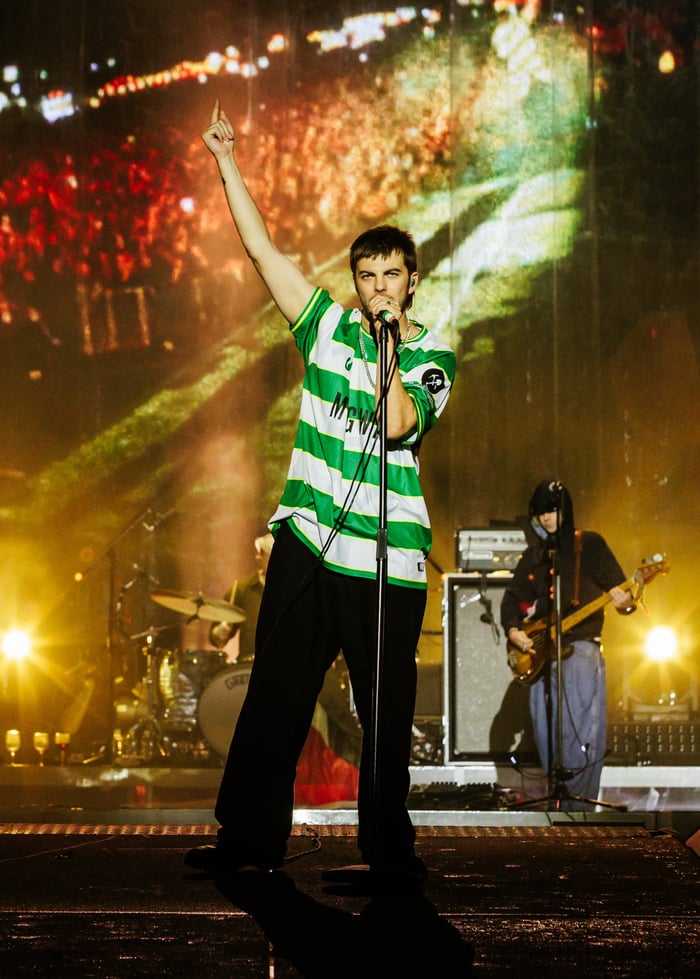
His admiration for Fontaines D.C. comes from a similar place. He says he could hear almost immediately that the band’s songs had begun in a rehearsal room. That detail matters to him because he still thinks of indie music as something created through physical collaboration — people in a room, instruments turned up, ideas bouncing off walls.
Marr even has a habit of asking support bands where they rehearse. His wife, Angie, once pointed out that he seemed to ask the question every time. He hadn’t realized it, but the question reveals how he imagines music being made: not as an abstract product, but as sound emerging from a specific place.
Clearing the Decks Before Moving Forward
Before this album, Marr released a greatest-hits collection and a book about his guitars. He describes that period as a kind of clearing of the decks — a bookmark after a decade of work.
The process also led toward a guitar exhibition and auction at Christie’s. Looking back, Marr now sees those projects as part of a larger transition. They closed one chapter while quietly preparing the ground for another.
Yet he insists that The Age Of Everything wasn’t written as an exercise in reinvention. Instead, he wanted to lean harder into the sound he and his band had already carved out. Some of the songs even reminded him of his first solo album, The Messenger.
That continuity doesn’t bother him. In fact, he seems to regard it as proof that his solo work has developed its own identity. If a song occasionally recalls his earlier groups or previous projects, so be it. Marr’s attitude is refreshingly straightforward: if a particular musical instinct still works, why run away from it?
Catchy Songs, Big Choruses, and a Cure Connection
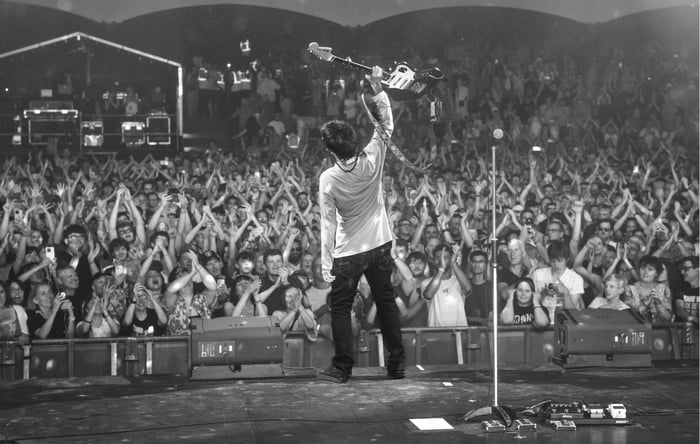
The pop elements on the album are turned up high, and “It’s Time” is a prime example. Marr began singing the repeated “oh-oh” chant during the writing process, unsure how listeners would react. Once he performed it live, audiences joined in immediately.
That response confirmed what he already suspected: upbeat songwriting can be more challenging than introspection. It’s easy to retreat into reflective material. Writing something joyful, direct, and memorable without making it feel weightless is another trick altogether.
Marr says each of his albums can sound like a first album because they carry a sense of urgency. He doesn’t mean that as a boast, and he understands why some listeners might interpret it as criticism. For him, though, the phrase means that the songs still feel like something is at stake.
Tracks such as “Fire With Fire” carry a darker, gothic undertone, while “All In A Life” has shades of Depeche Mode. Marr also recognizes a connection to The Cure, recalling similar moments on his earlier album Fever Dreams, including “Aerial.”
He rejects the supposed divide between fans of The Smiths and The Cure. Marr admired Robert Smith as a guitarist, particularly the focused, individual sound he brought to Seventeen Seconds. He saw The Cure live when he was still a teenager and remembers being drawn to their sense of atmosphere.
He has also covered Depeche Mode’s “I Feel You,” while “The Tracers,” from Call The Comet, prompted comparisons to Sisters Of Mercy. Marr took that as a compliment, especially since Sisters Of Mercy were the first major band The Smiths supported. Those sounds, he says, are part of his musical DNA.
The Catharsis Beneath the Hooks
Marr didn’t begin writing The Age Of Everything with a clear plan to exorcise anything. He tends to avoid spelling out his feelings too directly, preferring suggestion over announcement.
But after the album was mastered at Abbey Road, he walked home in the early hours and realized that certain emotions had made their way into the music anyway. Songs such as “Fire With Fire” and parts of “It’s Time” contained feelings he had been carrying without fully identifying them.
He avoided writing obvious songs about political turmoil or the dangers of social media. Those subjects are already everywhere, and Marr didn’t want to simply repeat the headlines. Instead, he approached them through broader images and emotional pressure.
“It’s Time” includes lines about opening your eyes, discovering the truth, mobilizing, and changing the weather. The language is deliberately larger than a single news story. It reflects the unease of the previous year and a half without turning into a lecture.
“Fire With Fire” comes from another familiar experience: someone you’ve known for years suddenly expresses a viewpoint that shocks you. The reaction is almost physical — “Is that where we’re going?” — and the song turns that uncomfortable recognition into something energetic and defiant.
What “The Age Of Everything” Really Means
The album’s title might initially suggest overload: too much information, too much technology, too many demands, too many opinions arriving at once.
Marr agrees that interpretation is valid, but he doesn’t think it tells the whole story. As a songwriter — and, at heart, a positive person — he also hears possibility in the phrase. Explain it to a five-year-old, he suggests, and it suddenly sounds less like a warning and more like an invitation.
The title can take on another dimension through cultural ideas associated with Buddhism and new age thinking. It becomes expansive rather than suffocating, a phrase about totality, connection, and the possibility of seeing the world from more than one angle.
Why Marr Still Believes in Young People
Marr isn’t blindly optimistic about the immediate future. His lyrics acknowledge concerns about ecology, weather, unchecked ambition, and the consequences of modern life.
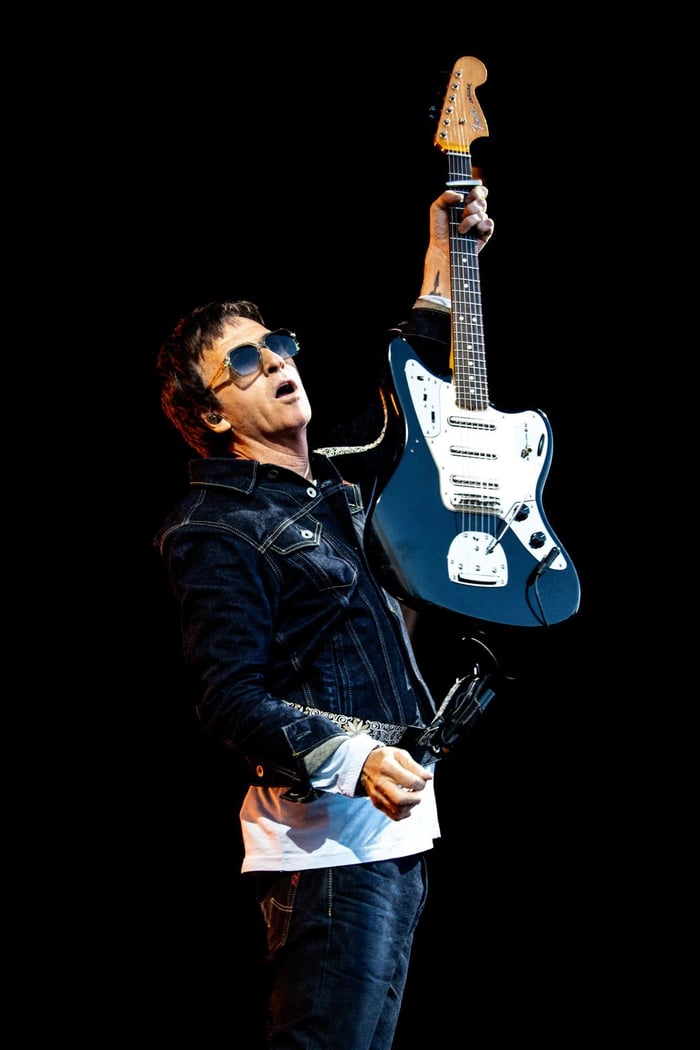
Still, he refuses to become purely gloomy. His hope comes from watching young people in major cities — teenagers, students, and young workers moving through their day. He admires their style, politics, musical instincts, and ideological awareness.
Marr believes the current young generation is switched on in ways that deserve serious respect. His faith isn’t presented as a utopian fantasy; it’s rooted in observation. He sees people responding to the world around them, thinking critically, and developing their own cultural language.
He also points to older thinkers and artists who expressed faith in younger generations, including David Hockney, Aldous Huxley, Joan Didion, and Susan Sontag. For Marr, that belief is something worth aspiring to rather than dismissing as youthful idealism.
Music, Politics, and Giving People a Chance
Marr also discusses Andy Burnham, the former Manchester mayor known for his interest in music and culture. Burnham has even played Marr’s songs on guitar, which earns him a certain amount of goodwill.
But Marr is quick to separate cultural fluency from the much harder business of governing. Posting on social media and understanding online algorithms aren’t enough to address serious national and global issues. Still, Marr argues that Burnham should be given a chance.
His response to whether Burnham is barred from listening to The Smiths, as David Cameron once was in Marr’s estimation, is characteristically dry: Burnham absolutely isn’t forbidden. Some people, Marr adds, are simply all right — and sometimes “cool by association” is easy enough to recognize.
The Age Of Everything arrives before Marr’s scheduled tour dates in Liverpool, Mexico, and South America. The album’s songs may have been shaped by observation and concern, but they’re designed to move — physically, emotionally, and collectively.
The most appealing thing about The Age Of Everything may be its balance: bright pop hooks alongside complicated questions, nostalgia without retreat, and political awareness without turning every lyric into a slogan. Marr still believes in the power of a great guitar song — especially one loud enough to make a room sing together.
FAQ
- What is Johnny Marr’s new album called?
Johnny Marr’s new solo album is titled The Age Of Everything. - How many tracks are on The Age Of Everything?
The album contains 10 bright, punchy, pop-leaning tracks. - Why did Johnny Marr play the songs live before recording them?
Marr wanted to test the songs in front of audiences and capture the energy that comes from performing them on the road. - Which artists influenced the new album?
Marr listened to ambient music, Boards Of Canada, Fontaines D.C., Gorillaz, and his own solo work while making the record. His collaboration with Damon Albarn also influenced his approach. - What does Johnny Marr think about the younger generation?
He admires young people’s musical instincts, politics, style, and ideological awareness, describing the current young generation as highly switched on.
If Johnny Marr’s mix of shimmering guitars, memorable choruses, and cultural reflection speaks to you, bring that atmosphere home with a favorite album cover poster from Architeg Prints. It’s a warm, stylish way to keep a little guitar-driven history on your wall.
 | DISCOUNTGET 30% OFF*Use code on your next order:
|
* This post may contain affiliate links, meaning we earn a commission if you make a purchase through these links, at no additional cost to you.