Jimi Hendrix Exhibition: Ronnie Wood on Art and Stones’ Return


 See more Architeg Prints stories on Google.
Jimi Hendrix Exhibition: Ronnie Wood on Art and Stones’ Return
Ronnie Wood’s Jimi Hendrix exhibition reveals a quieter side of the guitar icon while the guitarist weighs future plans with The Rolling Stones.
A Painter’s Tribute to a Guitar Revolutionary
Some friendships leave behind more than memories. In Ronnie Wood’s case, his connection with Jimi Hendrix has become a vivid collection of paintings and sketches—artworks that capture both the explosive performer and the private man Wood knew away from the spotlight.
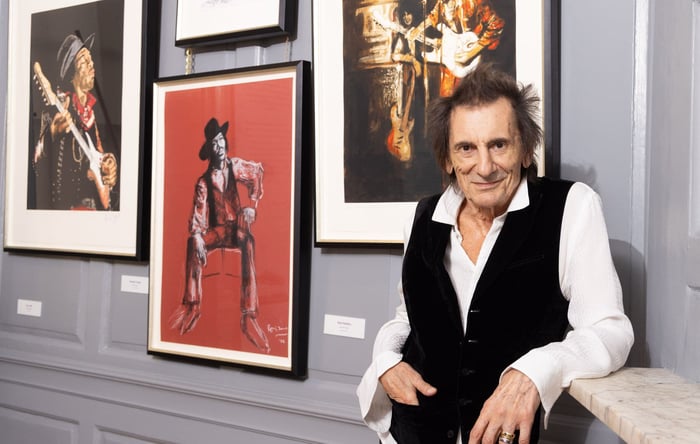
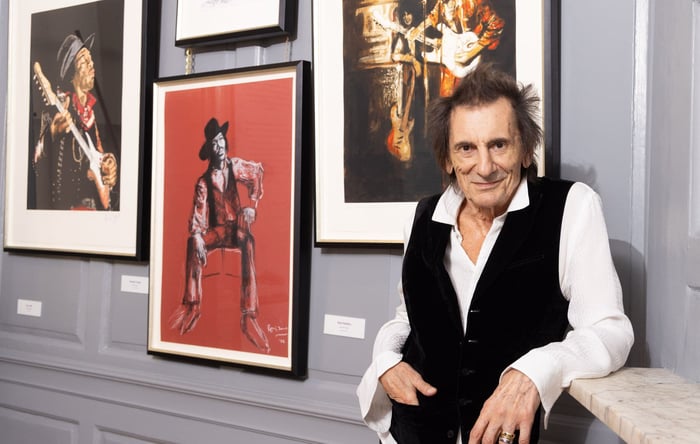
Titled Ronnie Wood: The Jimi Hendrix Portraits, the exhibition is now open at Handel Hendrix House in Mayfair. The museum occupies Hendrix’s former apartment on Brook Street, next door to the home where composer George Frideric Handel lived two centuries earlier. Talk about a musical neighborhood with serious history baked into the walls.
The collection brings together portraits and sketches Wood created over time, along with two previously unseen original works. Together, they present Hendrix through Wood’s eyes: as a dazzling stage presence, a deeply expressive face, and a quieter person whose shyness could easily be overlooked beneath the legend.
Wood’s admiration for Hendrix wasn’t based solely on records or reputation. He met the guitarist after Hendrix arrived in London in 1966, when Wood was playing bass with the Jeff Beck Group. The two eventually shared a house in Holland Park, giving Wood a rare view of Hendrix before fame turned him into an almost mythological figure.
How Ronnie Wood First Met Hendrix
The story began with whispers, as so many great music stories do. In the 1960s, news traveled quickly among musicians and fans who knew where to listen. Wood recalled hearing people talk about a remarkable new guitarist who had just arrived in town.
“I got to know him when he was a name that was already on people’s lips.”
Wood remembered musicians such as Eric Clapton asking whether others had seen “this new phenomenon.” Among those in the know, the message moved quickly: there was a new musician in London, and people needed to see him.
That first real connection happened at the Speakeasy Club in Soho. Hendrix sat in Wood’s booth after performing, and the two began talking. Wood said Hendrix opened up to him almost immediately, which made the encounter feel more personal than a simple meeting between two musicians.
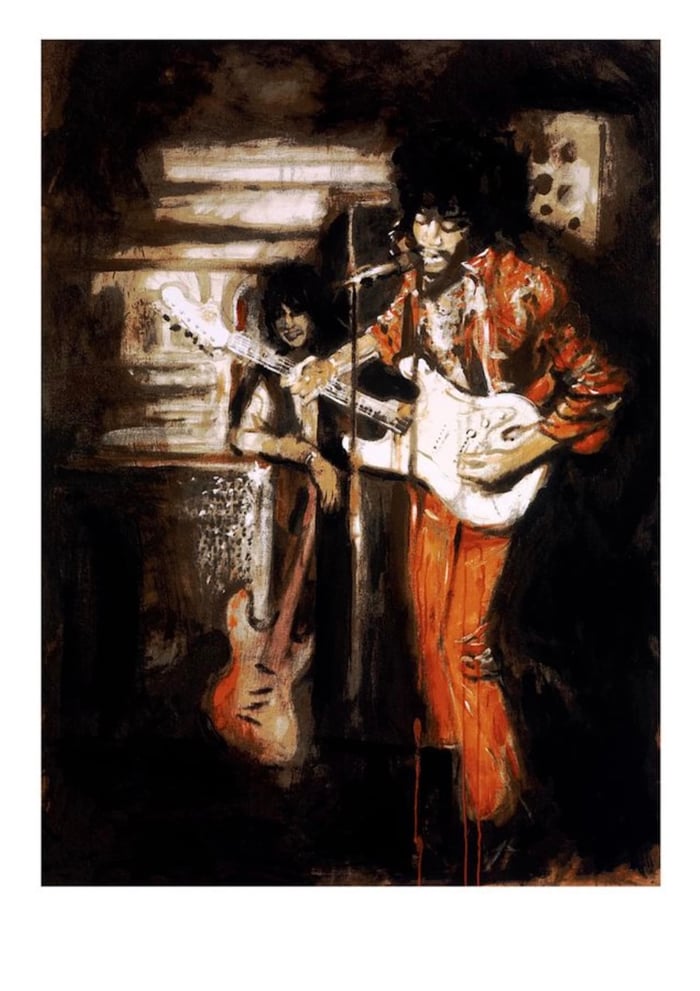
There’s something wonderfully intimate about that memory. The man who would soon become one of rock’s most influential figures was, for a moment, simply a new arrival in London, sitting in a club booth and getting to know another musician.
Why This Hendrix Exhibition Matters Now
Wood said the exhibition came together after he received an invitation from the people responsible for preserving the historic building at 25 Brook Street. The location honors both Hendrix and his famous neighbor, Handel—a pairing that sounds unlikely until you remember that great music often finds common ground across centuries.
Wood had already created several Hendrix artworks before the exhibition was proposed. Once the opportunity became real, he added new images to expand the collection and give the display greater depth.
For Wood, the project is also a tribute to Hendrix’s enormous impact on guitar playing. Hendrix didn’t merely add new sounds to rock; he changed people’s understanding of what the instrument could do. His playing was physical, experimental, and full of color, qualities that naturally lend themselves to visual art.
Wood described the invitation as a great honor. That sense of respect comes through in the collection, where the paintings don’t treat Hendrix as a distant icon carved in stone. Instead, they try to catch him in motion, in thought, and in those fleeting expressions that can disappear before a camera—or a brush—quite catches up.
The Quiet Side of a Rock Legend
The loudest image of Hendrix is familiar: a guitar held high, an eruption of sound, a stage lit by intensity. Wood’s memories point toward another side of him, one that was far more private and reserved.
Wood described Hendrix as highly individual, almost reclusive in his personal life. He said Hendrix was shy and even felt uncertain about his singing voice. That insecurity might surprise listeners who associate him with such total command onstage, but confidence and self-doubt have always lived side by side in the lives of many artists.
Wood remembered encouraging him not to worry about his voice. In his view, Hendrix’s guitar playing balanced and complemented his singing, creating a complete artistic identity.
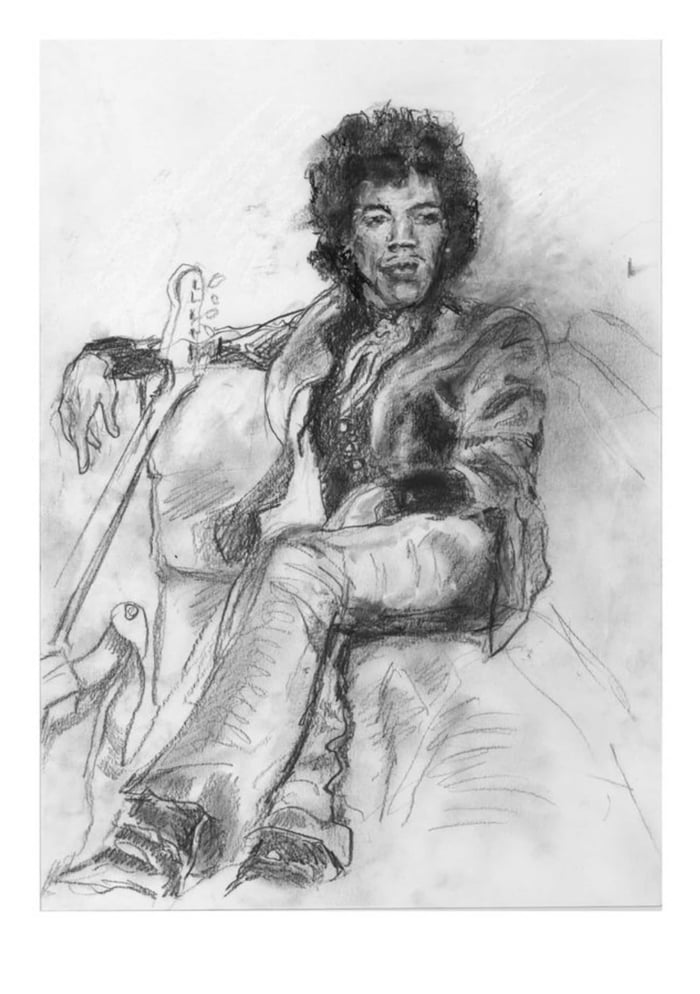
That emotional contrast is central to the exhibition. The stage portraits show force and energy, while the sketches lean into the more reflective qualities Wood remembers. Together, they suggest that Hendrix’s magnetism wasn’t only about volume or virtuosity. It was also in his face, his stillness, and the tension between public fire and private quiet.
Capturing Hendrix on Canvas
Wood admitted that painting Hendrix isn’t always easy. The guitarist’s face was expressive, but expression can be a slippery subject. A slight shift in the eyes can change the entire feeling of a portrait.
Sometimes, Wood said, he felt he got the eyes wrong. Other times, the image came together. What matters to him is whether the broader essence survives—the spirit, attitude, and recognizable presence of Hendrix.
That approach makes sense for an artist painting another artist. A portrait doesn’t have to reproduce every feature with photographic precision to feel truthful. Sometimes a line, a gaze, or a flash of color can communicate more than a perfect copy ever could.
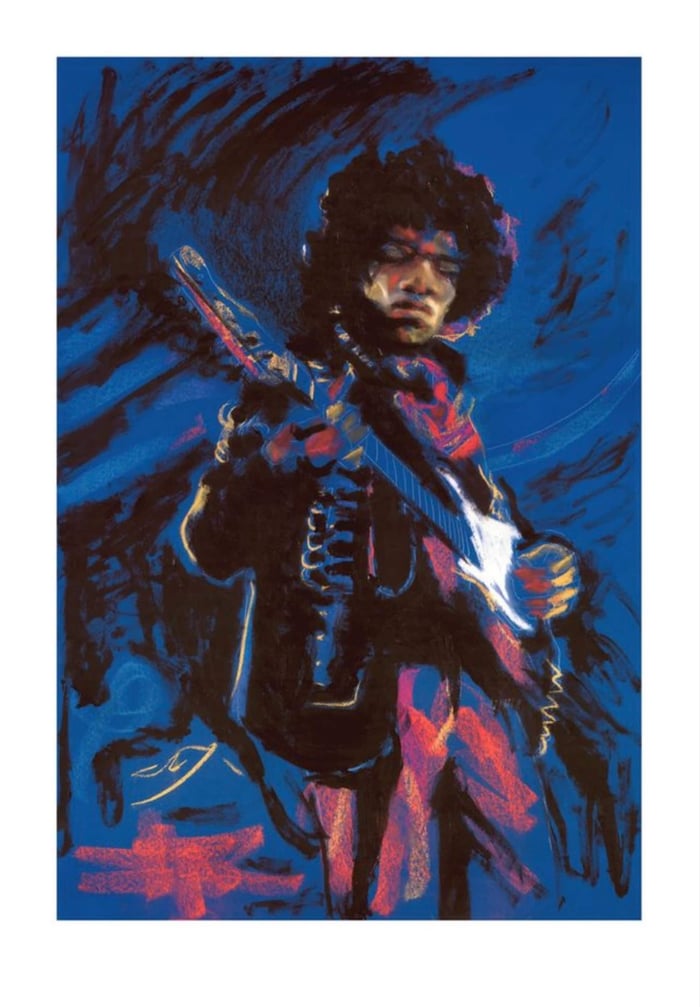
The artworks appear to move between those two goals: capturing Hendrix as he looked and capturing what he felt like. One is visual accuracy. The other is memory—and memory tends to paint with its own strange, beautiful light.
A Larger Ronnie Wood Exhibition Is Coming
The Hendrix collection isn’t the only major exhibition on Wood’s calendar. He also has a much larger museum presentation planned in Germany, south of Stuttgart, in a village called Tübingen.
That exhibition is scheduled to begin in November and run for six months. It will include more than 100 original paintings, 150 prints, and sculptures. Wood emphasized the scale of the event with a line that carries the unmistakable excitement of someone being handed the keys to a very large creative playground: “I’ve got the entire museum!”
For fans who know Wood primarily as a guitarist, his visual art offers another route into his imagination. Music and painting may seem like separate worlds, but Wood’s work with Hendrix shows how closely they can overlap. Rhythm can become brushwork. Stage energy can become color. A familiar face can become a study in movement and mood.
Will The Rolling Stones Tour Again?
While Wood is immersed in painting and performing with his own band, the question of another run with The Rolling Stones naturally hangs in the air.
At present, Wood said he is focused on his Ammo band, describing the group’s shows as energetic performances that have been setting venues alight. He has already toured Europe with them and was preparing to play South America next.
Still, the door to The Rolling Stones remains open. Wood’s position is straightforward: if the call comes, he’ll be ready.
“When my compadres say, ‘Let’s go’, I’ll be ready.”
There are no confirmed plans from Wood at this stage. He said he knows Mick Jagger is eager to perform again, while Keith Richards is less enthusiastic about returning to the road. For Wood, a major tour requires everyone’s enthusiasm. That seems obvious, but with a band of this scale, every “yes” has to line up before the machinery can start moving.
When asked about a possible festival appearance, including Glastonbury in 2027, Wood said he would happily play at a moment’s notice. He also expressed the feeling that the band should perform a show—and perhaps undertake a tour—but acknowledged that wanting it and organizing it are two very different things.
The Need for a Live Return
Wood also discussed the response to the band’s latest album, Foreign Tongues. He said listeners who had heard the record were pleased, but believed the next important step was a live presentation.
He and Jagger had already taken part in a smaller presentation, performing one song from the album along with several others. Wood described the event as enjoyable, though he made clear that he wants the full group back together.
That distinction matters. A brief appearance can create a spark, but a complete band performance is a different animal entirely. It’s the difference between hearing a few notes through an open door and stepping into the room while the whole house is shaking.
What About a Faces Reunion?
The long-discussed possibility of a Faces reunion is also still part of Wood’s musical horizon, though timing remains complicated.
Wood explained that he is currently touring with his band, while Rod Stewart is touring with his own group. For now, both projects are being allowed to run their course. After that, Wood suggested, the conversation can continue.
The outlook isn’t empty. Wood said the group has plenty of strong Faces material “in the bag,” leaving the possibility open even if no immediate reunion is taking shape.
For longtime fans, that may be the most Faces-like answer possible: not quite a promise, not quite a farewell, but a door left ajar with amplifiers waiting somewhere behind it.
Exhibition Details and Final Thoughts
Ronnie Wood: The Jimi Hendrix Portraits is open at Handel Hendrix House through April 11, 2027. Tickets and further information are available through the museum’s official booking page: Visit Handel Hendrix House.
The exhibition offers more than a collection of celebrity portraits. It’s Wood’s personal remembrance of a friend, filtered through paint, pencil, memory, and admiration. At the same time, his comments about touring show that his creative life is still moving in several directions at once—from galleries to clubs, from solo performances to the possibility of another Stones chapter.
The Jimi Hendrix exhibition brings the guitarist’s public brilliance and private reserve into the same frame, while Ronnie Wood’s touring comments keep the door open for more live music with his longtime bandmates. Would you rather see Wood’s Hendrix portraits in person or hear The Rolling Stones return to the stage?
FAQ
- What is the Ronnie Wood exhibition about?
Ronnie Wood: The Jimi Hendrix Portraits presents Wood’s paintings and sketches of Jimi Hendrix, including previously unseen original portraits. - Where is the Jimi Hendrix exhibition being held?
The exhibition is taking place at Handel Hendrix House on Brook Street in Mayfair, inside Hendrix’s former apartment. - How long will the exhibition remain open?
The exhibition is scheduled to run through April 11, 2027. - Did Ronnie Wood know Jimi Hendrix personally?
Yes. Wood met Hendrix after he moved to London in 1966, and the two later shared a house in Holland Park. - Are The Rolling Stones planning another tour?
No tour plans were confirmed in the interview. Wood said he would be ready if the band decided to return, while noting that not every member currently shares the same enthusiasm.
Bring the spirit of this musical history home with a favorite album cover poster from Architeg Prints. It’s a warm, stylish way to keep the art and sound of rock’s greats close by.
 | DISCOUNTGET 30% OFF*Use code on your next order:
|
* This post may contain affiliate links, meaning we earn a commission if you make a purchase through these links, at no additional cost to you.