Fluance Ri71 Review: Stunning Bookshelf Speakers with Detailed Sound



Fluance Ri71 Review: Stunning Bookshelf Speakers with Detailed Sound
Explore the impressive sound and features of Fluance Ri71 bookshelf speakers, offering great value and detailed audio performance for all music lovers.
If you've been eyeing mid-range speakers like the Fluance Ri71 active bookshelf speakers, you’ve probably heard the buzz—they're absolutely stellar for their price. The brand has been a bit coy about origins, but these speakers are designed in Canada and manufactured in Taiwan. Does it matter? Honestly, not one bit. What matters is the sound.
After spending quality time with the Fluance Ri71, I can confidently say they sound fantastic—perhaps even better than their price tag suggests. Sure, they might not quite reach the heights of Dali or KEF, but their beautifully neutral and detailed sound works across all genres. And at just under $400, you get a pair of superb stereo speakers that punch well above their weight.
I did wish there was a USB or USB-C port for direct computer hookup, and the volume control placement could be more intuitive. While the speakers' open design looks sleek (I’m a fan of that style), they lack a protective grille, which might be a dealbreaker for some. But honestly? There’s little else to fault here.
Fluance Ri71 stands out as an excellent powered bookshelf speaker option. Though they don’t offer spatial or surround sound features, they complement TV viewing quite nicely.
Fluance Ri71 Overview: Price and Release Date
- Released: March 2025
- Price: Approx. $400 USD
Positioned in the mid-price range, the Fluance Ri71 offers a sweet spot between budget and premium. You can find active bookshelf speakers three times the price, but not necessarily three times better. On the flip side, Fluance’s own Ai41 model costs less but is smaller, less powerful, and with a less refined sound profile.
Specifications at a Glance
| Feature | Details |
| Weight | 6.4 kg (active); 5 kg (passive) |
| Dimensions | 12.2 x 7.3 x 7.8 inches (310 x 185 x 199 mm) |
| Subwoofer | None |
| Frequency Response | 46 Hz – 30 kHz |
| Dolby Atmos / DTS:X | No |
| Max Power Output | 120 W |
Features That Make Them Stand Out
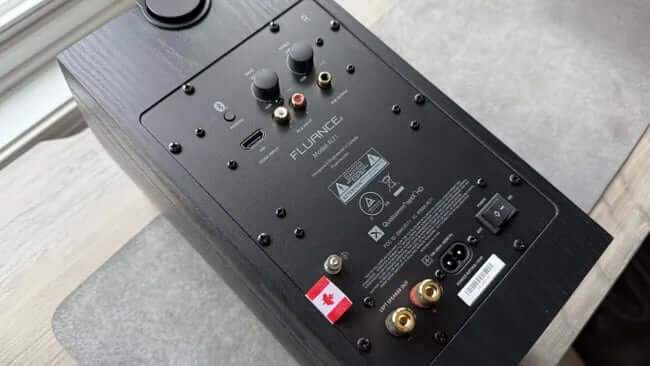
- Bluetooth 5.3 with aptX HD and AAC for near lossless wireless streaming
- Included HDMI port with ARC support for easy TV connection
- No spatial audio or Wi-Fi streaming capabilities
Fluance Ri71 slots perfectly between traditional speakers and modern user expectations. While you won’t find fancy features like spatial audio or Wi-Fi streaming, the Bluetooth 5.3 implementation with aptX HD and AAC codecs brings wireless audio quality surprisingly close to wired sound.
The HDMI port with ARC is a thoughtful addition, making the Ri71 an excellent companion for your TV. Built-in TV speakers rarely cut it, and while these speakers might not be as multifunctional as pricier soundbars, they deliver a richer stereo soundstage and a noticeably better audio experience—with the convenience of controlling volume via your TV remote.
Performance rating: 4.5/5
Sound Quality That Surprises
- Respectable bass range despite lack of subwoofer
- Impressively detailed highs with lively clarity
- Immersive soundstage with polite presentation
The frequency range from 46 Hz to 30 kHz suggests a speaker that’s no slouch. Though 46 Hz isn’t earth-shaking bass territory, it’s on par with many active bookshelf speakers that tend to cut off earlier. The downward-facing bass ports help extend the lower-end response for a balanced sound—even if you won’t get that deep rumble for EDM or cinematic explosions.
The upper frequency extension to 30 kHz is above the typical 20 kHz limit for most speakers, thanks to the AMT (Air Motion Transformer) tweeters. While many of us can’t hear that high, the extended range contributes to a quick and clean high-frequency response that reveals subtle musical nuances and extra sparkle.
Listening to the Ri71 is like someone pulled back the curtain on your favorite band—you suddenly hear string details and delicate expressions you might have missed before. The mids are a touch restrained, making rock music sound slightly more aggressive, but the EQ controls let you tweak highs and lows to your taste.
The soundstage is broad and precise—placing each instrument distinctly in the mix brings the music alive in a way that’s rare in this price bracket.
Sound quality rating: 4.5/5
Design: Understated Yet Thoughtful
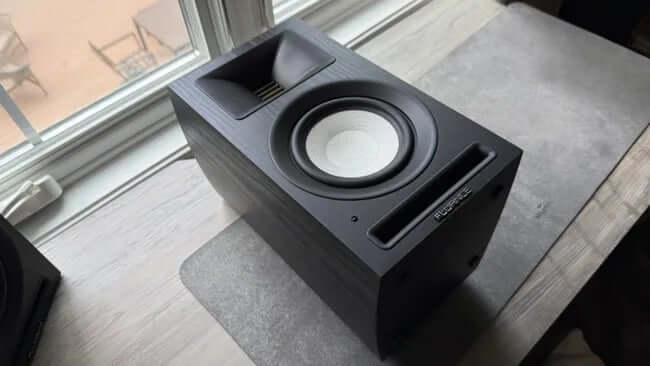
- Unique AMT tweeter is a standout design feature
- Unusual placement of controls on the back
- Limited digital inputs, HDMI only
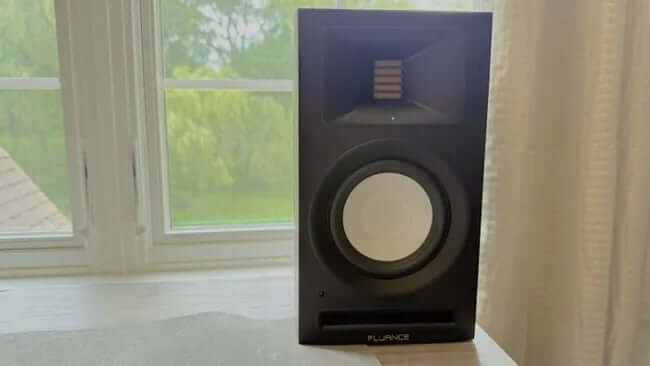
The Ri71 looks like your classic active bookshelf speaker with a modern twist. Standing about 12 inches tall, they taper slightly toward the back. Available in white, walnut, and black finishes, the wood grain texture shows through even on the white and black, which is a nice touch for MDF cabinets.
Inside each cabinet sits a 5.25-inch woven fiberglass woofer paired with that distinctive AMT tweeter. These tweeters provide quicker response and richer detail than typical dome tweeters but have a slightly more focused dispersion pattern.
Controls live on the back of the right speaker—including the volume dial (oddly placed on top rear), tone controls for highs and lows, power switch, and Bluetooth pairing button. The volume knob doubles as an input selector via push action, with an LED on the front showing the active source.
While I missed seeing USB or USB-C options for digital sources, the HDMI with ARC helps bridge that gap for TV users. RCA inputs and a subwoofer output round out the connectivity.
The remote control makes up for the unusual control placement by offering easy access to volume, input switching, tone adjustments, mute, and LED control.
Design rating: 4/5
Setup and Usability: Simple and Straightforward
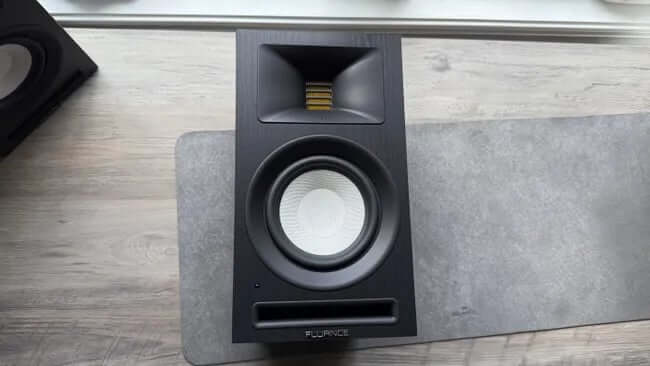
- Truly plug-and-play powered speakers
- Bluetooth auto-pairing simplifies wireless use
- Proper placement is key for best sound experience
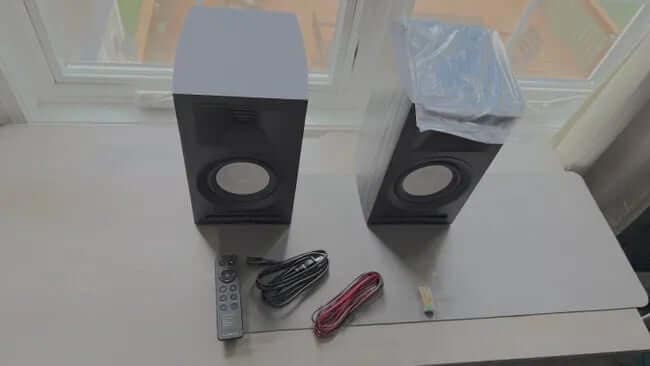
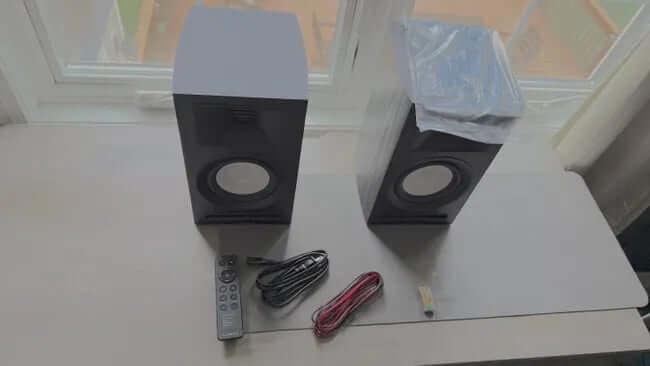
Setting up the Ri71 is as easy as it gets. The active speaker with all the ports connects to the passive one with the supplied color-coded speaker cable (red and white). The connections are secure and don’t rely on banana plugs, but it’s a quick and worry-free setup.
Once connected and powered up, just choose your source or pair your Bluetooth device. The speakers remember previous pairings, so future connections are instant.
Speaker placement matters just like with any bookshelf speaker—equal distance apart and angled toward you is the basic rule. The reward? A centered soundstage and precise imaging that truly brings music to life.
Ease of use rating: 5/5
Value for Money: A Solid Choice
- Many competitors offer USB connectivity
- HDMI is a rare plus in bookshelf speakers
- Offers quality sound without breaking the bank
The Fluance Ri71 slots neatly in the mid-range category, competing with names like Q Acoustics M20 HD, Audioengine, and Kanto Ren. The Q Acoustics M20 HD, often praised for its pure, uncompressed sound, offers USB but lacks HDMI. The Kanto Ren ups the ante with USB-C, HDMI, and Bluetooth 5.3, providing a colorful design and great clarity, though its bass might feel less punchy.
What these comparisons show is that Fluance Ri71 is a fantastic choice if you want strong stereo sound in a modest budget. Some pricier models earn their cost through extra features or ports, but the Ri71 strikes a smart balance—they’re not cheap, but you get excellent performance for the money.
Value rating: 4/5
Should You Buy Fluance Ri71?
| Aspect | Notes | Rating |
| Features | HDMI ARC and aptX HD Bluetooth cover most bases, except Wi-Fi streaming | 4.5/5 |
| Sound Quality | Neutral and detailed with surprisingly deep bass for the price | 4.5/5 |
| Design | Quirky control placement, no USB, but standout AMT tweeter | 4/5 |
| Setup & Usability | Very intuitive, pleasant to use with the remote | 5/5 |
| Value | Great sound quality for the price, though rivals offer some extras | 4/5 |
Also Worth Considering
Q Acoustics M20 HD
A slightly more expensive option with USB input and detailed, uncompressed sound. Left and right speakers can be swapped for flexible setups.
Kanto Ren
Features USB-C, HDMI, and Bluetooth 5.3. Offers vibrant sound and good connectivity, though fingerprints show on the finish and bass is less forceful.
My Testing Experience With Fluance Ri71
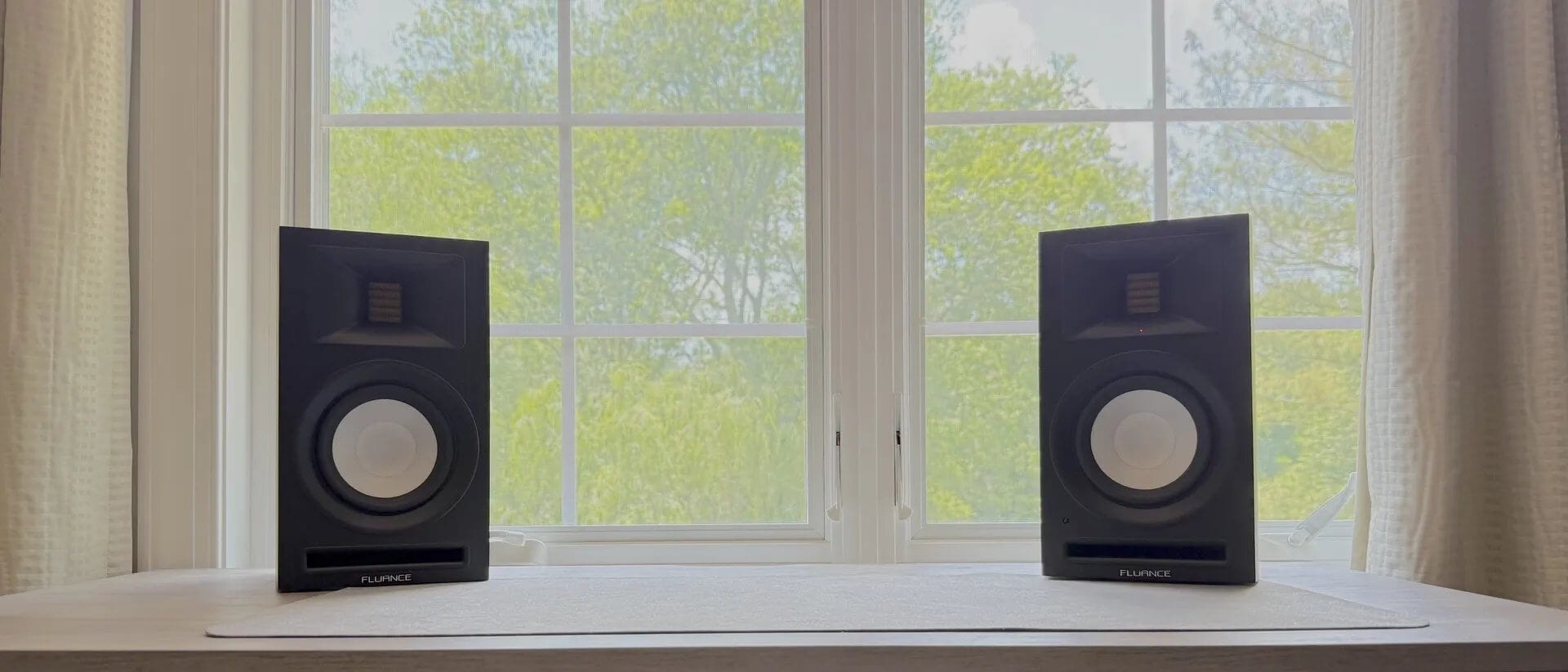
- Used regularly for several weeks
- Listened to hip-hop, EDM, pop, rock, and folk music
- Tested with TV shows and gaming
- Explored all controls and ports
My time with Fluance Ri71 was hands-on and thorough. I spun everything from bass-heavy hip-hop to delicate folk tunes, ran movies, and even some gaming to stress-test their performance. Having tested many audio devices over the years, I can confidently say these speakers deliver a rich, detailed experience that competes well at their price point.
Fluance Ri71 sounds fantastic—perhaps even better than their price tag suggests.
Looking for a way to bring this stellar sound into your space? Consider adorning your room with a vibrant album cover poster to match your new speakers! Shop your favorite music art at Architeg Prints for a perfect vibe boost.
FAQ
- What is the main connectivity offered by Fluance Ri71?
The speakers primarily use Bluetooth 5.3 with aptX HD and AAC codecs, plus an HDMI port with ARC support, RCA inputs, and a subwoofer output. - Can the Ri71 handle deep bass without a subwoofer?
They provide respectable bass down to 46 Hz with bass ports, but won’t replicate the deep rumble of a dedicated subwoofer. - Is the volume control easy to use?
The volume knob is on the back, which is unusual, but the included remote makes volume and input switching very convenient. - Do the speakers support spatial or surround sound?
No, they don’t offer Dolby Atmos, DTS:X, or Wi-Fi streaming with spatial audio. - How difficult is the setup process?
Very simple plug-and-play. Connect the passive speaker to the active one with the supplied cables, plug in power, and pair your device via Bluetooth or other input.
 | DISCOUNTGET 30% OFF*Use code on your next order:
|
* This post may contain affiliate links, meaning we earn a commission if you make a purchase through these links, at no additional cost to you.