Harry Styles’ Kiss All The Time Review: Disco, Privacy, and a Weird Glow


 See more Architeg Prints stories on Google.
Harry Styles’ Kiss All The Time Review: Disco, Privacy, and a Weird Glow
Harry Styles turns Kiss All The Time into a bright, guarded pop diary—disco when it counts, evasive when it doesn’t.
A record that smiles while it locks the door
This album doesn’t sound like a celebrity trying to “reinvent” himself. It sounds like someone who got tired of being readable—and decided to dance in a way that keeps you guessing.
The privacy pivot is the real plot
Since Harry Styles’ Harry’s House (2022), the biggest change isn’t a haircut or a new producer flex—it’s the way Styles handles attention. Back then, the music landed in the middle of nonstop gossip and armchair psychoanalysis about his personal life. Listening now, you can feel him trying to wrestle the steering wheel back.
What’s funny is that he doesn’t do it by going mute. He does it by getting slippery. The public noise used to cling to his songs like static; now he writes in a way that refuses to give you clean “receipt” moments. Where you once could pin tracks to rumors like little insects on a board, Kiss All The Time. Disco, Occasionally makes that harder on purpose.
And yeah, the vibe shift around him is obvious: it used to feel like he couldn’t breathe without a “blind item” attaching meaning to it. Now the most common updates are about him running marathons. That’s not just a lifestyle change—it’s a control change. The album carries that same “you don’t get to have me” energy, but it disguises it as openness.
That contradiction—guarded but glowing—is basically the album’s personality.
He writes personal songs without giving you the details
Here’s the trick Styles pulls: the songs still feel lived-in, but they don’t feel like confessionals. He’s singing from experience, but he’s sanding off the names, timestamps, and obvious plot points.
On “Pop,” he drops a line—
“I wanted to behave / But I know I’ll do it again”—and it’s the kind of admission that invites speculation. But the song refuses to resolve into a neat headline. I kept waiting for him to “clarify” with the next verse, and he just… doesn’t. He lets the impulse sit there, unsolved.
That’s the big upgrade from his earlier era: the emotional truth is still the engine, but the facts aren’t the fuel anymore. A lot of pop stars try to “protect their privacy” by becoming bland. Styles does it by becoming less literal. Arguably, that’s more honest than oversharing, because it’s how people actually remember their lives: not as data, but as pressure.
I’m not 100% sure everyone will like that, though. If you come to a Harry Styles album expecting a clearly framed story you can retell to your friends, this one shrugs and changes the subject mid-sentence.
The light isn’t naïve—it’s a decision
The album’s mood is bright in a way that feels chosen, not accidental. Even the sad moments don’t wallow; they kind of… inhale. There’s a liberated feeling to it, like the songs are letting sunlight into rooms that used to stay closed.
Styles talked about spending 2025 “saying yes to everything,” and you can hear that mindset in the record’s emotional range:
- “Taste Back” feels like cautious reconnection—dreamy, soft-focused, and a little dangerous in that “don’t text them” way. (It’s also one of three tracks with backing vocals from Ellie Rowsell of Wolf Alice, which adds a cool second presence hovering behind him.)
- “The Waiting Game” twists the knife differently: the specific heartbreak isn’t the point; the point is that the person you thought was your person… wasn’t.
- “Dance No More” is the album’s real disco swing—less “theme night,” more “I’m going to sweat out my problems because talking isn’t working.”
The album quietly argues that “feeling everything” is the only adult option. Not just the shiny stuff. Not just the curated happiness. And I’ll say it plainly: that’s a stronger stance than the usual pop-star positivity slogan, because it actually includes the hangover.
Aperture kicks the door open (and the video helps)
The lead single “Aperture” sets the musical agenda with an electronic build that clearly nods toward LCD Soundsystem-style tension and release. It’s not cosplay; it’s more like he’s borrowing a nervous system—those incremental climbs, that sense of momentum that doesn’t need a giant chorus every thirty seconds.
At first, I honestly thought “Aperture” might be him doing the classic “look, I’m artsy now” routine. On second listen, it landed differently: less posturing, more permission. Like he needed a track that physically forces the album into motion.
Arguably, “Aperture” is him telling the listener, “You’re not getting three minutes of diary entries. You’re getting a night out where I control the lighting.”
The adventurous stuff isn’t random—he’s stress-testing his image
Musically, this is the most exploratory album he’s made so far, and the key word is trying. He’s not just polishing a known persona. He’s tossing his voice into different rooms to hear what it does.
“Are You Listening Yet?” is the clearest example of him leaning into a stranger posture. The track pairs marching drums—played by Tom Skinner (Sons Of Kemet, The Smile)—with trumpets, and Styles delivers verses in a Sprechgesang-like talk-sung style. It nods toward post-punk attitude and even brushes the kind of vibe you might associate with Wet Leg, who used to support him.
That’s a weird sentence to write about Harry Styles, which is exactly why it matters. He’s not dabbling to impress critics; he’s dabbling to see what parts of himself survive outside the usual pop framing. And yeah, a reasonable listener could say he’s tourist-ing in other genres. I’m not totally convinced he isn’t—yet the song still works because he commits to the tension instead of smoothing it out.
Then there’s “Ready, Steady, Go!” with an elastic bassline that feels like it could’ve wandered out of an early Metronomy track—springy, a little smug, built to move more than to emote.
And “Coming Up Roses” flips the table: a waltzing piece that was premiered last week at one of Fred Again..’s London gigs, and it drops the electronics in favor of sweeping strings. It’s the kind of choice that can sound corny if you don’t earn it. Here, it feels like he’s letting the album breathe on purpose—like he knows constant rhythm can become its own kind of cage.
Arguably, the real experimentation isn’t the genre-hopping. It’s that he’s letting some songs end without squeezing them into neat pop closure.
Where it stumbles: fun, forgettable, and one awkward acoustic detour
Most of this new approach works. This is the rare mainstream pop album that invites you to spend time with it—because it has layers that don’t reveal themselves on a single distracted listen. It’s an album that drifts around you a little; it doesn’t just stand in front of you and wave.
But the missteps are real, and pretending otherwise would be dishonest.
“American Girls” is fun, sure—but it’s also the easiest track to lose in the shuffle. Next to the album’s more deliberate, textured moments, it feels like a placeholder for “we should probably have one straightforward crowd-pleaser.” Maybe that’s the point. Maybe he wanted one track that doesn’t ask anything of you. Still, it’s forgettable in a way the rest of the record isn’t.
And then there’s “Paint By Numbers,” the penultimate track: an acoustic moment that lands a little weirdly when it’s sandwiched between the disco punch of “Dance No More” and the gorgeous synth lift of “Carla’s Song.” I get the intended palate cleanser, but the sequencing bumps. It’s like you’re sprinting, then someone hands you a chair, then yells “run!” again.
That said, the album’s worldview seems to allow those blips. It’s basically saying: even the awkward parts count. Even the messy transitions are part of being awake.
Details
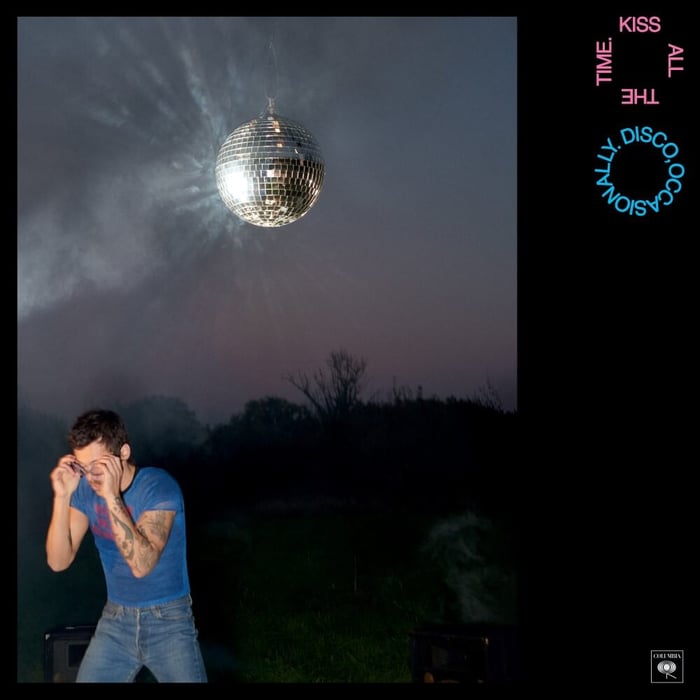
- Record label: Erskine Records / Columbia Records
- Release date: March 6, 2026
If Kiss All The Time has a mission, it’s not to narrate Harry Styles’ life—it’s to stop you from thinking you’re entitled to it. The disco isn’t a gimmick, the experiments aren’t a flex, and the brightness isn’t denial. It’s him choosing a kind of openness that doesn’t hand you the key.
Our verdict: People who like pop when it’s restless, slightly evasive, and built for repeat listens will actually love this. People who want tidy stories, big obvious “meaning,” or a playlist of instantly quotable confessionals will get impatient—and probably call it “vague” like that’s a moral failure.
FAQ
- Is Kiss All The Time a true disco album?
Not really. “Dance No More” is the clear disco moment, but the album uses disco like a flashlight—strategically, not constantly. - Does the album feel more private than his earlier releases?
Yes. The emotions are there, but the songs avoid giving you neat, gossipy specifics to latch onto. - What’s the most experimental track here?
“Are You Listening Yet?”—the marching drums, trumpets, and talk-sung delivery push him furthest away from standard pop comfort. - Are there any weak points on the tracklist?
“American Girls” feels fun-but-disposable next to the more textured songs, and “Paint By Numbers” is a slightly jarring acoustic detour in the sequence. - Does the album reward multiple listens?
Definitely. A lot of the impact comes from pacing, layering, and choices that don’t scream on first pass.
If you want something physical to match this album’s “bright but guarded” vibe, you can always shop a favorite album-cover poster at https://www.architeg-prints.com — it’s a nice way to let the art hang around after the last track fades.
 | DISCOUNTGET 30% OFF*Use code on your next order:
|
* This post may contain affiliate links, meaning we earn a commission if you make a purchase through these links, at no additional cost to you.