Hegel Audio Systems D50 DAC Review: A $5K Audio Gem for True Music Lovers



Hegel Audio Systems D50 DAC Review: A $5K Audio Gem for True Music Lovers
Experience the Hegel D50 DAC's smooth, expressive sound that brings digital music to life with warmth and clarity.
A Modern Classic in Digital-to-Analog Conversion
Remember when Vice President Thomas Marshall joked, “What this country needs is a really good five-cent cigar”? Well, if he were tuning into today's audio world, he might tweak that to, “What this world needs is a really good $5k DAC.”
In a landscape flooded with digital-to-analog converters (DACs) boasting astronomical price tags and dizzying feature sets, the Hegel D50 DAC emerges as a breath of fresh air. It offers a mid-priced option that focuses on delivering genuinely musical performance without the bells and whistles that often distract or bloat cost. At $4,900, it’s a serious investment, but a bargain compared to the five- and six-figure DACs dominating the high-end market.
Norwegian brand Hegel Music Systems has long been celebrated for amplifiers that sound fabulous and offer great value, many including built-in DACs. Now, they've streamlined their approach into a pure, no-frills DAC with the D50—nicknamed “The Raven”—that zeroes in on what matters most: authentic, captivating sound.
Pure Simplicity Meets Precision Engineering
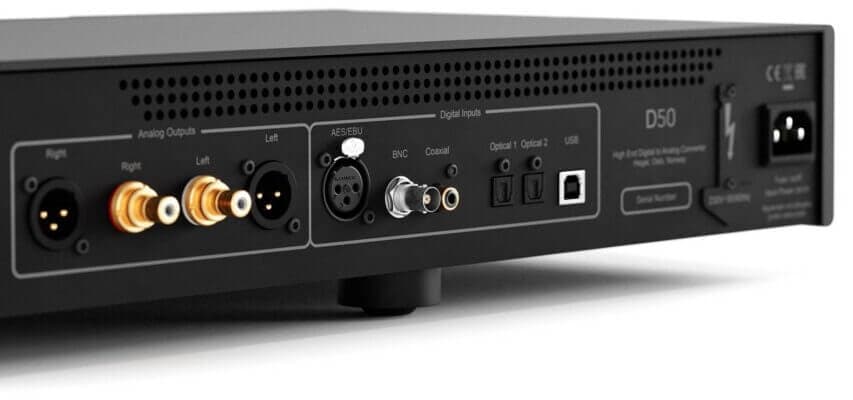
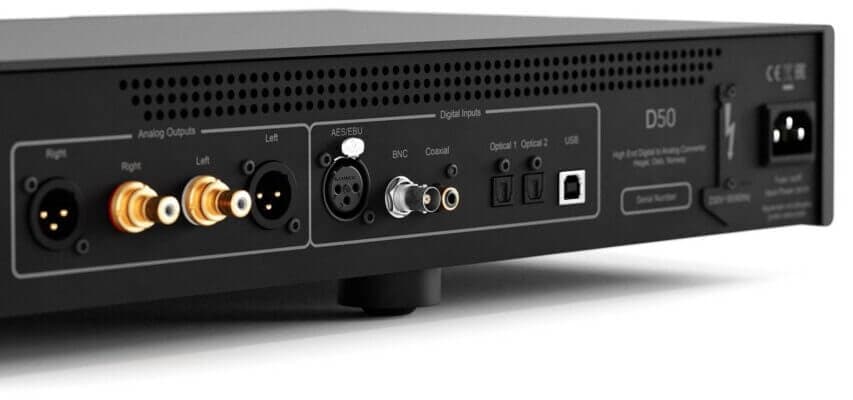
The D50 lives up to its “music first” mantra by stripping away everything unnecessary—no network streaming, no preamp features, no volume control. Just a laser focus on sonic excellence. Its connectivity is straightforward: a solid lineup of digital inputs including AES/EBU, SPDIF (BNC, RCA), TosLink (x2), and USB, alongside balanced and unbalanced analog outputs and a standard IEC power inlet.
Hegel packs some serious tech muscle under the hood to back up this minimalist philosophy. The company is proud of its high-grade AC input filtering, designed to snuff out power-line noise. Intriguingly, when plugged into a grounded outlet, the D50’s filtering is said to even enhance the sound quality of other equipment sharing the same power line.
Inside, you’ll find dual toroidal transformers—one dedicated to housekeeping tasks, the other feeding digital and analog audio circuits. These transformers are carefully shielded by a hefty steel frame and physically distanced from the sensitive audio boards to reduce interference.
One of the D50’s standout features is its 20 independently regulated power-supply rails—a remarkable number for its price category. This meticulous power management minimizes phase noise in the clock that drives digital-to-analog conversion, a subtle but critical influence on sound fidelity.
The master clock sits right next to the DAC chip, which is isolated on a separate, elevated circuit board. The chip’s balanced differential outputs are buffered and amplified through a true balanced signal path all the way to the XLR outputs. This attention to detail reflects the pedigree of Bent Holter, Hegel’s founder and former semiconductor physicist.
A Demo That Sealed the Deal
At the recent AXPONA show, a simple yet profound demonstration convinced me the D50 deserved a full review. Hegel’s integrated amps, which I adore, can bypass their internal DACs to allow external ones. Hearing the same track first through the amp’s built-in DAC and then through the D50 was revelatory.
The difference? Dramatic improvements in timbral richness, clarity, soundstage depth, and overall realism. The D50 injected a newfound liquidity and life into the music. This DAC upgrade option is available for a range of Hegel integrated amps including the H300, H360, H390, H590, H400, and H600 models—which means plenty of listeners can unlock better sound without replacing their entire system.
Listening: A Warm, Inviting Soundscape
Setting up the D50 was a breeze. Connecting via USB, it was instantly recognized by Roon as a Roon Endpoint, and I was off exploring its sound.
The first thing that struck me about the D50 was its gentle, relaxed, and expressive presentation. Unlike some DACs that scream “I'm digital!” with sharp, edgy highs or hyped transient attack, the D50 offers a smooth, musical ease that pulls listeners in rather than pushing at them.
There’s no metallic sheen dulling the textures, no harsh cymbals, no threadbare or bleached tonal colors. Instead, every instrument felt warm and fully formed—liquid in texture and natural in timbre.
Take Neil Young’s “Harvest Moon” as an example. The D50 delivered the rhythmic flow with hypnotic grace. Acoustic guitars came through warm and full-bodied, Young’s familiar vocals were silky and liquid, and the harmonies floated delicately in the background. Melody Gardot’s “If You Love Me” from Sunset in the Blue was equally lush and intimate, with strings that breathed, vocals free from graininess, and trumpet tones that glowed without any digital harshness.
Looking back, many DACs from the 1990s aimed to sound “musical” by softening harsh digital edges but sacrificed detail, transient speed, and overall excitement. They were safe but boring. The D50’s initial smoothness might feel reminiscent of that era, but it quickly reveals itself as something far more engaging and fulfilling.
Expressive Musicality Without Compromise
What truly sets the Hegel D50 apart is its capacity to seduce listeners out of an analytical mindset and into pure enjoyment. It doesn’t just sound pleasant; it reveals the subtle interplay between musicians with clarity and warmth.
For instance, the album Like Minds—featuring Chick Corea, Gary Burton, Pat Metheny, Dave Holland, and Roy Haynes—came alive with the D50. The DAC beautifully conveyed the group’s cohesion and spontaneous creativity, making the music vibrant and dynamic.
And it’s not just about gentle music. The D50 handles high-energy genres with aplomb, too. Eddie Palmieri’s Latin jazz album Listen Here boasted rhythmic drive and punch without any sense of fatigue or ear fatigue, even at higher volumes. Trumpets on various albums like Freddie Hubbard’s Cables’ Vision and Roy Hargrove’s Earfood sounded dense and golden-hued, free from typical upper-register harshness.
Vocals benefit as well, with sibilance/tinny “s” sounds de-emphasized, as heard on Paul Simon’s Graceland. While the DAC doesn’t mask recording flaws, it doesn’t spotlight them either, striking a respectful balance.
The bass response is outstanding—full of pitch articulation, tonal density, and satisfying weight. Ray Brown’s bass on Soular Energy serves as a great example: the D50 adds warmth and body without any bloat, enriching acoustic bass with texture and presence.
Finally, the D50’s spatial performance is remarkable. Whether it's small jazz combos or sprawling orchestral recordings like Keith Johnson's The Arnold Overtures with the London Philharmonic, the DAC delivers depth, air, and separation that suggest a much more expensive device.
Conclusion: A Rare Gem in the DAC World
The Hegel D50 is a triumph of focused design and sonic purity. By eliminating unnecessary features and putting the budget squarely toward sound quality, Hegel has crafted a DAC that offers a smooth, liquid, and relaxed sound usually found only in pricier gear.
Rather than chasing treble fireworks or hyped detail, the D50 favors true musical expression—a quality that draws listeners deep into the performance. While it may not boast the absolute most extended treble presence, plenty will happily trade a touch of air for its gorgeous tone color, musical flow, and sonic ease.
For anyone seeking a top-tier DAC that truly delivers on musicality without breaking the bank, the Hegel D50 is a flat-out bargain and exactly what the digital audio world needs.
Specs & Pricing
- Inputs: AES/EBU, SPDIF (BNC, RCA), TosLink (x2), USB
- Outputs: RCA and XLR
- Dimensions: 17″ x 3.9″ x 12″
- Weight: 14.55 lbs
- Price: $4,900
Associated Equipment
- Analog source: Basis Audio A.J. Conti Transcendence turntable with SuperArm 12.5 tonearm; Air Tight Opus cartridge; Esoteric E1 phonostage; DS Audio ST-50 stylus cleaner; DS Audio ES-001 Eccentricity Detection Stabilizer; Levin record brush; Degritter ultrasonic LP cleaner
- Digital source: Wadax Reference Server with Reference PSU
- Amplification: CH Precision L10 Dual Monaural linestage; CH Precision M10 Dual Monaural power amplifiers
- AC Power: Shunyata Everest 8000 and Shunyata Typhon 2 conditioners; Shunyata Omega X and Sigma NR V2 power cords; Shunyata AC outlets; five dedicated 20A lines wired identically with 10AWG
- Support: Critical Mass Systems Olympus equipment racks and amplifier stands; CenterStage2 isolation; Ayra Audio RevOpods isolation; Wilson Audio Pedestal
- Cables: AudioQuest Dragon interconnects and Dragon Zero loudspeaker cables
- Grounding: Shunyata Altaira grounding system
- Accessories: The Chord Company GroundArray noise reduction
- Acoustics: Acoustic Geometry Pro Room Pack 12; ASC 16″ Round Tube Traps
- Room: Purpose-built; Acoustic Sciences Corporation Iso-Wall System
"The D50 is the antithesis of digital sound that calls attention to itself; it seduces you into the music with its relaxed warmth and expressive liquidity." – Reviewer
FAQ
- What sets the Hegel D50 apart from other DACs at this price?
It focuses solely on sound quality, removing unnecessary features to allocate budget toward superior components like advanced power filtering and clock stability. - Is the D50 suitable for high-energy music genres?
Absolutely. It delivers rhythmic drive and power without harshness, making it great for jazz, rock, and Latin music. - Can the D50 be used to upgrade an existing Hegel integrated amplifier?
Yes! The D50 can replace the internal DAC section in many Hegel integrated amps, boosting sound quality significantly. - How does the D50 handle vocals and sibilance?
It smooths over harsh sibilance and prevents thinness, providing natural, warm vocal textures without glossing over recording flaws. - Does the D50 support popular audio formats?
Yes, it is Roon Tested, MQA compatible, and supports DSD decoding up to 256.
Ready to celebrate your favorite album with a stunning visual? Shop your favorite album cover poster at our store and bring your music space to life: Architeg Prints.
 | DISCOUNTGET 30% OFF*Use code on your next order:
|
* This post may contain affiliate links, meaning we earn a commission if you make a purchase through these links, at no additional cost to you.