Insta360 Mic Pro Review: Best-in-Class Noise Cancellation Wireless Mic


 See more Architeg Prints stories on Google.
Insta360 Mic Pro Review: Best-in-Class Noise Cancellation Wireless Mic
Experience top-tier noise cancellation and versatile audio capture with Insta360 Mic Pro, the wireless mic that blends innovative tech and user-friendly features.
Meet the Insta360 Mic Pro: Innovation Wrapped in a Tiny Package
Ever come across a wireless mic that feels like it's from the future? That’s Insta360 Mic Pro for you. This flagship wireless microphone system from Insta360 dives into the crowded pool of compact wireless mics but carries some serious trump cards that set it apart from the pack—especially when you pit it against big names like DJI Mic 3.
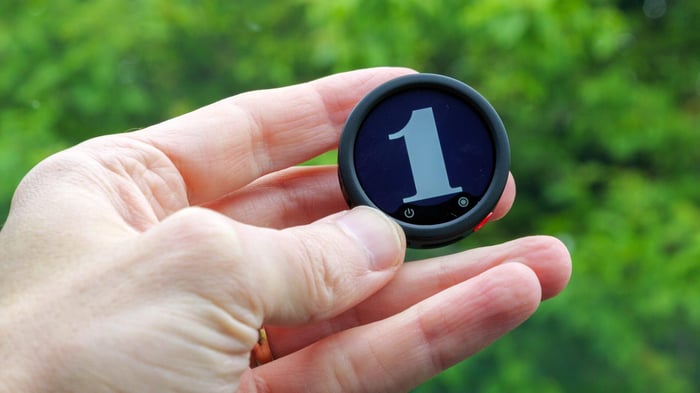
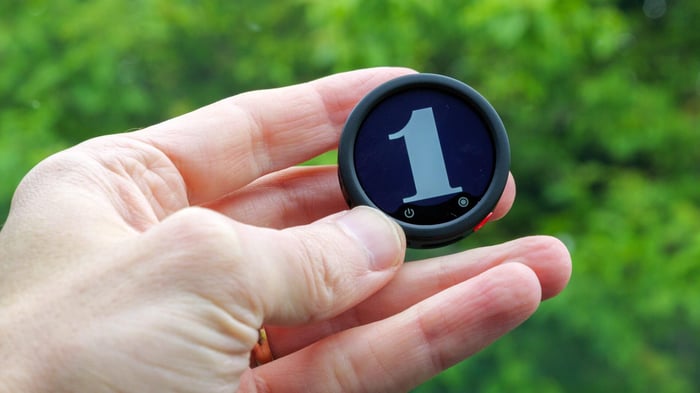
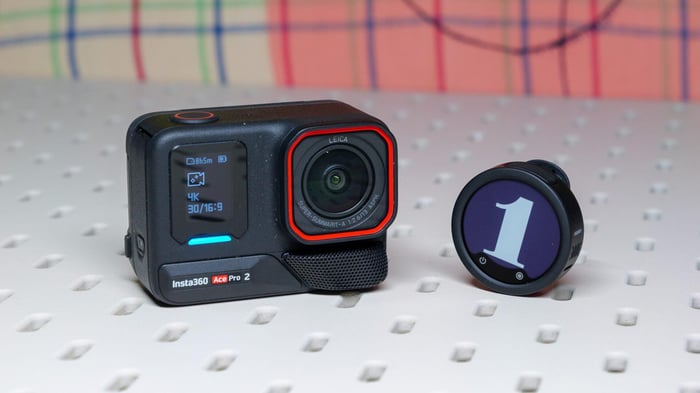
The first eye-catcher? A fully customizable e-ink display on each transmitter. Unlike typical OLED screens that gulp battery power, this 1.22-inch round, 6-color e-ink display only sips power when updating its image, staying lit without draining your battery. What’s cooler is you can upload any image via the Insta360 app, and it will stay put, even when the transmitter is powered down. It’s a nifty blend of style and smarts.
On the mic front, the Mic Pro features a trio of microphones working hand-in-hand with a digital signal processor (DSP) to emulate different pickup patterns—omnidirectional, supercardioid, cardioid, and figure-eight. While these aren’t separate physical capsules for each mode but digitally crafted from omnidirectional inputs, the differences are audible and useful. However, in everyday use, I found myself sticking mostly to the omnidirectional mode. The polar patterns really shine when the mic is mounted on your camera’s cold shoe and switched to cardioid or supercardioid, effectively turning it into a directional shotgun mic—something DJI’s Mic series can’t claim.
Power-Packed Specs and Standout Features
Beyond the cool display and smart mic array, the Mic Pro flexes some serious technical muscle:
- 32-bit floating-point recording
- Massive 32GB onboard storage
- Neural processor-driven noise suppression
- Timecode sync
- Wireless range up to 400 meters
- Flexible multi-channel setups supporting 4-to-1 and 2-to-4 configurations (meaning two transmitters can connect to four receivers simultaneously, great for multi-camera shoots)
But what really got me hooked was the noise cancellation. During a test run in my office with a whirring fan, the "Strong Noise Cancellation" mode wiped out nearly all background noise effortlessly, leaving the DJI Mic 3 trailing behind in the dust. Sure, the design isn’t flawless—some quirks pop up here and there—but the overall sound quality is impressive.
Pricing and Launch Details
- Released: May 19, 2026
- Starting price: $99.99 for a single transmitter
- Available in three configurations
Insta360 Mic Pro is available in three flavors. The entry-level pack is perfect for those who already have an Insta360 camera or want to record directly to the transmitter's memory via Bluetooth. It costs about $99.99.
The mid-tier kit with 1 transmitter and 1 receiver runs around $199.99, ideal for solo creators on the go. For duo setups, the full kit with 2 transmitters, 1 receiver, and a charging case costs $329.99.
In comparison, DJI Mic 3’s two-transmitter and one-receiver kit is slightly cheaper but lacks some of the Mic Pro’s unique features.
Detailed Specs at a Glance
- Dimensions: Transmitter (TX): 38 x 38 x 12.2 mm / Receiver (RX): 55.8 x 27.7 x 21 mm
- Weight: TX: 19.7 g (clip/magnet excluded) / RX: 29.8 g
- Range: Up to 400 meters
- Connections: RX supports USB-C, Lightning, 3.5mm headphone jack
- Bluetooth: Yes
- Battery Life: 10 hours (TX), 11 hours (RX), up to 30 hours with fully charged case
- Noise Cancellation: Dual-level noise suppression
Design: Tiny Tech With Thoughtful Details
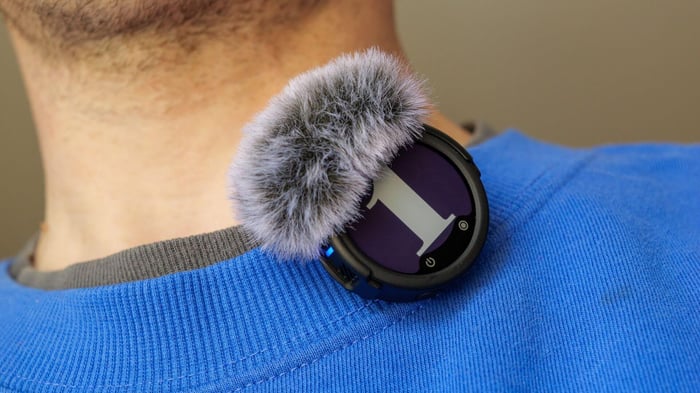
The Mic Pro’s transmitter is a slim 38mm diameter disc, just 12.2mm thick, with a bright, customizable e-ink display on one side weighing just under 20 grams. It’s featherlight enough to clip easily onto a lapel without snagging.
The e-ink display is a real crowd-pleaser. At 1.22 inches diagonal with 197 PPI resolution, logos and text pop crisply. Supporting six colors, it’s perfect for customizing your gear with brand logos or quick visual IDs when juggling multiple mics. And since e-ink only uses power when refreshing, it’s a battery-saving marvel.
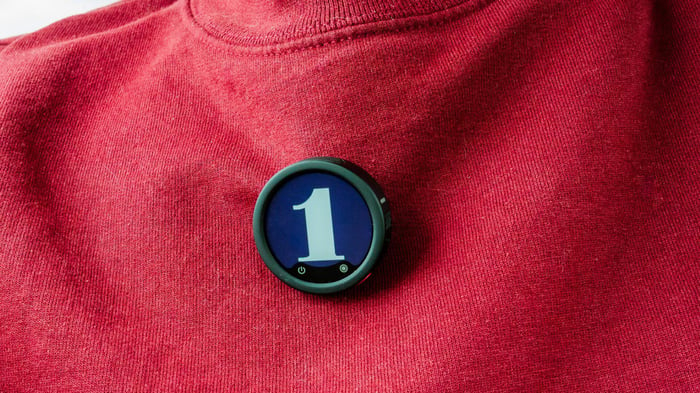
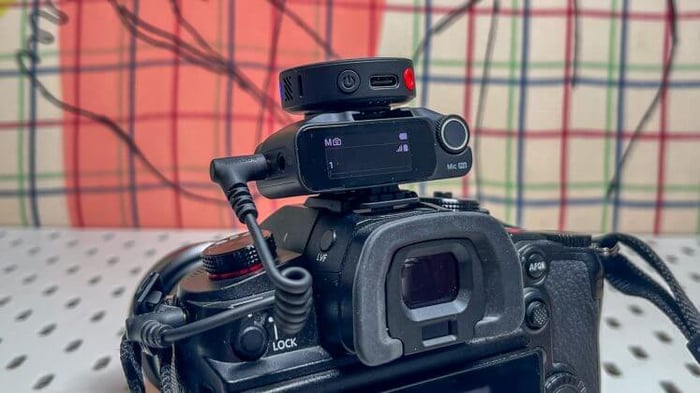
Mounting is a tried-and-true combo: a clip for collars, hats, or lapels, and a magnetic button mount for thin fabrics. The clip also doubles as a cold shoe adapter, so you can slap the transmitter right onto a mirrorless camera for directional recording using cardioid or supercardioid modes. This extra flexibility is perfect for content creators on the move and is a feature DJI’s mic series doesn’t currently offer.
The receiver is a compact rectangular block with a cold shoe mount, USB-C and 3.5mm outputs, and a modest OLED screen to monitor levels and settings. It’s not the tiniest receiver out there and might be a bit bulky on smartphones, but it does its job faithfully.
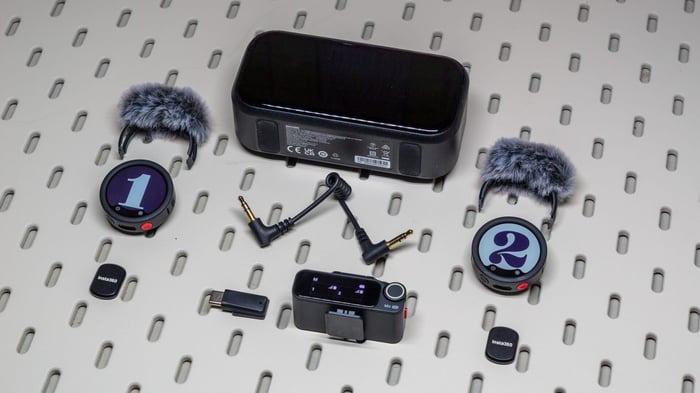
The charging case is stylish with a transparent front showing its contents: two transmitters, one receiver, clips, magnets, and adapters for smartphones. However, the transparent panel is a fingerprint magnet and could scratch with frequent use. The flip-up lid isn’t as smooth or intuitive as DJI’s cases, so it takes some getting used to.
Two small annoyances: there’s no dedicated compartment for the 3.5mm audio cable inside the case, and the windshields (deadcats) don’t fit inside either. This means you have to carry those separately, which isn’t ideal for light packing. DJI’s windshields fit neatly in their cases, which is a smart convenience.
The box includes a soft zippered pouch just right for the charging case, cables, and windshields—a nice touch. But if you still rock older iPhones, heads up: no Lightning adapter is included, likely since Apple is moving to USB-C, and the adapter is a separate purchase.
In-Depth Features and Audio Performance
- 10 hours battery life on transmitters, 11 on receiver
- Wireless range up to 400 meters
- Excellent dual-level noise cancellation
The sound quality is stellar, capturing crystal-clear audio via 48kHz/24-bit wireless streaming, a standard for this class. The onboard 32-bit floating recording is a sweet bonus but applies only to internal recordings, not live wireless audio. This onboard recording can be a game-changer for pros who want to capture clean, high-dynamic-range sound without clipping, offering up to 44.8 hours of mono or 22.2 hours of stereo 32-bit recording. The internal stereo by combining the three microphones is rare in this price range and perfect for recording ambient sounds or ASMR.
The four selectable polar patterns are crafted digitally by combining signals from the three mic capsules—not separate physical capsules for each. While differences are noticeable, omnidirectional usually does the job. The polar patterns become particularly useful when the mic is cold-shoe mounted and switched to cardioid or supercardioid, effectively acting as a reliable shotgun mic. This versatility makes it ideal for solo creators aiming to carry less kit.
Noise cancellation is where this mic truly outperforms. With two modes—Weak and Strong—powered by an onboard neural processor, the Strong mode eliminated all background fan noise in my testing room, leaving recordings pristine. Side-by-side with DJI Mic 3, the Mic Pro’s noise suppression was clearly superior. The Weak mode also performed solidly, which is crucial when Strong mode isn’t practical, like recording without the receiver.
Mic Pro works directly with many Insta360 cameras (X5, X4 Air, Ace Pro 2, Go Ultra) via Bluetooth, streaming 48kHz audio without a receiver. However, during testing with the Ace Pro 2, I couldn’t activate noise cancellation or tweak settings (except gain) from the camera menu yet. Hopefully, firmware updates will fix this. Meanwhile, DJI’s OsmoAudio ecosystem feels more polished and integrated.
Battery life is impressive for a wireless mic: 10 hours on transmitters, 11 on receivers, and a quick 5-minute charge nets an extra 1.5 hours of use.
Should You Buy the Insta360 Mic Pro?
If you’re a solo creator craving unbeatable noise cancellation and a mic that can adapt from lavalier to shotgun with a simple switch, the Mic Pro is for you. It’s less compelling if you’re already deep into DJI’s ecosystem or want an ultra-compact, wallet-friendly solution without the flashy e-ink display.
My verdict: Yes, with some caveats.
It’s an ambitious premium product packed with unique features, but weaker magnets on clips, charging case quirks, and occasional wired connection bugs mean you’ll need patience alongside your passion for superb sound.
Note on Alternatives
DJI Mic 3
Still the gold standard for many creators, the DJI Mic 3 offers comparable sound quality, onboard 32-bit floating recording, and a more mature wireless ecosystem. Priced similarly to the Mic Pro’s 2 TX + 1 RX kit, it’s a natural alternative if Insta360’s unique features don’t excite you.
DJI Mic Mini 2
If you don’t need 32-bit floating recording, selectable polar patterns, or camera mounting, the DJI Mic Mini 2 is a budget-friendly wireless mic delivering quality sound. Its full kit price is about $199, making it an outstanding value.
How I Tested the Insta360 Mic Pro
- One week of testing indoors and outdoors
- Paired with Panasonic Lumix GH6 and Insta360 Ace Pro 2
- Tested in both noisy and quiet environments, clipped on clothing, and mounted on cameras
- Compared noise suppression directly to DJI Mic 3
"The 'Strong Noise Cancellation' mode completely erased background noise, easily outperforming the DJI Mic 3 under the same conditions." — Personal Test
FAQ
- What is unique about the Insta360 Mic Pro’s display?
The e-ink round screen can display any custom image and retains it without power drain until updated. - Can the Mic Pro work as both a lavalier and shotgun mic?
Yes, by switching polar patterns and mounting on a cold shoe, it serves as a directional mic ideal for cameras. - How long does the Mic Pro last on a single charge?
About 10 hours for the transmitter and 11 hours for the receiver, with quick charging options. - Does it support multi-camera setups?
Yes, its 2-to-4 multi-channel setup allows two transmitters to connect with four receivers simultaneously. - Is the noise cancellation effective?
Absolutely. It features two noise suppression levels powered by a neural processor and outperforms several competitors in tests.
Feel inspired by the sleek design and powerful features of the Insta360 Mic Pro? Elevate your creative space by shopping your favorite album cover posters at our store to complement your gear and vibe: Architeg Prints.
 | DISCOUNTGET 30% OFF*Use code on your next order:
|
* This post may contain affiliate links, meaning we earn a commission if you make a purchase through these links, at no additional cost to you.