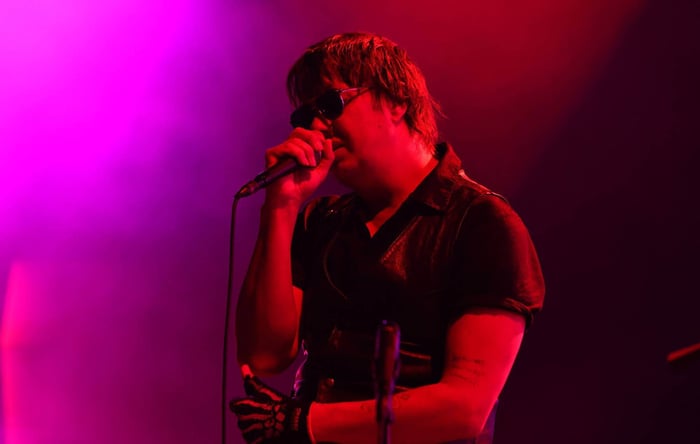
Julian Casablancas Expands on “White Privilege” and American Zionism Comments in Full Oxford Union Speech


 See more Architeg Prints stories on Google.
Julian Casablancas Expands on “White Privilege” and American Zionism Comments in Full Oxford Union Speech
Julian Casablancas delves deeper into his views on American Zionism, white privilege, and expansionism during a revealing Oxford Union address.
A Provocative Voice from The Strokes
If you’ve followed The Strokes or Julian Casablancas’s outspoken stances, you know he’s never shy about stirring conversation beyond music. Back in April, Casablancas sparked widespread discussion with his candid remarks on American Zionists and white privilege on the viral YouTube series SubwayTakes. He boldly claimed, “American Zionists get the benefits of white privileged people, but talk like they are Black people during slavery.”
The host, Kareem Rahma, echoed Casablancas’s sentiments, emphasizing the paradox of Zionists claiming oppression while attending celebratory events in Tel Aviv amid heavy regional conflict.
Casablancas further reflected on the complexities of violent resistance, comparing Hamas's actions to historical rebellions by Native Americans and enslaved Black people, noting that the legitimacy of rebellions doesn’t justify oppressive systems.
“I mean, just for the people that are gonna be like, ‘Hamas, October 7th’, yes, bad, but you know, Native American rebellions didn’t mean it was ok to do what we did. Slave rebellions that were violent didn’t mean that slavery is not bad.” — Julian Casablancas
You can watch his candid SubwayTakes interview here:
https://www.youtube.com/watch?v=r3j2X4kLxTo
Unpacking Zionism and Expansion at Oxford Union
Just recently, Casablancas offered a more nuanced breakdown of his views during a talk at the prestigious Oxford Debate Society on May 28, with footage released on July 3.
He explained that the core of his concern isn’t nationalism or love of country—but expansionism. To Casablancas, "expansion is the key concept," specifically referring to Israeli settlements and the vision of “greater Israel.”
“You can love England and want it to be safe without wanting it to control India, for example,” Casablancas noted, drawing a compelling analogy. He expressed disbelief at the “greater America project” but held no qualms about admitting his American identity while advocating for “large reparations” that he believes are long overdue.
This perspective challenges listeners to differentiate between patriotism and imperial ambition—a crucial distinction often blurred in political discourse.
The Limits of Language and Censorship
Casablancas addressed the challenges of discussing the Israeli-Palestinian conflict openly, highlighting how certain narratives are restricted.
He compared the reluctance to call the situation a genocide to prohibitions against saying “Black Lives Matter,” implying a suppression of honest dialogue. Casablancas warned that if the only critique one offers is “Netanyahu is the problem” or a blanket defense of Israel’s right to exist, it might unintentionally signal support for “Jewish supremacy and white supremacy.”
In other words, the discussion around Zionism is often muddied by euphemisms and half-truths, unintentionally echoing exclusionary ideologies.
The “Green Liners” and Settler-Style Zionism
Making a clear distinction, Julian split Zionists into two camps:
- “Green liners”: Those who accept internationally agreed borders and advocate for peace.
- Expansionists: Settler types who actively engage in taking Palestinian homes and perpetuate violent conflict.
He aligned himself with the green liners and mentioned that some moderate Jewish friends agree that expansionists are “kind of crazy.” However, he lamented that the label “Zionist” is often conflated, creating confusion.
In his own words from the SubwayTakes interview, he clarified:
“Maybe some good-hearted indoctrinated moderates, when they’re talking in this kind of victim language, is weird because they get many of the perks of white privilege in America and stuff — in my defense, I had nine takes at this point and SubwayTakes asked me for the most controversial take I had; I feel much stronger about the long audio messages — but speak like they are Black people during slavery.”
Casablancas stressed he wasn't pointing fingers at friends who simply believe Israel has a right to exist. Instead, he criticized the desire for expansion beyond agreed borders — a point he says Arab countries and much of the world have long accepted.
Watch Julian Casablancas’s Full Oxford Union Speech
For those wanting to hear the full context, Casablancas’s Oxford Union address gives a thoughtful, layered insight into his position:
https://www.youtube.com/watch?v=-S0lJMTe3-A
Casablancas’s History of Advocacy
Julian Casablancas’s activism is well-documented. Back in 2021, he signed an open letter supporting Palestinian rights and called for boycotts of performances in Israel. His advocacy extends beyond words; The Strokes’ recent Coachella set was capped with a politically charged montage highlighting U.S. government interference, the murder of Martin Luther King Jr., and the destruction of universities in Iran and Gaza.
This fearless approach to blending music and political statement reflects a commitment to using his platform for awareness.
On Billionaires, Distractions, and Society’s Focus
In a candid 2024 interview, Casablancas shared his frustration with society’s obsession with distractions — particularly those fed by billionaires trying to avoid accountability and taxes.
“The main weapon of these ‘bad guy’ people – billionaires trying to pay no taxes – is distraction,” he said. “And it’s a long, complicated, indirect chain of exploitation, so it’s not really easy to pinpoint who’s doing what damage.”
He expressed weariness with the constant bombardment of media distractions, noting how even respected outlets like CNN contribute to a hypnotic cycle that keeps people from truly engaging with the pressing issues.
The Strokes: Back with New Music and a Massive World Tour
Beyond all the political discourse, The Strokes are gearing up for their first album in six years, Reality Awaits, slated for release on July 24. Produced with the legendary Rick Rubin in Costa Rica and finalized across several global spots, the album is highly anticipated by fans worldwide.
They’ve also announced a huge world tour spanning the UK, North America, Europe, and Japan. This will be their first full UK and Ireland tour in over two decades, with stops at iconic venues like London’s O2 and Dublin’s 3Arena this coming October.
Final Thoughts
Casablancas’s willingness to probe uncomfortable topics, challenge narratives, and speak his mind—even when it courts controversy—is a reminder that musicians often carry more than just their art; they carry a mirror held up to society.
What do you think about the distinctions Casablancas draws between different forms of Zionism and the role of privilege in political discourse? Does his perspective challenge your own views or spark new questions?
FAQ
- What did Julian Casablancas say about American Zionists?
He stated that American Zionists enjoy white privilege but speak as if they are oppressed like enslaved Black people. - How does Casablancas differentiate types of Zionists?
He describes “green liners” who accept agreed borders and peace, versus expansionists who actively take Palestinian homes and engage in violence. - What analogy did he use to explain expansionism?
He compared loving a country without imperial ambitions to loving England but not wanting it to control India. - Has Casablancas been involved in activism before?
Yes, he signed a 2021 open letter supporting Palestinian rights and has urged boycotts of performances in Israel. - When is The Strokes’ new album releasing?
Reality Awaits will be released on July 24, following six years since their last album.
If this journey through Julian Casablancas’s provocative thoughts intrigues you, why not bring some of that energy home? Shop your favorite album cover posters and add a piece of music history to your space at Architeg Prints. It’s a stylish way to celebrate music that challenges and inspires.
 | DISCOUNTGET 30% OFF*Use code on your next order:
|
* This post may contain affiliate links, meaning we earn a commission if you make a purchase through these links, at no additional cost to you.