Kim Gordon’s Guitar Influence: From Sonic Youth to Fender Jazzmaster


Kim Gordon’s Guitar Influence: From Sonic Youth to Fender Jazzmaster
Kim Gordon’s guitar influence stretches from no wave and free jazz to Sonic Youth and her new Fender Jazzmaster.
A Guitar Found by Accident
Some musicians chase the spotlight from the very beginning. Kim Gordon seemed to wander into it sideways, carrying an artist’s eye, a borrowed guitar, and absolutely no grand plan to become a musician.
That unlikely path eventually led to Sonic Youth, a celebrated solo career, and a signature Fender Jazzmaster built around the same spirit of experimentation that has shaped her work for decades.
Gordon has spoken about her relationship with the guitar, as well as Sonic Youth’s lasting influence on modern music. The surprising part is that she never really thought of herself as a musician in the traditional sense.
Her first proper six-string arrived through a breakup. In the early 1980s, her roommate had received a guitar from her boyfriend. When the relationship ended, the roommate gave the instrument to Gordon instead.
“My roommate gave me this guitar that her boyfriend had given her. She got mad at her boyfriend and they broke up, so she gave me the guitar. Jeffrey Lohn from Theoretical Girls came over and taught me how to make half jazz chords, or jazz chords but playing half the strings.”
— Kim Gordon
It’s a wonderfully Gordon-like origin story: no formal plan, no conservatory training, just a strange instrument landing in her hands and immediately becoming part of a creative life. Jeffrey Lohn of Theoretical Girls helped her learn unusual chord shapes, but Gordon’s approach was never about mastering a rulebook.
The Guitar That Became Part of Sonic Youth
That first guitar carried an unexpected connection to Thurston Moore, whom Gordon would later meet and who became her bandmate in Sonic Youth.
When Gordon met Moore, he recognized the instrument. He already knew its previous owner, which gave the guitar a little musical history before it had even entered Gordon’s world.
Moore eventually used it for “Burning Spear,” creating sounds by pushing a drumstick through the strings and using another stick to produce percussive effects. In other words, the guitar wasn’t treated simply as a machine for playing chords. It became a sound-making object, almost closer to a sculpture or a piece of found art.
Gordon’s second guitar was an East German model she purchased in Berlin. It was called an Eterna, and its appearance made an impression on her immediately. She remembers it as “super cool-looking,” although she wishes she could recall exactly which early songs she played on it.
That small detail says plenty about her creative memory. The feeling of the instrument remains vivid, even when the song titles have faded into the background. For Gordon, texture, shape, and atmosphere have always mattered as much as conventional musical technique.
A Fender Jazzmaster With a Personal History
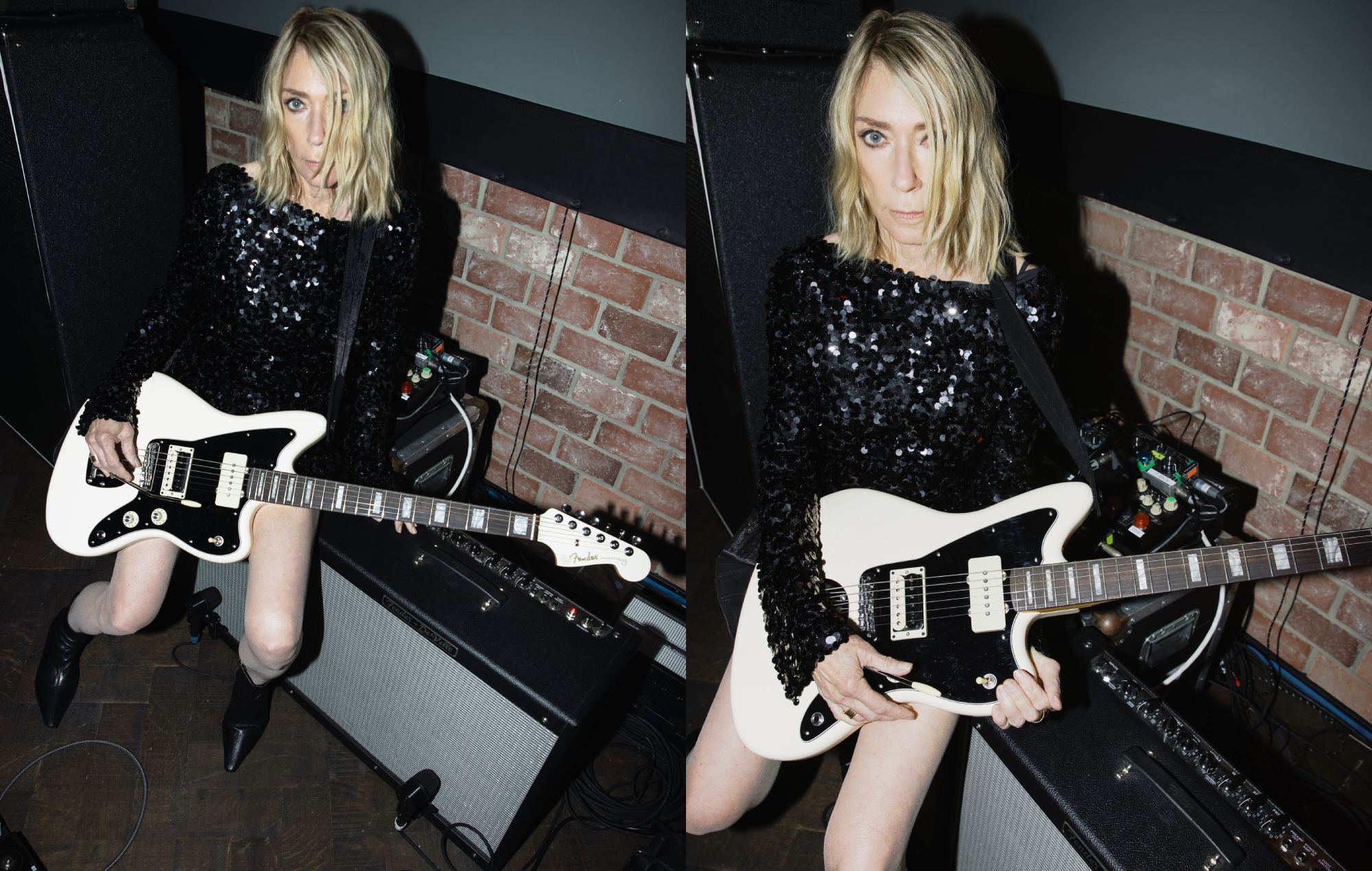
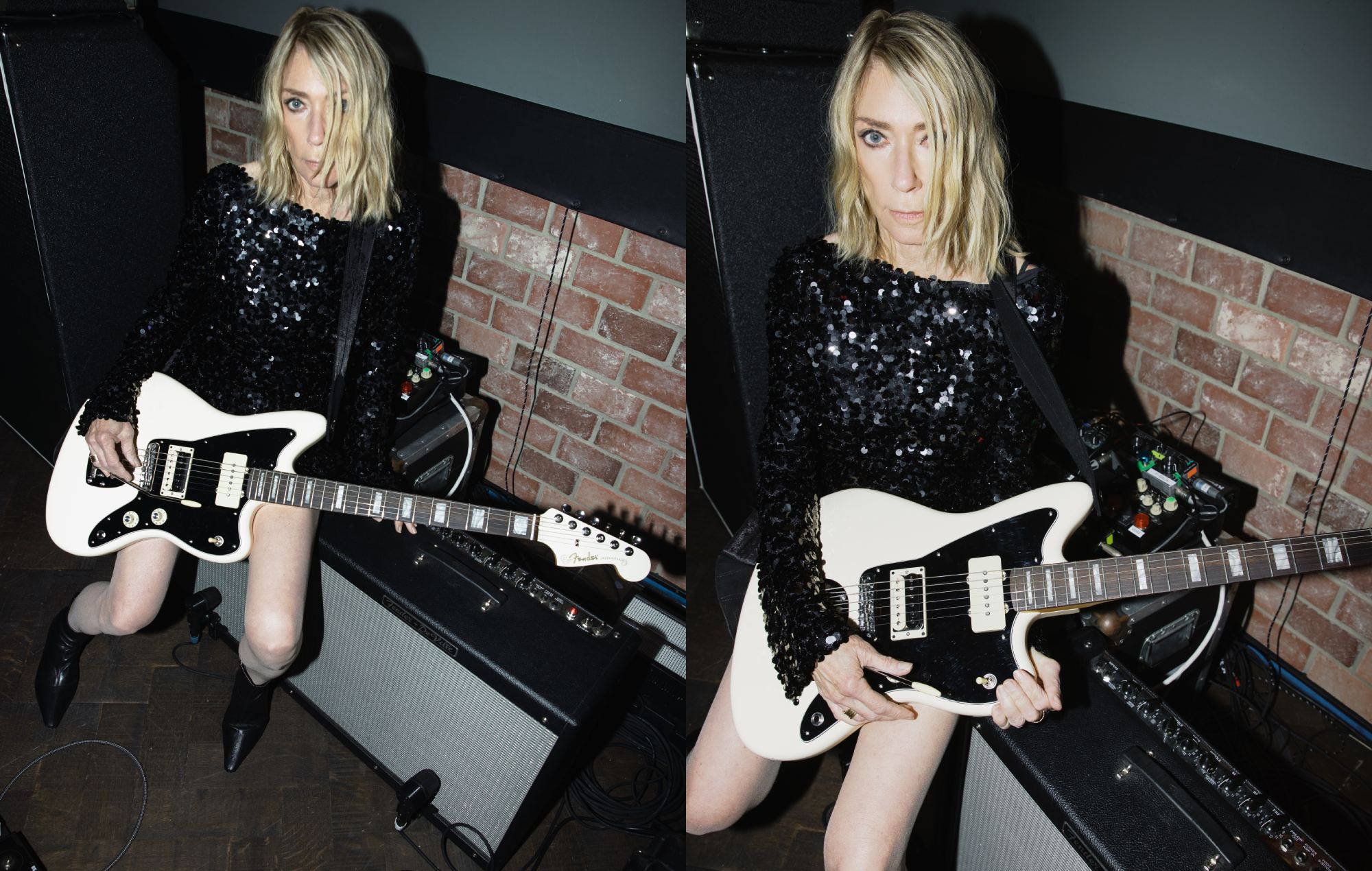
Now Gordon has teamed up with Fender for the Limited Edition Kim Gordon Jazzmaster. The guitar is based on a 2008 Mexican Standard model that she received during Sonic Youth’s final tour of South America.
The signature instrument keeps the basic identity of that guitar while adding inverted colors and distinctive adjustments developed with friends and collaborators. It feels less like a polished industry trophy and more like an extension of Gordon’s long-running habit of taking familiar objects apart and seeing what else they can do.
The Jazzmaster is already closely associated with adventurous guitar music. Artists including Elvis Costello, J Mascis of Dinosaur Jr., Tom Verlaine of Television, Robert Smith of The Cure, and Kevin Shields of My Bloody Valentine have all helped give the model its outsider reputation.
Gordon’s version adds another chapter to that story. Her guitar influence doesn’t come from flashy solos or a conventional idea of virtuosity. It comes from the way she uses sound as color: abrasive when needed, spacious when useful, and occasionally startling enough to make the listener sit up straight.
No Wave, Free Jazz, and the Beauty of Dissonance
The roots of Gordon’s musical language reach back to the no wave bands she watched early in her creative life. Their performances felt liberating because they were free, dissonant, and unconcerned with smoothing out every rough edge.
She had also grown up listening to jazz and free jazz, so those sounds already made sense to her. The looseness, tension, and unpredictability weren’t obstacles. They were invitations.
Gordon also pointed to Glenn Branca and Rhys Chatham, musicians who explored alternative tunings and used multiple guitars to generate overtones. Those sounds helped demonstrate how a guitar could become something larger than a standard rhythm or lead instrument.
When Sonic Youth began, Gordon initially played guitar. She later moved toward basslines, and switching to bass became the natural choice within the developing band. Even then, she learned by ear rather than through formal instruction.
“I just played by ear and never properly learned. I approached it more as a visual artist first. I never really thought of myself as a musician and had no aspirations to play bass or guitar. I just fell into it like a lot of people in post-punk that were inspired by music being a tool for expressions of anti-corporateness.”
— Kim Gordon
There’s something refreshingly anti-careerist about that perspective. Gordon didn’t set out to become a technically perfect player. She followed an instinct, and that instinct helped redefine what an electric guitar could express.
She says she hasn’t changed all that much over the years. Her vocabulary has expanded, but she still doesn’t feel she ever truly learned in the traditional sense. That may be the secret ingredient: the instrument remains a place for discovery rather than a subject she considers fully conquered.
When “Noise” Becomes a Language
It can feel surreal for Gordon to hear traces of her own influence in other artists, although she doesn’t spend much time monitoring it. Her broader observation is that musicians today seem less afraid of dissonant sounds.
When Sonic Youth started, “noise” was often used as an insult. Gordon saw it differently. To her, noise could work as shading or coloring, adding realism to a piece of music and reflecting the world around it.
That idea feels especially important to understanding her guitar influence. Noise wasn’t inserted merely to provoke. It functioned as a tool, a way to express something that a clean melody might not capture.
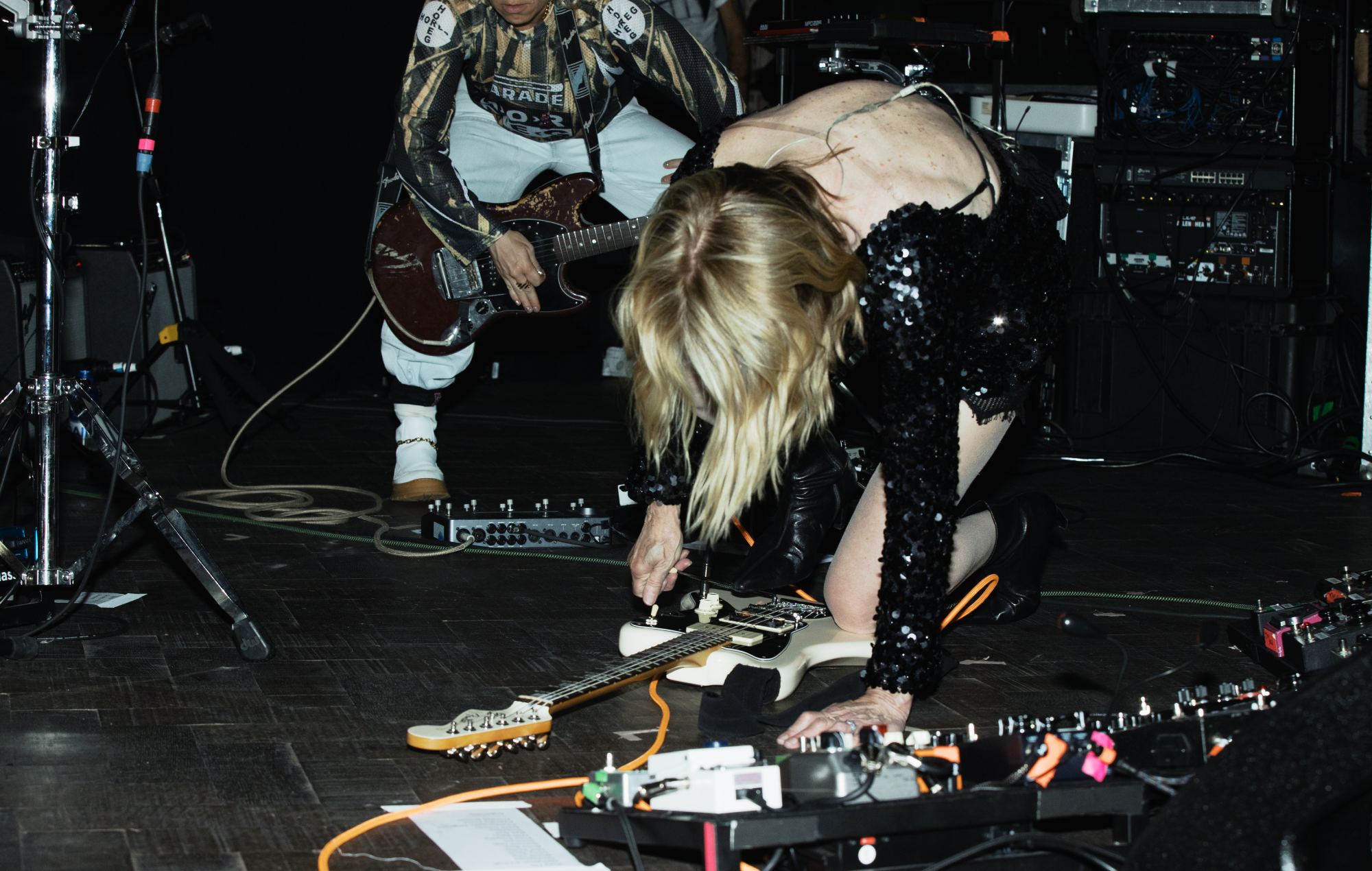
The signature Jazzmaster reflects that practical curiosity. Gordon noted that the instrument combines a humbucker pickup at the bridge with a conventional Fender single-coil pickup. The result brings together a thicker, heavier sound and the familiar single-coil character that many players enjoy.
It’s a fitting combination for an artist who has always moved between extremes: melody and abrasion, structure and improvisation, basslines and guitar textures.
From Guitar Experiments to Beat-Driven Songs
The timing of Gordon’s signature guitar is particularly interesting because her most recent album, Play Me, leans into beats and trip-hop atmosphere rather than the rock sound many listeners associate with her earlier work.
Her solo career has continued to shift shape, and the move toward beat-driven music shows that she isn’t interested in repeating an old formula simply because it worked before. The guitar remains part of the story, but it no longer has to dominate the room.
For live performances of Play Me, Gordon explained that she generally doesn’t play guitar on the record’s songs in concert. Singing requires much of her attention, so guitarist Sarah Register recreates some of the guitar parts while also developing new material of her own.
There is one song performed each night that is largely improvised, along with an older song that includes guitar. That balance between preparation and uncertainty feels very much in keeping with Gordon’s history. Even inside a setlist, there’s room for something to go gloriously sideways.
What Comes Next?
After three solo albums that have continued to surprise listeners, Gordon isn’t claiming to have a fixed plan for the next chapter.
She and her collaborators have recently made two or three new songs. They may eventually arrive somewhere familiar, but they’re considering beginning the process in a different way. Nothing has been decided yet.
That answer seems fitting. Gordon’s career has rarely moved in a straight line. The next project may grow from a beat, a guitar texture, a visual idea, or a happy accident that nobody can predict in advance.
Music, Money, and the Advice to Keep Playing
Gordon has also spoken about the difficult climate facing musicians and other creatives. Her recent work reflects the anxieties of a doomscrolling era, and she remains concerned about the concentration of power and wealth in the hands of a very small number of people.
She pointed to the huge spending surrounding artificial-intelligence companies and unprofitable data centers. She also questioned the safety of the internet now that AI agents can hack systems, while adding a darkly funny possibility: perhaps that could become a positive development if it means people spend less time with their phones.
The thought is bleak, but Gordon’s response still carries her familiar mixture of realism and curiosity. She doesn’t offer a neat solution. Instead, she looks directly at the mess and asks what new possibilities might grow from it.
For aspiring musicians who feel intimidated by the industry, her advice is simple. What someone wants from music matters. For many people, music is a lifestyle rather than a reliable source of income, and making money from playing has become increasingly difficult. Many artists need other jobs to support themselves.
Still, Gordon believes music is good for the soul.
“It depends on what you want out of music. For a lot of people, music is a lifestyle. It’s becoming harder and harder to make money from playing music in general, so a lot of people have other jobs, but it’s good for the soul. Just play.”
— Kim Gordon
That final thought lands with the force of a well-placed chord. You don’t need perfect technique, a mapped-out career, or permission from anyone else. Pick up the instrument. Make a sound. See where it takes you.
Her Play Me album and Limited Edition Fender Jazzmaster are both available now. Gordon’s touring schedule continues with an appearance at Hipnosis Music Festival in Mexico, followed by a December performance at Clockenflap in Hong Kong. She is also set to visit Japan in January before appearing at Kilby Block Party in Salt Lake City in May 2027.
Gordon’s guitar influence has never depended on conventional mastery. It lives in the willingness to experiment, to treat noise as color, and to let an instrument become whatever the song needs. What’s the first unexpected sound that made you hear guitar music differently?
FAQ
- What inspired Kim Gordon’s approach to guitar? Gordon was influenced by no wave, free jazz, and musicians such as Glenn Branca and Rhys Chatham, whose work explored dissonance, alternate tunings, and layered guitar overtones.
- How did Kim Gordon get her first guitar? Her roommate gave her a guitar after breaking up with the boyfriend who had originally given it to her. Jeffrey Lohn of Theoretical Girls later showed Gordon how to play unusual partial jazz chords.
- What is special about the Limited Edition Kim Gordon Jazzmaster? The guitar is based on a 2008 Mexican Standard model Gordon received during Sonic Youth’s final South American tour. It features inverted colors, personal modifications, and both humbucker and single-coil pickup elements.
- Does Kim Gordon play guitar live during performances of Play Me? She generally does not play guitar live for the album’s songs because she focuses on singing. Sarah Register recreates some guitar parts and adds new material, while one regularly performed song is largely improvised.
- What advice does Kim Gordon give to aspiring musicians? Gordon encourages people to consider what they want from music, recognizing that many artists need other jobs. Her simplest advice is to keep playing because music remains good for the soul.
Bring a little of Gordon’s experimental spirit into your space with a favorite album cover poster from Architeg Prints. It’s a warm, creative way to keep the feeling of adventurous music close by.
 | DISCOUNTGET 30% OFF*Use code on your next order:
|
* This post may contain affiliate links, meaning we earn a commission if you make a purchase through these links, at no additional cost to you.