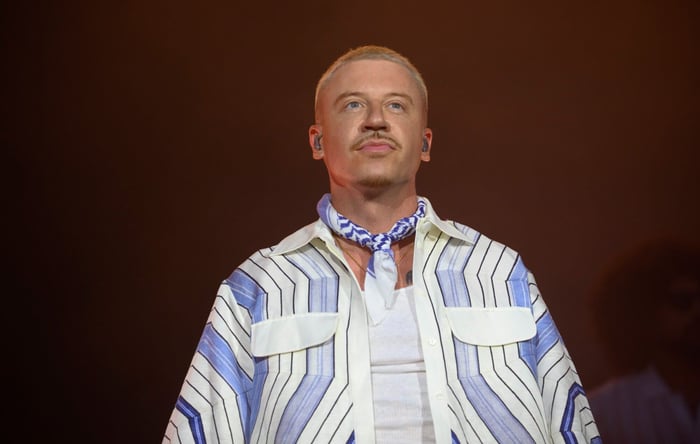
Macklemore Tour Exit Sparks Debate Over ‘Free Palestine’ Remarks


 See more Architeg Prints stories on Google.
Macklemore Tour Exit Sparks Debate Over ‘Free Palestine’ Remarks
Macklemore has addressed his removal from Ed Sheeran’s U.S. tour after making outspoken comments supporting Palestinian freedom during recent performances.
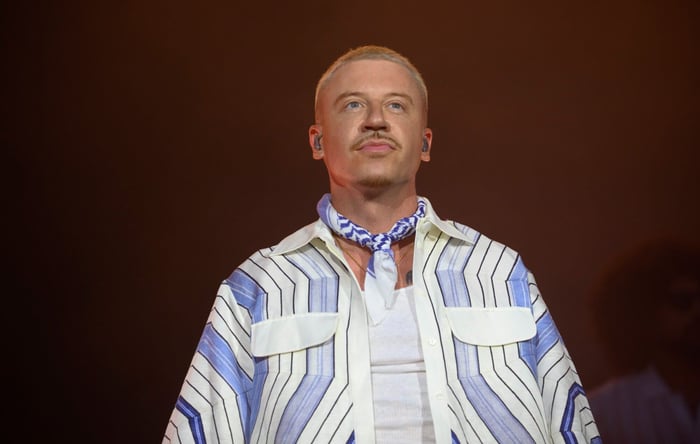
Macklemore Addresses His Removal From the Tour
Sometimes a concert speech lasts only a few minutes, yet the fallout can stretch far beyond the final encore. Macklemore has now spoken publicly after being removed from Ed Sheeran’s upcoming U.S. tour dates, following a series of onstage comments supporting Palestinian freedom.
The rapper addressed the situation on September 14, after recently defending his calls for a “Free Palestine.” His position, he said, was rooted in the belief that striving for equality and human dignity “should never be controversial.”
The dispute began after Macklemore opened for Ed Sheeran at several New Jersey shows. During one speech at MetLife Stadium, he asked for all people to be treated with “dignity, respect, and equality.” He also told the audience that people in Gaza and the West Bank should know they had not been forgotten.
Macklemore then expanded his message beyond one region, saying:
“I say Free Palestine, free Cuba, Congo, Sudan and Iran and all the people of America who live in fear because of this terrorist organisation ICE.”
He followed the remarks with a performance of ‘Hind’s Hall’, while footage connected to Gaza appeared on the screen behind him. For fans in the stadium, it was a striking shift from the usual concert rhythm: lights, hooks, cheers—and then a political statement landing with the force of a spotlight.
Why Macklemore Was Dropped From the Ed Sheeran Shows
The decision to remove Macklemore came after the Israeli-American Council called for him to be taken off the tour. The organization accused him of using his platform to promote what it described as a one-sided political agenda.
Messina Touring Group, promoter of the U.S. leg of Sheeran’s Loop Tour, later said venues had informed organizers that they would not allow concerts to proceed with Macklemore included on the lineup.
In a statement, the promoter explained that keeping him on the bill could have led to canceled shows and affected hundreds of thousands of ticket holders. The company said that, after discussions with stakeholders, Macklemore would no longer perform on the remaining support dates.
The statement framed the decision around the practical realities of a stadium tour: venues, contracts, audiences, and a massive production machine that has to keep moving. Still, for Macklemore, the decision represented something more pointed than a scheduling change.
He later claimed that Robert Kraft, owner of the New England Patriots and Gillette Stadium, had objected to his participation. According to Macklemore, Sheeran told him that Kraft said he would not be allowed to perform at the stadium.
Macklemore also alleged that Kraft had spoken with other stadium owners, who collectively gave Sheeran an ultimatum: either Macklemore left the tour, or Sheeran would not be permitted to perform at their venues.
Those claims were presented by Macklemore in his own statement. Representatives connected to Kraft and Sheeran were contacted for comment.
Macklemore Says Sheeran Was Put in a Difficult Position
The rapper described Sheeran as a friend and said the singer had been placed in what he called a “fucked up position.” Macklemore argued that Sheeran’s usually apolitical public stance was being challenged in a way it had not been before.
According to Macklemore, Sheeran told him the words “Free Palestine” and the Palestinian flag were hurtful to many people he had spoken with. Macklemore said he responded that if those words were considered more offensive than the deaths of Palestinian children, then there was a fundamental disconnect between their perspectives.
He also suggested that Sheeran could not move beyond his public-facing position of refusing to take sides.
That tension sits at the center of the entire controversy. A touring artist can be a collaborator, a friend, and a business partner—but a stadium stage also belongs to a network of promoters, venue owners, sponsors, and audiences. Once a performer uses that stage for a political message, every part of the machine suddenly becomes visible.
“At a Certain Level of Exposure,” Macklemore Says the Risk Changes
Macklemore emphasized that he had been speaking about the situation for nearly three years. In his view, the difference was not the message itself but the size of the platform.
He wrote that he had previously made similar statements on stages around the world without the same level of backlash. This time, however, he was sharing a stage with one of the biggest artists in the world and performing in some of the largest stadiums in the United States.
“At a certain level of exposure ‘Free Palestine’ becomes too much of a risk.”
Macklemore continued by imagining what might happen if he stayed on the tour, repeated the phrase, and received loud support from the audience. He wondered what other artist might speak out next if the crowd’s response became impossible to ignore.
“The stage becomes resistance. Maybe that’s why this time it became so important to silence me.”
It’s a dramatic way to describe the power of a concert platform, but anyone who has watched a crowd turn a song into a collective chant understands the idea. A stage is never just a raised platform. At the right moment, it can become a town square with a lighting rig.
Criticism From Boy George and P!NK
Macklemore’s comments also drew criticism from several musicians.
Boy George criticized him after posting an AI-generated image depicting Sheeran in a shirt with an insulting message aimed at Macklemore. He also wrote on social media that he had never been a fan of Sheeran and that nothing had changed.
P!NK, meanwhile, reshared a post from the group StopAntisemitism. That post accused Macklemore of promoting what it described as a false genocide claim and of turning a mainstream concert event into a political confrontation involving Israel.
The criticism added another layer to the story. Macklemore was not simply facing a disagreement over concert etiquette; artists and advocacy groups were publicly debating whether his statements represented legitimate protest, harmful rhetoric, or an inappropriate use of a support slot.
For Macklemore, the answer has remained clear: he believes silence would be the more troubling choice.
Shirley Manson Defends Macklemore’s Right to Speak
Garbage singer Shirley Manson pushed back against the backlash. She called the situation “madness” and said it was unjust for Macklemore to be removed from a major tour because some people felt threatened or scared when he pleaded for the protection of an occupied and persecuted population.
Manson also argued that nothing Macklemore said was violent, hateful, or remotely radical.
“Just because you ignore the truth doesn’t make the truth go away or make it any less potent.”
She went on to say that Macklemore’s words were not antisemitic and that he was being punished for asking for occupation, oppression, and violence to end. Her comments turned the dispute toward freedom of speech and the boundaries placed on artists working within large commercial events.
That argument has an old rock-and-roll heartbeat to it. Music has always carried protest, from handwritten signs outside venues to entire albums built around resistance. The modern twist is that every speech can be clipped, reposted, debated, and transformed into a headline before the artist has even left the building.
Chris Shiflett Also Comes to Macklemore’s Defense
Foo Fighters guitarist Chris Shiflett also defended Macklemore after calls for his removal emerged. The guitarist responded to online discussions about whether it was appropriate for Macklemore to express political beliefs while opening for Sheeran.
When guitarist Joe Bonamassa raised the question of concert etiquette, Shiflett replied:
“Maybe speaking out against genocide trumps etiquette.”
Shiflett also pointed to the MetLife audience, which appeared receptive to Macklemore’s message. That detail matters because the controversy was not happening in a vacuum. The crowd’s reaction became part of the argument: were the comments an unwanted interruption, or did they reflect what many people in the venue wanted to hear?
The question is uncomfortable precisely because both the artist and the audience have agency. A support act is there to warm up a room, but performers have never been entirely predictable creatures. Sometimes the setlist takes a sharp turn, and suddenly the room is discussing politics instead of the next chorus.
The Wider Debate Over Gaza and Genocide Claims
The background to the dispute also includes findings from international organizations concerning Israel’s military actions in Gaza.
A United Nations-appointed Commission of Inquiry concluded in September 2025 that Israel had committed genocide against Palestinians in Gaza. Amnesty International reached the same conclusion.
Israel has repeatedly denied committing genocide or war crimes. Its government has maintained that its military campaign followed the Hamas-led attacks of October 7 and was an act of self-defense. Israel rejected the UN Commission’s findings as distorted, false, and a libelous sham.
A later UN Commission report, issued in June, stated that Israeli authorities and security forces had deliberately targeted Palestinian children, describing the actions as genocide, atrocity crimes in Gaza, and war crimes in the West Bank.
These competing claims form the wider political context behind Macklemore’s speeches. His supporters see his words as an appeal for accountability and equal human rights. His critics argue that his framing unfairly targets Israel or turns a concert into a political event. The debate remains deeply charged, with no simple chorus to resolve it.
Why ‘Hind’s Hall’ Has Become Central to Macklemore’s Message
Macklemore’s position is not new. His 2024 song ‘Hind’s Hall’ established a clear connection between his music and pro-Palestinian activism.
The track was named after Columbia University’s Hamilton Hall, which was renamed Hind’s Hall by pro-Palestinian student activists. The new name honored Hind Rajab, a child killed by Israeli forces in Gaza.
The song became one of Macklemore’s most direct political statements. Tom Morello praised it as “the most Rage Against the Machine song since Rage Against the Machine,” a compliment that neatly captured its protest-driven energy.
Later in 2024, Macklemore released a sequel featuring Palestinian-American artists Anees and Amer Zahr, Gaza-born rapper MC Abdul, and vocals from the Los Angeles Palestinian Kids Choir.
That history explains why the MetLife performance carried such weight. Macklemore was not improvising a one-off message for attention; he was continuing a position that had already shaped his recent work. For listeners who have followed the songs, the speech and the performance of ‘Hind’s Hall’ were part of the same ongoing creative and political statement.
Conclusion
Macklemore’s removal from Ed Sheeran’s tour has opened a fierce debate about political speech, concert etiquette, commercial pressure, and the responsibilities of artists with access to enormous audiences. His supporters see an artist refusing to soften his message; his critics see a performer crossing a line within someone else’s show.
Either way, the controversy raises a question music has wrestled with for generations: when an artist steps onto a stage, should the spotlight belong only to the songs—or can it also illuminate the world beyond them?
FAQ
- Why was Macklemore removed from Ed Sheeran’s tour?
He was removed after making onstage comments supporting “Free Palestine” and performing ‘Hind’s Hall’ during recent shows. The promoter said venues would not allow the concerts to proceed with him on the lineup. - What did Macklemore say at MetLife Stadium?
He called for dignity, respect, and equality for all people, said people in Gaza and the West Bank had not been forgotten, and expressed support for freedom in Palestine and several other regions. - What is ‘Hind’s Hall’ about?
The 2024 protest song reflects Macklemore’s longstanding support for Palestinian rights. It was named after a building at Columbia University that student activists renamed in honor of Hind Rajab. - Who defended Macklemore?
Garbage singer Shirley Manson and Foo Fighters guitarist Chris Shiflett both defended his right to speak. Shiflett argued that speaking against genocide could be more important than questions of concert etiquette. - What has Israel said about the accusations discussed in the article?
Israel has denied committing genocide or war crimes, saying its military campaign followed the Hamas-led attacks of October 7 and was an act of self-defense. It rejected the UN Commission’s findings as false and distorted.
Bring the music-and-message connection into your own space with a favorite album cover poster from Architeg Prints—a warm visual nod to the records and artists that stay with us long after the final note.
 | DISCOUNTGET 30% OFF*Use code on your next order:
|
* This post may contain affiliate links, meaning we earn a commission if you make a purchase through these links, at no additional cost to you.