Oasis Documentary Reveals the Magic Behind the Reunion Tour



Oasis Documentary Reveals the Magic Behind the Reunion Tour
Oasis documentary Don’t Look Back In Anger captures Liam and Noel Gallagher’s reconciliation, the fans’ emotional connection, and tributes to Mani and Bonehead.
A reunion built on more than nostalgia
Some rock reunions feel like business arrangements with a greatest-hits soundtrack. Oasis’ return felt different. In Don’t Look Back In Anger, directors Will Lovelace and Dylan Southern capture the Gallagher brothers rebuilding their working relationship while preparing for the Live ’25 tour—their first live shows together in 16 years.
The film follows Liam and Noel from their earliest rehearsals through backstage moments and enormous stadium performances. It’s a portrait of two brothers setting aside a long, famously bitter feud because they still understand the one language they’ve always shared: the songs.
Lovelace and Southern already had music films such as LCD Soundsystem’s Shut Up And Play The Hits, Meet Me In The Bathroom, and Blur’s No Distance Left To Run behind them. But this project presented a different challenge. Everyone already knew the history. The real question was much more immediate: what would it actually feel like to be in the room when Liam and Noel met again?
The room where Oasis began again
The filmmakers were caught up in the reunion fever like everyone else. When the tour was announced, the film hadn’t yet been discussed, and Southern found himself trying to secure a ticket. Once the documentary became a possibility, though, the decision was immediate.
The announcement was one thing. Making it happen was another. As the film points out, it’s easy to publish a tour image and promise a return. The difficult part is walking into the rehearsal room and proving the promise can survive contact with reality.
The directors wanted the film to feel unguarded, especially during those first rehearsals. Their solution was simple but demanding: disappear.
The crew placed cameras around the space and stayed out of the way. For six weeks, Liam and Noel didn’t see a single crew member. The goal was to create the sensation that there was no camera in the room at all—a tricky feat when the people being filmed are two of the most recognizable brothers in British rock.
“We wanted it to feel as close to what it would be like if there weren’t cameras in the room as possible.”
— Dylan Southern
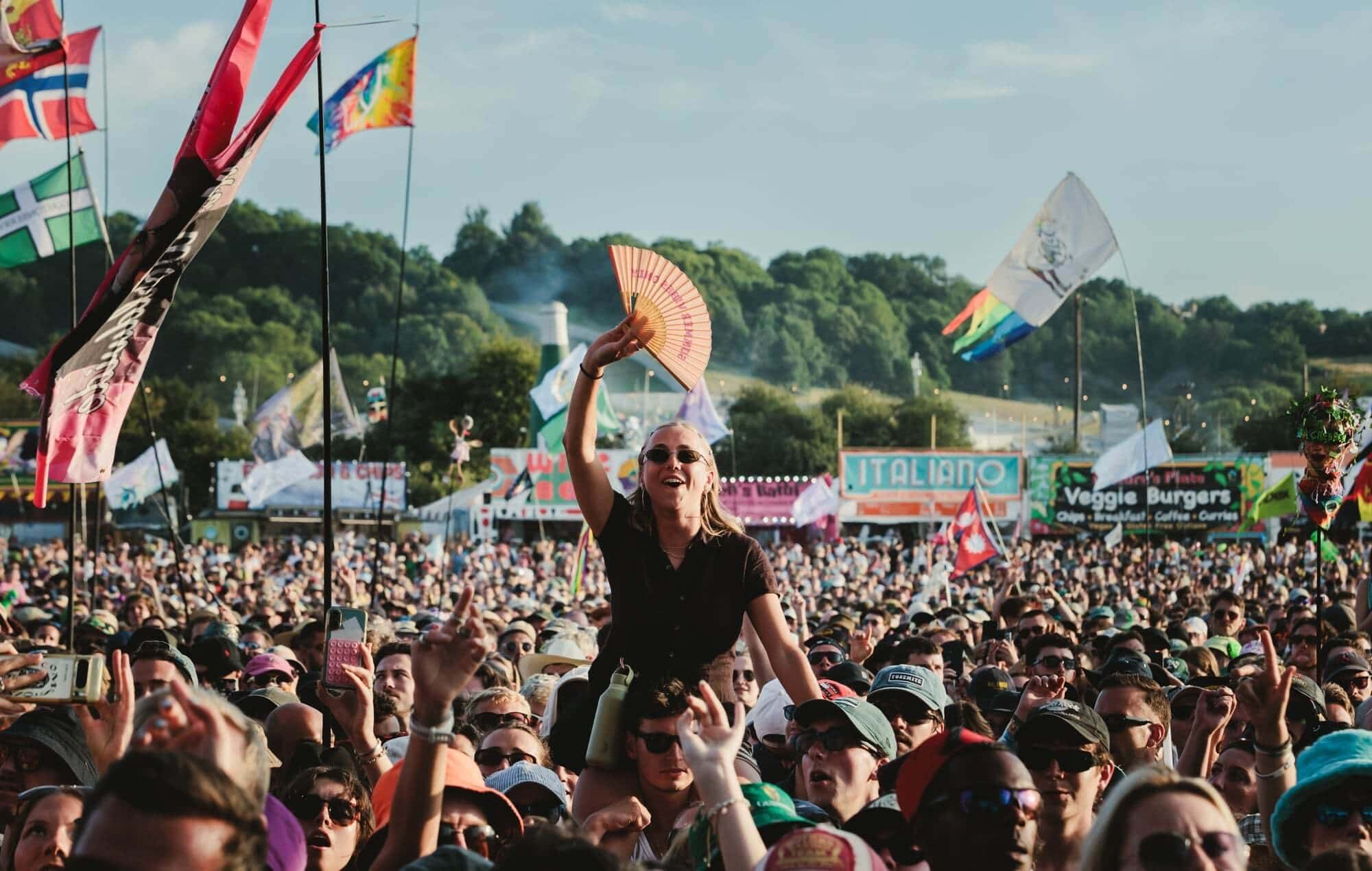
The approach changed once the band reached the road. Millions of fans had tried and failed to get tickets, so the directors wanted the concerts to provide more than a distant record of the performances. They aimed to put viewers inside the crowd, shoulder to shoulder with the people who had waited years for this moment.
Why the big screen matters
The concert footage was designed for spectacle. The filmmakers encouraged fans to see Don’t Look Back In Anger in IMAX or the largest cinema they could find, with the sound turned up as far as the theater allows.
That recommendation makes perfect sense. Oasis songs have always been built for mass participation—the kind of songs that turn strangers into a temporary choir. A stadium performance of “Champagne Supernova” isn’t merely a song being played; it’s a weather system of guitars, voices, lights, and memory.
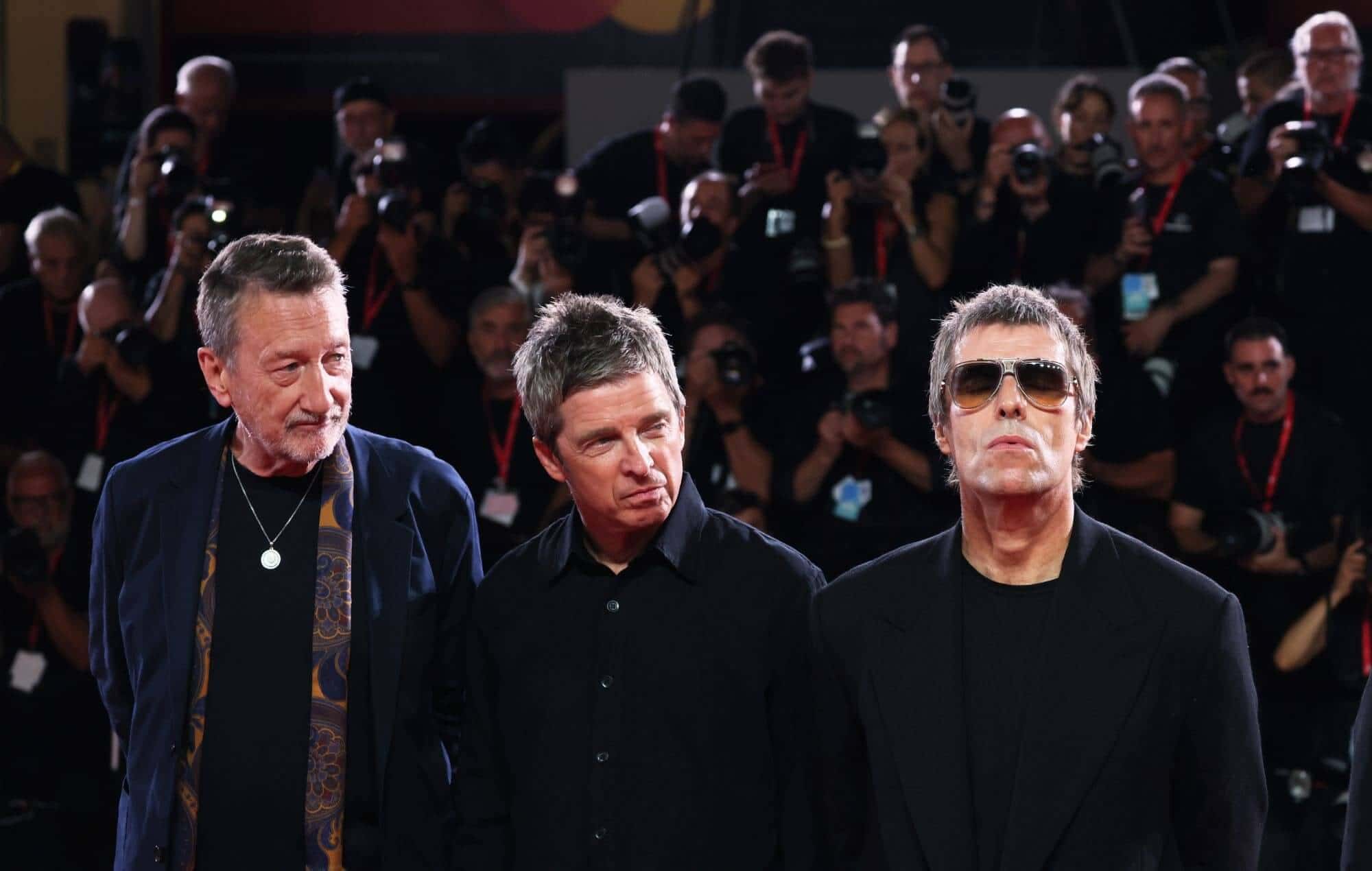
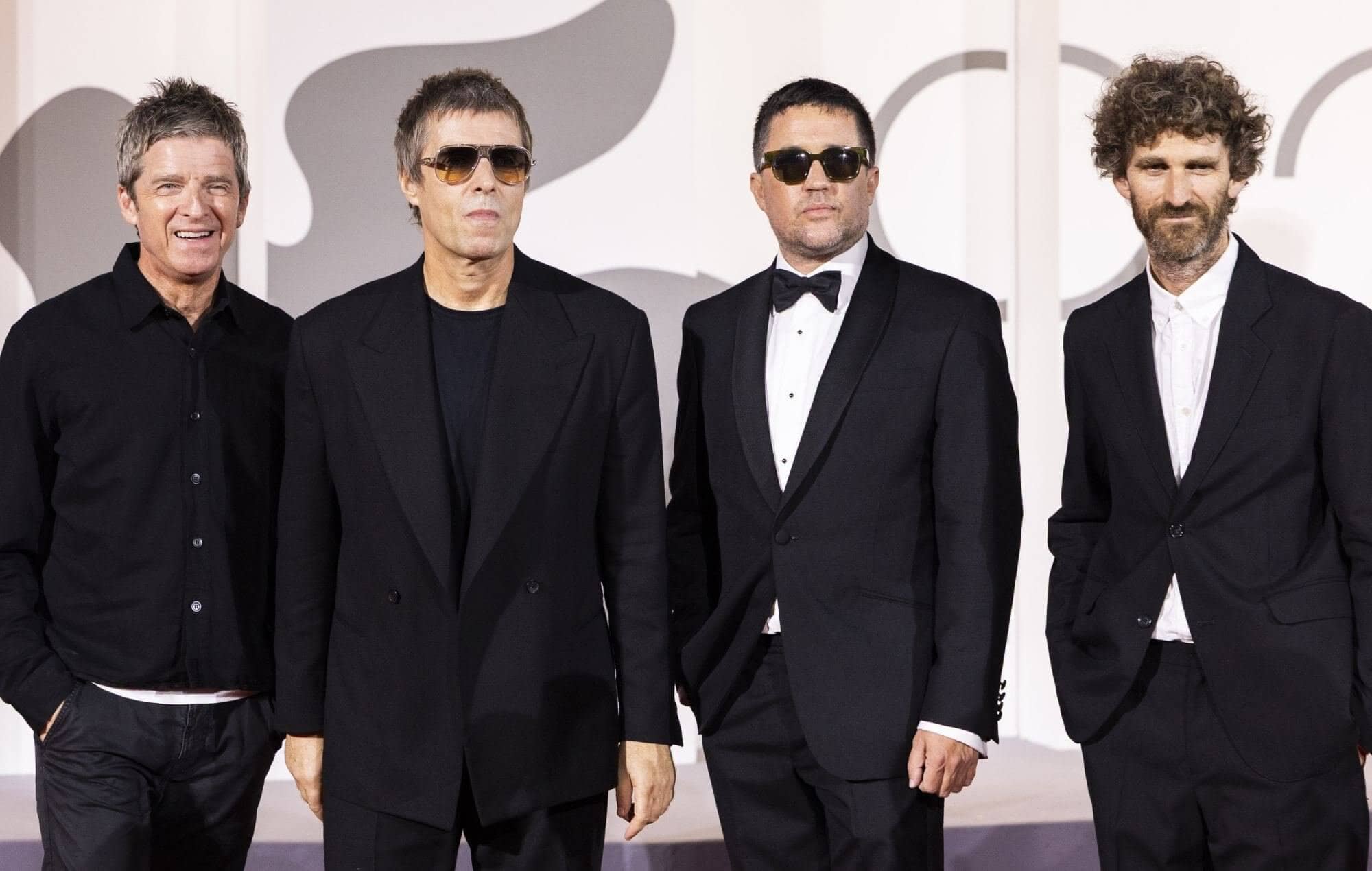
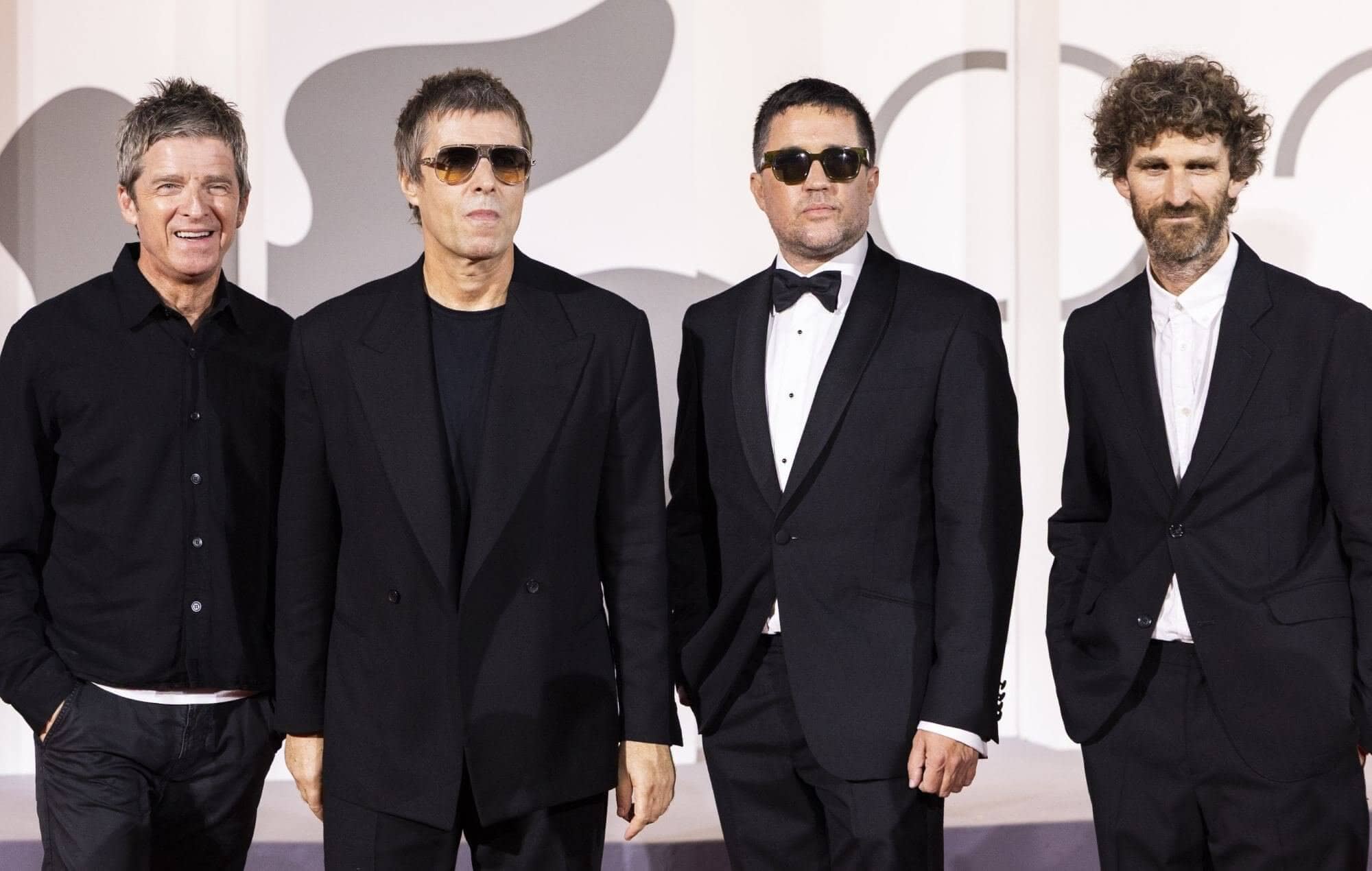
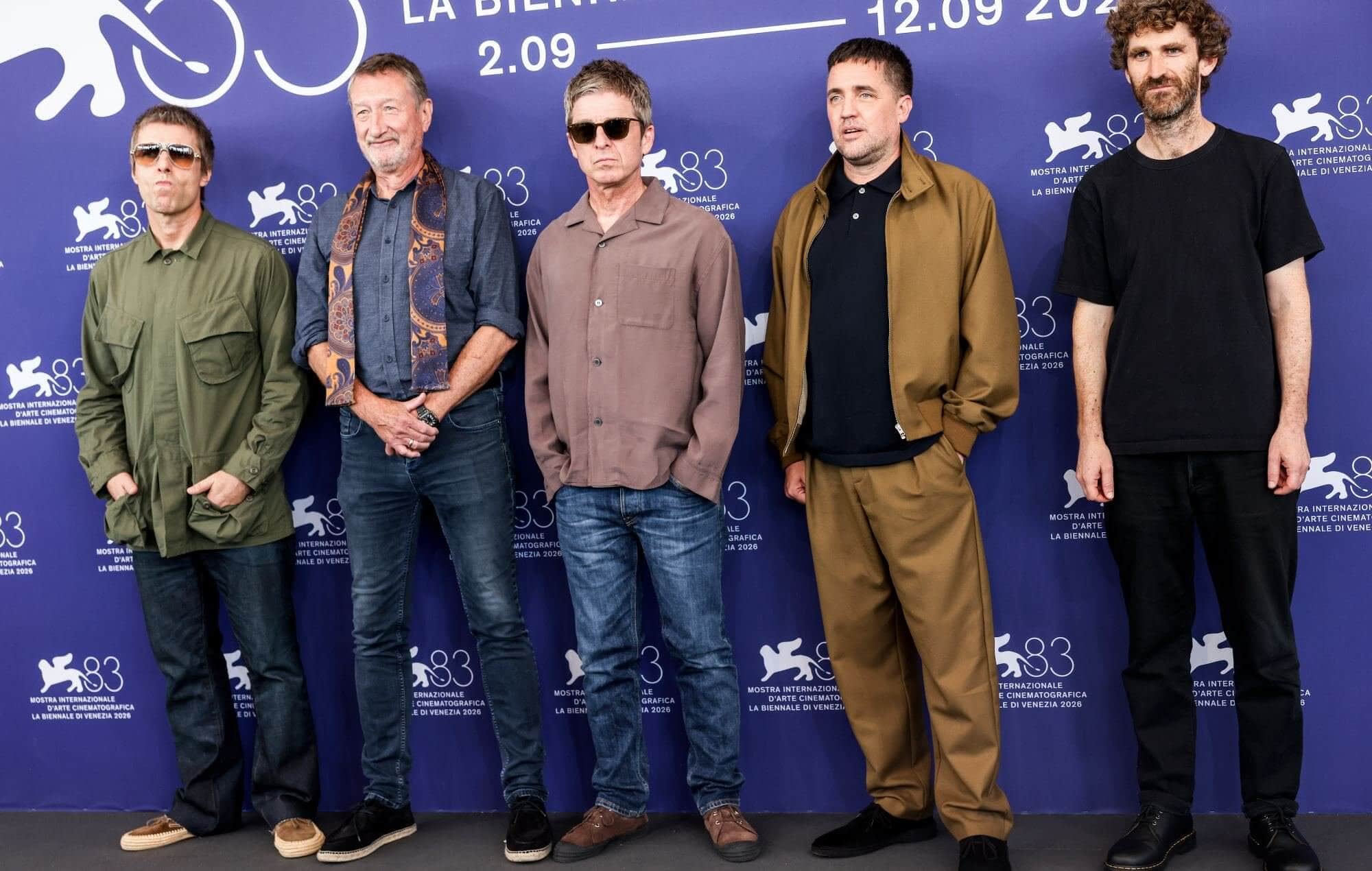
The filmmakers had experienced the scale of Oasis fandom firsthand during a “wild” night in Venice. Fans camped along the red carpet waiting for Liam and Noel to arrive, an unusual sight even for a major film festival. Once the brothers appeared, the event seemed to take on a life of its own.
That intensity also shaped the documentary. The concerts had to feel less like archival footage and more like a ticket finally obtained after years of waiting.
The first rehearsal was remarkably ordinary
If you’re expecting a dramatic, slow-motion reunion with swelling strings, Don’t Look Back In Anger offers something much more Oasis-like. Liam walked into the rehearsal room, dropped his bag, and asked whether everyone was ready to get on with it.
Then the band played through a two-hour set.
During the outro to “Champagne Supernova,” Liam picked up his bag and left while the song was still being played. No grand speech. No theatrical embrace. Just a very British refusal to make a fuss.
That restraint became part of the film’s emotional power. The filmmakers wondered whether the brothers would argue, whether the reunion would last, and whether they would make it to the tour. Instead, both seemed focused on giving fans the best show possible.
The emotion arrived later, when the crowd reacted with a force neither brother had quite anticipated.
“That’s Oasis! That British, unemotional thing of, ‘Let’s just get on with this’. The emotion comes later when the reaction of the audience was at a level they weren’t expecting.”
— Dylan Southern
Cardiff changed the emotional temperature
The opening Cardiff show carried all the nervousness of a high-wire act. Everyone was asking the same questions: Would it work? Would the brothers stay together? Could the old chemistry return without the old explosions?
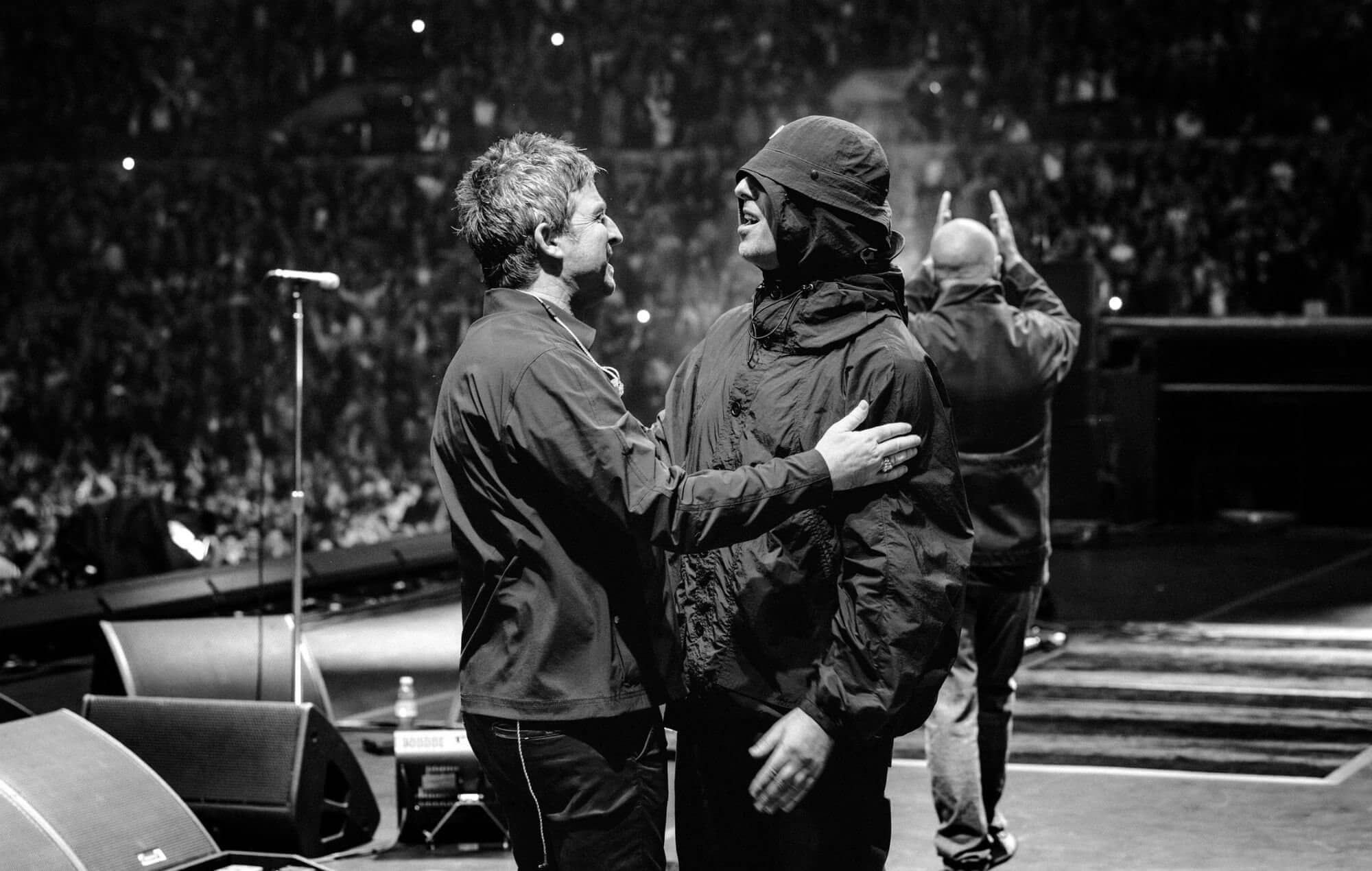
Then Liam reached for Noel’s hand as they walked onstage together.
Noel hadn’t expected it. The audience hadn’t expected it. Even the filmmakers were surprised. For a fleeting moment, the famously complicated relationship became startlingly simple: two brothers walking toward a stage, arm in arm, while tens of thousands of people roared their approval.
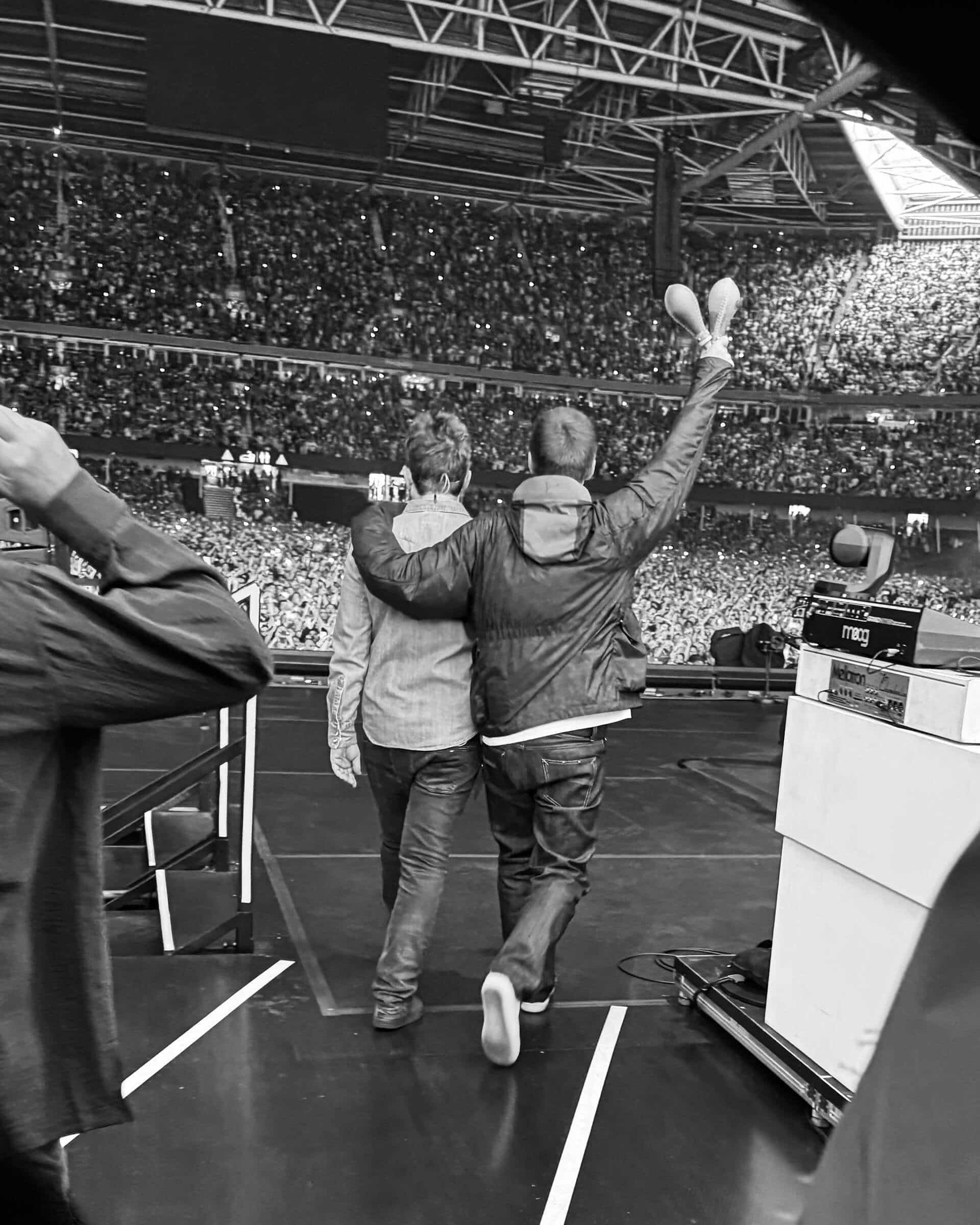
Southern described standing in the crowd as an experience unlike anything he had felt at a live show. Noel even admitted that he wished he could have called a time-out and returned to the dressing room because he had underestimated the emotional impact.
The audience needed the moment as much as it wanted it. That distinction matters. This wasn’t only about seeing Oasis perform again; it was about witnessing a part of people’s lives return to the stage.
Across the tour, the brothers’ relationship appeared to grow warmer. Every show brought another crowd, another shared performance, and another reminder that the music still worked as a bridge between them.
A temporary escape from a divided world
Inside the stadiums, the outside world seemed to fall away for a few hours. The directors compare the feeling to attending a soccer match where everyone supports the same team—and everyone wins.
That sense of collective release became one of the documentary’s central ideas. Oasis first arrived in the 1990s as a breath of fresh air, and the reunion seemed to land at another moment when people were hungry for something communal.
The concerts didn’t erase the troubles beyond the stadium gates. They simply offered a place where those troubles could be set down for a while. Thousands of people could sing the same words, celebrate the same melodies, and feel part of a single enormous room.
Remembering Mani and celebrating Bonehead
The film’s tribute to Mani carries particular weight. When the Stone Roses musician died while Oasis were on the road, the shock was felt throughout the band and crew. The crowd’s response that night made it clear how deeply he was loved.
The filmmakers felt the tribute belonged in the documentary because it showed the emotional world surrounding the tour—not just the reunion itself, but the history and friendships carried into those stadiums.
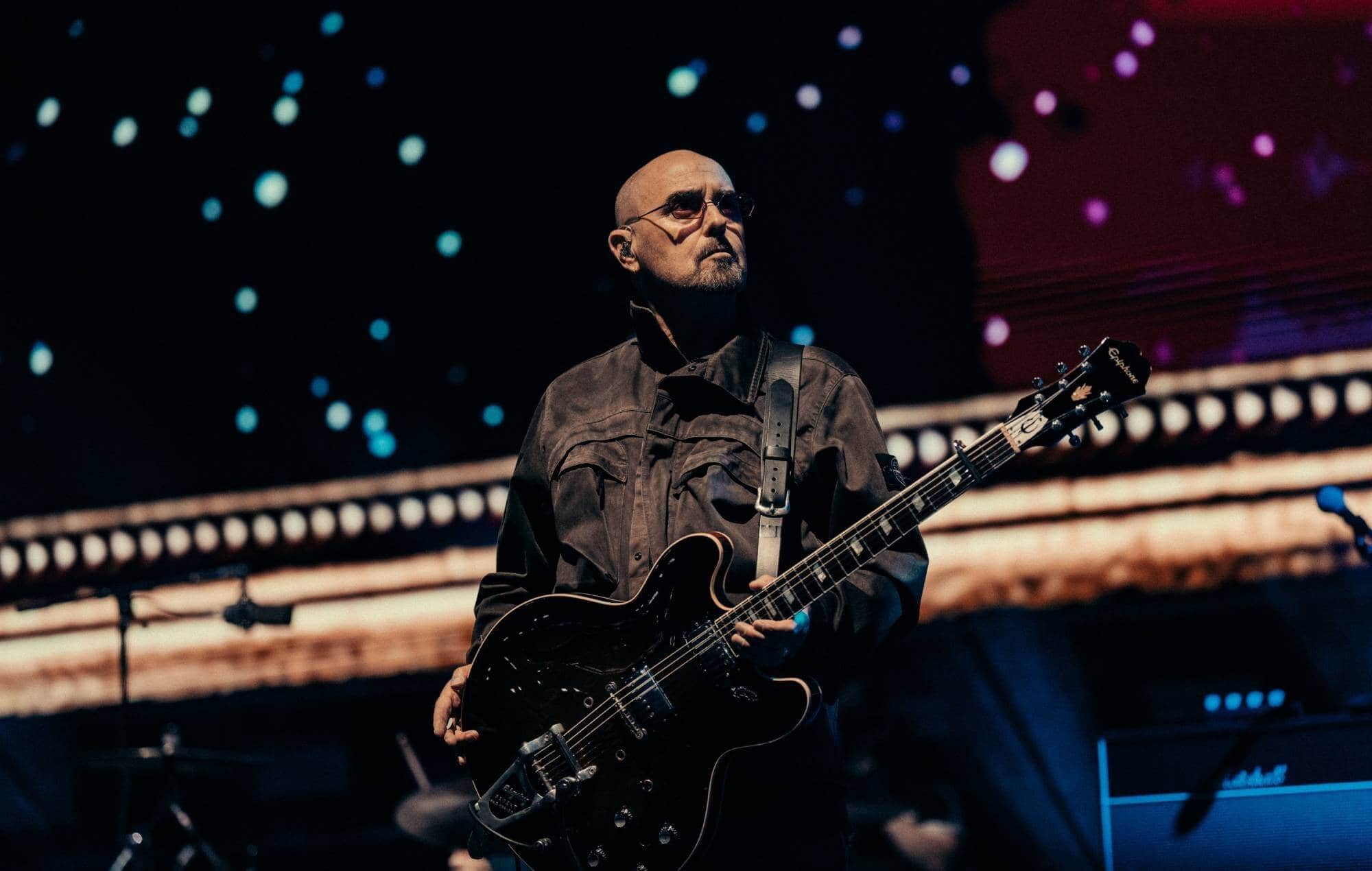
Bonehead receives another heartfelt spotlight. During rehearsals, the camera’s attention repeatedly drifted toward him. He is not only a distinctive personality but also a vital part of Oasis’ sound, with guitar playing that helps define the band’s chemistry.
His position between Liam and Noel—both onstage and during rehearsals—makes him an essential ingredient in the group’s dynamic. Like the Gallagher brothers, he’s also a natural comedian, bringing a lighter energy to a story that could otherwise become overwhelmingly serious.
When the directors were told that fans would happily watch an entire documentary about Bonehead, Southern jokingly replied:
“We’ll make one for you!”
— Dylan Southern
The magic of Liam and Noel together
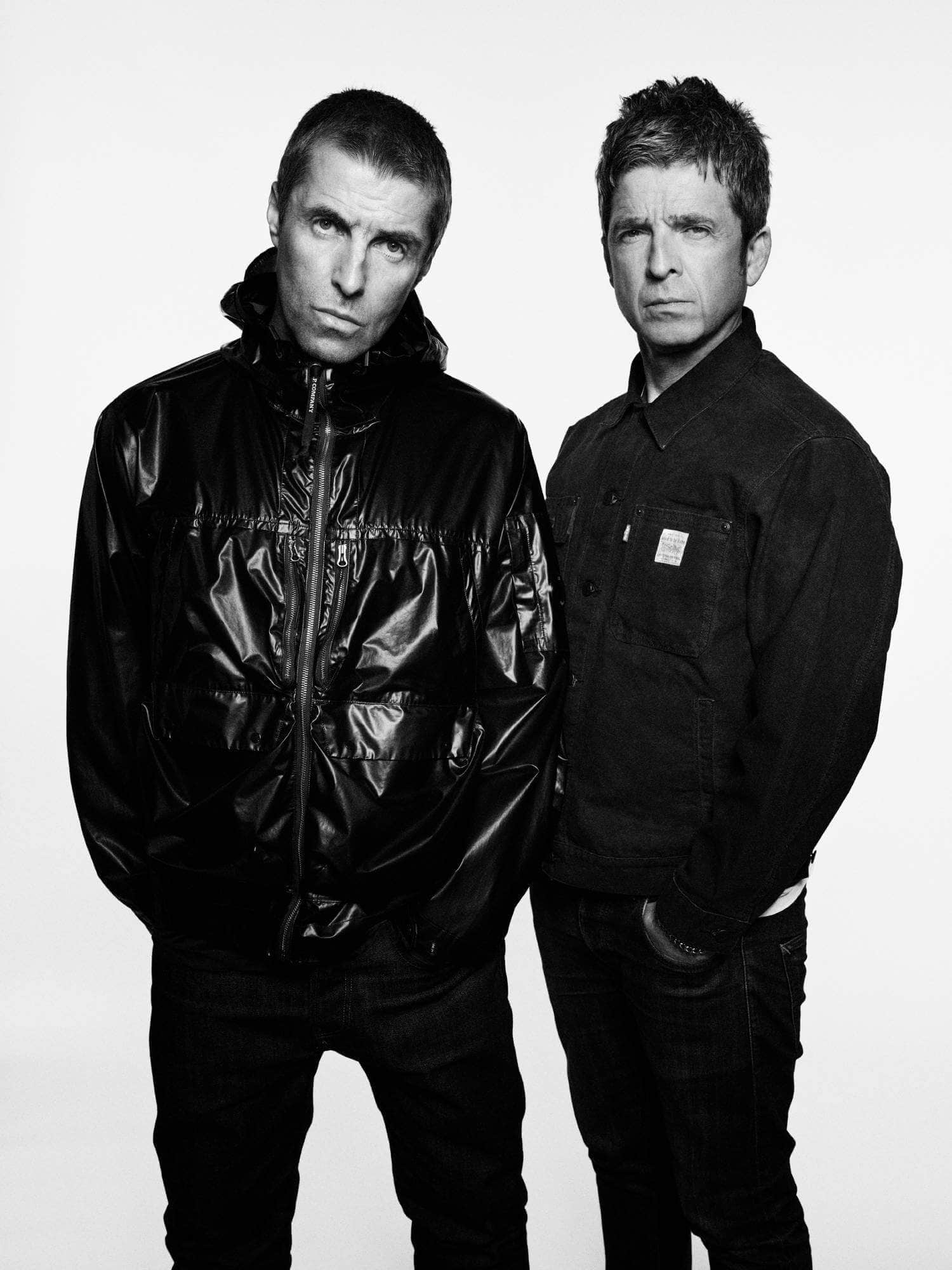
One of the film’s most revealing moments is an interview with Liam and Noel sitting together. They hadn’t shared an interview in that way for many years before the split, making the scene feel like a small miracle in itself.
What makes it work is that neither brother appears to be performing a version of reconciliation for the cameras. Their humor, affection, and familiar rhythm feel natural. The relationship seems to have found its way back—not to the past exactly, but to something recognizable from it.
The brothers have spoken about messaging each other daily and sending one another silly videos. Their easy laughter at Venice reinforced the impression that forgiveness was no longer merely a theme in the film. It had become part of their daily lives.
A sermon written by perfect timing
One of the documentary’s most unexpected moments involves a priest delivering an Oasis-themed sermon. It sounds like the sort of scene that might have been created specifically for a film, but the circumstances were far more accidental.
The crew visited Burnage, the neighborhood where the Gallaghers grew up, and filmed at St. Bernard’s Church, where their mother still sometimes attends. They met Father Luke and returned to film a Thursday morning service.
The biblical reading that day concerned Peter asking Jesus how many times he must forgive a brother who has sinned against him. The priest then shaped his sermon around the Gallagher brothers’ relationship.
The filmmakers couldn’t have planned a better match for the documentary’s themes. Oasis’ language is often grand and religious—“biblical” and “celestial” are words Liam uses freely—and the concerts themselves can feel almost devotional. Father Luke was expected at the premiere, possibly wearing a clerical collar, a Slayer shirt, or both.
What comes next for the footage?
The directors filmed weeks of rehearsals and concerts around the world, leaving a vast amount of material outside the final cut. Choosing which songs to use, and selecting the strongest performances from different cities, became a major part of the editing process.
There is enough unused material for fans to hope for a live album, a full concert film, or a physical release. The filmmakers said those conversations had not yet happened, though they clearly hope the unseen footage eventually reaches viewers.
They also remain uncertain about whether they’ll join the band on the road again. Asked about another tour, they admitted that they weren’t the right people to ask.
One thing they do hope for is a new generation of guitar bands. Oasis inspired countless young musicians in the 1990s, and the filmmakers believe these concerts could spark that same urge again—the irresistible thought that maybe it’s time to pick up a guitar and start a band.
The question is whether that kind of scene can grow in the same way in the modern era. For now, they’re happy to wait and see.
Oasis: Don’t Look Back In Anger arrives in IMAX and cinemas on Wednesday, September 9, before later moving to Disney+.
Conclusion
Don’t Look Back In Anger isn’t simply a concert film. It’s a record of trust returning one rehearsal, one song, and one stadium at a time. The documentary understands that the power of Oasis has never belonged only to Liam and Noel—it also lives in the fans who keep showing up, singing louder than expected.
FAQ
- What is Oasis: Don’t Look Back In Anger about?
The film follows Liam and Noel Gallagher as they reunite for the Live ’25 tour, covering rehearsals, backstage moments, interviews, and stadium performances. - Who directed the Oasis documentary?
Will Lovelace and Dylan Southern directed the documentary, with Steven Knight also involved in conversations with the band. - Why was the Cardiff concert important?
Cardiff marked the emotional beginning of the reunion shows. Liam and Noel walking onstage together, with Liam reaching for Noel’s hand, captured the warmth and surprise surrounding their return. - How does the film pay tribute to Mani and Bonehead?
It remembers the grief felt after Mani’s death while the band was touring and highlights Bonehead’s musical importance, humor, and central place between the Gallagher brothers. - Will there be a live album or more unseen footage?
The directors said a live album or additional release had not yet been discussed, but a large amount of rehearsal and concert footage remains unseen.
For fans who want to keep that reunion-era feeling close, browse our favorite album cover posters—a warm, wall-ready tribute to the records and moments that never really leave us.
 | DISCOUNTGET 30% OFF*Use code on your next order:
|
* This post may contain affiliate links, meaning we earn a commission if you make a purchase through these links, at no additional cost to you.