Pulp Film: Jarvis Cocker on New Beginnings and What Comes Next


 See more Architeg Prints stories on Google.
Pulp Film: Jarvis Cocker on New Beginnings and What Comes Next
Pulp film What Do You Do For An Encore? captures the band’s return, emotional history, new generation of fans, and Jarvis Cocker’s hopes for the future.
A New Chapter for Pulp
Some concert films preserve a night. Pulp film What Do You Do For An Encore? tries to preserve something bigger: the feeling of a band finding its way back to itself.
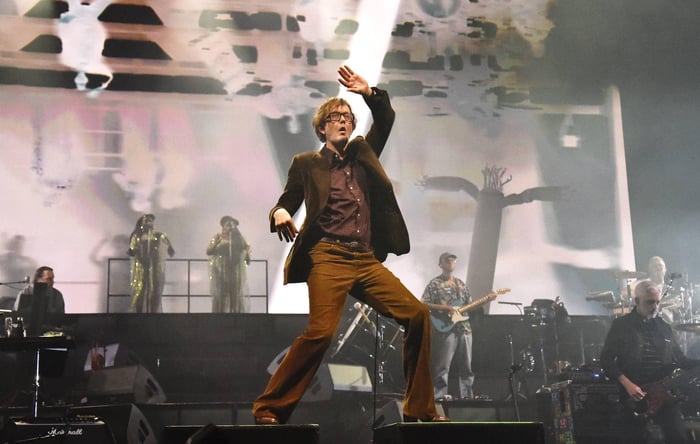
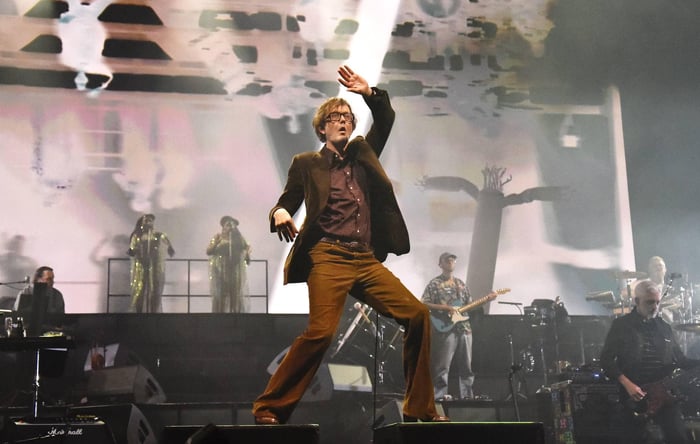
Jarvis Cocker spoke about the movie shortly before its London premiere, reflecting on Pulp’s unusual history, the group’s ever-changing lineup, the late Steve Mackey, and the uncertain road ahead. The conversation took place before an afterparty that rolled into Cocker’s 63rd birthday celebrations at Soho’s Bar Italia—a location forever linked with one of Pulp’s most recognizable songs.
Directed by Garth Jennings, the filmmaker behind Pulp’s “Help The Aged” and “A Little Soul” videos, the 90-minute movie documents two sold-out shows at London’s O2 Arena. It combines concert footage with narration from the band, unseen archive material, and rare behind-the-scenes moments.
The film also traces Pulp’s journey from obscurity to cultural landmark, leading into the group’s major tour supporting More, its first album in 24 years. For longtime fans, that gap is almost comically enormous. It’s the sort of pause that makes you wonder whether a band is returning—or being summoned from the past.
Why the New Songs Felt Like a Beginning
That sense of uncertainty became part of the film’s emotional center. When Pulp returned with new material, Cocker wasn’t sure how the songs from More would sit beside the classics.
For Cocker, the documentary accidentally captured the exact week More was released. That timing gave the film an extra layer: it wasn’t simply documenting a successful comeback, but showing the band discovering in real time that its present could coexist with its past.
“The thing that I was concerned about was if the new songs would fit with the old songs. Would they play well together, or would they not? You know, this is a 24-year gap between the last record. So it was an amazing thing that we played them; they fit in, and it all went well.”
The old songs, he explained, only truly come alive when Pulp performs them. They may live on records, in headphones, and in the memories of fans who learned every syllable, but the stage gives them another pulse. Then the new songs arrived, bringing a different kind of energy.
“It was great to play the old songs. That’s the time when they come back to life, is when you play them live. But then to have new stuff as well, it was like a new beginning or something.”
That phrase—“a new beginning”—might be the simplest way to understand the film. Pulp didn’t merely revisit its history. The group used that history as a launchpad.
A Band Built on Chemistry, Not Perfection
From there, the conversation turned to what makes Pulp sound like Pulp. Cocker admitted that releasing More did leave the band with something to prove, although the biggest relief was the lack of a musical disconnect.
It felt, he said, as if the band had simply left the room, made an album, and returned. The missing 24 years were somehow folded into the music without creating a wall between the old Pulp and the new one.
During that long gap, Cocker had become a father and made solo music, but Pulp remained its own strange organism. For him, the group’s identity has always come from the combination of its members rather than from any one person’s technical ability.
Candida Doyle, the band’s keyboard player, has dealt with arthritis that limits her playing. Yet Cocker sees that limitation as part of the group’s musical character. Pulp’s sound developed from what its members could do, not from an attempt to imitate conservatory-level musicianship.
None of them, he suggested, were especially trained. Doyle was the only member with something resembling formal piano education—“grade four piano or something,” as he put it—while everyone else operated on instinct, personality, and a cheerful amount of “Whatever.”
When asked whether he had at least learned the recorder at school, Cocker gave a wonderfully direct answer: no. He once tried to learn how to read music but couldn’t manage it.
That lack of conventional polish has never been a weakness for Pulp. It became part of the magic. The songs feel carefully observed, but the band itself has always carried a wonderfully scruffy, human quality.
Twenty-Four Members and One Unlikely Gang
The film includes a timeline showing the remarkable number of people who have been part of Pulp over the past 48 years: 24 members in total.
That revolving cast matters because musicianship was never the only requirement for joining the band. Cocker said the more important question was whether people got along. Pulp began, in part, as his way of finding a gang.
He described himself as a shy child who wasn’t good at sports. Forming a band offered another route into friendship and belonging. A person needed to survive the van ride to a concert without causing a feud, just as much as they needed to play an instrument.
The group’s shared DNA, then, wasn’t technical brilliance. It was individuality.
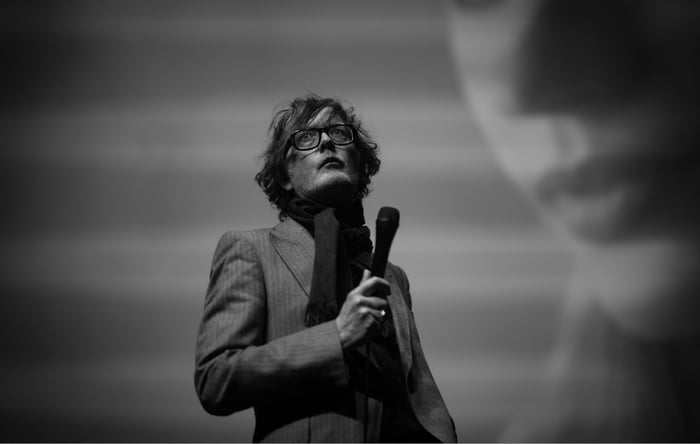
Cocker remembered Pulp’s early members as school misfits who weren’t particularly interested in sport. The first drummer even left because he wanted to play football, which feels like the most Pulp-adjacent reason imaginable to lose a band member.
Over the years, the group was compared to the escape party from One Flew Over The Cuckoo’s Nest during a van trip to a show in Hull. Cocker didn’t reject the comparison. If anything, he suggested that the description still fits.
Pulp has always sounded like a collection of outsiders who found a shared language. The lineup changed, the circumstances shifted, and decades passed, but that essential oddness remained intact.
Remembering Steve Mackey
One of the film’s most meaningful elements is its tribute to Steve Mackey. Cocker was grateful that Jennings included it, while also recognizing how difficult it can be to honor someone without making the tribute feel forced.
Mackey was the member of Pulp closest to Cocker. His importance went beyond bass playing. When Cocker moved to London, the flat he expected to have had been given to someone else. Suddenly homeless, he turned to Mackey, who was squatting in Camberwell.
Mackey told him that there was a free room below the house. In Cocker’s words, Mackey “rescued” him.
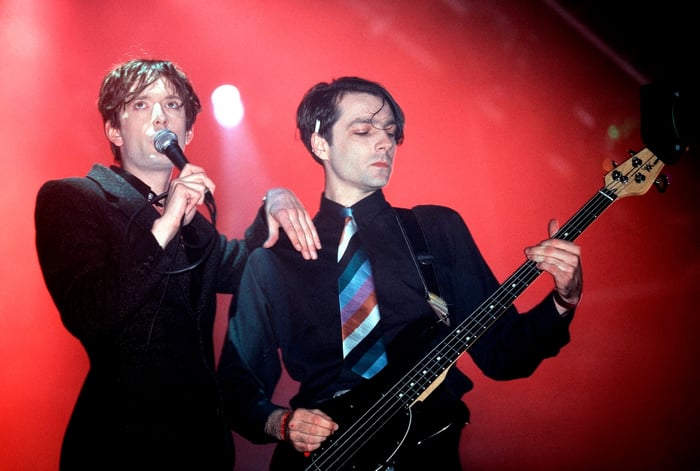
Mackey’s arrival also meant there were now two Pulp members living in London. Even during periods when the band wasn’t doing much, he remained organized and determined to make the group work.
Cocker believes Pulp might not have continued without that drive. Mackey joined as the bass player, but his contribution became much larger than the role listed on a stage plan. He supplied momentum when the band could easily have drifted away.
The tribute in the film reflects that history without overwhelming it. There’s affection, gratitude, and the sense of a friendship that helped keep an entire musical life from disappearing.
How Garth Jennings Shaped the Show
Jennings first contacted the group when Pulp announced its return, offering to help in any way he could. Cocker initially assumed that meant designing the stage show. It turned out to be a slight misunderstanding—but a productive one.
When the two met in Paris, they realized they had both recently seen ABBA’s Voyage production. Beyond its digital performers, they were interested in how the show combined spectacle with real musicians onstage.
That production became an inspiration for Pulp’s own staging. Jennings designed the stage show seen in the documentary, and when the idea of making a film emerged, he was naturally positioned to direct it.
The original plan was to film Pulp at the end of an earlier touring period, following the group’s shows at Eventim Apollo in Hammersmith. However, the financing disappeared at the last moment, and the project was abandoned.
In retrospect, that delay may have helped. The eventual film captures Pulp at the moment it returned as a creative force, rather than simply recording a band midway through a reunion tour.
A Younger Audience Finds Pulp
The shows also revealed something that surprised Cocker: younger fans had discovered the band.
When the concerts were first offered, a promoter told him that Pulp songs were being played at shows and that audiences were singing along. Cocker’s first reaction was understandable performer anxiety: was the promoter certain people would actually turn up?
It took time to convince him. Eventually, he decided to trust the information and give it a try. The result was an audience that included both longtime devotees and a new generation encountering Pulp on its own terms.
Cocker was especially pleased because Pulp had always wanted to be a pop band. For him, pop music belonged to young people. It helped him understand how life might work, offering little clues about dating, kissing, and the emotional mysteries that seemed much larger when you were young.
The fact that younger listeners were still finding those things in Pulp’s music suggested that the songs hadn’t gone stale. The pop was still “fizzy,” still able to energize people.
Pulp’s Honest Version of Romance
Could Pulp offer audiences an escape from difficult times? Perhaps—but Cocker pointed out that Pulp songs are hardly relentlessly cheerful.
“Something Changed” is one of the group’s more straightforward love songs, and many people have told him they played it at their weddings. Still, his approach to songwriting has always been rooted in the awkward, less polished parts of life.
He felt that pop music sometimes let him down by presenting love in unrealistic terms. His goal was to write about what romance and relationships actually feel like, including the embarrassment, uncertainty, and clumsy moments that rarely make it into a perfect chorus.
That honesty is a big part of Pulp’s appeal. The band doesn’t promise that everything will be wonderful. Instead, it suggests that ordinary life can be dramatic enough on its own. You can take what happens to you, reshape it, and turn it into art without pretending to be someone else.
Will Pulp Make Another Album?
The end of the film asks why Pulp is still doing this. Cocker’s answer—“Why wouldn’t you?”—sounds open-ended rather than definitive.
He believes there is a future for the band, but he avoids making firm predictions. After all, the group has already returned from a 24-year gap, and waiting another 24 years is no longer practical. As Cocker joked, he would be dead by then.
For now, the band will probably rest. Perhaps later in the year, he’ll call the other members and suggest a rehearsal. The future may develop naturally, as Pulp always has.
Cocker described the group as organic: sometimes it bears fruit, and sometimes it doesn’t. Still, he feels confident that Pulp will manage to create something else, even if he can’t say when.
The possibility of a new album could also be shaped by newer members Emma Smith and Richard Jones, who come from more classical musical backgrounds. With nine people now involved, Cocker is curious about exploring that influence.
“That’s the good thing about music: you don’t know where it’s going to take you, but hopefully it could take us somewhere good.”
Life After the Encore
For the immediate future, Cocker remains busy with his radio show on BBC 6 Music. He was also looking forward to spending time with his wife and dog, which sounds like a pleasantly low-key counterpoint to sold-out arenas and film premieres.
He and his wife were also curating an art show scheduled for the Hepworth Gallery in Wakefield the following May. That project was expected to occupy plenty of his time.
Pulp’s recent special performances may or may not have been recorded. At a Southbank show celebrating Rough Trade’s anniversary, the band played More in full alongside deep cuts, including “Wickerman.” At End of the Road, they performed “Deep Fried In Kelvin” for the first time.
Cocker hoped the shows had been recorded but wasn’t sure. Even if they were, he didn’t expect the recordings to be released.
As for the film itself, he hoped viewers enjoyed it. Watching the archive footage made him feel as if his life were flashing before his eyes—though, as he quickly clarified, he wasn’t dead. Not yet, anyway.
Pulp’s return feels less like a nostalgic victory lap than a reminder that bands can change shape without losing their strange, beating heart. What do you hope the group explores next?
FAQ
- What is the Pulp film about? What Do You Do For An Encore? documents Pulp’s sold-out O2 Arena performances, combining concert footage, archive material, behind-the-scenes scenes, and reflections on the band’s long journey.
- Who directed the Pulp film? The film was directed by Garth Jennings, who previously worked on Pulp’s “Help The Aged” and “A Little Soul” music videos.
- What album was Pulp promoting during the tour? The tour followed the release of More, Pulp’s first album in 24 years.
- How many people have been members of Pulp? The film’s timeline highlights 24 members across the band’s 48-year history.
- Will Pulp release another album? Cocker suggested that Pulp has a future, but he didn’t give a firm timeline. He said the band would likely rest before deciding what comes next.
Bring a little of Pulp’s wonderfully offbeat spirit into your space with a favorite album cover poster from Architeg Prints. It’s a warm, stylish way to keep the music—and the memories—close.
 | DISCOUNTGET 30% OFF*Use code on your next order:
|
* This post may contain affiliate links, meaning we earn a commission if you make a purchase through these links, at no additional cost to you.