Riff Wood’s Green Day Roots Fuel a Hopeful New Album


 See more Architeg Prints stories on Google.
Riff Wood’s Green Day Roots Fuel a Hopeful New Album
Riff Wood’s Green Day roots meet Rob Cavallo’s studio wisdom on a playful, positive new record built to give their generation hope.
A Pop-Punk Spark From Davis County
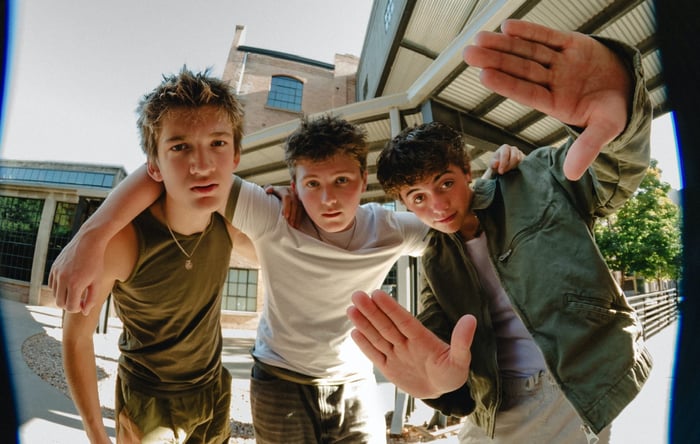
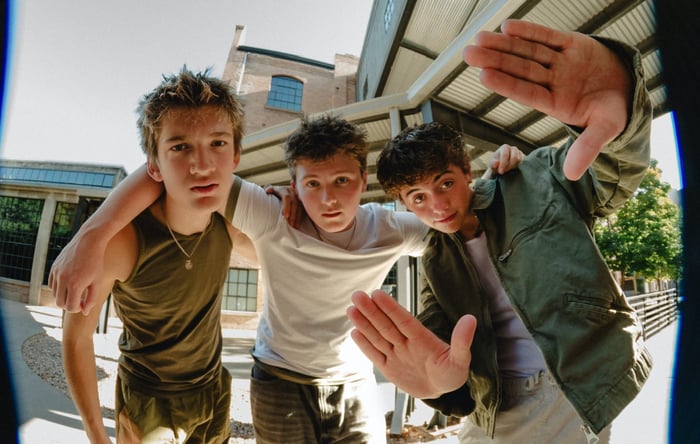
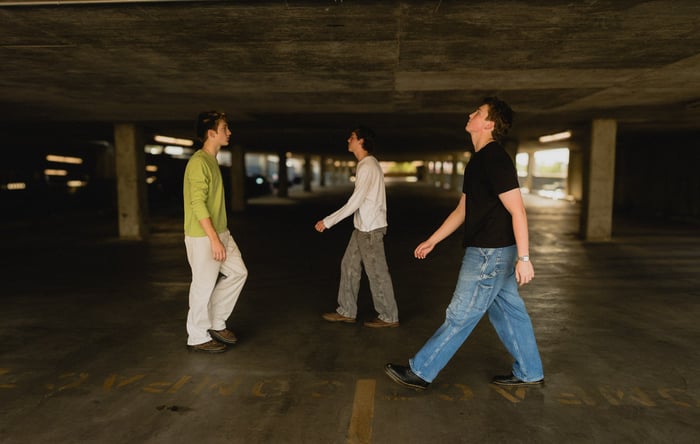
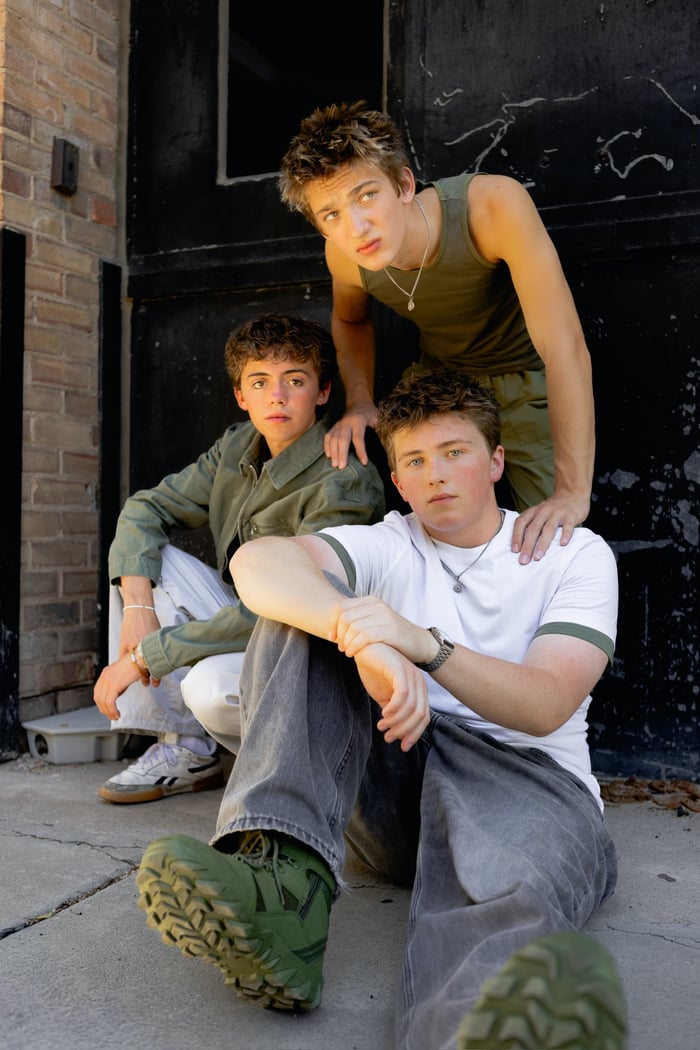
Some bands begin with a grand plan. Riff Wood began with a musical comedy series, a borrowed guitar-shaped dream, and the life-changing jolt of hearing Dookie for the first time. Six years after forming, the Utah trio has turned those early sparks into Butterfly In Black And White, a record that keeps its pop-punk heartbeat while reaching for something broader.
The group—Carson Groves, Hyrum Russon, and Shredder—first wanted to start a band after watching Julie And The Phantoms. Then Green Day’s 1994 album entered the picture, and suddenly the path ahead seemed obvious. The record’s energy was immediate, melodic, and just scrappy enough to make three developing musicians believe they could try it themselves.
“‘Basket Case’ was the song that got us all into rock music,” Groves explained. “It was just so carefree and [whenever we saw clips of them performing live] they just looked like they were having a blast on stage.”
Russon remembered that the album’s simplicity was part of its magic. “We were still learning guitar at the time and [‘Dookie’] wasn’t full of Van Halen-style shredding. It was so simple, it felt like we could do it too.”
That approachable quality helped steer the band toward Green Day, Blink-182, and other pop-punk favorites. For Shredder, the sound also stood apart from the rap and pop they were listening to at the time. It felt fresh, loud, and exciting—exactly the kind of musical left turn that can rearrange a teenager’s entire playlist.
Why the New Album Is Called Butterfly In Black And White
That playful spirit continues in the album’s title and artwork. The cover began with an ordinary accident: Russon spilled milk before band practice, and Groves photographed the shape it made. Once the trio noticed that the spill resembled a butterfly, curiosity took over. They began looking into the symbolism of black-and-white butterflies and found a meaning that matched the record’s emotional center.
“In some cultures it’s good luck, others see it as a sign of misfortune and death,” Russon said. “This whole album is about duality, positives and negatives, so it was a perfect fit.”
That contrast runs through the music. Butterfly In Black And White still delivers sharp guitars, energetic hooks, and the kind of teenage attitude that makes you want to jump around your room with absolutely no regard for nearby furniture. Yet compared with the band’s debut, Tough Luck, the new collection stretches further.
The first album was described as pure pop-punk. This time, Riff Wood are allowing more influences, arrangements, and ideas into the frame. Groves said the trio keeps discovering new sounds through records and live shows, then experiments with those influences until they become something that feels unmistakably like Riff Wood.
From Green Day Foundations to a Wider Sound
The record’s Green Day-inspired roots are still easy to trace, but the band doesn’t see that connection as a limitation. Shredder described the new album as more advanced and mature while still growing from the same foundation as Tough Luck.
Groves said the songwriting process became more adventurous. The musicians tried different chord progressions, explored changing time signatures, and wrote about topics they hadn’t tackled before. Instead of simply repeating the formula that first brought them together, they wanted to see how far the songs could travel.
Russon also pointed to the natural changes in their voices. In earlier videos, the members were consciously echoing Billie Joe Armstrong’s style. With this album, however, they feel more comfortable in their own identities.
“If you look at old videos, we’re definitely trying to copycat Billie Joe Armstrong—but with this record, we’ve found our own voices, and we know who we are [as a band].”
The trio doesn’t seem interested in proving a point for its own sake. Still, the album’s development may answer some of the comparisons that follow any young band with strong influences. Listeners may continue to hear Green Day in Riff Wood, but Russon said he doesn’t hear that influence as strongly on Butterfly In Black And White.
The Records Behind the Record
The album’s inspiration is a lively mix rather than a single straight line. Russon named Green Day, Radiohead, and The Beatles as influences on songs written across different periods. That timeline matters: some tracks began two years earlier, while others arrived much more recently, giving the album a layered sense of time.
Shredder’s drumming drew from The Police and Van Halen, as well as Tré Cool and Travis Barker. That combination suggests a rhythm section capable of moving between tight, punchy punk momentum and more intricate flourishes without losing the band’s directness.
The Beatles remain especially important to the group. After seeing a documentary about Oasis, Riff Wood became fascinated by the lasting emotional power of the band’s music and began listening through the catalog. The experience reinforced something they had already witnessed while seeing Paul McCartney perform on his Get Back tour.
Groves described that concert as surreal. Songs written decades earlier were being sung by people of dramatically different ages, with older fans standing alongside children and teenagers. The sight of an entire crowd connecting through the same melodies made a lasting impression.
“Seeing them connect to the music and how much it impacts their lives, it was just so inspiring. You can’t help but want to do something similar.”
Working With Rob Cavallo
The album was produced by Rob Cavallo, whose work includes Green Day’s Dookie and American Idiot, Paramore’s Brand New Eyes, and My Chemical Romance’s The Black Parade. For a young band raised on those albums, stepping into his world was bound to feel a little unreal.
Russon recalled seeing guitars connected with famous recordings whenever the band entered the studio. The instruments included the guitar Billie Joe Armstrong used for “Good Riddance (Time of Your Life),” one associated with “Iris,” and another linked to “The Only Exception.”
“Every time we go into the studio, we see the guitar that Billie used to record ‘Good Riddance (Time Of Your Life)’. It was so surreal and mind-blowing.”
Groves found Cavallo demanding but approachable. The producer pushed the musicians to improve while creating a relaxed enough environment for them to perform naturally. His central lesson was simple: authenticity matters more than endless perfection.
“If you do too many takes, a song loses its authenticity—and sometimes, imperfect is far more interesting.”
That philosophy fits Riff Wood’s music perfectly. Their appeal comes partly from the sense that the songs are alive—slightly rough at the edges, emotionally direct, and more interested in connection than polish for its own sake.
Watch Riff Wood’s acoustic performance clip.
A Band That Still Leaves Room to Play
The album’s sense of fun was never a calculated strategy. Russon said the trio approached Tough Luck before they had an audience, which meant they were free to make whatever felt exciting. They carried that same instinct into the new record.
Groves added that Riff Wood doesn’t feel pressured to satisfy outside expectations. If the music isn’t meaningful to the people making it, he believes listeners will sense that distance too.
That honesty also shapes the album’s themes. The songs come from personal experiences, observations about the world, and moments when music became an outlet for feelings that were difficult to express in ordinary conversation.
Ultimately, Butterfly In Black And White is about finding hope when hope feels scarce. That message isn’t delivered as a glossy slogan. It comes wrapped in guitars, energetic choruses, and the messy emotional truth of growing up in a complicated moment.
“We want to give hope to our generation.”
Russon emphasized that many of the band’s listeners are close to the trio’s age and are facing similar pressures while preparing to take on adulthood. Groves described music as one of the most powerful ways people can unite, especially when the wider world feels overwhelmed by anger and uncertainty.
The album isn’t intended as a political statement, but it does carry a clear emotional promise: things can get better, and choosing hope still matters.
Taking the Songs Beyond Utah
Riff Wood built its early experience around its hometown before touring outside Utah for the first time in 2025. Earlier this year, the band also played its first shows outside the United States. Those experiences expanded the trio’s sense of what the music could do.
Groves said the band now feels driven to share its songs with as many people as possible—not for status, but for the connection that happens between performers and fans. Bigger rooms, naturally, make that feeling even more powerful.
The group’s touring journey also gives Butterfly In Black And White a wider emotional backdrop. These songs began in a local setting, but they’re now moving through new rooms, cities, and audiences. That’s a satisfying arc for a band whose earliest goal was simply to make music that felt exciting.
For a live glimpse of the band’s sound, here is the official visualizer for “Down To Nowhere”:
A New Generation’s Rock Rebirth
Riff Wood formed during a pop-punk resurgence that spread widely through short-form video platforms. But the trio recognizes that the revival can sometimes look more nostalgic than forward-thinking.
Russon mentioned several younger bands the group has befriended, including The Paradox, Trueblood, The Cherry Bombs, and Willowake. Their presence suggests a growing network of artists exploring guitar music together rather than simply recreating an earlier era.
Groves sees the renewed interest in ’90s and 2000s music as something more than parental nostalgia. Younger listeners are discovering those records through streaming and claiming them as their own. For him, the appeal comes from how genuine and emotionally direct the music still feels.
Shredder described the moment as a rebirth of rock. As artificial intelligence becomes more visible in everyday life, he believes people are searching for experiences that feel unmistakably human.
That may be the quiet power of Riff Wood’s approach. They’re not pretending the past doesn’t matter, and they’re not trapped inside it either. They’re taking familiar ingredients—big guitars, melodic punk, classic songwriting, and live-room energy—and cooking up something personal.
The band’s UK in-store acoustic shows are scheduled for the week following the album’s release, with tickets available through its official ticket listing.
Riff Wood’s Green Day roots are still part of the story, but Butterfly In Black And White makes it clear that the trio is building its own chapter. With Rob Cavallo’s guidance, a broader palette of influences, and a message rooted in hope, the band is turning youthful energy into something generous. Maybe that’s what rock needs most right now: not nostalgia alone, but a reason to believe the next chorus can still bring people together.
FAQ
- What is Riff Wood’s new album called? Riff Wood’s second full-length album is titled Butterfly In Black And White.
- What inspired Riff Wood to start making music? The trio was initially inspired to form a band after watching Julie And The Phantoms. Hearing Green Day’s Dookie soon helped define the kind of music they wanted to play.
- Who produced Butterfly In Black And White? The album was produced by Rob Cavallo, known for working on major records including Green Day’s Dookie and American Idiot.
- What themes run through the album? The record explores duality, personal experiences, observations about the world, and the importance of finding hope during difficult times.
- Which artists influenced the new record? The band cited Green Day, Radiohead, The Beatles, The Police, Van Halen, Tré Cool, Travis Barker, and Oasis as influences on the album and its performances.
If Riff Wood’s colorful, hopeful take on pop-punk speaks to your record-loving side, browse a favorite album cover poster at Architeg Prints and bring that same musical energy to your walls.
 | DISCOUNTGET 30% OFF*Use code on your next order:
|
* This post may contain affiliate links, meaning we earn a commission if you make a purchase through these links, at no additional cost to you.