Greta Thunberg Challenges Ed Sheeran Over Palestine Comments

 See more Architeg Prints stories on Google.
Greta Thunberg Challenges Ed Sheeran Over Palestine Comments
Greta Thunberg criticizes Ed Sheeran’s response to the Palestine debate and urges public figures and fans to step beyond their comfort zones.
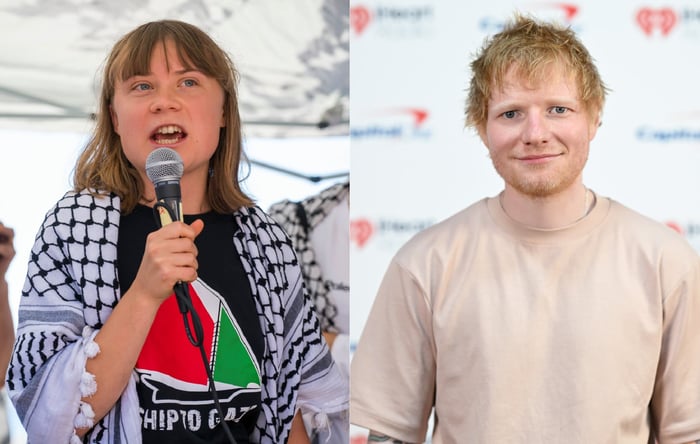
Greta Thunberg Calls for Greater Accountability
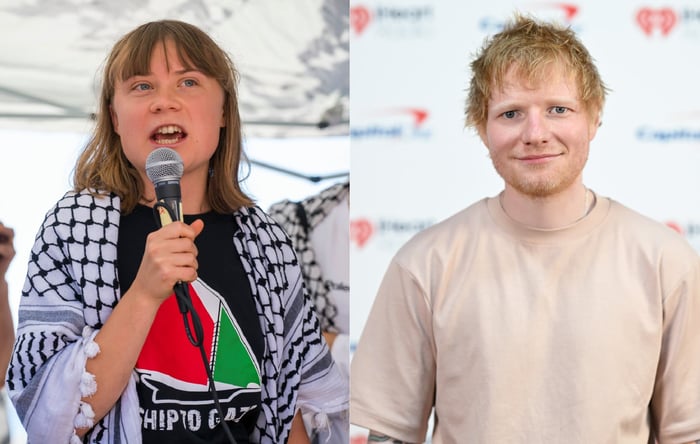
When a global star speaks, the echo can travel far beyond the stage. Greta Thunberg has criticized Ed Sheeran’s response to the ongoing debate over Palestine, accusing the singer of showing a “lack of spine” while urging people not to remain passive in the face of genocide.
The environmental activist made the comments in a recent video, arguing that public figures with large audiences and access to significant resources carry a heightened responsibility. For Thunberg, the issue is not simply about one musician or one disputed decision. It is about how artists, institutions, and ordinary people respond when taking a public stand feels personally uncomfortable.
Her message was direct:
“Yes, Ed Sheeran should be accountable for his lack of spine. But remember that we have to continuously apply the same pressure on all those complicit in all genocides. The bigger your platform and your access to resources, the bigger your responsibility.”
— Greta Thunberg
She also widened the focus beyond Sheeran, pointing toward the role played by institutions and the public. In her view, pressure should be applied through boycotts, sanctions, and divestment where appropriate.
“If we ourselves are not stepping out of our comfort zones, we are not doing enough. And remember, silence is complicity, and you cannot be neutral in a genocide.”
— Greta Thunberg
The remarks come after Thunberg’s own involvement in humanitarian efforts connected to Gaza. The text surrounding her statement says she was abducted in international waters and illegally detained in an Israeli prison while attempting to challenge the blockade and deliver humanitarian aid to the occupied Gaza Strip.
Why Ed Sheeran Became Part of the Debate
The dispute surrounding Sheeran intensified after Macklemore, a former support act on the singer’s Loop tour, was removed from the lineup following pro-Palestine remarks. Macklemore had made an impassioned “Free Palestine” speech during his support performances at MetLife Stadium in New Jersey, where he also performed his protest track “Hind’s Hall” alongside footage from Gaza.
The decision prompted backlash from Macklemore’s supporters, as well as calls for him to be removed from the tour from figures including Pink and the Israeli American Council. Sheeran later said that the final decision had been made by promoter Messina Touring Group after several venues objected to Macklemore appearing.
The controversy did not stop there. Musicians including FINNEAS, Lukas Graham, Aaron Rowe, and Beoga withdrew from the tour, while Sheeran’s backing musicians also pulled out. Suddenly, what might once have been an ordinary tour announcement had become a much larger argument about artistic freedom, political expression, and the responsibilities attached to celebrity.
That is the strange pressure cooker of pop culture: one sentence can become a headline, one lineup change can become a referendum, and one concert speech can follow an artist from city to city.
Sheeran Apologizes During His Philadelphia Return
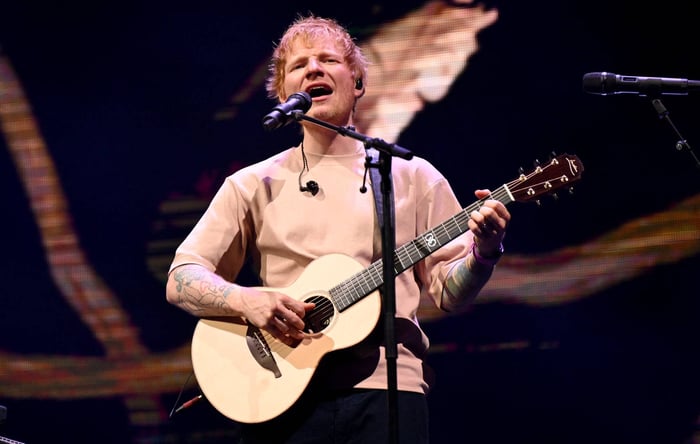
Sheeran returned to the stage in Philadelphia on September 19 and acknowledged that he had made mistakes during the fallout. Speaking to the audience at Lincoln Financial Field, he said the situation had made him question whether he wanted to continue being an artist at all.
“I’ve had to take and make difficult decisions, and I am making mistakes, and I’m so, so sorry.”
— Ed Sheeran
Sheeran explained that he had never intended to become what he called an “activist musician.” Throughout his career, he said, he had tried to avoid acting as a political commentator because he wanted his music and concerts to focus on unity rather than division, and humanity rather than politics.
Still, he said the situation had placed him at the center of what he described as an important and passionate argument about freedom of speech. He also objected to the idea that venues should pre-approve material performed by artists.
“I am deeply worried about the idea that venues should pre-approve content for performers. This happens in so many places that I perform around the world, but it should never happen in the free world.”
— Ed Sheeran
When discussing Gaza, Sheeran said he could no longer hide how he felt about the humanitarian crisis.
“I’ve tried in my career to not be a political commentator of any kind because I want my music and shows to be about unity, not division, about humanity, not politics. But this is a humanitarian issue, and I cannot hide how I feel about it anymore.”
— Ed Sheeran
He described the Hamas-led attack at the Nova music festival on October 7, 2023, as “horrific.” He then characterized the situation in Gaza as “catastrophic, unjustifiable, and disproportionate,” adding that he was speaking with people across the political spectrum about making a humanitarian contribution.
The Stage Design Changed Amid Security Concerns
The tension also affected Sheeran’s live production. During the same Philadelphia concert, he revealed that he had removed the usual B-stage, a smaller performance platform positioned closer to the center of the crowd.
Sheeran said he was afraid of what might happen if he stood in the middle of the audience.
“I didn’t know if I’d have things thrown at me.”
— Ed Sheeran
The singer later reflected on the contrast between losing the support of people he had known for years and receiving encouragement from thousands of concertgoers.
“Last week I saw people I’ve known for years, friends abandoned me and today I saw 50,000 people who haven’t abandoned me.”
— Ed Sheeran
It was a revealing moment. Live music usually depends on a shared sense of escape, but this controversy followed the artist into the arena. The stage, normally a safe distance between performer and audience, suddenly felt much more exposed.
Bob Geldof Defends an Artist’s Right to Choose
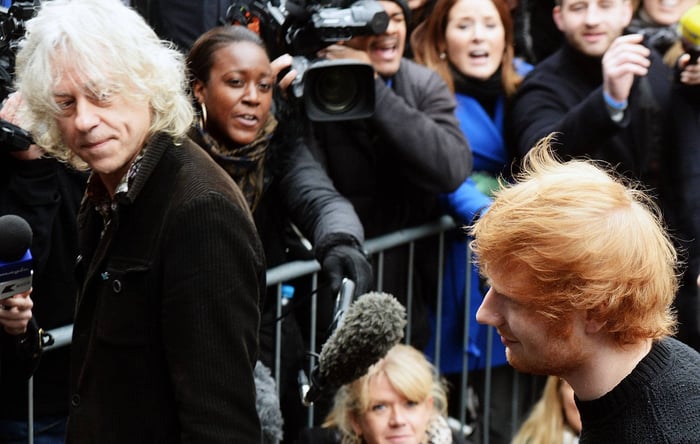
Not everyone believes Sheeran should be forced to make political statements. Bob Geldof has defended the singer, arguing that artists should decide when and where they want to use their platform to address political issues.
Geldof said that fame can function like a form of currency, but each artist has the right to decide how that currency is spent.
“There are those who say, y’know, at a certain level of fame, having a non-political stance is political. No, that’s not right. Fame is a currency, and it depends on how you want to use it.”
— Bob Geldof
He also argued that audiences should not automatically expect every famous performer to speak publicly about every major crisis.
“I wouldn’t expect The Rolling Stones to get up and go on about Gaza, you just wouldn’t. Why? Because it’s not their thing, although I’m quite sure that Mick Jagger has an opinion on it.”
— Bob Geldof
Geldof’s position reflects one side of the wider argument: a musician’s fame may create an opportunity to speak, but it does not necessarily create a duty to comment on every political issue. For some fans, music can remain a place for connection without becoming a political platform.
Aaron Rowe Says the Focus Has Shifted
Aaron Rowe, another former support act who withdrew from the tour, also defended Sheeran while criticizing the attention given to the dispute. Rowe argued that anger should be directed elsewhere, specifically toward people and organizations he believes hold greater influence over the situation.
“I’m gonna be honest, I think youse are all focusing on the wrong person here. All I keep hearing is Ed Sheeran this, Ed Sheeran that, when youse really should be focusing on the likes of Robert Kraft.”
— Aaron Rowe
Rowe acknowledged that Sheeran’s first statement could have been much stronger and maintained that Macklemore should not have been removed from the tour. At the same time, he described Sheeran as fundamentally kind and said that, like any other human being, he makes mistakes.
“All he has inside of him is kindness. That is who Ed Sheeran is. And yes, like every other human being he makes fucking mistakes.”
— Aaron Rowe
The disagreement over Macklemore’s removal continued after Robert Kraft said he found the rapper’s remarks “deeply offensive and hurtful to the Jewish community.” Sheeran, meanwhile, has maintained that the final choice to remove Macklemore came from the promoter after venue objections.
Artists Debate Whether There Is a Neutral Position
Other musicians have continued to comment on the dispute, but some have tried to redirect attention away from the personalities involved. The band Maruja said the controversy should bring the conversation back to what is happening in Palestine rather than leaving the public focused only on Macklemore and Sheeran.
Frontman Joe Carroll argued that framing the issue as a choice between opposing sides can obscure what he views as a basic moral question.
“You get misled that you have to pick a side, but this is a genocide. There shouldn’t be any ‘picking a side’, it’s just basic human morality.”
— Joe Carroll
That sentiment sits at the heart of the disagreement with Thunberg. Sheeran has said that he wanted his shows to be about unity and humanity, but Thunberg argues that refusing to step outside a comfortable position can itself become a form of complicity.
The debate is unlikely to disappear soon. Pop stars have enormous reach, but they also face professional, personal, and commercial consequences when they speak. Fans, meanwhile, are left to decide whether silence represents neutrality, caution, or something more troubling.
Conclusion
Greta Thunberg’s criticism of Ed Sheeran has reignited a difficult conversation about celebrity responsibility, artistic freedom, and the moral expectations placed on performers. Sheeran says he can no longer hide how he feels about the humanitarian crisis, while Thunberg insists that public figures—and the institutions and fans around them—must be willing to take meaningful risks. Where do you think the line between personal choice and public responsibility should fall?
FAQ
- What did Greta Thunberg say about Ed Sheeran? Greta Thunberg criticized Ed Sheeran’s response to the Palestine controversy, describing it as a “lack of spine” and calling for greater accountability from people with large platforms.
- Why was Macklemore removed from Ed Sheeran’s tour? Sheeran has said the final decision was made by promoter Messina Touring Group after several venues objected to Macklemore appearing following his public pro-Palestine comments.
- What did Ed Sheeran say about Gaza? Sheeran called the situation in Gaza “catastrophic, unjustifiable, and disproportionate.” He also said he could no longer hide his feelings about the humanitarian crisis.
- Who defended Ed Sheeran during the dispute? Bob Geldof and former support act Aaron Rowe defended Sheeran, with both arguing that artists should have control over when and how they use their public platforms.
- Which musicians withdrew from Sheeran’s tour? FINNEAS, Lukas Graham, Aaron Rowe, Beoga, and Sheeran’s backing musicians were among those reported to have withdrawn from the tour.
If this story connects music, memory, and social conscience for you, browse the favorite album cover poster collection at Architeg Prints. A carefully chosen print can bring a little of that concert-room feeling home.
 | DISCOUNTGET 30% OFF*Use code on your next order:
|
* This post may contain affiliate links, meaning we earn a commission if you make a purchase through these links, at no additional cost to you.