Ed Sheeran Defended by Bob Geldof Amid Macklemore Palestine Row


 See more Architeg Prints stories on Google.
Ed Sheeran Defended by Bob Geldof Amid Macklemore Palestine Row
Ed Sheeran faces renewed scrutiny as Bob Geldof defends his character, praises Macklemore’s stance, and questions the promoters behind the tour fallout.
Bob Geldof Weighs In on the Ed Sheeran Controversy
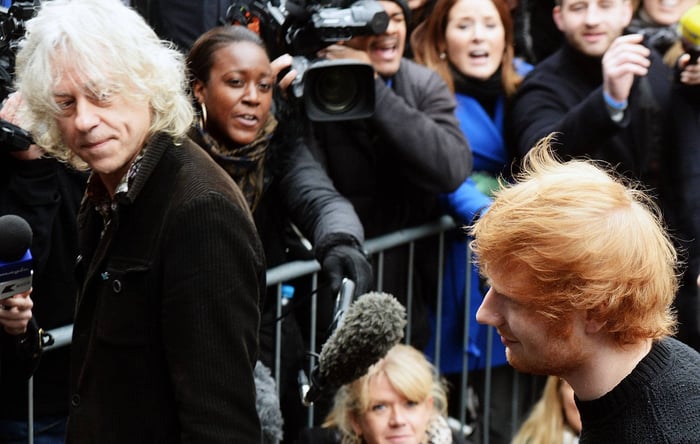
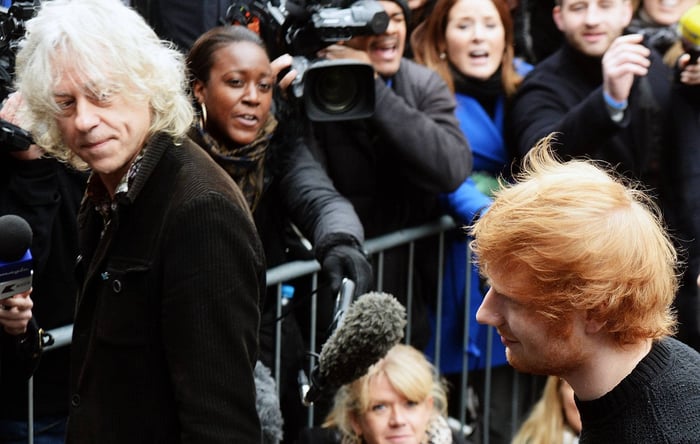
The argument surrounding Ed Sheeran, Macklemore, and the politics of live music has grown far beyond one tour decision. Now Bob Geldof has entered the conversation, defending Sheeran as a “good man” while also praising Macklemore and the musicians who chose to walk away.
The Boomtown Rats frontman said artists have the right to decide whether they want to use their public platform for political expression. At the same time, he made it clear that he respects those who take a personal or professional risk by speaking out.
“An artist has the absolute right to choose what he wants to say and when he wants to say it,” Geldof said in an interview with the Belfast Telegraph. “There are those who say, y’know, at a certain level of fame, having a non-political stance is political. No, that’s not right. Fame is a currency, and it depends on how you want to use it.”
That idea feels especially relevant in the current concert landscape, where a microphone can quickly become a political podium. Some artists treat that platform as a responsibility. Others want the stage to remain focused on music, connection, and escape. Geldof’s position is that both approaches can exist.
Why Geldof Says Not Every Artist Has to Speak Out
From there, Geldof offered a memorable comparison. He said he wouldn’t expect The Rolling Stones to suddenly make Gaza the center of a concert, even while acknowledging that Mick Jagger almost certainly has personal views on the issue.
“I wouldn’t expect The Rolling Stones to get up and go on about Gaza, you just wouldn’t,” Geldof said. “Why? Because it’s not their thing, although I’m quite sure that Mick Jagger has an opinion on it.”
It’s a distinction many fans understand instinctively. Going to a show can feel like entering a temporary little universe: lights down, phones up, choruses bouncing through the room. Yet artists don’t stop being citizens when they step onstage. The tension comes from deciding when a performance should remain entertainment and when silence starts to feel like a statement of its own.
Geldof did not criticize Macklemore for using his platform. In fact, he praised the rapper and the other musicians who later withdrew from Sheeran’s tour.
“I really admire Macklemore and the guys who walked, because it’s a hard ask. They are making a big quid for the first time in their lives, y’know, and he just said, ‘No, mate’.”
For Geldof, that decision carried real weight. Walking away from a major tour can mean giving up money, exposure, momentum, and the kind of opportunity musicians may wait years to receive. That’s why he described the choice as difficult rather than simply dramatic.
Geldof Directs His Anger at the Promoters
Although he defended Sheeran, Geldof did not hold back when discussing the people and organizations responsible for staging the concerts. His criticism was aimed at Gillette Stadium owner Robert Kraft and the tour’s promoters.
“Shame on Kraft, and shame on the promoters,” Geldof said. “Shame on them! But not shame on Sheeran.”
He argued that artists should be supported by the promoters who book them and by the stadium owners who host their performances. In his view, it isn’t the business of those parties to control what an artist says beyond the basic responsibilities surrounding a concert.
“They both should be supported by the promoters that put on their concerts and by the owners of the stadium,” he added. “It’s certainly none of their fucking business what an artist gets up to.”
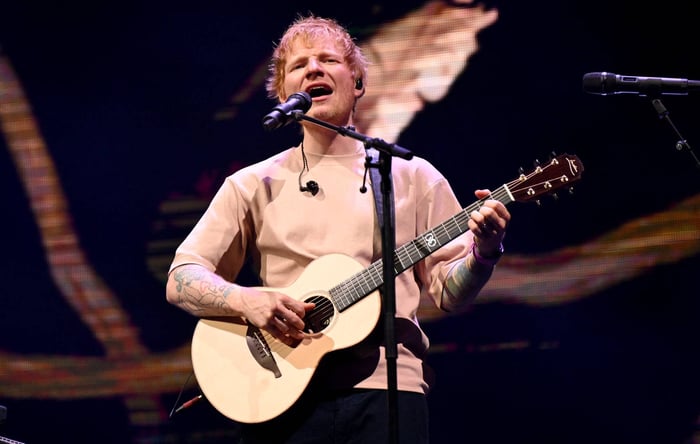
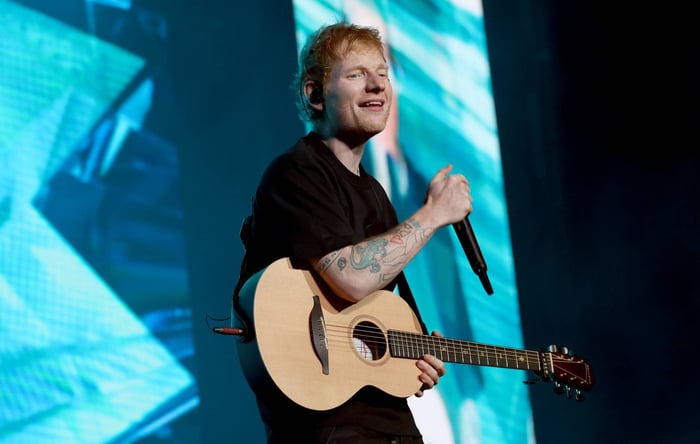
The comments arrived after Sheeran returned to the stage in Philadelphia and spoke publicly about the dispute. During the show, he acknowledged that he had made mistakes and apologized to the audience.
Ed Sheeran Addresses Mistakes and Freedom of Speech
Speaking to the crowd at Lincoln Financial Field, Sheeran said the controversy had caused him to question whether he wanted “to be an artist at all”.
“I’ve had to take and make difficult decisions, and I am making mistakes, and I’m so, so sorry,” he told fans.
Sheeran also explained that he had never intended to become “an activist musician”. His goal, he said, had generally been to make concerts about unity rather than division, and humanity rather than politics. Still, the growing backlash placed him in the middle of a much larger discussion about artistic freedom.
“I am deeply worried about the idea that venues should pre-approve content for performers,” Sheeran said. “This happens in so many places that I perform around the world, but it should never happen in the free world.”
He then addressed Gaza directly, saying that he could no longer conceal his feelings about the humanitarian crisis.
“I’ve tried in my career to not be a political commentator of any kind because I want my music and shows to be about unity, not division, about humanity, not politics.”
“But this is a humanitarian issue, and I cannot hide how I feel about it anymore.”
Sheeran described the Hamas-led attack at the Nova music festival on October 7, 2023, as “horrific”. He also said that the situation in Gaza was “catastrophic, unjustifiable, and disproportionate”. He told the audience that he was speaking with people across the political spectrum about making a humanitarian contribution.
Those remarks came as he tried to explain the complicated position he found himself in: not wanting to operate as a political commentator, but also not wanting to remain silent on an issue he considered fundamentally humanitarian.
Security Fears Changed Sheeran’s Stage Design
The controversy also affected the physical shape of Sheeran’s return concert. He revealed that he had removed the usual B-stage, the smaller platform positioned in the middle of the crowd.
The reason was simple, if unsettling: he was afraid of what might happen if he stood among the audience.
“I didn’t know if I’d have things thrown at me,” Sheeran said.
During the same concert, Sheeran became emotional while thanking fans for supporting him. A message shared from the event captured the mood of the evening: “I will never stop doing this.”
For a performer whose shows are built around closeness and audience participation, removing the central stage was a major psychological shift. That familiar walk into the crowd is usually one of the warmest parts of a concert. Here, it became a reminder that the dispute had moved from headlines and statements into the room itself.
Aaron Rowe Also Defends Sheeran’s Character
Geldof’s comments echoed remarks from former support act Aaron Rowe, who also argued that public anger had been directed at the wrong person.
“I’m gonna be honest, I think youse are all focusing on the wrong person here,” Rowe said. “All I keep hearing is Ed Sheeran this, Ed Sheeran that, when youse really should be focusing on the likes of Robert Kraft.”
Rowe was among the musicians who withdrew from the tour. He acknowledged that Sheeran’s initial statement “could have been a lot better”, and he maintained that Macklemore should not have been removed from the lineup.
Still, Rowe described Sheeran as fundamentally kind.
“All he has inside of him is kindness. That is who Ed Sheeran is,” Rowe said. “And yes, like every other human being he makes fucking mistakes.”
That combination of criticism and compassion has become one of the defining themes of the dispute. Supporters of Macklemore believe the rapper should have been allowed to speak without losing his place on the tour. Others argue that Sheeran was placed in an impossible position by promoters, venues, and competing public expectations.
How Macklemore’s Speech Sparked the Fallout
Macklemore was removed from the tour after delivering an impassioned “Free Palestine” speech during his support performances at MetLife Stadium in New Jersey. He also performed his protest track “Hind’s Hall” while footage from Gaza played behind him.
The speech led to calls for his removal from several public figures, including Pink, as well as the Israeli American Council. Kraft later said that he found Macklemore’s comments “deeply offensive and hurtful to the Jewish community”.
Sheeran has maintained that the final decision was made by promoter Messina Touring Group after several venues objected to Macklemore appearing. The decision prompted FINNEAS, Lukas Graham, Aaron Rowe, and Beoga to withdraw from the tour. Sheeran’s backing musicians also pulled out.
The result was a messy chain reaction. One speech led to demands for removal; the removal led to artists leaving; the departures intensified attention on Sheeran; and Sheeran’s attempt to explain the situation brought the wider issue of freedom of speech back to center stage.
Macklemore Pledged His Tour Earnings to Aid Organizations
Macklemore later pledged his entire $1 million in tour earnings to six organizations supporting Palestinians. Kraft subsequently said that Sheeran had asked him to match that contribution with a $2 million humanitarian donation.
That development added another layer to an already emotionally charged story. The dispute was no longer only about who appeared on a concert bill. It had also become a question of how artists, promoters, and wealthy event figures respond when public statements create real consequences.
The financial contributions did not erase the disagreement, but they showed how the controversy had moved into direct humanitarian action.
Geldof’s Own Statements on Gaza
Geldof’s defense of Sheeran and praise for Macklemore came despite his own forceful comments about the humanitarian crisis in Gaza.
He had previously called Israeli Prime Minister Benjamin Netanyahu a “liar” and accused Israeli forces of lying about the starvation crisis. Days earlier, he had criticized the starvation of children in Gaza as “abysmal”, telling the Israeli public that its government and army appeared to be out of control.
That context helps explain why Geldof separated the right to remain publicly non-political from the decision to speak out. He has used his own platform to condemn the humanitarian situation, but he still believes artists should decide for themselves how their fame is used.
Other Musicians Say the Focus Should Return to Palestine
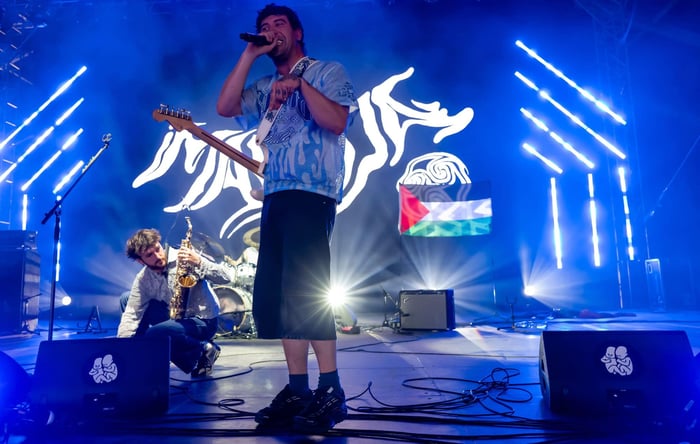
The debate continued as other musicians weighed in. Maruja said the controversy should redirect attention to what was actually happening in Palestine, arguing that the story should not become solely about Macklemore and Sheeran.
Frontman Joe Carroll said audiences were being misled into thinking they had to choose one side or the other.
“You get misled that you have to pick a side, but this is a genocide,” Carroll said. “There shouldn’t be any ‘picking a side’, it’s just basic human morality.”
That sentiment cuts through the celebrity drama surrounding the story. While the tour fallout has generated the headlines, the artists involved have repeatedly pointed toward the humanitarian crisis as the issue that should remain central.
Conclusion
Bob Geldof’s position is ultimately a complicated one: he defends Ed Sheeran’s character, admires Macklemore’s decision to stand by his beliefs, and blames promoters and venue owners for how the controversy unfolded. The debate leaves one question hanging over the concert world: should artists be expected to speak up, or should the choice always belong to them?
FAQ
- What did Bob Geldof say about Ed Sheeran? Geldof defended Sheeran, saying the singer should not be blamed for the tour fallout and describing him as someone who should be supported rather than shamed.
- Why did Bob Geldof praise Macklemore? He admired Macklemore for speaking publicly about Palestine and for accepting the professional consequences of that decision, including leaving a lucrative tour opportunity behind.
- Why was Macklemore removed from the tour? Macklemore was dropped after delivering a “Free Palestine” speech and performing “Hind’s Hall” during a support appearance at MetLife Stadium. Sheeran said the final decision was made by the promoter after objections from venues.
- Why did Ed Sheeran remove the B-stage? Sheeran said he was afraid of what might happen if he stood in the middle of the crowd, including the possibility that people might throw objects at him.
- What happened to Macklemore’s tour earnings? Macklemore pledged his full $1 million in tour earnings to six organizations supporting Palestinians. Kraft later said Sheeran had asked him to match that amount with a $2 million humanitarian contribution.
If this story brings back memories of the records and performances that shaped your own musical life, browse the favorite album cover posters at our store. A great print can keep a powerful song, era, or artist close long after the final encore.
 | DISCOUNTGET 30% OFF*Use code on your next order:
|
* This post may contain affiliate links, meaning we earn a commission if you make a purchase through these links, at no additional cost to you.