Ed Sheeran Loop Tour Returns After Band Exodus: His Best Show Yet


 See more Architeg Prints stories on Google.
Ed Sheeran Loop Tour Returns After Band Exodus: His Best Show Yet
Ed Sheeran’s Loop Tour returned amid controversy, canceled support slots, a rebuilt band, and an emotional Philadelphia speech about love and unity.
A Difficult Return to the Stage
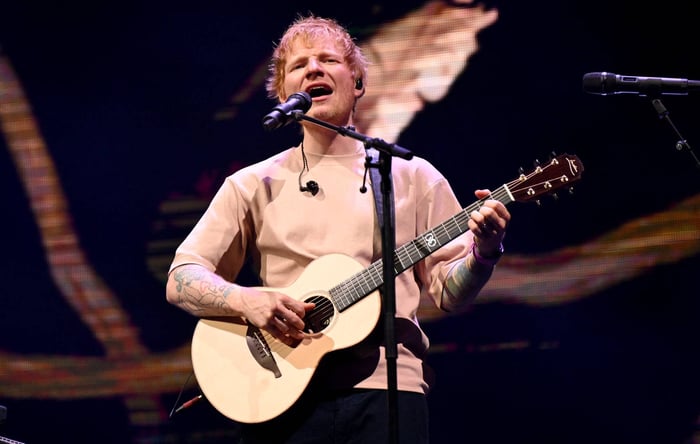
Ed Sheeran walked back onto the Loop Tour carrying more than a guitar and a loop pedal. After a turbulent week that saw his opening acts and backing musicians leave the tour, the singer faced a Philadelphia crowd with an uncertain show, a newly assembled band, and plenty of questions hanging in the air.
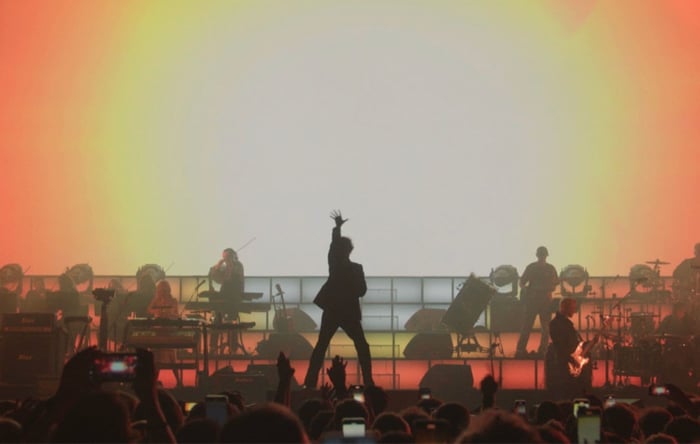
The September 19 performance at Philadelphia’s Lincoln Financial Field marked Sheeran’s first concert since the controversy surrounding Macklemore’s departure from the tour. The evening was already unusual before the first song began: there were no remaining opening acts, and the musicians who normally helped fill out the production had also stepped away.
For fans arriving at the stadium, it must have felt like walking into a familiar movie with half the cast suddenly replaced. The songs were still there, the giant crowd was still there, but the emotional weather had changed completely.
How Macklemore’s Departure Changed the Tour
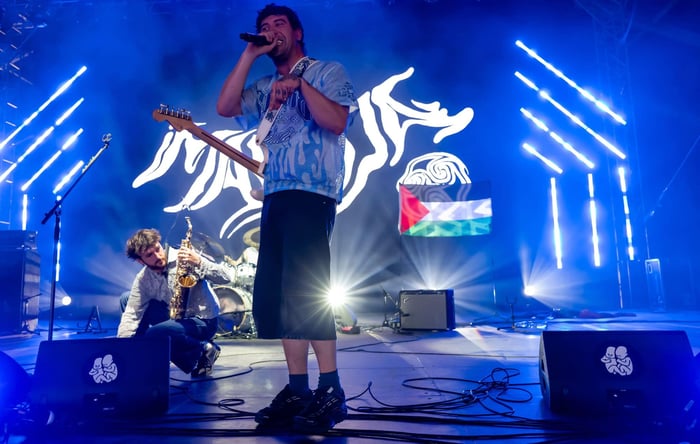
The chain of events began after Macklemore delivered an impassioned speech supporting Palestine while opening for Sheeran at New Jersey’s Gillette Stadium. His comments prompted public calls for him to be removed from the tour, including criticism from Pink and the Israeli American Council.
Robert Kraft, the owner of Gillette Stadium, later described Macklemore’s remarks as “deeply offensive and hurtful to the Jewish community.” Macklemore was subsequently dropped from the tour, leaving Sheeran’s run without its main opening act.
That decision quickly became larger than a lineup change. FINNEAS, Lukas Graham, Aaron Rowe, and Beoga all announced that they would no longer participate in the tour, with each expressing support for Macklemore. Later, additional performers connected to the tour also spoke publicly in support of the rapper.
The result was a rare sight in modern arena pop: a major concert production forced to rebuild itself almost overnight.
Sheeran Addresses the Crowd
Before the music began in Philadelphia, Sheeran spoke directly to the audience. He acknowledged that criticism of his music was nothing new, and that he accepted it as part of being a working artist. This time, though, he said the criticism concerned something much more serious.
“I’m used to my music being criticized, and I’m always happy to take that because I’m lucky a lot of you like my stuff, and to be honest, I’m surprised,” Sheeran said. “But this week, the criticism was about something much more important, and I’ve had to take and make difficult decisions, and I am making mistakes, and I’m so, so sorry.”
— Ed Sheeran
He then addressed the October 7 attack at the Nova music festival, describing it as horrific and connected to centuries of Jewish pain. At the same time, he called the situation in Gaza catastrophic, unjustifiable, and disproportionate, while expressing grief over the deaths of civilians and children.
Sheeran also condemned what he described as systemic injustice in the West Bank. His statement did not try to turn the concert into a political rally. Instead, he said he was speaking with people across different perspectives, listening, learning, and trying to understand how he could help those affected by the conflict.
That admission—that he did not know enough—gave the speech a noticeably personal edge. It wasn’t polished pop-star messaging so much as a performer trying to find solid ground while standing in the middle of a fast-moving storm.
Why the B Stage Was Removed
The changes weren’t limited to the lineup. During the portion of the concert when Sheeran would normally move to a smaller setup in the middle of the audience, he explained that the B stage had been removed for safety reasons.
He admitted that he had worried about what might happen if he stood in the center of the crowd. Would people throw things? Would the audience be angry with him? Those questions had clearly become part of the practical reality of putting on the show.
For a performer whose concerts are usually built around warmth, singalongs, and an almost disarmingly casual connection with the crowd, that uncertainty must have felt especially strange. Sheeran is often at his most comfortable with just a guitar, a microphone, and thousands of people singing back. On this night, even that familiar formula carried a new risk.
A New Band Learns the Songs in Three Days
Sheeran also explained how he replaced the musicians who had withdrawn. Some songs, he said, simply do not translate as effectively through the loop pedal alone. The challenge was keeping the concert recognizable without pretending that nothing had changed.
He contacted a musician he had toured with during the previous year and asked whether she would join him onstage. She agreed, then helped bring in other musicians. The new group had only three days to learn the set.
“I asked her if she had musician friends and she said yes. And they’ve had three days to learn these songs,” Sheeran explained. “And they agreed to come on stage knowing that the world might hate them too for coming on stage with me.”
— Ed Sheeran
That detail added another layer of bravery to the night. These players weren’t simply filling empty chairs in a professional arrangement. They were stepping into a controversy that had already divided the tour, knowing their decision could attract criticism of its own.
Sheeran introduced the replacement musicians during the show, giving the audience a glimpse behind the curtain. Arena concerts can look effortless from the seats, but this one visibly carried the fingerprints of emergency planning: new players, rearranged sections, and a production adapting in real time.
“Tonight Has Been Honestly the Best Show of My Life”
Before the final stretch of the concert, Sheeran sat at the edge of the stage and delivered his longest statement of the evening. He read from a teleprompter, suggesting that he had carefully considered what he wanted to say.
“The last week of my life has been one of the worst weeks of my life, and today has been one of the weirdest days of my life,” Sheeran said. “Tonight has been honestly the best show of my life.”
— Ed Sheeran
He said he had genuinely wondered whether the tour would continue, whether he would perform again, and even whether he still wanted to be an artist. The week had moved quickly, he explained, with people urging him to cancel and longtime acquaintances distancing themselves.
Then he looked toward the audience and saw something different: ticket sales had continued. Instead of a mass departure, he saw people still choosing to attend.
“I look at the end of the week, and I see 50,000 people who haven’t abandoned me,” he said. “People will say what they want, but I’m doing this for you. I love you. I love this.”
— Ed Sheeran
That moment seemed to crystallize why he had decided to continue. For Sheeran, the concert was not simply a job or a tour date. It was a meeting place where people with different backgrounds, religions, political opinions, and personal beliefs could still sing the same songs together.
A Concert Built Around Unity
Sheeran repeatedly returned to the idea that concerts can create temporary common ground. He acknowledged that the people in the stadium did not all agree with one another, and probably never would. Yet they were standing beside one another, dancing together, and sharing a night that had somehow survived an extraordinary amount of upheaval.
“A lot of people here have differing opinions, and we’ve had a great night,” Sheeran said. “You are standing next to people and dancing with people who you may disagree with. And you probably understand them better by being one and love.”
— Ed Sheeran
He ended with an appeal to love, saying that if the tour stopped, love would not win. That may sound almost too neat on paper, but inside a stadium packed with 50,000 people, the sentiment clearly carried weight for him.
“The root of it is love,” Sheeran said. “I can’t let you guys down. That’s why I’m here tonight, on my own, for you guys.”
— Ed Sheeran
The speech did not erase the controversy, nor did it resolve the disagreement surrounding Macklemore’s removal. It did, however, explain Sheeran’s decision to keep performing and made clear that he viewed the tour as a space where disagreement and togetherness could exist at the same time.
The Wider Fallout Continues
The dispute has continued beyond the Philadelphia concert. Sheeran reportedly lost more than 200,000 Instagram followers, while Macklemore gained more than 1.6 million.
BIIRD and Myles Smith, who had also appeared as support acts, spoke in support of Macklemore. Irish trad-folk band BIIRD said it stood unequivocally behind his words. Smith described the suffering of Palestinians as devastating and impossible to ignore, specifically referencing bombing, displacement, hunger, grief, and fear affecting innocent people.
Roger Waters also entered the debate, criticizing Sheeran while praising Macklemore for speaking out. Massive Attack likewise argued that neutrality in the face of mass civilian suffering cannot truly be considered neutral.
Sheeran has not responded directly to every comment made by former support acts or other musicians. Meanwhile, Macklemore donated his entire $1 million earnings from the tour to Palestinians, and Kraft pledged an additional $2 million to provide aid in the region.
So, yes, this is far bigger than one canceled set or a reshuffled backing band. It has become a story about political speech, artistic responsibility, public pressure, friendship, and the complicated business of trying to create a shared emotional space in a divided moment.
The Loop Tour is moving forward, but it no longer looks quite the same. Sheeran returned to the stage without his original touring group, built a replacement band in three days, removed a major portion of the production, and still managed to turn the night into an emotional statement about music bringing people together. Did the Philadelphia performance change how you see the tour—or Sheeran’s response to the controversy?
FAQ
- Why did Macklemore leave Ed Sheeran’s Loop Tour?
Macklemore was dropped from the tour after making a speech supporting Palestine while performing at Gillette Stadium. The remarks prompted criticism from several figures, including Pink and the Israeli American Council, while stadium owner Robert Kraft called the speech offensive and hurtful to the Jewish community. - Which musicians withdrew from the tour?
FINNEAS, Lukas Graham, Aaron Rowe, and Beoga all left the tour after Macklemore’s removal and publicly expressed support for him. Other support acts also later made statements about the controversy. - What did Ed Sheeran say in Philadelphia?
Sheeran apologized for mistakes, condemned the October 7 attack at the Nova music festival, described the situation in Gaza as catastrophic, and spoke about the suffering of civilians and children. He also said he was listening and learning while seeking ways to help victims. - Why was the B stage removed from the concert?
Sheeran said the smaller stage in the middle of the crowd had been scrapped for safety. He worried about what might happen if he stood among the audience while emotions surrounding the controversy were still high. - How did Sheeran rebuild the backing band?
He contacted a musician he had toured with previously, who helped bring in other players. The replacement musicians had only three days to learn the songs before performing in Philadelphia.
Bring a little of the Loop Tour atmosphere home with a favorite album cover poster from Architeg Prints. It’s a warm, music-loving way to keep the songs—and the memories attached to them—close by.
 | DISCOUNTGET 30% OFF*Use code on your next order:
|
* This post may contain affiliate links, meaning we earn a commission if you make a purchase through these links, at no additional cost to you.