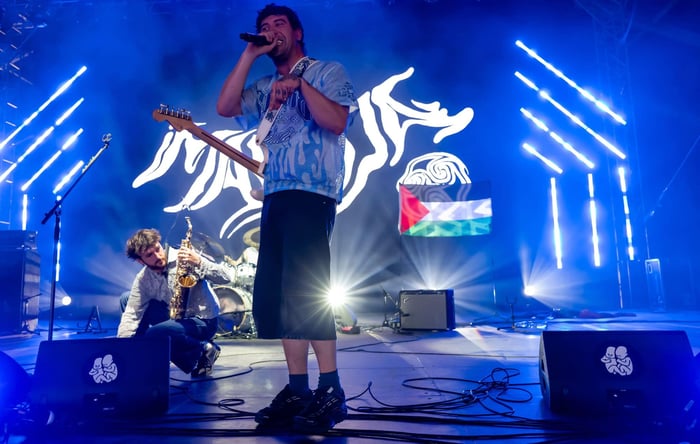
Maruja, Punk’s 50th Anniversary and a Life-Affirming Year


 See more Architeg Prints stories on Google.
Maruja, Punk’s 50th Anniversary and a Life-Affirming Year
Maruja reflects on a transformative year, political punk, fan tattoos, Palestine, and their special 100 Club anniversary show.
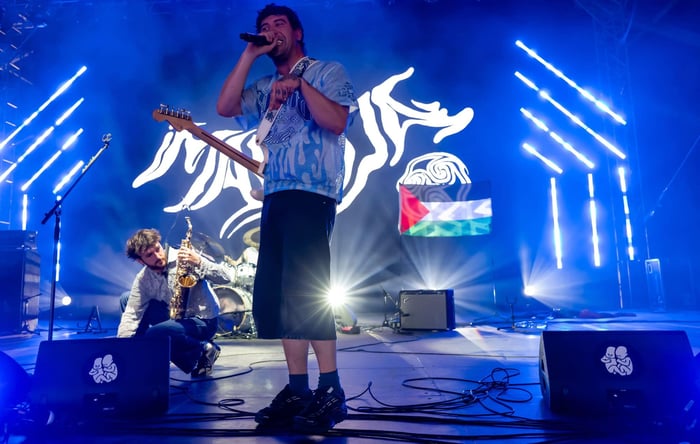
Some bands make noise. Maruja make noise that stares straight back at the world. After a year of touring their debut album Pain To Power, saxophonist and vocalist Joe Carroll reflects on fan tattoos, political responsibility, punk’s enduring spirit, and the strange story of a curry-stained duel invitation.
A Full Album Changes Everything
A year after Pain To Power arrived, Maruja are looking back on a period that has taken them far beyond the possibilities of their early releases. Their two EPs had already carried them around the world, but a full-length album represented something more substantial: a complete statement, with room to breathe, argue, rage, and offer hope.
Carroll says the clearest measure of the album’s impact has come from the stage. Live shows have given the band direct, unfiltered reactions from people who have connected with the lyrics and music in deeply personal ways.
“It’s been a very life-affirming year for sure.” — Joe Carroll
That connection has produced one particularly unexpected side effect: what Carroll jokingly calls a “Maruja tattoo epidemic.” Fans have been sending the band photographs of lyrics, artwork, and symbols permanently etched into their skin. For musicians, that kind of devotion can feel almost surreal. A song begins as an idea in a rehearsal room, then somehow ends up living on the arm of someone the band has never met.
It is “pretty wild,” Carroll says, describing the impact of seeing their work carried so literally by listeners.
The lyric that appears most often at shows comes from the second verse of “Look Down On Us”. It speaks to the oppressive culture surrounding people while also offering a route through it—not by ignoring the world, but by understanding it and allowing that awareness to create solidarity rather than paralysis.
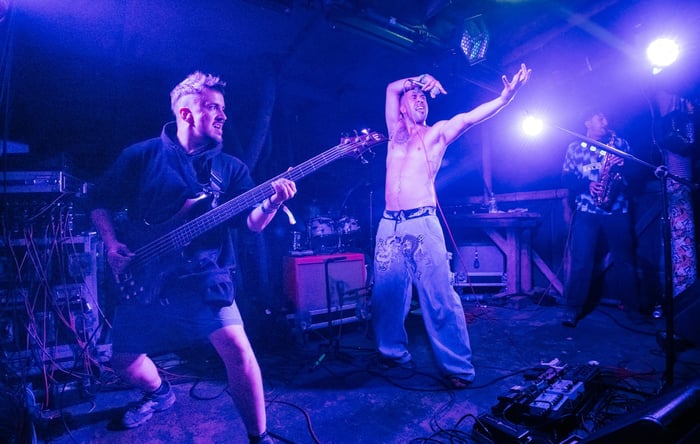
When Music Meets Morality
That message feels especially urgent to Carroll when viewed alongside recent arguments about public artists, political speech, and the price of speaking openly. The band’s appearance at The 100 Club’s 50th anniversary Punk Special arrives during a moment when questions about money, morality, and silence are impossible to avoid.
Carroll points to the controversy surrounding Macklemore’s removal from Ed Sheeran’s tour after the rapper made a “Free Palestine” speech at Gillette Stadium. Robert Kraft, the venue’s billionaire owner, reportedly threatened to prevent future Sheeran performances at venues across the United States if Macklemore remained on the tour.
For Maruja, the argument shouldn’t be reduced to a celebrity dispute. Carroll hopes the attention will return to the wider crisis in Palestine and encourage people to use whatever influence they have—contacting local representatives, attending rallies, and continuing to speak up.
“This isn’t about Macklemore and Ed Sheeran,” he argues. “It’s about what is actually going on in Palestine.”
Carroll rejects the idea that people are required to choose between two equally valid sides. In his view, the language of “picking a side” can disguise the basic moral reality of what is happening.
“You get misled that you have to pick a side, but this is a genocide. There shouldn’t be any ‘picking a side’, it’s just basic human morality.” — Joe Carroll
That conviction runs through “Look Down On Us,” particularly its line, “When it’s money over minds, there will never be a truce.” Carroll sees the current situation as a highly visible example of a broader pattern that has existed behind closed doors in political and economic life for years: profit being placed ahead of human lives.
He also describes hearing a radio interview with someone raised in Israel within a Zionist background who later changed his views. For Carroll, that kind of personal shift demonstrates the importance of looking directly at events rather than allowing familiar narratives to keep the truth at a distance.
The uncomfortable silver lining, he says, is that the controversy may have forced people to notice behavior they previously overlooked. The backlash has also created a larger community questioning the music industry’s habit of putting financial interests above principles.
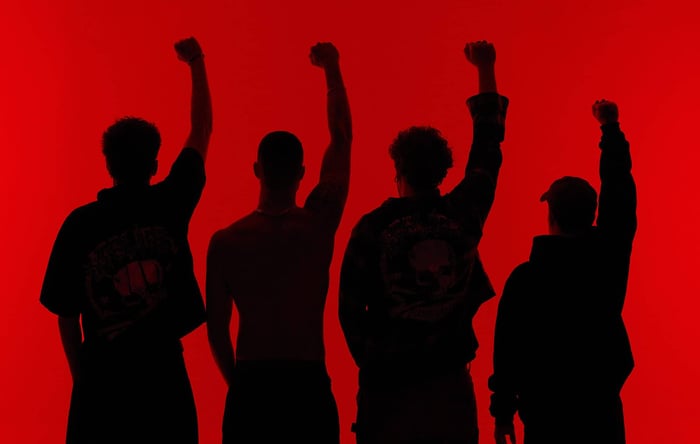
Why Maruja Refuse to Stay Quiet
Maruja’s position is not merely theoretical. The band says that if they cannot display a Palestine flag onstage, they will not play the show. Their entire team understands that expectation before they arrive at a venue.
Carroll acknowledges that calling this a “sacrifice” can sound disproportionate when compared with the suffering taking place. Still, he says that in situations where people feel helpless, the only option is to take whatever action remains available.
For Maruja, that action comes through their music, their public statements, their stage setup, and the community they build around the band. Their audience tends to attract people who share those values, while making it clear that the group will not soften its message to appeal to everyone.
The band’s criticism of artistic silence is particularly sharp when aimed at performers with enormous platforms. Carroll argues that artists who perform for hundreds of thousands of people have an opportunity—and perhaps a responsibility—to stand up for those audiences and for people facing unimaginable violence.
He questions the value of having immense wealth and influence if those resources don’t make it possible to say “no” when children are being killed. In Carroll’s view, the role of an artist is not simply to entertain, but to follow their conscience and share that conviction with the world.
Punk at 50 Still Has Teeth
The 100 Club’s Punk Special commemorates the 50th anniversary of the venue’s legendary two-day festival. Across the years, the event has been associated with acts including the Sex Pistols, The Clash, Siouxsie And The Banshees, The Damned, and Buzzcocks.
The anniversary shows bring that history into the present. After Sprints headlined the previous night, Maruja take the lead on the second evening, joined by Opus Kink, Wax Head, and a DJ set from Jehnny Beth. In a charming nod to the original era, tickets are priced at $1.50 each—the same figure attached to the 1976 event.
For Carroll, the timing feels almost suspiciously perfect. Punk has always been aggressive, but he believes its foundation is love: the courage to say, “This is what we believe, and we won’t be quiet about it.”
Punk, in his description, is political, stubborn, and unwilling to sell its soul. That makes the movement’s 50th anniversary more than a historical celebration. It becomes a reminder of what the culture was built to challenge and why those arguments still matter.
Maruja feel honored to be included, particularly alongside artists who are being given the chance to recognize the significance of the occasion. The event is not simply a museum piece with loud guitars. It is a living argument, still being made in real time.
The Curry-Stained Duel
Maruja’s connection with Opus Kink stretches back years, including one bizarre challenge that sounds like a lost scene from a particularly theatrical tour documentary.
At Green Man, Carroll was approached by someone carrying letters in the style of a primary school Valentine’s Day delivery. The messenger asked, “Are you Joe?” and handed him an envelope. Inside was a fork that had been used to eat curry, along with a note announcing that Opus Kink challenged Maruja to a duel at a specific place and time.
The duel never happened. Everyone was partying, which is perhaps the most believable ending imaginable.
Even so, Maruja and Opus Kink have maintained a long-running artistic connection. Carroll says Opus Kink influenced Maruja’s stage presence, swagger, sonic identity, and live energy. Sharing the stage again therefore feels like a reunion with a band that helped shape how Maruja present themselves in front of an audience.
The Artists Who Keep Pushing
When asked about punk heroes, Carroll doesn’t limit his answer to the famous names associated with the venue’s history. He points instead to contemporary acts who use their platforms to speak about Palestine, trans rights, and local political realities.
Lambrini Girls stand out for their willingness to support trans rights and for the research they do before touring. Carroll admires the way they try to understand the communities they visit so the people at those shows feel acknowledged rather than treated as anonymous stops on a route.
He also highlights Enola Gay, a Belfast band whose work emerges from a place with a deeply political character. Carroll believes musicians from Belfast need thick skin, and he praises the group for pushing musical boundaries while carrying that intensity into their performances.
Gilla Band receive a mention too. Carroll says he is excited about their forthcoming album and has heard that it is “absolutely bonkers”—a description that, in music, is usually a very good sign.
What Comes Next for Maruja?
Fans hoping for a surprise new song at the anniversary show may have to wait a little longer. Carroll says the set will focus on existing material rather than unveiling new music.
That doesn’t mean Maruja are standing still. The band is always working behind the scenes, and Carroll hints that several major announcements are coming. For now, listeners are encouraged to keep watching and waiting.
After a year of touring, personal fan tributes, political pressure, and increasingly important conversations about artistic responsibility, Maruja seem to be entering their next chapter with the same principle that has guided them so far: make the work honestly, stand behind it, and don’t confuse silence with neutrality.
Conclusion
Maruja’s version of punk is less about recreating the past than carrying its spirit forward. Their music turns frustration into solidarity, and their live shows remind us that a song can be both a rallying cry and a place to feel less alone. What does punk mean to you when the world is asking artists—and audiences—to take a stand?
FAQ
- What is Maruja’s debut album?
Maruja’s debut album is Pain To Power, a full-length release that followed two earlier EPs and became the focus of a transformative year of touring and live performances. - Which Maruja song is discussed in the interview?
“Look Down On Us” is discussed at length, particularly its lyrics about oppressive culture, solidarity, hope, and the danger of placing money above human lives. - Why was Maruja’s 100 Club performance significant?
The show formed part of The 100 Club’s 50th anniversary Punk Special, celebrating the venue’s historic punk festival and its connection to influential acts from the movement’s early years. - Which band challenged Maruja to a duel?
Opus Kink challenged Maruja to a playful duel at Green Man. The invitation arrived with a letter and a curry-used fork, but the duel never took place because the musicians were partying. - Will Maruja perform new music at the anniversary show?
Carroll said the performance would focus on original material already released, although he hinted that the band has several significant announcements in progress.
Bring the spirit of Maruja’s bold artwork and uncompromising music into your space with a favorite album cover poster from Architeg Prints. It’s a warm, stylish way to keep the soundtrack—and the message—close.
 | DISCOUNTGET 30% OFF*Use code on your next order:
|
* This post may contain affiliate links, meaning we earn a commission if you make a purchase through these links, at no additional cost to you.